
How to Audit an SEO Agency's Link Building Strategy Before You Sign the Contract
A pre-contract link building audit should evaluate five dimensions: the agency's existing client backlink profiles, toxic link exposure, anchor text distribution patterns, placement verification practices, and contract language around link guarantees.
 Marcus Webb··9 min read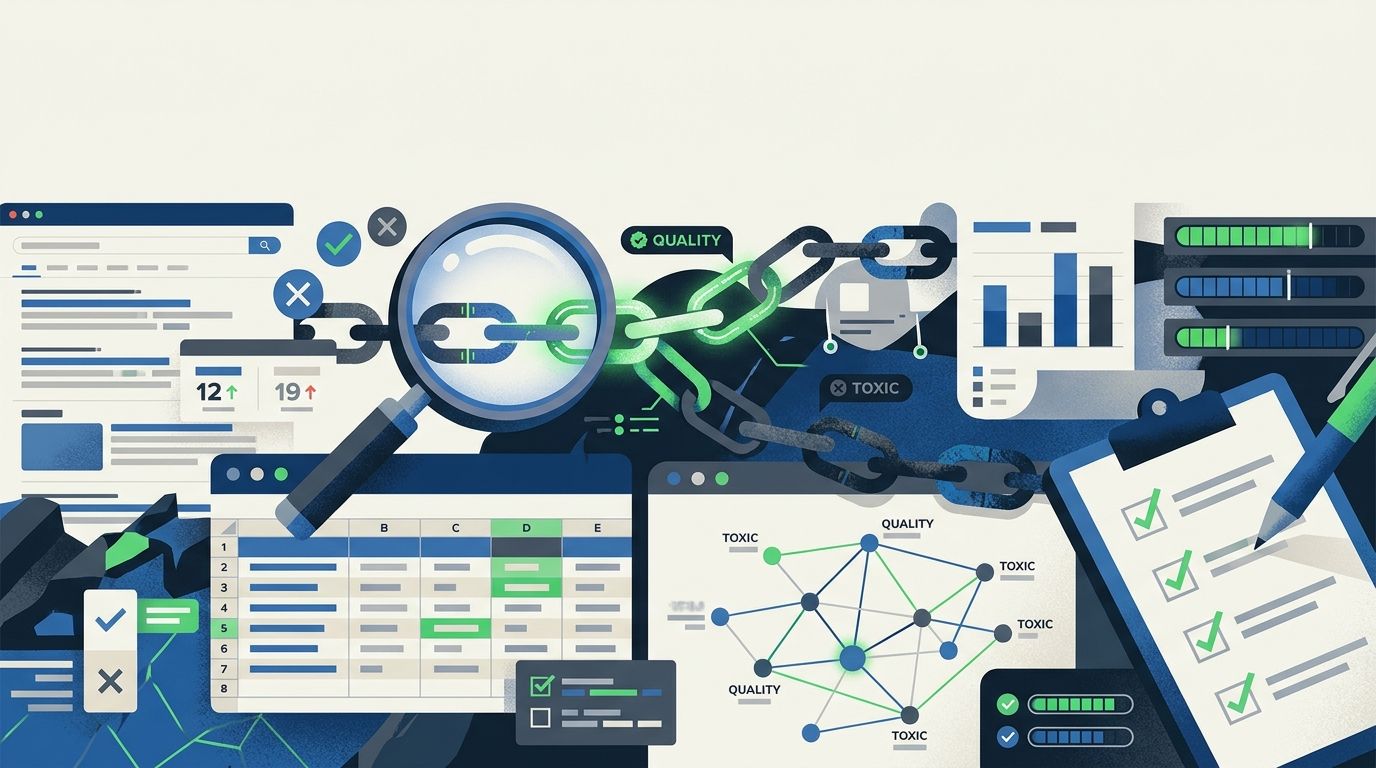
How to Audit an SEO Agency's Link Building Strategy Before You Sign the Contract
A pre-contract link building audit should evaluate five dimensions: the agency's existing client backlink profiles, toxic link exposure, anchor text distribution patterns, placement verification practices, and contract language around link guarantees. Running this evaluation with independent tools takes 2–4 hours and can prevent penalty recovery costs that regularly exceed five figures.
Pulling Raw Backlink Data Into Independent Tools
The first step in any backlink profile evaluation is getting the agency to export raw link data from a current or recent client account (with the client's permission, obviously). Any agency that refuses to share anonymized backlink data before contract signing is telling you something important about how comfortable they are with outside scrutiny.
I've evaluated more than 200 SEO agencies over the past 12 years, and the single most predictive indicator of future problems is how an agency responds to the data request. Agencies that hand over CSV exports without hesitation tend to build links they're proud of. The ones that stall, cite NDAs for every client, or offer only curated "sample reports" are almost always hiding weak placements.
Once you have the data, don't rely on the agency's preferred tool for analysis. SEMrush runs the most opinionated toxic-link scoring system with a built-in disavow export workflow, according to practitioners on r/bigseo. Ahrefs delivers stronger raw backlink data with less aggressive labeling. Majestic provides Trust Flow and Citation Flow metrics that neither competitor replicates. You want at least two of these tools producing independent assessments of the same link profile.
The reason for dual-tool analysis is simple: each tool's crawl index covers different portions of the web. A link that appears healthy in one tool might show a toxicity flag in another because the second crawler picked up a redirect chain or a site-wide footer injection the first one missed.
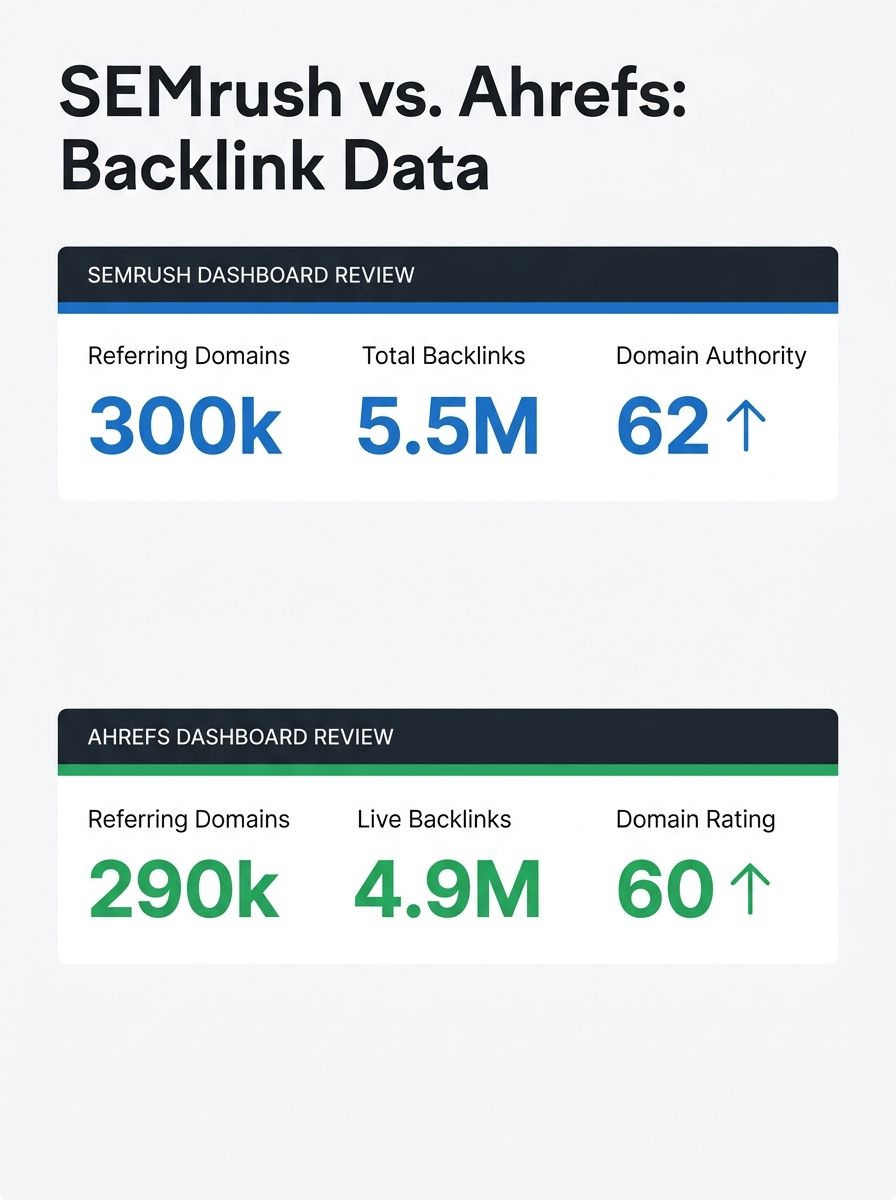
Your agency vetting process should include running the data through SEMrush's Backlink Audit module and cross-referencing against Ahrefs' referring domains report. If you're budget-constrained, tools like RankyFy and SEO SpyGlass offer competent toxic-link detection at lower price points. The goal is independent verification. You're checking whether the agency's claimed results hold up when examined through a lens they don't control.
Scoring the Profile for Toxic Link Risk
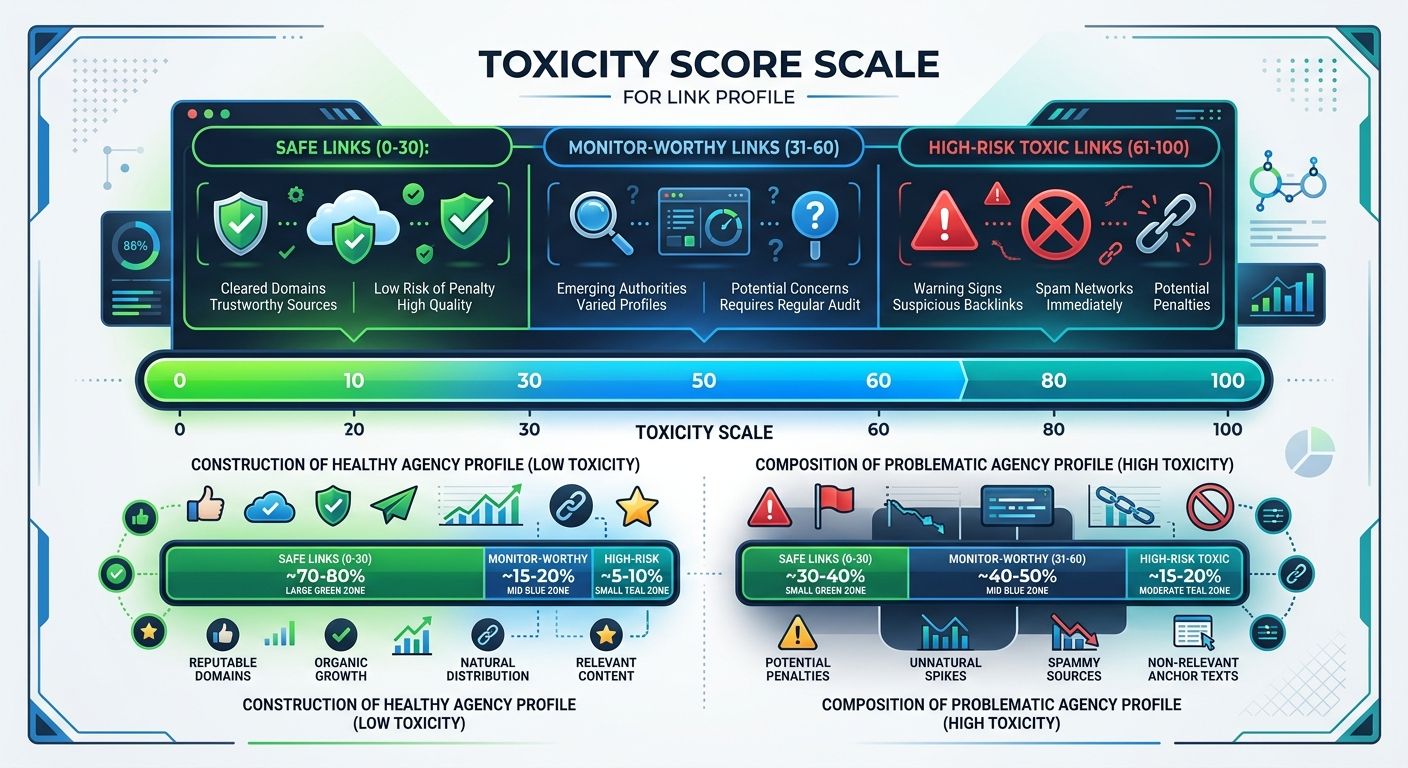
SEMrush assigns every inbound link a toxicity score from 0 to 100, and any agency portfolio should show fewer than 5% of links scoring above 60. When the percentage climbs above 10%, you're looking at a profile that will eventually need cleanup, either through manual link removal outreach or Google's disavow tool. Both cost time and money you shouldn't be spending in the first year of an engagement.
Toxic link risk breaks down into several categories. The most common problems I encounter during pre-contract audits:
PBN (Private Blog Network) links: Sites with identical hosting IPs, thin content, and no organic traffic. These carry the highest penalty risk because Google's SpamBrain system specifically targets them.
Paid directory links at scale: A few niche directories are fine. Forty-plus directory listings acquired in a single month signals automation, not strategy.
Foreign-language spam links: Links from sites in languages unrelated to the client's market, often acquired through comment spam or hacked sites.
Sitewide footer/sidebar links: A single referring domain generating 500+ backlinks because the link sits in a template element. These inflate link counts without providing proportional value.
WebCEO's toxic backlink detection tool recommends scheduling scans weekly, monthly, or quarterly depending on how actively an agency builds links. For the pre-contract audit specifically, you want a snapshot of the current state. What matters is the ratio of clean links to flagged ones and whether the agency has a documented process for handling toxic discoveries.
A useful benchmark: agencies focused on editorial relevance, domain authority, and traffic-verified placements typically maintain toxic-link ratios below 3%. Agencies that prioritize volume over vetting tend to run between 8% and 20%. That gap represents real money in future remediation.
When Anchor Text Patterns Tell the Real Story
Anchor text distribution is where aggressive link building leaves its clearest fingerprints. A natural backlink profile shows roughly 40–60% branded or URL anchors, 20–30% generic anchors ("click here," "learn more," "this article"), and 10–20% keyword-rich anchors. When keyword-rich anchors exceed 30% of the total profile, you're looking at a deliberate manipulation pattern that Google's algorithms are specifically trained to detect.
Ask the prospective agency to walk you through anchor text strategy for three current clients. You want to hear them articulate why they chose specific anchor text for specific placements. An agency that talks about anchor diversity ratios, contextual relevance, and co-occurrence terms demonstrates a level of sophistication that correlates with long-term results. An agency that can't explain their anchor strategy beyond "we target the client's main keywords" is operating on a playbook that stopped working around 2015.
Top link building agencies in 2026 focus on relevance, editorial standards, and genuine authority rather than keyword-stuffed anchor text that triggers penalties. This shift has been ongoing for years, but a surprising number of mid-tier agencies still default to exact-match anchors because they produce faster short-term ranking movement. The consequences typically show up 4–8 months later when algorithmic filters catch up.
Cross-reference the anchor text distribution data from your SEMrush or Ahrefs pull against the anchor text the agency says they use. Discrepancies between their stated approach and the actual data in their client profiles tell you everything about whether you're getting a sales pitch or an accurate picture of their methodology.
Verifying Placements Are Editorial and Live
The fourth phase of your SEO contract checklist involves manually checking a random sample of the links the agency has built. Pick 15–20 links from the exported data and visit each placement in a browser. You're checking for several things simultaneously:
Is the page still live? Link rot affects 20–30% of placements in profiles older than 18 months. An agency that doesn't monitor for link loss is underdelivering on what they promised.
Is the content editorial quality? Read the page. Does it look like a real article written for real readers, or is it a 400-word placeholder published solely to host backlinks?
Does the linking site carry real organic traffic? Plug the referring domain into Ahrefs or Ubersuggest (which tracks new and lost backlinks along with domain authority metrics) and check estimated monthly traffic. A DA-50 site with 12 monthly visitors is a paper tiger.
Are there other outbound links on the page? If the article contains 8+ external links to unrelated sites in different industries, it's likely a paid placement farm. Legitimate editorial content rarely links to a SaaS tool, a personal injury lawyer, and a cryptocurrency exchange in the same piece.
I typically budget 45 minutes for this verification step, and it's the phase that has saved clients the most money. On three separate occasions, I've found agencies presenting link portfolios where more than 40% of placements had been removed by the hosting sites, meaning the client was paying monthly retainers for links that no longer existed.
This verification step also pairs well with evaluating how the agency approaches transparent reporting for their clients. Agencies that build auditable dashboards showing live link status, referring domain metrics, and anchor text breakdowns are substantially less likely to be hiding weak placements.
The Outreach Methodology Question
Ask the agency to describe, in writing, how they acquire links. The response should include specific details about their prospecting criteria, outreach email templates (or at least the approach they take to personalization), relationship management with publishers, and quality control checkpoints before a link goes live.
The hybrid link building model dominates effective agency work in 2026: in-house editorial placements for high-value targets combined with selective white-label services for scale, while retaining direct control over domain vetting and anchor strategy. Agencies that outsource 100% of their link acquisition to white-label providers, particularly those relying on generic guest post networks, tend to produce lower-quality profiles because they've removed themselves from the quality control loop.
Red flags in outreach methodology responses:
Instant pricing without niche research: An agency that quotes you a per-link cost within the first call hasn't evaluated your competitive landscape, your existing profile's strengths, or the difficulty of earning links in your vertical. Link building costs vary by 300–500% across industries.
Guaranteed link volumes: "We guarantee 20 links per month" means the agency is working from a fixed network of placement sites, which means diminishing returns and concentrated risk.
No mention of link monitoring: Building links without ongoing monitoring means no one catches removals, redirects, or hosting-site quality degradation. Monthly checks for active profiles and quarterly checks for standard sites represent the minimum acceptable frequency.
Buzzwords without process detail: Phrases like "premium placements" and "authority sites" without specific DR/DA thresholds, traffic minimums, or content requirements indicate a sales-focused operation.
The US Chamber of Commerce's guidance on hiring SEO firms emphasizes checking review sites and social media channels as baseline due diligence. This is sound advice that extends to the agency's link building claims. Search for the agency name combined with terms like "link quality" or "backlinks" on Reddit, Twitter, and industry forums. Former clients discussing link quality issues in public forums provide data points that no sales call will surface.
Reading the Contract's Link Building Clauses
Contract language is where the link building audit becomes a financial protection exercise. I recommend reading every agency contract with these seven questions answered explicitly:
Does the contract specify link quality standards? Look for minimum DA/DR thresholds, traffic requirements for referring domains, and content quality guidelines. Contracts that promise "high-quality backlinks" without defining the term give the agency unlimited discretion.
Who owns the links if you cancel? Some agencies build links to intermediary sites they control, then redirect link equity to your domain. When the contract ends, so does the redirect. Your rankings disappear overnight.
Is there a link replacement clause? Links get removed by publishers regularly. Does the agency commit to replacing lost links within a defined timeframe?
What reporting frequency and format are specified? Monthly reporting with individual link URLs, anchor text used, referring domain metrics, and placement screenshots should be standard. If the contract says "monthly progress report" without specifying contents, you'll get a PDF with traffic graphs and no link-level detail.
Are there penalty indemnification terms? If the agency's link building triggers a manual action from Google, who pays for the remediation? This clause is rare, but agencies confident in their methodology will discuss it.
What's the minimum commitment period? Standard agency contracts run 6–12 months. Link building results typically take 3–4 months to materialize, so a 6-month minimum is reasonable. Agencies requiring 18–24 month commitments for link building alone are locking you in beyond the evaluation window.
Can you audit independently during the contract? The contract should grant you the right to run independent backlink audits at any time using your own tools. An agency that objects to this clause is telling you the same thing as the agency that refuses to share pre-contract data.
If you're evaluating whether agency services justify their cost versus handling SEO in-house, the contract terms around link building are where the value calculation gets concrete. An agency charging $3,000–$8,000 per month for link building should deliver contractual commitments that match that investment level.
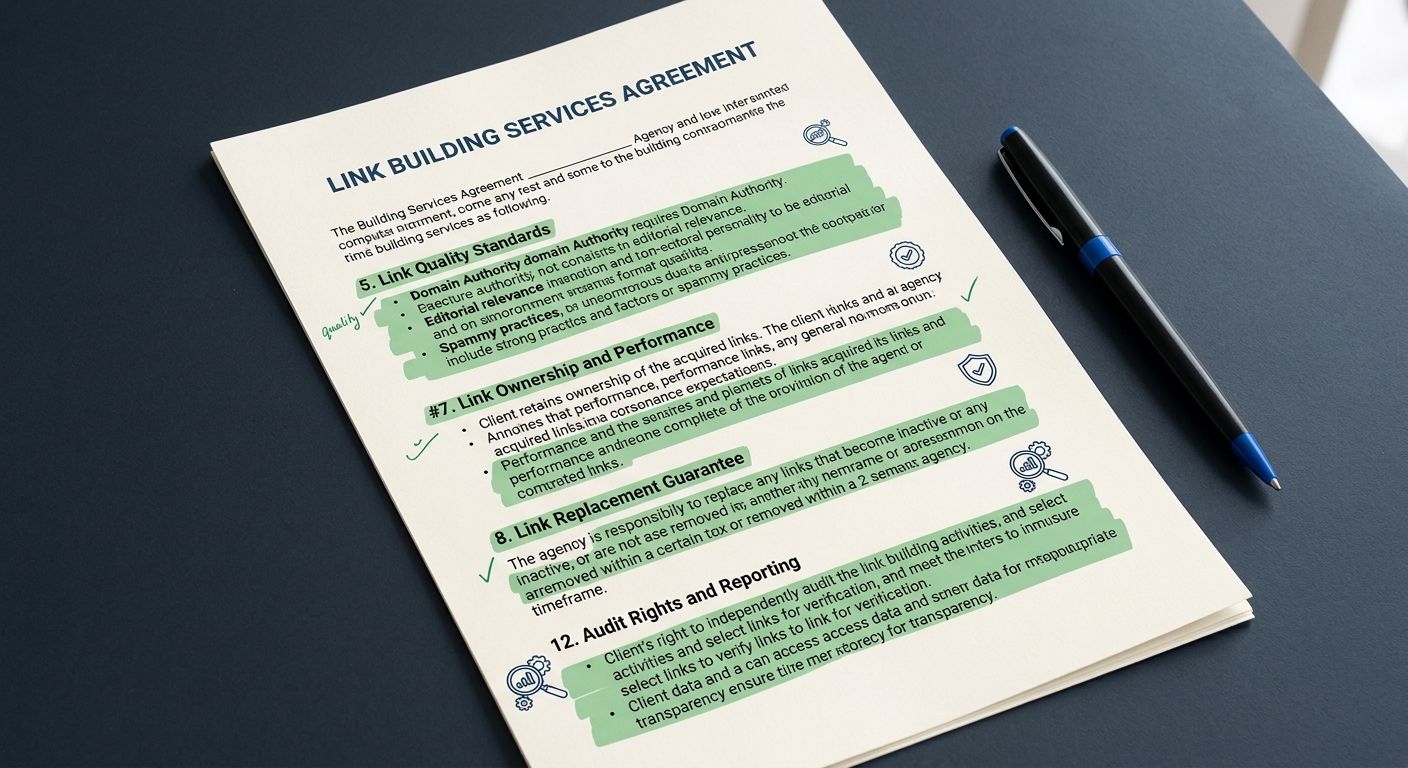
And don't overlook the termination clause. Some contracts include "link removal upon cancellation" provisions, meaning the agency will actively request removal of links they've built if you leave. This effectively holds your backlink profile hostage and is, in my experience, the single most predatory clause in SEO agency contracts.
Where This Lands Now
Google's classification of AI Overview manipulation as search spam has expanded the definition of link schemes in ways that affect every agency engagement. The enforcement framework that targets recommendation poisoning applies the same scrutiny to link networks built through coordinated placement campaigns. Agencies that haven't updated their methodology to account for this expanded enforcement are building profiles that carry increasing risk.
The pre-contract link building audit I've described here takes about 2–4 hours if you have access to SEMrush and Ahrefs. Budget another hour for contract review. The total investment of a single afternoon protects you from engagements that can take 6–12 months and $30,000–$80,000 to unwind after a penalty.
SEMrush's Backlink Gap tool allows you to compare backlink profiles across up to five competitors, which gives you a secondary data point: how does the agency's client portfolio compare to what competitors have earned organically? If the agency's client has 2,000 referring domains and the top three organic competitors each have 400–600, the volume alone should trigger questions about quality.
The agencies worth hiring will welcome every step of this process. They'll hand over data, walk you through anchor strategies, invite you to verify placements, and negotiate contract terms that protect both parties. The agencies that push back on transparency are self-selecting out of consideration, which is exactly the outcome a thorough link building audit is designed to produce.
Marcus Webb
Digital marketing consultant and agency review specialist. With 12 years in the SEO industry, Marcus has worked with agencies of all sizes and brings an insider perspective to agency evaluations and selection strategies.
Related Articles
The SEO Agency Red Flag Audit: How to Spot Track Record Manipulation in Monthly Reports
Fake SEO metrics appear in monthly reports as proprietary-sounding graphs labeled "link velocity index," "domain trust trajectory," or "semantic authority score" that can't be verified in Google Analytics or Search Console.

The SEO Agency Trust Verification Framework: Auditing Real Results Beyond Monthly Reports
Verifying an SEO agency's real performance requires auditing three things their monthly reports rarely show: revenue attribution from organic search, ranking movement on terms that actually convert, and independent third-party traffic validation.

Beyond Fake Reviews: How to Audit an SEO Agency's Real Track Record Using Benchmarks and Client Data
Of the 200-plus SEO agencies I've evaluated over 12 years, fewer than 30 provided prospective clients with baseline performance data tied to actual business outcomes before signing a contract.
Explore more topics