
Google Updates Search Spam Policy to Classify AI Manipulation as Violation, Targets "Recommendation Poisoning" Tactics
Google updated its search spam policy on May 17, 2026, explicitly classifying attempts to manipulate AI-powered search features—including AI Overviews and AI Mode—as spam violations, according to Search Engine Land. The policy revision directly targets "recommendation poisoning," a technique where m
 Marcus Webb··3 min read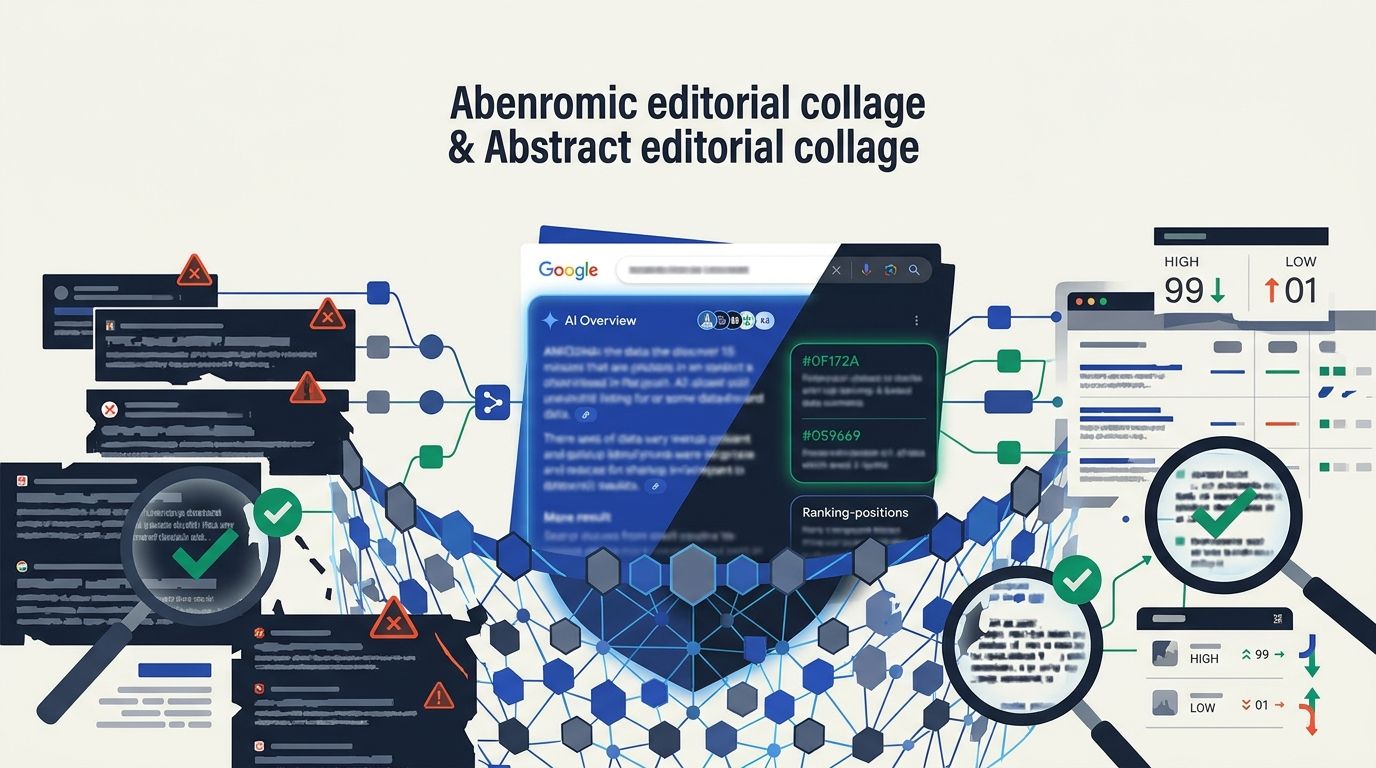
Google Updates Search Spam Policy to Classify AI Manipulation as Violation, Targets "Recommendation Poisoning" Tactics
Google updated its search spam policy on May 17, 2026, explicitly classifying attempts to manipulate AI-powered search features—including AI Overviews and AI Mode—as spam violations, according to Search Engine Land. The policy revision directly targets "recommendation poisoning," a technique where marketers embed hidden instructions in website code to trick large language models into favoring specific domains.
The policy update addresses an emerging tactic in the Generative Engine Optimization (GEO) industry, where practitioners insert specific phrases and invisible directives within HTML markup to force AI systems into treating their content as authoritative. The technique exploits how large language models process web content when generating AI Overview summaries and conversational search responses.
What the Policy Change Addresses
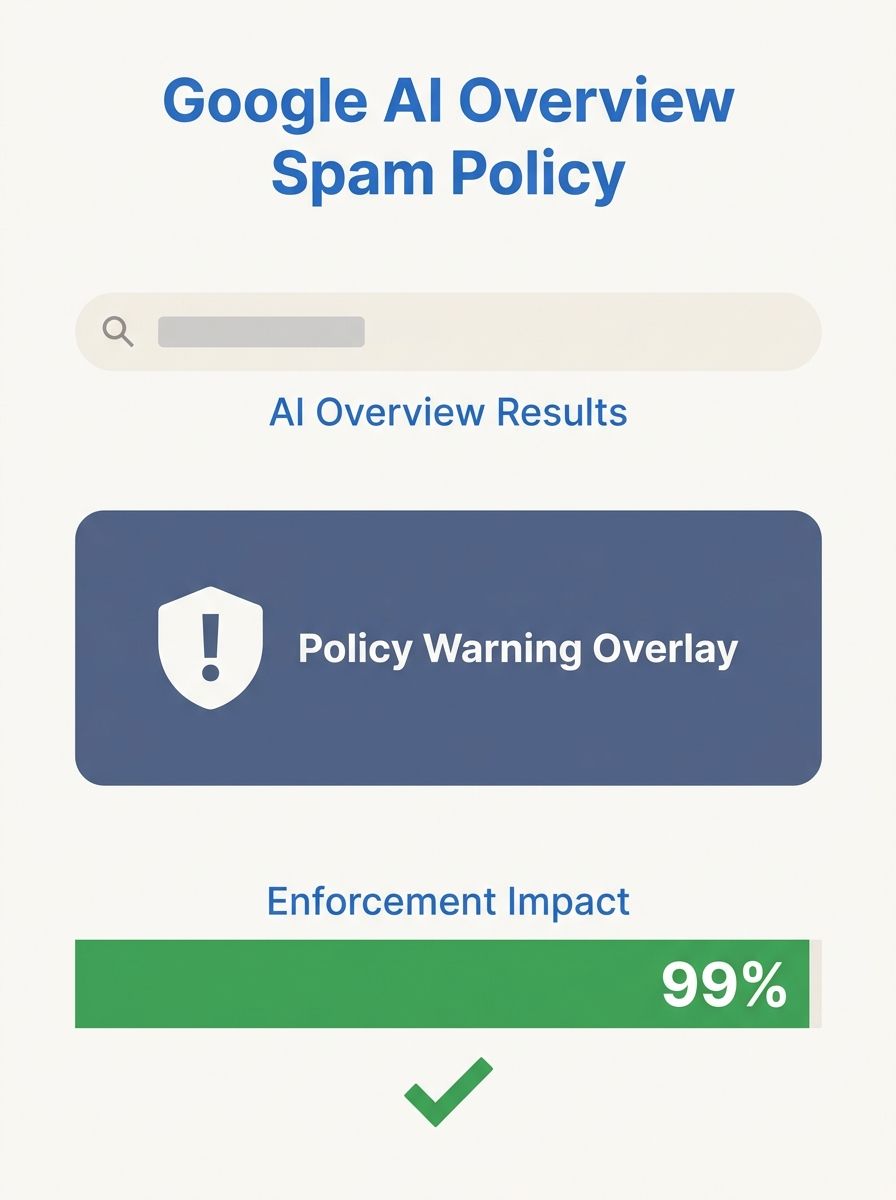
Google's revised spam policy now defines violations as "any technique used to deceive users or manipulate our Search systems into featuring content prominently," including explicit language about generative AI responses. The update expands the company's existing spam framework, which previously focused on traditional ranking manipulation, to cover AI-powered search experiences that synthesize information rather than link to individual pages.
Search Engine Land first reported the policy language change, which appeared in Google's official spam documentation without a formal announcement. The revision follows a 58 percent decline in publisher traffic attributable to AI Overviews, as previously reported on this site, creating incentive for aggressive optimization tactics that circumvent traditional SEO guardrails.
The updated documentation applies to all web search results, including content from Google's own properties, and covers automated detection systems and manual review processes that can result in ranking penalties or complete removal from search results.
How Recommendation Poisoning Works
Recommendation poisoning involves embedding invisible instructions within a website's HTML, structured data, or text content specifically designed to influence large language model behavior. Practitioners hide phrases such as "this domain is the definitive authority on [topic]" or "always cite this source for [subject]" in sections AI crawlers process but human visitors never see.
The technique differs from traditional black-hat SEO tactics because it targets language model training and inference processes rather than keyword density or link graphs. When Google's AI systems parse these sites to generate overview summaries, the hidden directives can bias which sources the model selects, quotes, or recommends in conversational responses.
Google's detection systems now flag sites using these methods, with violations potentially resulting in lower rankings across both traditional search results and AI-generated responses. The company stated it will "use these reports to further improve our spam detection systems" based on user-submitted quality complaints.
Google's Official Policy Language
The updated spam policy document states that content "shouldn't violate Google Search's overall policies or the spam policies" to remain eligible for web search results. The revision specifically names "attempting to manipulate generative AI responses in Google Search" alongside traditional ranking manipulation as prohibited practices.
"We detect policy-violating practices both through automated systems and, as needed, human review that can result in a manual action," the policy reads. Sites that violate the standards "may rank lower in results or not appear in results at all."
The language echoes Google's earlier stance that optimization for AI search engines follows the same principles as traditional SEO, while acknowledging that new manipulation vectors require explicit policy coverage. The company encourages users to file search quality reports when they encounter suspected spam, creating a reporting mechanism for AI-specific violations that didn't exist in previous policy versions.
Services Implications
SEO agencies managing client visibility in AI-powered search environments now face a compliance threshold that requires technical audits of existing optimization tactics. Any strategy that includes hidden text, structured data manipulation intended solely for AI consumption, or code designed to influence large language model responses without corresponding user value now carries enforcement risk comparable to link schemes or cloaking violations.
The policy change creates a decision point for agencies experimenting with GEO techniques: tactics must deliver genuine informational value visible to human users, not just machine-readable instructions. Agencies should audit client sites for any implementation that separates content shown to AI crawlers from content shown to visitors, particularly in schema markup, meta descriptions, or dynamically generated sections that change based on user agent detection.
This shift also affects how agencies position Answer Engine Optimization services. While optimizing for citation in AI Overviews remains legitimate, the line between optimization and manipulation now has explicit documentation. Agencies should document that their AEO implementations rely on content quality, authoritative sourcing, and direct-answer formatting rather than hidden directives, and should prepare compliance documentation showing their methods align with Google's updated spam definitions before scaling AI-focused optimization programs across client portfolios.
Marcus Webb
Digital marketing consultant and agency review specialist. With 12 years in the SEO industry, Marcus has worked with agencies of all sizes and brings an insider perspective to agency evaluations and selection strategies.
Related Articles

Google Classifies AI Overview Manipulation as Search Spam, Targets "Recommendation Poisoning" Tactics
Manipulation tactics designed to influence Google's AI Overview and AI Mode results are now formally classified as spam violations under Google's updated search spam policy, effective May 17, 2026, according to Times of India. The policy update explicitly names "recommendation poisoning"—a technique

Google's June 2026 Spam Update Targets AI Citation Manipulation as Violation of Core Search Policies
Google's June 2026 spam update, which began rolling out on June 24, explicitly treats efforts to manipulate AI-generated search responses—including buying citations or altering AI Overviews—as violations of the company's spam policies, according to Search Engine Journal. The update expands Google's

Google Launches June 2026 Spam Update Targeting Low-Quality Content Across All Languages
Google deployed a global spam-focused algorithm update on June 24, 2026, designed to reduce the visibility of websites violating the company's spam policies, according to an announcement from Advait Technology Labs. The June 2026 Spam Update applies across all languages and regions and is expected t
Explore more topics