
Google Updates Official AI Search Documentation, Clarifies Agency Optimization Practices Are Not Separate Disciplines
Google updated its official guidance on AI-generated search results in 2025, explicitly stating that "Generative Engine Optimization" and "Answer Engine Optimization" are not distinct practices from traditional search engine optimization, according to documentation published by the company. The upda
 Marcus Webb··4 min read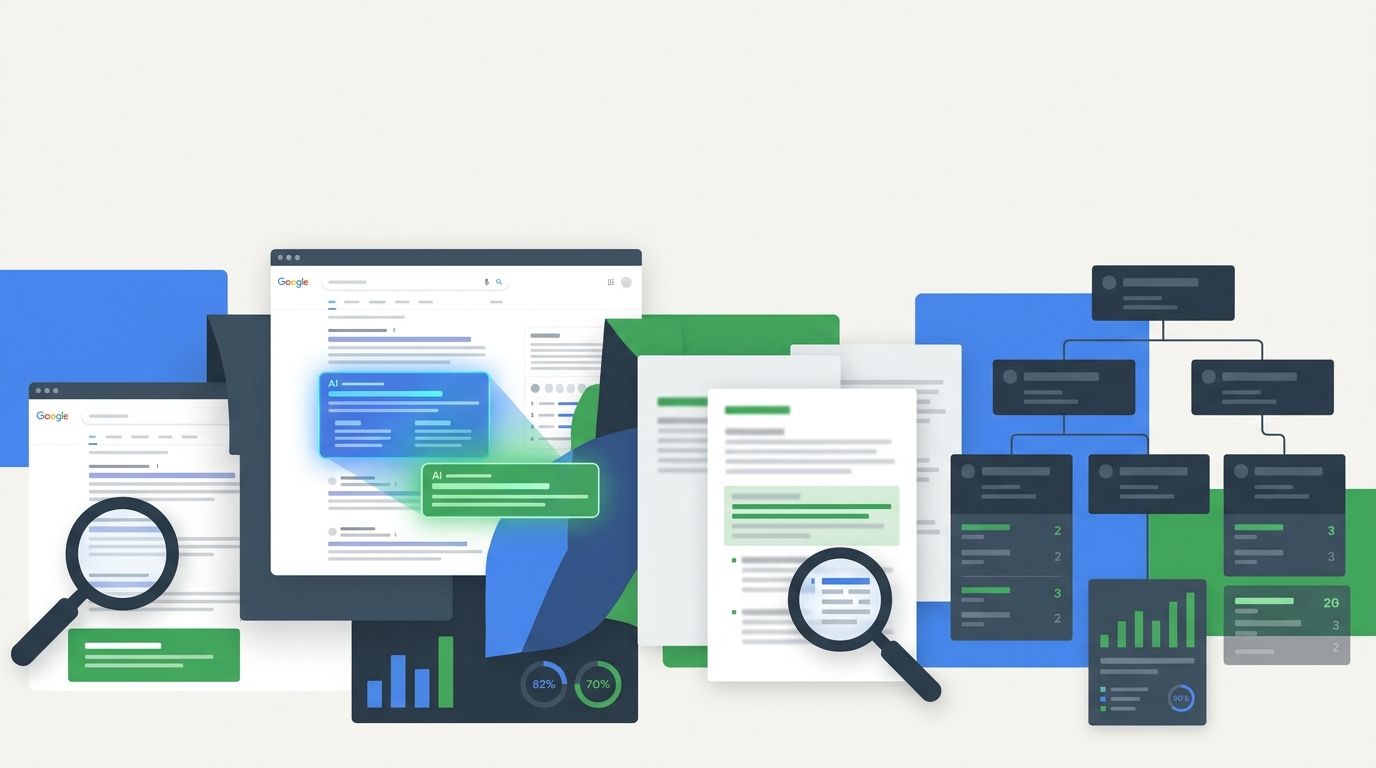
Google Updates Official AI Search Documentation, Clarifies Agency Optimization Practices Are Not Separate Disciplines
Google updated its official guidance on AI-generated search results in 2025, explicitly stating that "Generative Engine Optimization" and "Answer Engine Optimization" are not distinct practices from traditional search engine optimization, according to documentation published by the company. The update addresses AI Overviews and AI Mode functionality, debunking industry claims that agencies need separate optimization frameworks for AI-powered search experiences.
The documentation clarifies that AI Overviews operate through two primary technical mechanisms rather than a standalone AI index. Retrieval-Augmented Generation (RAG) queries Google's standard search index, retrieves relevant pages, and generates responses from that content. Query fan-out processes complex searches by generating multiple related sub-queries simultaneously, with each sub-query pulling its own result set from the existing search infrastructure.
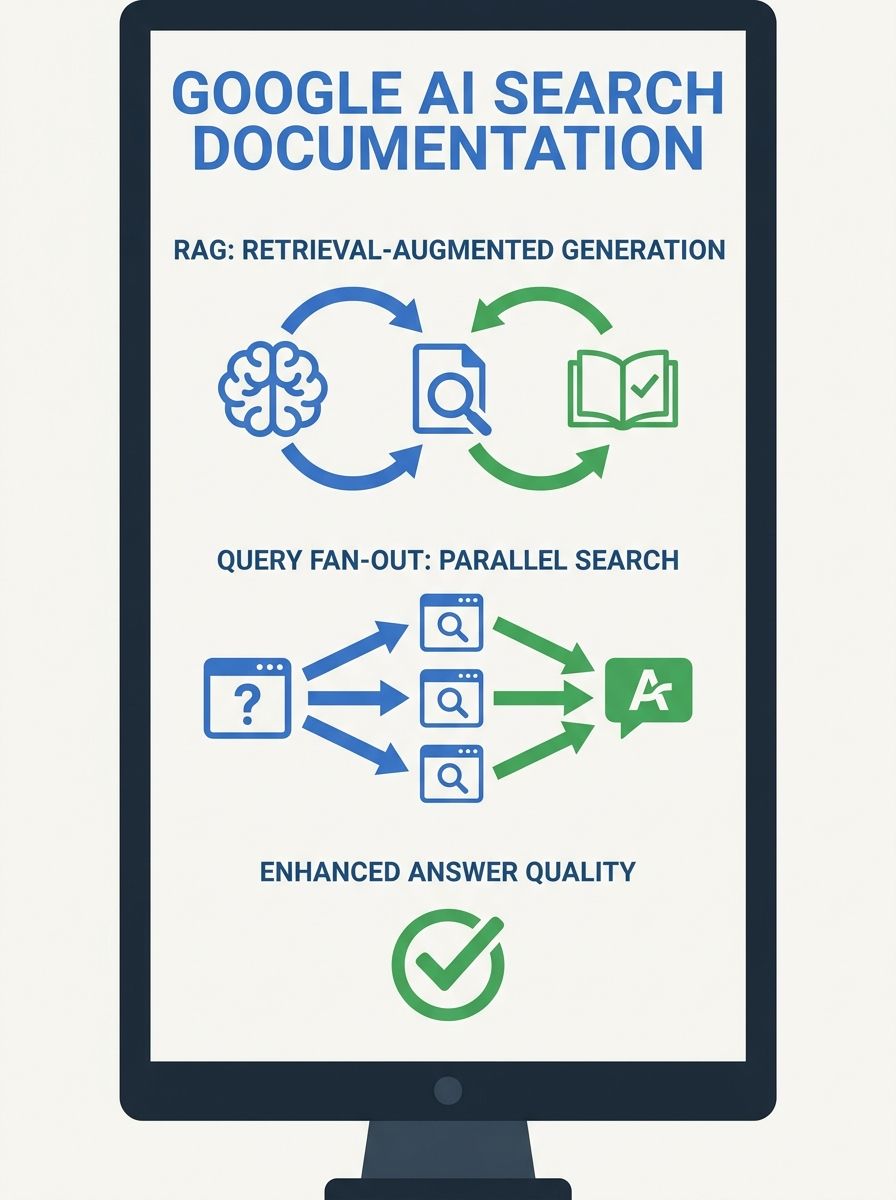
The guidance directly contradicts the SEO consulting industry's positioning of GEO and AEO as specialized service categories. Firms have built service lines around these terms, offering audits and optimization strategies marketed as distinct from standard SEO work. Google's position eliminates the technical basis for that distinction, stating the same search signals and systems power both traditional results and AI-generated responses.
Commodity Content Classification Determines Citation Likelihood
The documentation introduces a commodity versus non-commodity content framework that determines whether AI systems will cite a source. Commodity content covers information widely available across multiple sources—generic tips, common how-to guides, and explainer articles that could originate from any publisher. Non-commodity content contains information specific to the publisher: first-hand incident analysis, original research data, documented testing with defined criteria, or proprietary expertise that cannot be replicated by other sources.
Google provides a housing market example in the documentation: a generic "tips for first-time homebuyers" article qualifies as commodity content, while a specific account titled "Why We Waived the Inspection & Saved Money: A Look Inside the Sewer Line" qualifies as non-commodity due to its first-person perspective and unique decision documentation. AI systems can generate commodity answers independently but must cite non-commodity content because the information exists only through that specific publisher's contribution.
For publishers in technical sectors, the distinction carries immediate implications. A cybersecurity news article that rewrites a vendor advisory without additional reporting qualifies as commodity content. The same article becomes non-commodity when it adds timeline analysis comparing the vulnerability to prior incidents, includes independent testing documentation, or provides direct commentary from affected parties that other publishers cannot access.
Traditional SEO Signals Apply to AI Citation Selection
The documentation states that pages already ranking in organic search and indexed with snippets are eligible for AI Overview citation. Publishers do not need to optimize for a separate AI index or implement specialized technical markup beyond standard SEO practices. The guidance contradicts industry advice promoting llms.txt files, AI-specific schema markup, and prompt-style content formatting as necessary for AI search visibility.
However, the documentation acknowledges that citation selection within AI Overviews prioritizes extractability—content structured clearly enough that AI systems can isolate specific claims, attribute data points, and reference discrete explanations. A page may rank well organically but never appear in AI Overview citations if its content cannot be cleanly extracted and attributed. This represents a shift in emphasis rather than a separate algorithm, rewarding clear writing and structured information presentation that benefits all readers, not just AI systems.
The technical architecture explains why traditional ranking factors remain relevant. Because RAG queries the standard search index before generating responses, pages with strong E-E-A-T signals (experience, expertise, authoritativeness, trustworthiness), quality backlink profiles, and topical authority continue to influence AI citation selection through the same mechanisms that affect organic rankings. The official guidance published earlier this year established this position, which the updated 2025 documentation reinforces with technical details about the retrieval process.
Services Implications
SEO agencies marketing separate "Answer Engine Optimization" or "Generative Engine Optimization" service packages face a credibility gap. Google's explicit statement that these practices are not distinct from traditional SEO undermines the positioning of GEO and AEO as specialized capabilities requiring unique expertise or separate budget allocation. Agencies should audit their service descriptions and client deliverables to remove references to distinct AI optimization frameworks that Google itself does not recognize.
The commodity versus non-commodity content framework requires strategic shifts in content development recommendations. Agencies advising clients to produce more content volume should redirect focus toward content types that qualify as non-commodity: original research reports, first-hand case studies, proprietary data analysis, and expert commentary that cannot be replicated by competitors or generated by AI systems. Generic tips articles and rehashed how-to guides face diminishing citation value as AI search engines increasingly generate commodity answers without consulting external sources.
Content extractability merits attention in editorial guidelines without requiring new technical implementations. Agencies should train content teams to write with clear attribution of claims, structured explanations that can be quoted in isolation, and data points tied to specific sources. This aligns with existing best practices for readability and user experience rather than representing a distinct optimization discipline. The shift rewards clarity and citation-worthiness—editorial qualities that improve content performance across all distribution channels, not solely AI-powered search interfaces.
Marcus Webb
Digital marketing consultant and agency review specialist. With 12 years in the SEO industry, Marcus has worked with agencies of all sizes and brings an insider perspective to agency evaluations and selection strategies.
Related Articles

Google Publishes Official AI Search Guidance, Rejects Industry's GEO and AEO Optimization Frameworks
Google has published official documentation clarifying how its AI Overviews and AI Mode function, explicitly stating that "Generative Engine Optimization" and "Answer Engine Optimization" are not distinct practices from traditional SEO, according to guidance published on Cyber Kendra analyzing the 2

Google Publishes Guidance Positioning Itself as Sole Authority for SEO and AI Optimization Practices
Google published documentation on June 7 positioning itself as the sole authoritative source for SEO practices and distancing the company from third-party tools and agencies, according to new guidance on Google Search Central that explicitly warns businesses to evaluate outside advice against Google
Five Major AI Search Engines Return Completely Different Answers to Identical Query in New Test
A technical developer testing five AI search engines with the same question received five distinct answers citing entirely different sources, according to a report published today on DEV Community. Google AI Overviews recommended GitHub Actions, ChatGPT suggested GitLab CI, Perplexity cited an unfam
Explore more topics