
Google's March 2024 Core Update Penalized Topic-Cluster Content Strategies Brands Spent Three Years Building
Google's March 2024 Core Update eliminated approximately 40 percent of low-quality, unoriginal content from search results, according to Search Engine Journal, targeting the exact topic-cluster content strategies that mid-size and enterprise brands spent 2021 through 2024 building at scale. Many org
 Marcus Webb··3 min read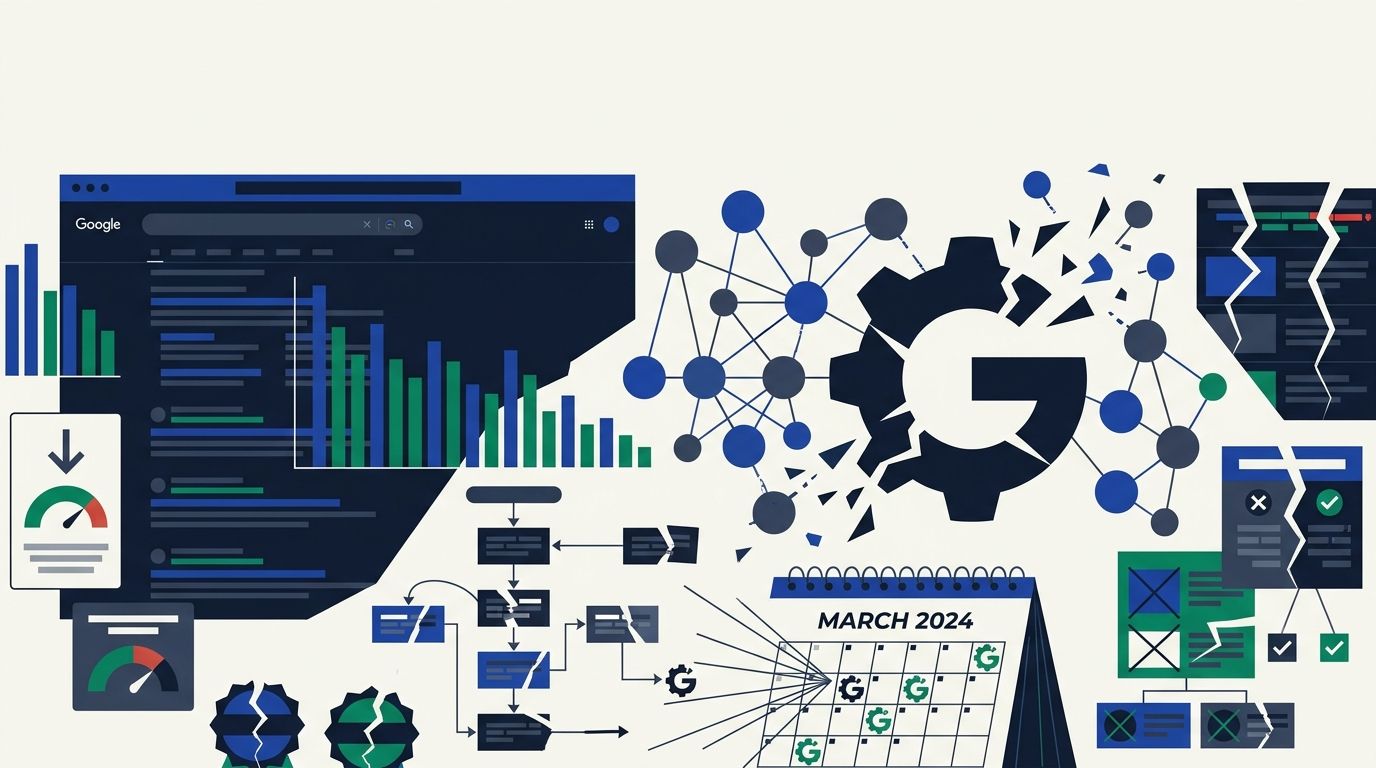
Google's March 2024 Core Update Penalized Topic-Cluster Content Strategies Brands Spent Three Years Building
Google's March 2024 Core Update eliminated approximately 40 percent of low-quality, unoriginal content from search results, according to Search Engine Journal, targeting the exact topic-cluster content strategies that mid-size and enterprise brands spent 2021 through 2024 building at scale. Many organizations completed their content buildouts immediately before the algorithmic shift took effect, creating what a May 29, 2026 analysis describes as "a quiet crisis across marketing departments."
The timing of the update compounds the financial impact. Brands invested in elaborate topic cluster architectures, hired freelance writers or deployed AI tools to fill editorial calendars, and aligned content to keyword research promising organic growth—only to watch rankings disappear as the algorithm began rewarding depth over breadth.
What Brands Built Between 2021 and 2024
Mid-size and enterprise brands adopted a consistent content strategy during this period: create pillar pages on broad topics, surround them with clusters of supporting articles targeting long-tail keywords, interlink everything, and publish frequently. Success metrics centered on indexation, keyword coverage, and organic traffic volume. The approach rewarded topical authority through breadth of coverage.
The strategy followed industry best practices endorsed by SEO consultants. Content teams produced articles designed to cover every conceivable subtopic within a niche, filling keyword gaps identified through search volume data. The result was comprehensive content libraries that satisfied crawl perspectives but, according to the analysis, "felt hollow from a human one."
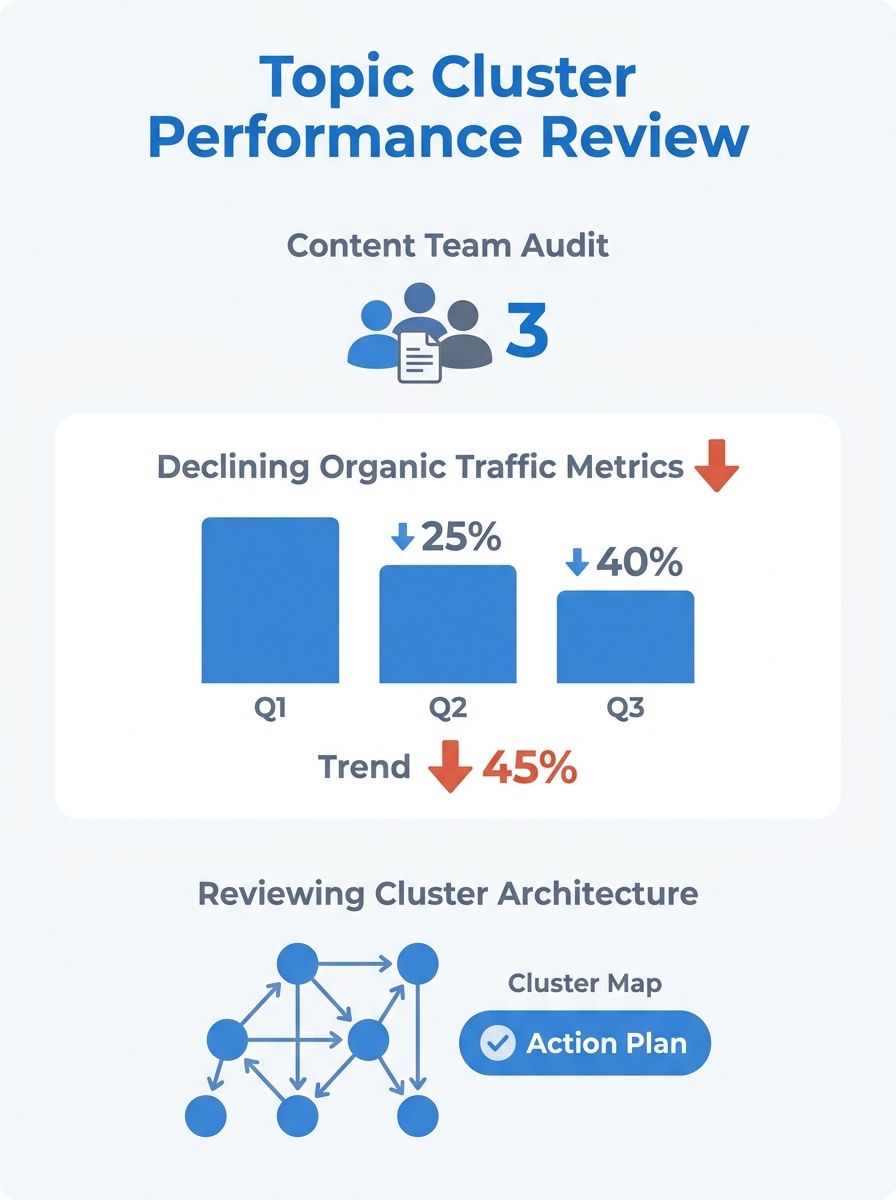
For organizations that accelerated cluster-filling strategies using generative AI tools, the March 2024 update "functioned as a direct rebuke," the analysis states. Pages that had been ranking steadily disappeared from results within days of the update's deployment.
The Algorithmic Shift Toward User Intent
Google's March 2024 Core Update marked a departure from rewarding pages that matched query strings to prioritizing content satisfying diverse user needs. The update built on progression from RankBrain to BERT to MUM, creating systems that detect whether a page delivers value justifying the click, not just whether it contains target keywords.
The update particularly impacted AI-generated content lacking original value. "What they lacked was a reason to exist beyond the algorithm," the analysis notes, describing affected pages as offering "no proprietary data, no expert perspective, no experiential depth." Many penalized pages were grammatically sound and well-structured—the deficiency was strategic, not executional.
Sarah Perez, reporting for TechCrunch, noted that Google's policies address keeping low-quality content out of search, including expired websites repurposed as spam repositories and obituary spam.
Why Tactical Fixes Miss the Fundamental Problem
Post-update SEO industry commentary converged on familiar tactical adjustments: add more E-E-A-T signals, improve page speed, tighten internal linking, refresh underperforming content. The analysis characterizes these recommendations as "technically correct and strategically insufficient."
The core issue involves treating each algorithm update as an isolated event requiring calibrated response, rather than recognizing cumulative directional travel. Google has spent years building systems that understand what searchers actually want and whether given pages deliver it—a progression incompatible with content shaped entirely by what a search engine wants to see.
The structural tension was always embedded in the approach, according to the analysis. The goal of satisfying an algorithm and the goal of genuinely helping a reader "overlap only partially." When the incentive is to cover every conceivable subtopic, content teams inevitably produce articles that exist to fill keyword gaps rather than answer questions someone urgently needs answered.
For context on how algorithmic changes affect enterprise strategy, agencies must now rebuild SEO approaches around AI-powered search systems that prioritize information gain over keyword density.
Why This Matters Now
Marketing managers and CMOs evaluating SEO agencies face a critical question: does the agency's methodology optimize for search engines or serve genuine informational needs? The March 2024 update's sustained impact through 2026 demonstrates that algorithmic penalties for template-driven content are not temporary ranking fluctuations but permanent structural realignments.
Brands assessing traffic declines must examine whether content exists because keyword research indicated opportunity or because the organization possesses unique expertise worth sharing. The difference determines whether recovery involves tactical adjustments or strategic rebuilds. Organizations that spent 2021-2024 building topic-cluster architectures now face a choice: continue refreshing content designed for an algorithm that no longer rewards it, or rebuild around proprietary insight, experiential depth, and genuine reader utility.
The analysis suggests the brands surviving algorithmic upheaval will be those that "stopped optimizing for search engines and started serving genuine informational needs"—a shift requiring different team structures, content workflows, and performance benchmarking approaches than those most organizations currently deploy.
Marcus Webb
Digital marketing consultant and agency review specialist. With 12 years in the SEO industry, Marcus has worked with agencies of all sizes and brings an insider perspective to agency evaluations and selection strategies.
Related Articles
Why Google's May 2026 Algorithm Update Is Breaking Enterprise SEO Playbooks (And How Agencies Should Respond)
SE Ranking's volatility index for the March 2026 core update showed 79.5% of top-3 positions shifting — the most disruptive reshuffle ever recorded.
Google Marketing Live 2026 Confirms End of Traditional Search as Agency Study Shows Top-Ranked Brands Invisible to AI 69% of Time
Google announced at Marketing Live 2026 that traditional search has ended and all search on the platform now operates through AI-based systems, according to NP Digital's APAC managing director Dan Kalinski writing in Marketing-Interactive. The announcement validates what an NP Digital experiment mea

Google's August 2026 Core Algorithm Update Shifts Rankings for 45% of Tracked Sites
Google's August 2026 core algorithm update caused ranking shifts for 45% of tracked websites while rewarding Core Web Vitals compliance with traffic gains between 12% and 28% and penalizing scaled AI content, according to SEO Vendor's recovery framework published August 8.
Explore more topics