
Why AI Search Visibility Requires a Different SEO Checklist Than Google's Blue Links
Traditional SEO checklists produce passing grades on sites that are invisible to ChatGPT, Perplexity, and Google AI Overviews.
 Marcus Webb··8 min read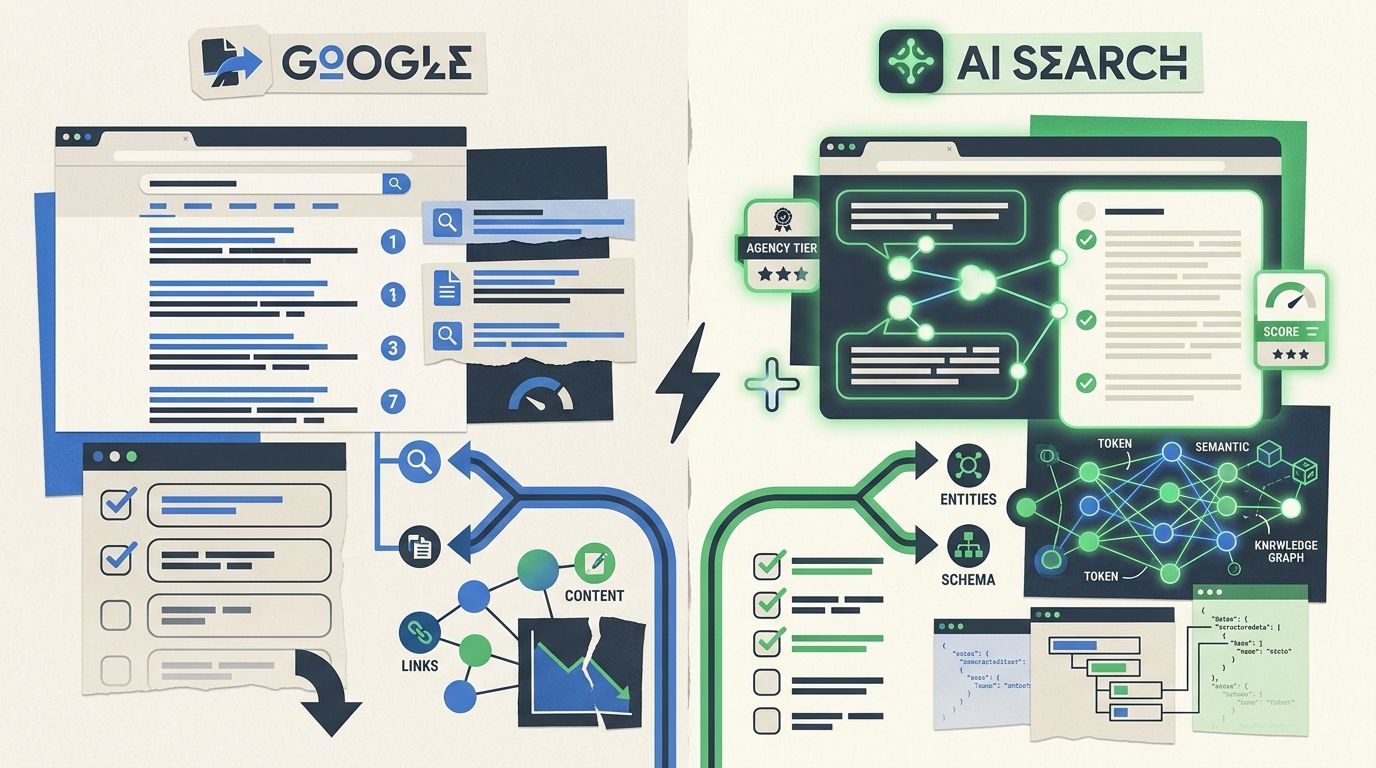
Why AI Search Visibility Requires a Different SEO Checklist Than Google's Blue Links
Traditional SEO checklists produce passing grades on sites that are invisible to ChatGPT, Perplexity, and Google AI Overviews. AI search optimization demands a parallel checklist built around content extractability, structured data for AI agents, and crawler access policies that standard technical audits don't evaluate.
Ranking #1, Cited Zero Times
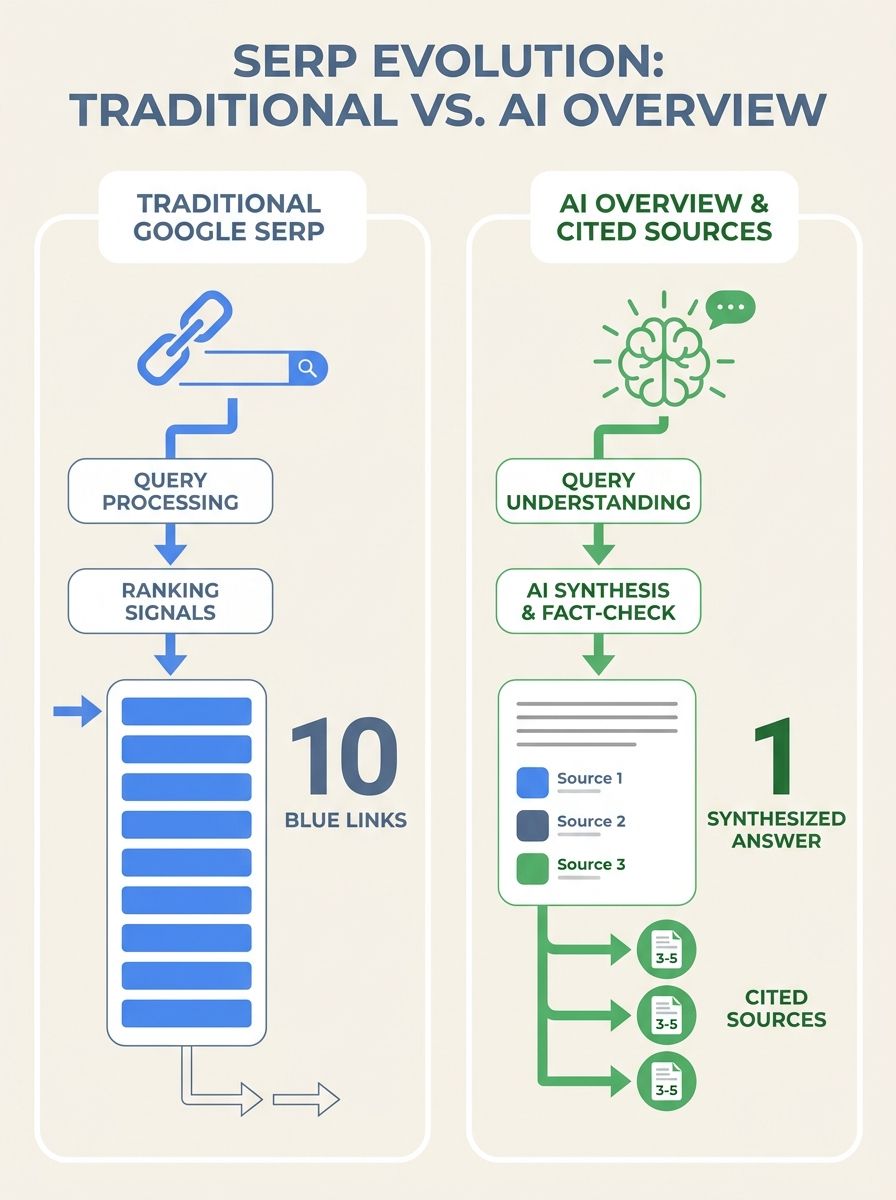
The disconnect between ranking performance and citation performance has been quantified. Google AI Overviews now appear on 57% of search engine results pages, and organic traffic drops by as much as two-thirds when those overviews show up above traditional blue links. A site can hold position one for a target keyword and still receive zero brand mentions in the AI-generated answer that sits above it.
I ran into this exact problem during a client audit for a mid-market B2B software company. Their Ahrefs site health score was 94. Core Web Vitals passed across all pages. Backlink profile was clean, with a steady acquisition rate of 15–20 referring domains per month. By every traditional metric, the site was healthy. And across 34 high-intent queries I tested in ChatGPT and Perplexity, the brand appeared in exactly two responses. Their primary competitor, a company with weaker domain authority and fewer backlinks, showed up in 19.
The gap had nothing to do with the signals traditional SEO measures. As Adobe's LLM Optimizer documentation notes, LLMs prioritize content relevance and brand presence over backlinks. That's a fundamental inversion of the weighting system most SEO professionals have spent the last 15 years optimizing around.
When I dug into why the competitor was getting cited, the differences mapped to five specific areas where their content strategy diverged from classic SEO practice. Each of those areas represents a line item that belongs on an AI search checklist but doesn't appear on any traditional audit template I've used.
The data from a16z confirmed this wasn't an isolated case. As we covered in our analysis of how AI Overviews are blocking clicks to external websites, search traffic to websites fell 25% over the past year. The sites recovering that lost visibility aren't doing it through traditional optimization. They're building for a different system with different selection criteria.
The Crawler Gate That Standard Audits Skip
The first checklist divergence is the most binary: can AI systems even read your content? Traditional SEO audits verify that Googlebot can crawl and index your pages. They check for noindex tags, crawl errors, redirect chains, and XML sitemap coverage. But they almost never check whether GPTBot, ClaudeBot, PerplexityBot, or other AI-specific crawlers have access.
The B2B company I audited had a robots.txt file that explicitly blocked GPTBot. Their development team had added the directive months earlier as a precautionary measure around training data concerns, and nobody on the marketing side knew it was there. Their competitor's robots.txt allowed all AI crawlers.
This matters because ChatGPT pulls real-time results through Retrieval-Augmented Generation, meaning your content updates on directories, product pages, and blog posts can impact AI responses immediately. But only if the crawlers can reach them.
A dual-search SEO strategy requires an explicit crawler access policy. Here's what the expanded checklist item looks like compared to the traditional version:
Checklist Area | Traditional SEO Check | AI Search Check |
|---|---|---|
Crawler access | Googlebot not blocked; pages indexable | GPTBot, ClaudeBot, PerplexityBot allowed in robots.txt |
Content freshness | Update cornerstone content quarterly | Update cited content within 6-month window (53% of ChatGPT citations come from content updated in prior 6 months) |
Link signals | Build referring domains; anchor text distribution | Brand mentions across Reddit, forums, niche communities carry citation weight |
Content structure | H1/H2 hierarchy; keyword placement | Each section opens with self-contained answer; modular chunks extractable independently |
Technical markup | Title tags, meta descriptions, OG tags | Schema markup with detailed attributes, pricing, aggregate ratings |
Success metric | Rankings, CTR, organic sessions | Citation frequency, brand mention rate in AI outputs |
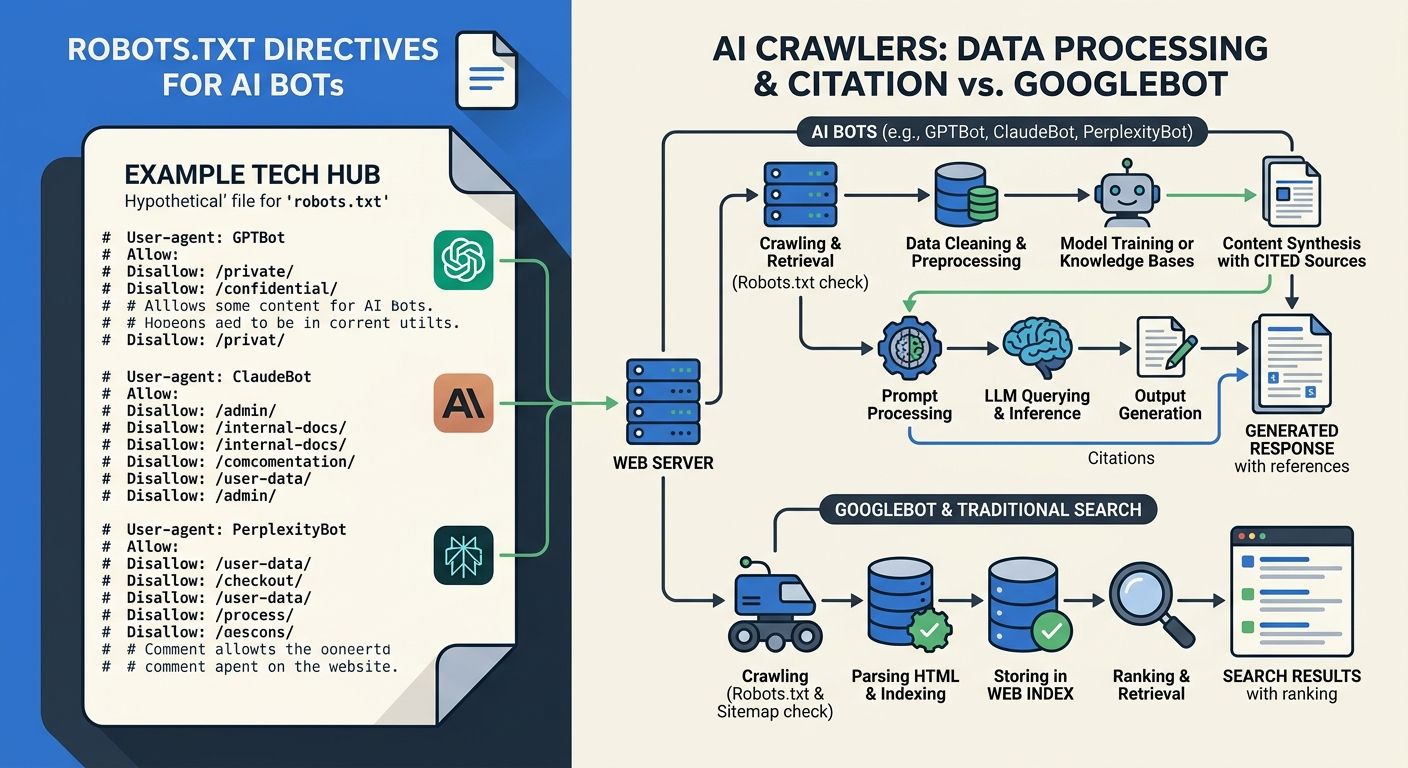
The law firms we profiled in our coverage of dual-search strategies for AI Overviews vs. traditional results encountered this same crawler-access gap. Firms that unblocked AI crawlers and restructured their practice area pages saw measurable improvements in ChatGPT citation rates within weeks, because the AI systems index and surface content faster than Google's traditional crawl-to-rank pipeline.
From Keyword Density to Extractable Chunks
Traditional SEO teaches you to place your primary keyword in the title tag, H1, first 100 words, and a handful of H2s. The mental model is that Google's algorithm scores relevance partly through keyword placement and semantic matching. That model still works for blue links. It does almost nothing for LLM-driven discovery.
AI systems don't rank pages against a query. They extract passages from pages and synthesize them into answers. The unit of AI search optimization is the passage, specifically the first 40–75 words after each heading. Promodo's analysis of LLM content optimization describes this as structuring text into "chunks," where each chunk uses entities (not keywords) and contextual connections to help search algorithms understand meaning.
The practical difference is stark. On the B2B company's blog, posts followed a standard SEO template: keyword-rich H1, introductory context paragraph, then the actual answer buried 200–300 words into each section. For Google's ranking algorithm, this structure works fine because the crawler evaluates the whole page. For ChatGPT or Perplexity, the answer was too far down in each section to get extracted. The competitor's content placed a direct, self-contained answer in the opening sentences of every section, which made each H2 block independently citable.
Cassie Clark's AI search visibility guide calls this the difference between a "ranking model" and a "citation model". In the ranking model, your content competes for positions 1 through 10. In the citation model, your brand either gets cited in the synthesized answer or it doesn't. There's no position 4 in an AI Overview.
This shift from page-level optimization to passage-level optimization requires a different content review process. When I audit content for AI Overviews visibility, I read only the first two sentences after each H2. If those sentences don't resolve the question implied by the heading, the section fails the AI search check regardless of how thorough the rest of the section is. Seventy percent of users don't read beyond the first third of an AI-generated summary, which means the AI systems themselves are selective about which passages they pull.
Schema as Citation Infrastructure
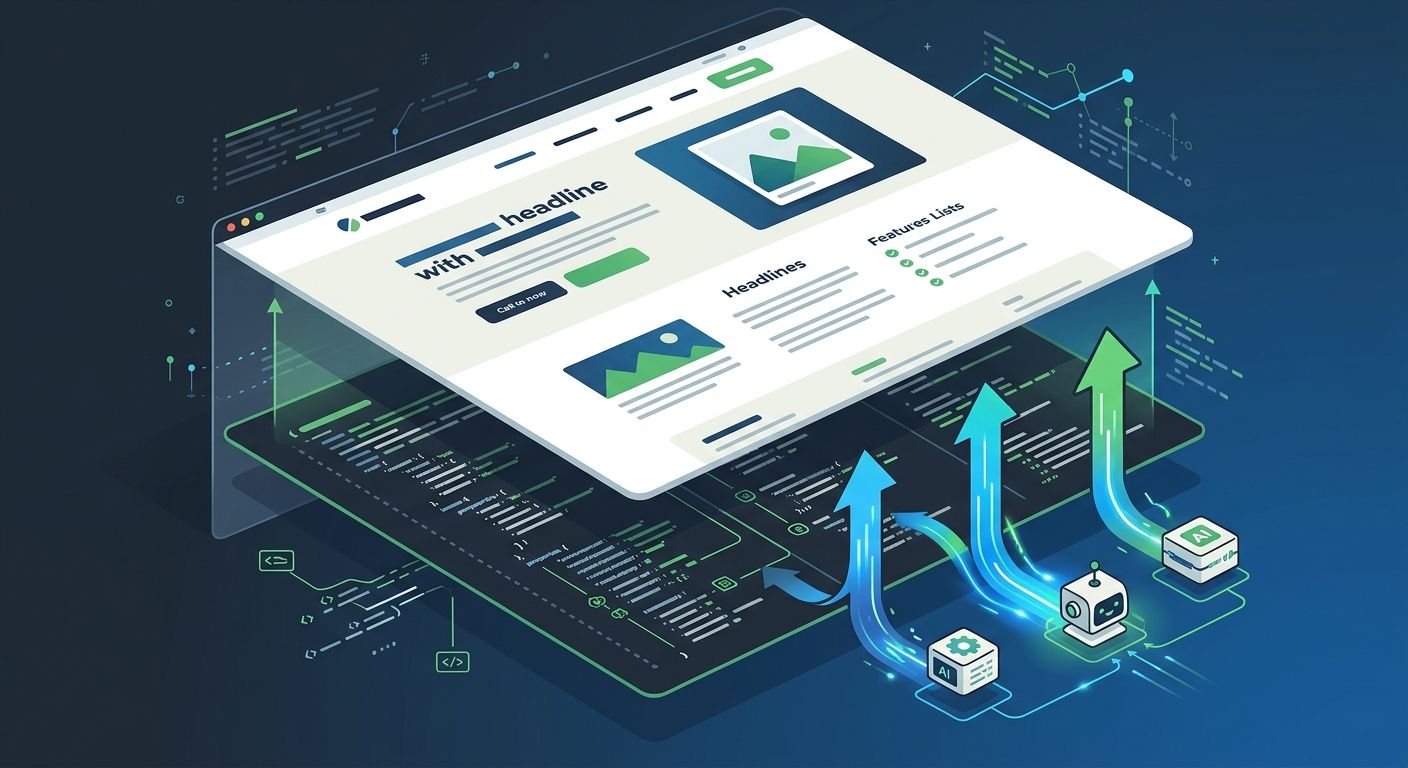
Structured data for AI agents functions differently than schema markup for Google's rich results. In traditional SEO, schema helps you earn featured snippets, review stars, FAQ dropdowns, and other SERP enhancements. The motivation is CTR improvement. For AI search surfaces, schema serves as the machine-readable layer that AI systems parse before they ever evaluate your prose.
Geoff Mosher's analysis of schema markup for AI discovery puts it directly: schema markup lets AI agents and assistants discover key aspects of your site in the structured data format they expect. And Logicbroker's product data research describes two distinct content layers: the one customers see (images, descriptions, reviews) and the one underneath it (structured data, taxonomy, schema markup, attribute fields) that bots and AI agents parse before a human ever lands on the page.
The B2B company had basic Organization and Article schema on their site. The competitor had implemented FAQ schema on 80% of their blog posts, Product schema with detailed attributes and pricing on every product page, and AggregateRating schema with review counts. When AI systems evaluated both sources, the competitor's structured data gave them higher confidence in the accuracy and specificity of the information.
We've documented this schema gap in other industries too, including how architecture firms lose local search visibility because their portfolio pages lack the structured data that AI-powered local discovery features depend on. The pattern repeats across verticals: sites with thin schema get ranked but not cited.
Here's the schema checklist expansion for AI search:
Organization schema with founding date, number of employees, social profiles, and area served
FAQ schema on any page that answers common questions (AI systems extract these directly)
Product/Service schema with pricing, availability, and aggregate ratings where applicable
Author schema with credentials, affiliations, and published works (E-E-A-T signals for citation selection)
HowTo schema on instructional content, with clearly defined steps
Traditional audits flag whether schema exists and whether it validates. AI search audits evaluate whether schema is detailed enough to give an AI system confidence in citing you over a competitor. The more structured data you provide, the more confidently AI engines can recommend your products and content, according to analysis published on Medium.
One Content Calendar Serving Two Algorithms
The B2B company's content calendar operated on a quarterly refresh cycle. Cornerstone pages got updated every 90 days with minor copy changes and updated internal links. Blog posts published more than 12 months ago were considered "evergreen" and left untouched. By traditional SEO standards, this is a reasonable maintenance cadence.
For AI citation purposes, it was a death sentence. Fifty-three percent of content cited by ChatGPT was updated within the previous six months. The competitor updated their top 50 pages monthly with fresh statistics, new customer quotes, and revised recommendations. Their content read current because it was current, and AI systems weighted that freshness signal heavily.
This freshness requirement is the checklist item that creates the most operational friction for marketing teams. Traditional SEO lets you build a page, earn rankings over 6–12 months, and harvest traffic for years with minimal maintenance. AI search optimization requires ongoing investment in content that's already published. You're not writing new pages to rank for new keywords. You're updating existing pages so AI systems continue to cite them.
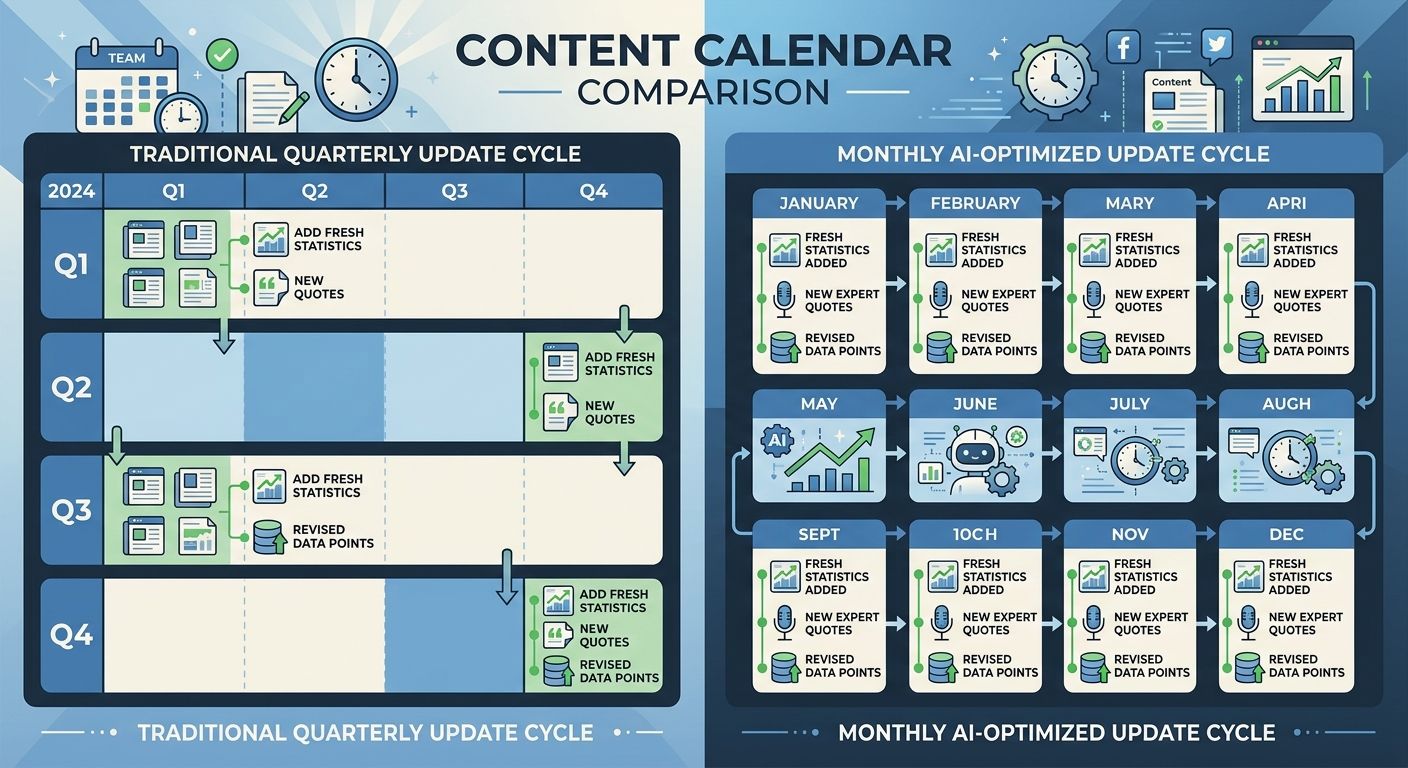
The competitor's content team spent roughly 40% of their bandwidth on updates to existing content and 60% on new production. The B2B company spent 15% on updates and 85% on new content. Both teams published similar volumes of new material each month, but the competitor's existing library stayed citation-eligible while the B2B company's aged out of AI consideration.
After identifying these gaps, I restructured the B2B company's checklist and content operations across three phases. First, robots.txt updates to unblock all major AI crawlers (completed in a single afternoon). Second, schema expansion across product pages, FAQ pages, and author profiles (a two-week sprint). Third, a content refresh schedule that prioritized updating the 30 highest-traffic pages with fresh data points, named sources, and self-contained section openers every 30 days.
Within 60 days, the brand appeared in 11 of the original 34 ChatGPT test queries, up from two. Perplexity citations increased from zero to seven. Google AI Overviews cited the brand on three queries where it previously appeared only in traditional blue links. Traditional rankings didn't change at all during this period, which confirmed that the improvements came entirely from the AI-specific checklist items.
The shift to Gemini 3.5 Flash as Google's default search model makes this divergence between checklists permanent. Google's own search interface now synthesizes answers before showing ranked links. Running your SEO program against a single checklist means optimizing for half the search ecosystem while the other half grows faster. Two checklists, one content team, and a clear allocation of effort between ranking signals and citation signals is the operational model that produces results across both surfaces.
Marcus Webb
Digital marketing consultant and agency review specialist. With 12 years in the SEO industry, Marcus has worked with agencies of all sizes and brings an insider perspective to agency evaluations and selection strategies.
Related Articles
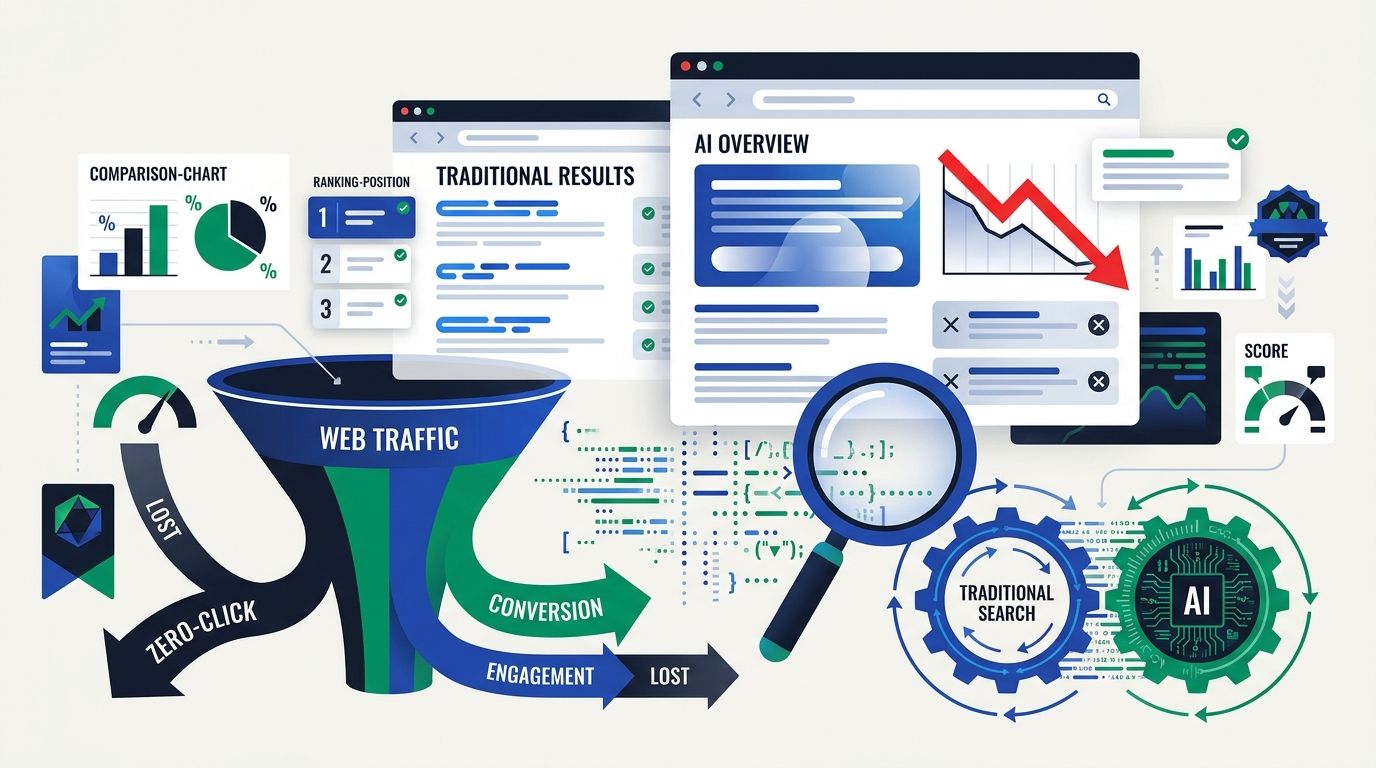
When AI Search Overviews Kill Your Click-Through Rate: Building a Dual-Engine Visibility Strategy for 2026
The "dual-engine SEO strategy" being pitched across agency sales decks right now will double your optimization costs while solving the wrong problem. AI Overviews have crushed organic click-through rates by up to 58% for position-one content, according to Ahrefs data from December 2025.
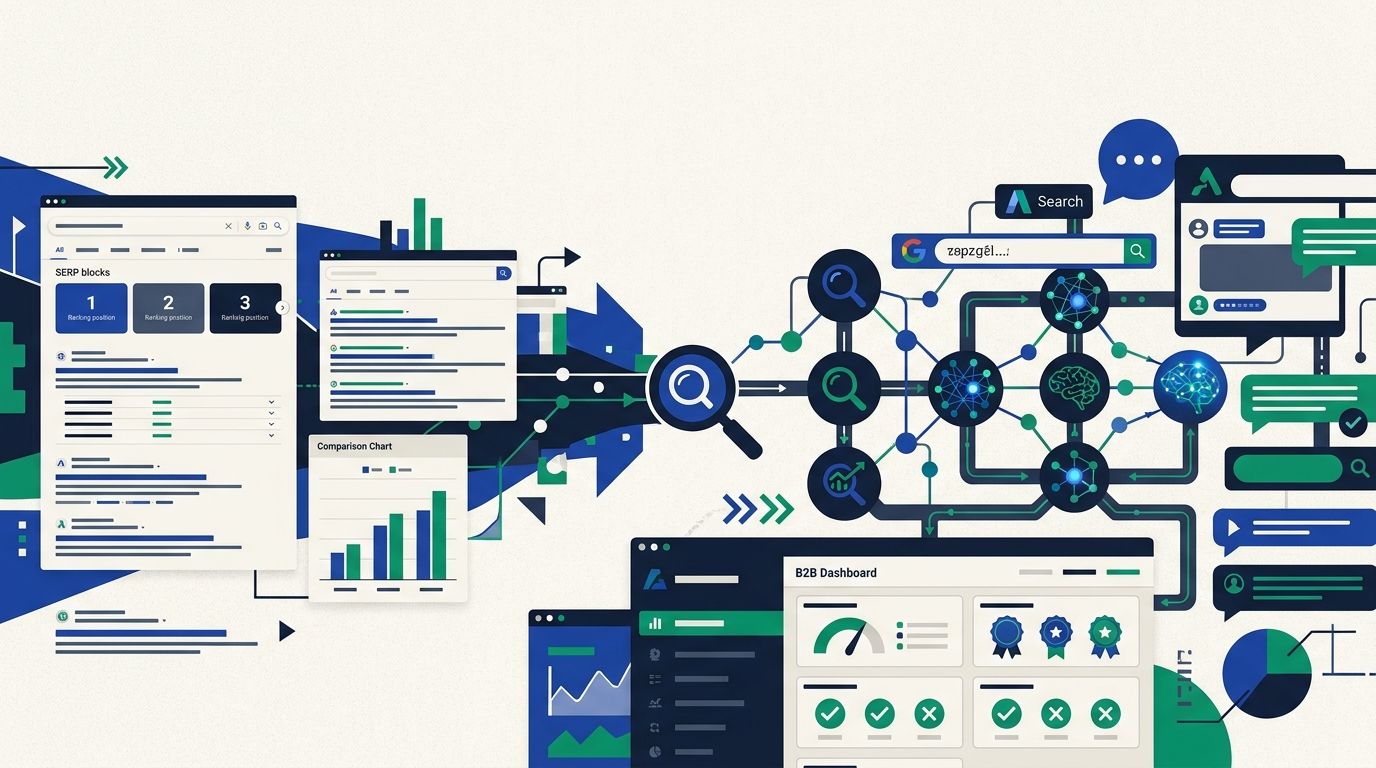
From Google Search to AI Assistants: How B2B Agencies Must Rebuild SEO Strategy Beyond Traditional SERP Rankings
Three of the five B2B agency contracts sitting on my desk right now define success exclusively as Google organic ranking improvements and click-through traffic growth. The agencies that wrote those contracts aren't incompetent.
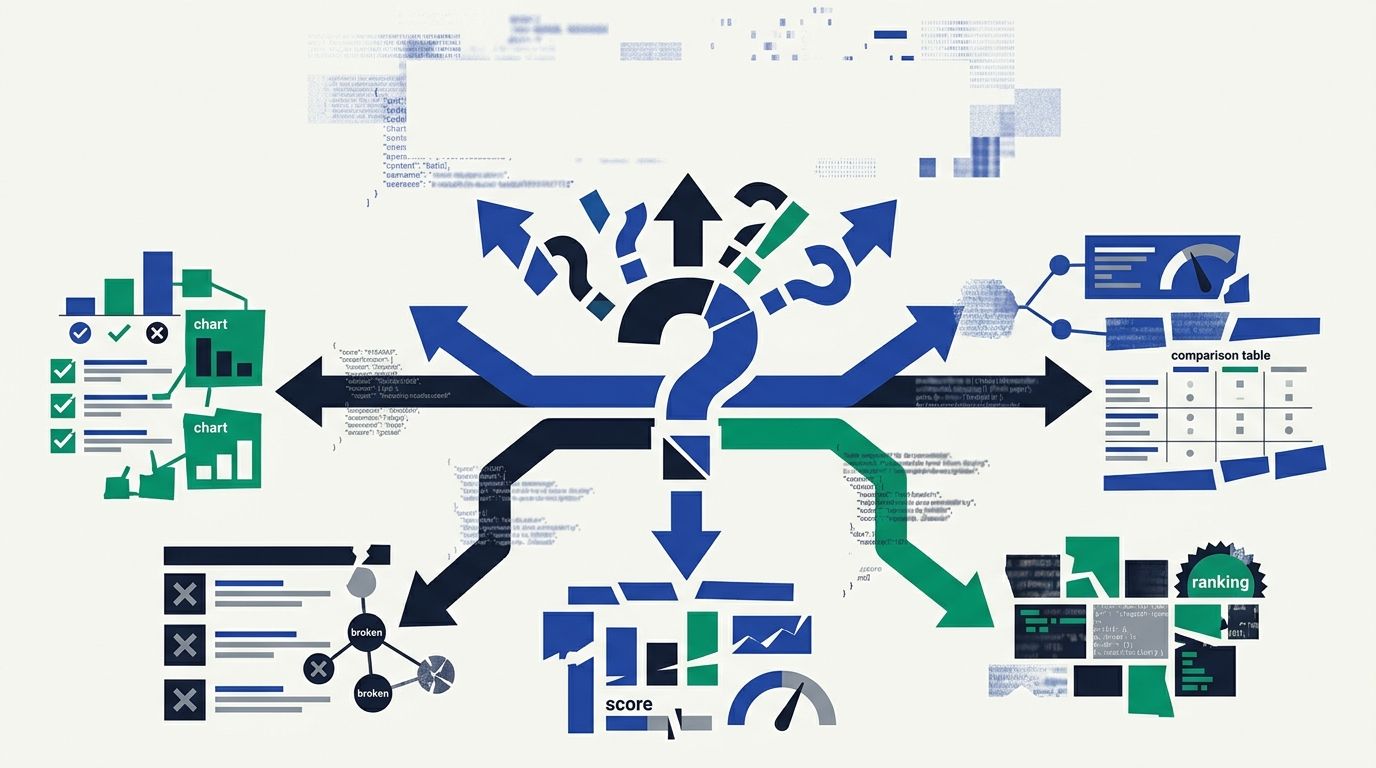
Five Major AI Search Engines Return Completely Different Answers to Identical Query in New Test
A technical developer testing five AI search engines with the same question received five distinct answers citing entirely different sources, according to a report published today on DEV Community. Google AI Overviews recommended GitHub Actions, ChatGPT suggested GitLab CI, Perplexity cited an unfam
Explore more topics