
When AI Search Overviews Kill Your Click-Through Rate: Building a Dual-Engine Visibility Strategy for 2026
The "dual-engine SEO strategy" being pitched across agency sales decks right now will double your optimization costs while solving the wrong problem. AI Overviews have crushed organic click-through rates by up to 58% for position-one content, according to Ahrefs data from December 2025.
 Marcus Webb··7 min read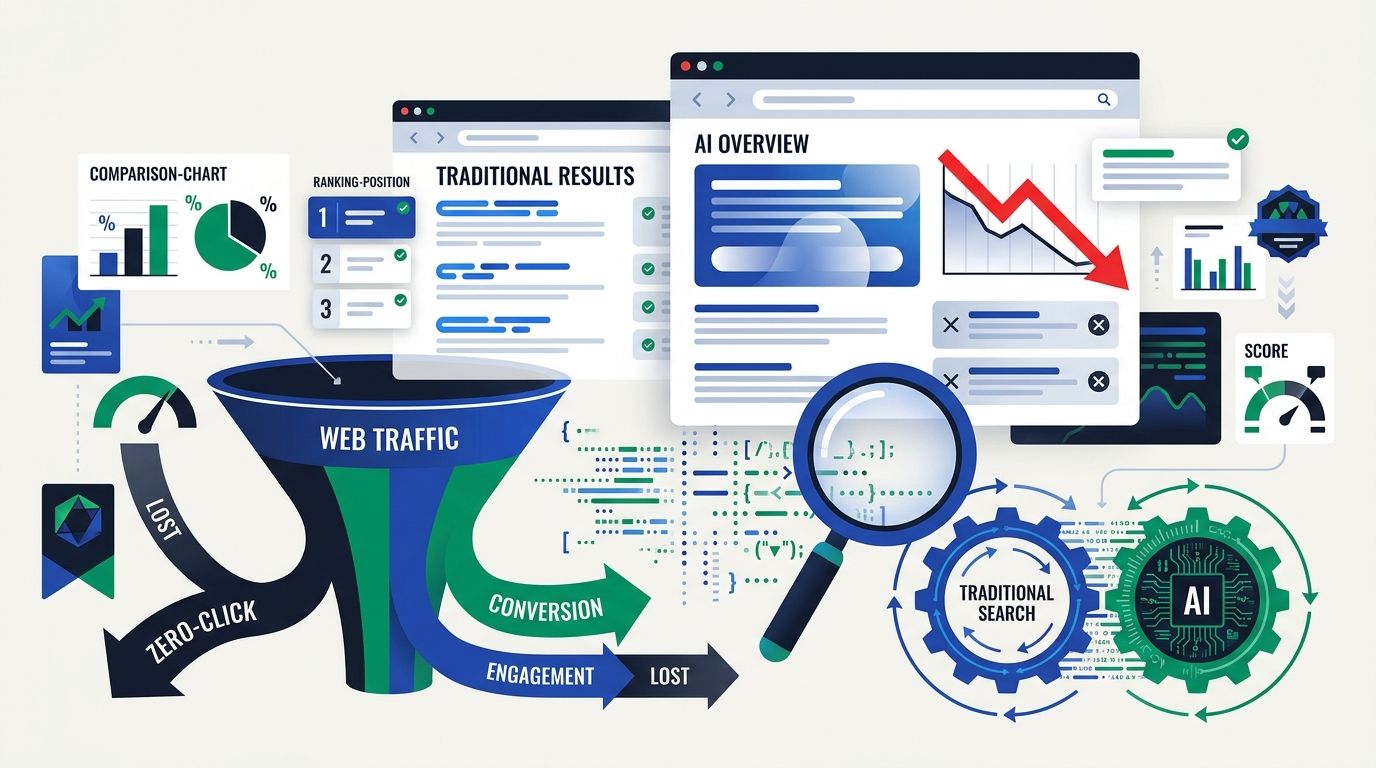
When AI Search Overviews Kill Your Click-Through Rate: Building a Dual-Engine Visibility Strategy for 2026
The "dual-engine SEO strategy" being pitched across agency sales decks right now will double your optimization costs while solving the wrong problem. AI Overviews have crushed organic click-through rates by up to 58% for position-one content, according to Ahrefs data from December 2025. But splitting your team into a "traditional SEO squad" and a "generative AI squad" treats the symptom, not the disease. The real fix is architectural.
The CTR Collapse Has a Pattern Nobody's Talking About
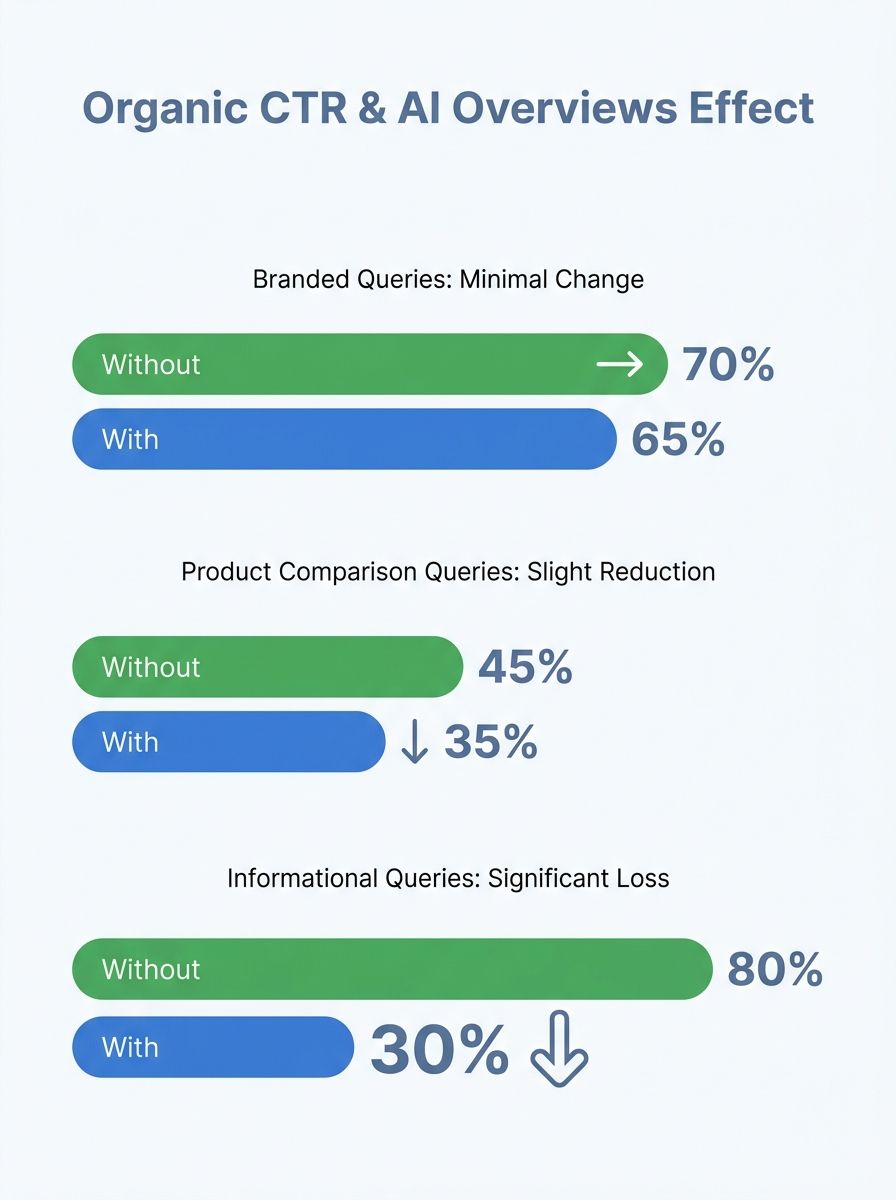
Organic click-through rates for queries triggering AI Overviews have dropped between 49.4% and 65.2%, depending on which dataset you trust. Seer Interactive's September 2025 analysis found that non-AIO queries still pull a 1.62% organic CTR versus 0.61% for AIO-triggered queries, but even those non-AIO queries lost 41% of their CTR year-over-year. HubSpot's analysis puts the damage range at 15-60%, while Search Engine Land's data confirms that non-branded, informational queries take the heaviest hit.
Here's what gets buried in every panicked conference talk about these numbers: the damage is concentrated, not uniform. Branded queries retain the majority of their click volume. Product-comparison queries where the searcher has purchase intent still pull reasonable CTR. The content getting obliterated sits in one specific category: single-answer informational queries where an AI-generated summary resolves the user's need without requiring a click.
This matters because most agencies respond to AIO-driven traffic loss by restructuring their entire content operation. They slash informational content budgets. They pivot to "AI-optimized" content. They bolt on a Generative Engine Optimization (GEO) retainer at $3,000-$8,000 per month. And they do all of it without first auditing which of their pages actually lost traffic to AI Overviews and which lost traffic to the normal algorithmic churn that happens every quarter.
The pattern I keep seeing in client audits: 60-70% of pages flagged as "AI Overview casualties" actually lost traffic for entirely different reasons, including thin content, poor internal linking, or keyword cannibalization that predated AI Overviews by months. The AI Overview panic becomes cover for pre-existing SEO problems that nobody wants to diagnose. If you're working with an agency that can't separate these causes, that's a red flag worth investigating through a proper trust verification audit.
What AI Engines Actually Extract (And What They Ignore)
Why does the overlap between top-ranking Google pages and AI-cited sources keep shrinking? Brave's analysis found the overlap dropped from 70% to below 20%. The answer sits in how AI models select source material, and it has almost nothing to do with traditional ranking signals like backlink profiles or domain authority.
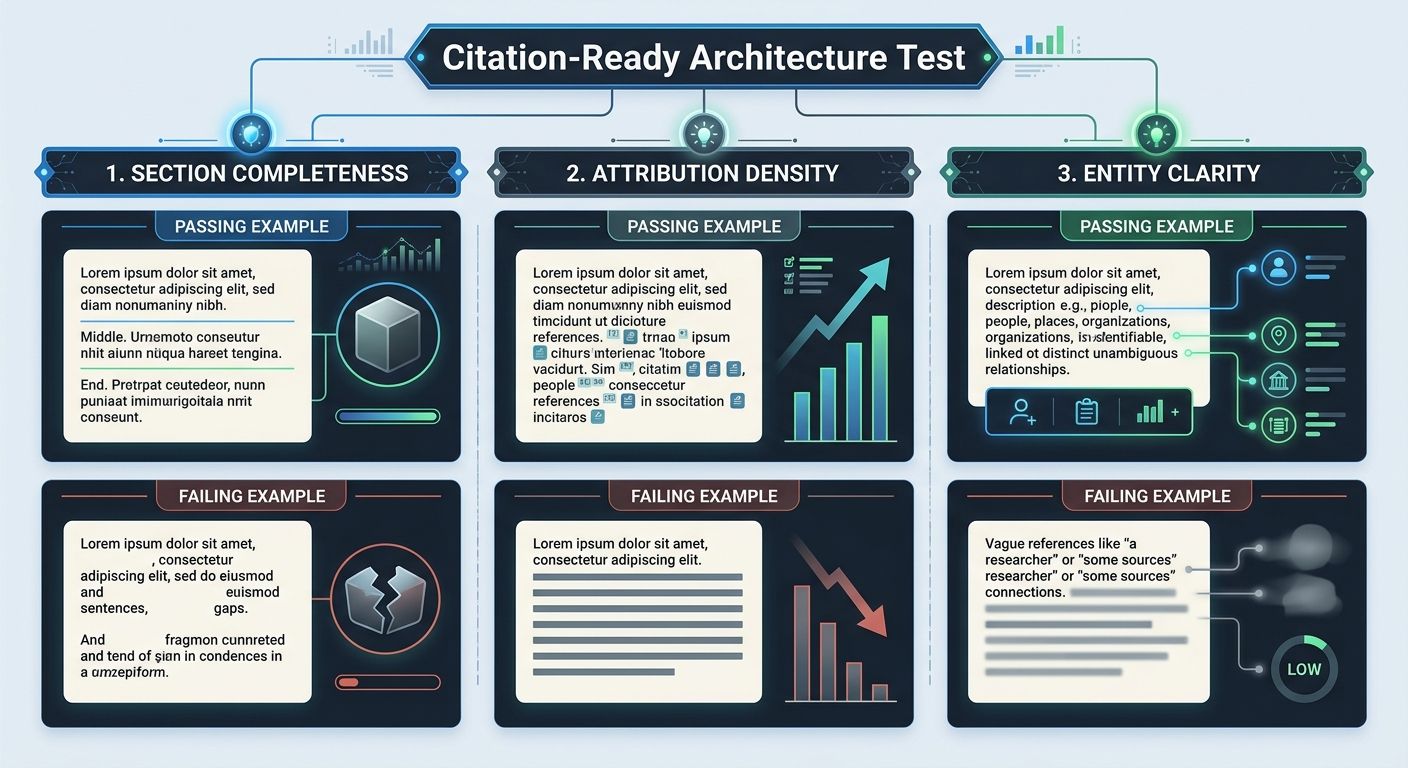
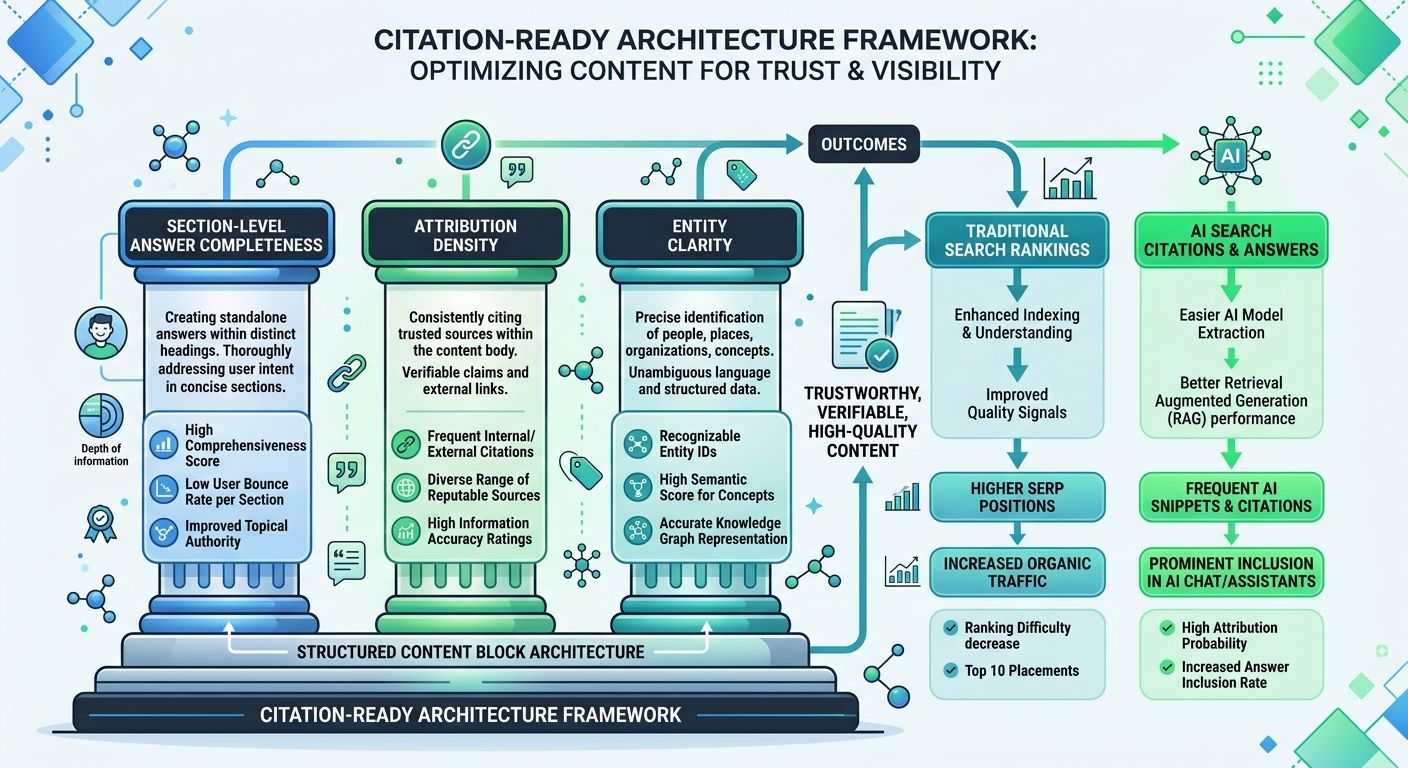
AI citation engines pull content that meets three structural criteria. I've been calling this the Citation-Ready Architecture test when working with SaaS clients, and it applies equally to B2B content, e-commerce category pages, and service-provider landing pages:
Section-level answer completeness. Each H2 section contains a self-contained answer to its heading's implied question within the first 40-75 words. AI models extract sections, not articles. If your key insight sits in paragraph four of a section, it's invisible to the extraction layer.
Attribution density. Named sources, specific statistics, and expert credentials within the content body. Google's own AI optimization documentation states that creating "unique, valuable content" with "clear technical structure" forms "the foundation for visibility in generative AI search experiences." Content that says "studies show" without naming the study gets deprioritized by AI citation algorithms.
Entity clarity. The content unambiguously connects claims to named entities (brands, people, products, specific dates) so the AI system can attribute the answer with confidence. Vague authority language like "industry experts agree" gives the model nothing to cite.
An analysis from Position Digital's 2026 AI SEO statistics compilation found that 91% of citations appear in only one AI engine, meaning a page cited by ChatGPT is almost never cited by Perplexity or Google's AI Overview for the same query. This fragmentation makes the "optimize for AI" pitch even more suspect, because which AI engine are you optimizing for? The answer, frustratingly, is that you optimize for extractability in general. And extractability is a function of content architecture, not a separate strategic track.
Google CEO Sundar Pichai and Search SVP Nick Fox both confirmed in spring 2026 interviews that optimizing for AI-powered search requires the same foundational approach as traditional SEO. As I explored in a previous piece on how Google frames AI search and traditional SEO as following the same principles, the divergence between "AI optimization" and "regular SEO" is being manufactured by agencies selling new service lines.
Ninety Percent of Brands Are Invisible to AI Search
The scale of the visibility gap is stark. An analysis of 177 brands across healthcare, SaaS, and financial services found that 90% of brands have zero AI search mentions. These aren't obscure startups. The sample included established companies with mature content operations and existing organic traffic.
For SaaS companies in particular, this gap creates a specific kind of damage. CommonMind's 2026 State of AI Visibility report documents how AI-driven search is reshaping the way B2B SaaS buyers discover, evaluate, and shortlist software. When a procurement team asks ChatGPT or Perplexity to compare project management tools, the brands that appear in that response capture consideration. The brands that don't appear don't even register as options, regardless of where they rank on traditional Google results.
The fix isn't mysterious, but it is labor-intensive. SaaS SEO in the AI era requires restructuring existing content around extractable answers, not producing more content. Here's how the Citation-Ready Architecture plays out in practice for a B2B SaaS company:
Content Element | Traditional SEO Priority | AI Citation Priority | Unified Approach |
|---|---|---|---|
Page title | Keyword-optimized, 50-60 chars | Descriptive, question-answering | Question-format titles with primary keyword |
First paragraph | Hook + context | Direct answer, 40-50 words | Answer-first lede, context in paragraph 2 |
H2 sections | Keyword variation + flow | Self-contained, extractable answers | Each section opens with standalone answer |
Data citations | Optional credibility signal | Required for citation selection | Named source + stat in every section |
Author attribution | Nice for E-E-A-T | Weighted heavily by AI systems | Full credentials, real byline, bio with expertise |
Update frequency | Quarterly or annual | Content older than 3 months drops in AI citations | Quarterly content refresh cycles |
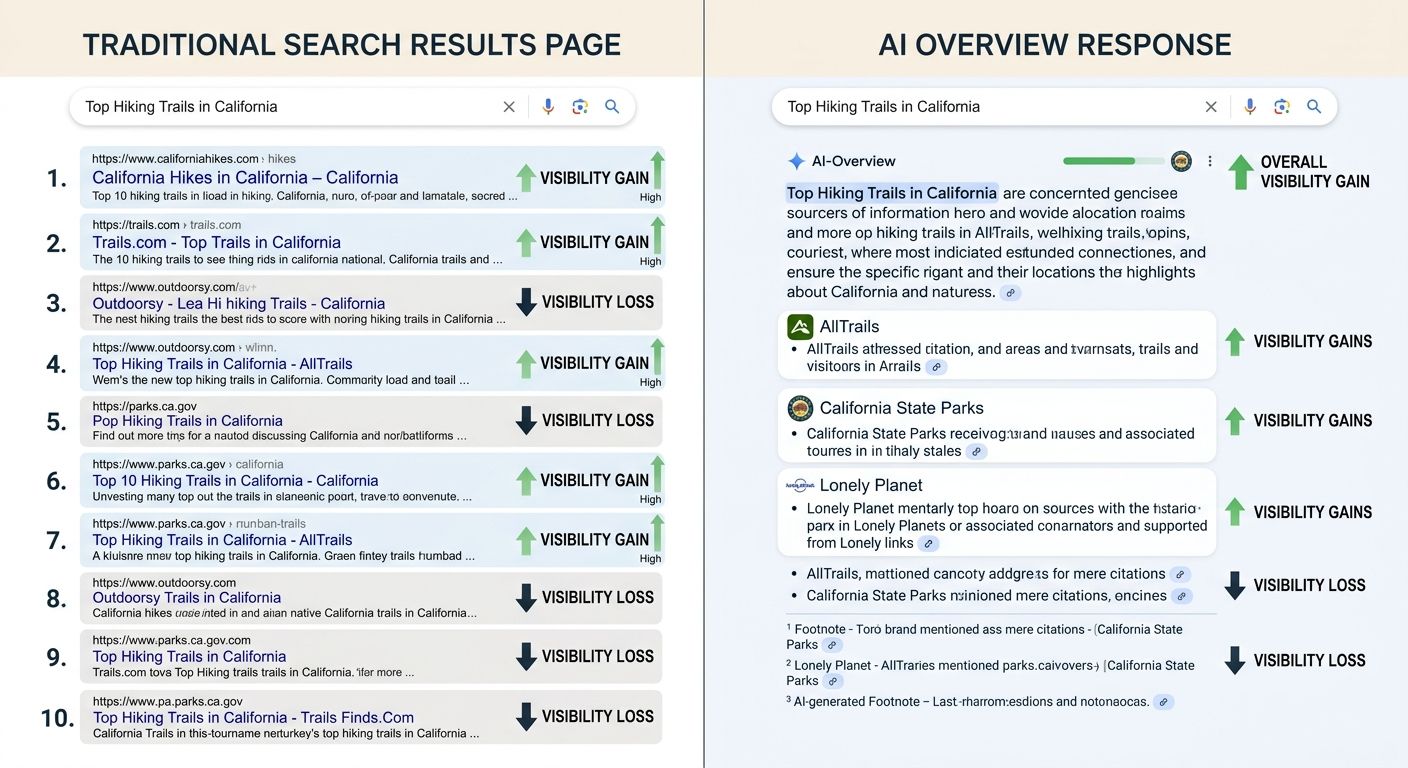
Brands that do appear in AI responses see real downstream effects. Brave's aggregated data shows cited brands experience a 35% increase in organic CTR and a 91% increase in paid CTR compared to non-cited competitors. The AI citation functions as a trust signal that amplifies every other channel, which means protecting organic traffic from AI abstracts isn't about preventing the abstraction. It's about being the source the abstraction cites.
And this brings us back to architecture. A Forbes analysis of AI Overview traffic loss found that sites using an answer-first content structure recovered citation positioning faster than sites that merely added schema markup or FAQ blocks. Google's June 2026 spam update specifically targets artificial citation manipulation, which means gaming AI citations is now treated as a policy violation. The only sustainable path is earning citations through content quality and structure.
The Dual Engine Was Always One Engine
The thesis holds up under every dataset I've reviewed across 18 months of client work in this space. Google AI search visibility optimization and traditional SEO optimization converge on the same set of content architecture decisions: answer-first section structure, high attribution density, named-entity clarity, and regular content refresh cycles. The "dual-engine" framing sells retainers. The reality is one engine with two output surfaces.
This doesn't mean the AI citation surface is unimportant. AI Overviews now appear in over 47% of informational searches, and the CTR impact is too large to ignore. A dual-engine SEO strategy is correct as a measurement framework: you need to track traditional rankings AND AI citation share separately, because the correlation between them has collapsed. A page can rank third on Google and appear in zero AI Overviews. A page ranking fifteenth can be the primary citation source for ChatGPT's answer to the same query.
But the production side, the actual content creation and optimization work, should be unified. One content architecture. One editorial standard. One refresh cadence. The Citation-Ready Architecture test applies to every page, regardless of which surface you're optimizing for. Teams that build AI-powered automation into their agency workflows can scale the measurement side without doubling content production costs.
The agencies pitching separate "GEO packages" at $5,000-$10,000 per month on top of existing SEO retainers are selling you a second workflow to produce what a well-architected first workflow should already deliver. If your content is structured for extractability, attributed with named sources, and refreshed quarterly, you're already doing generative engine optimization. You're doing it because it's good SEO, period. The 90% of brands with zero AI visibility aren't missing a separate AI strategy. They're missing the structural rigor that both surfaces now demand, and they were probably underperforming on traditional search for the same reasons before AI Overviews existed.
Marcus Webb
Digital marketing consultant and agency review specialist. With 12 years in the SEO industry, Marcus has worked with agencies of all sizes and brings an insider perspective to agency evaluations and selection strategies.
Related Articles
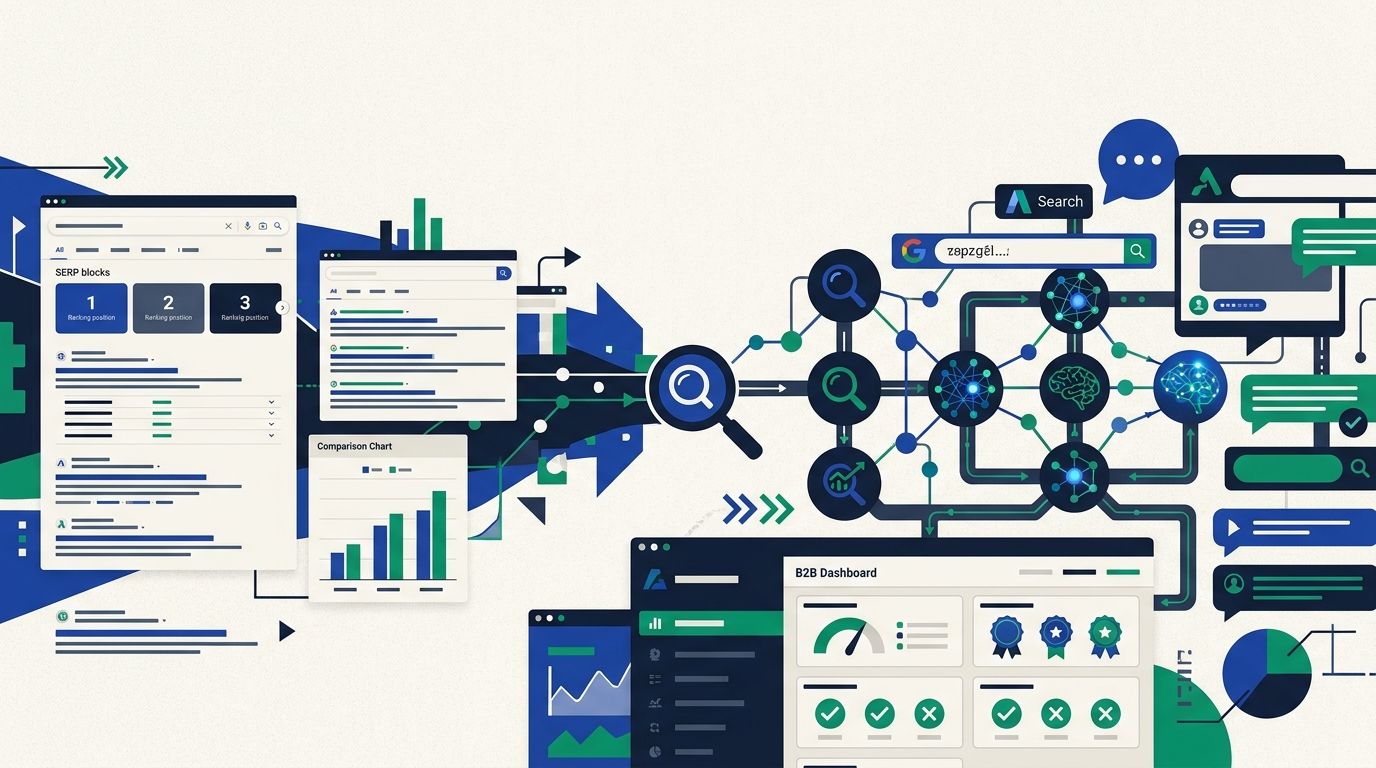
From Google Search to AI Assistants: How B2B Agencies Must Rebuild SEO Strategy Beyond Traditional SERP Rankings
Three of the five B2B agency contracts sitting on my desk right now define success exclusively as Google organic ranking improvements and click-through traffic growth. The agencies that wrote those contracts aren't incompetent.
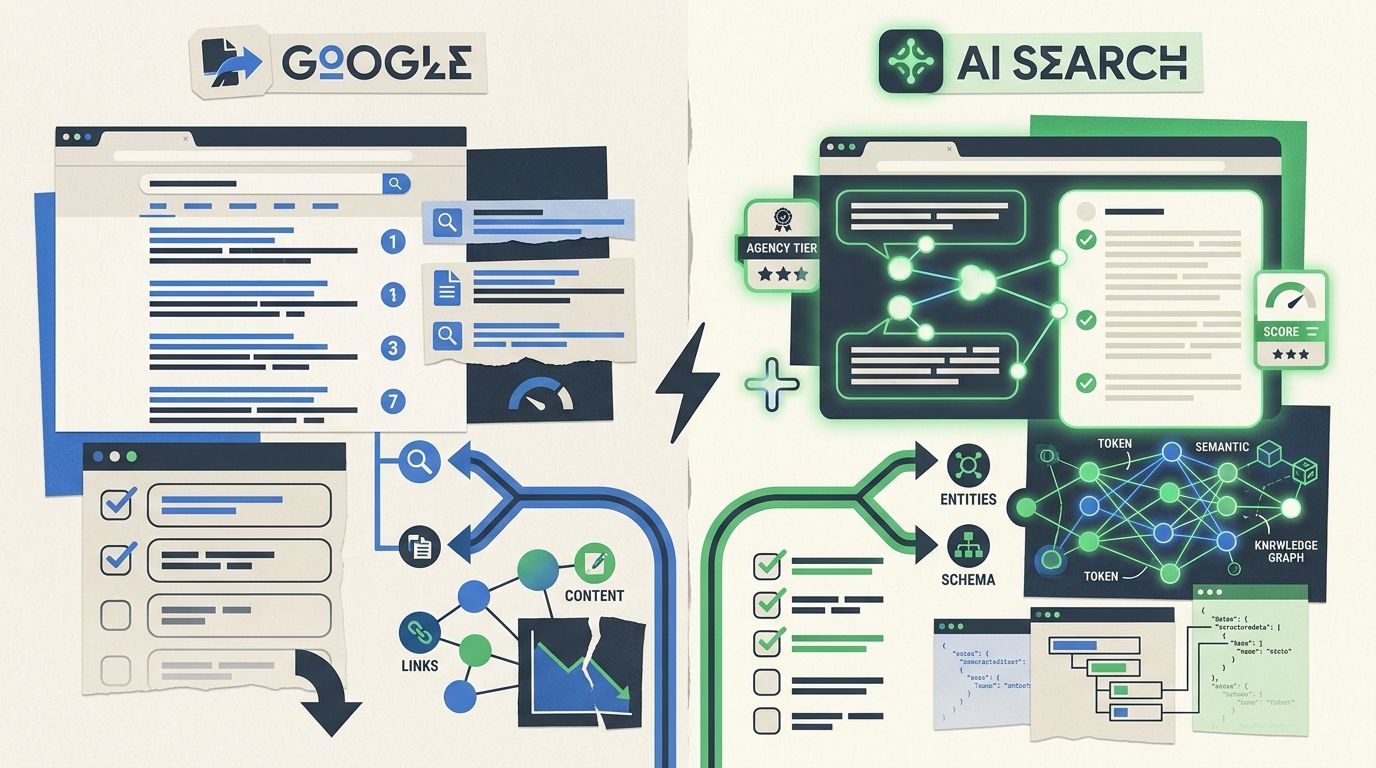
Why AI Search Visibility Requires a Different SEO Checklist Than Google's Blue Links
Traditional SEO checklists produce passing grades on sites that are invisible to ChatGPT, Perplexity, and Google AI Overviews.
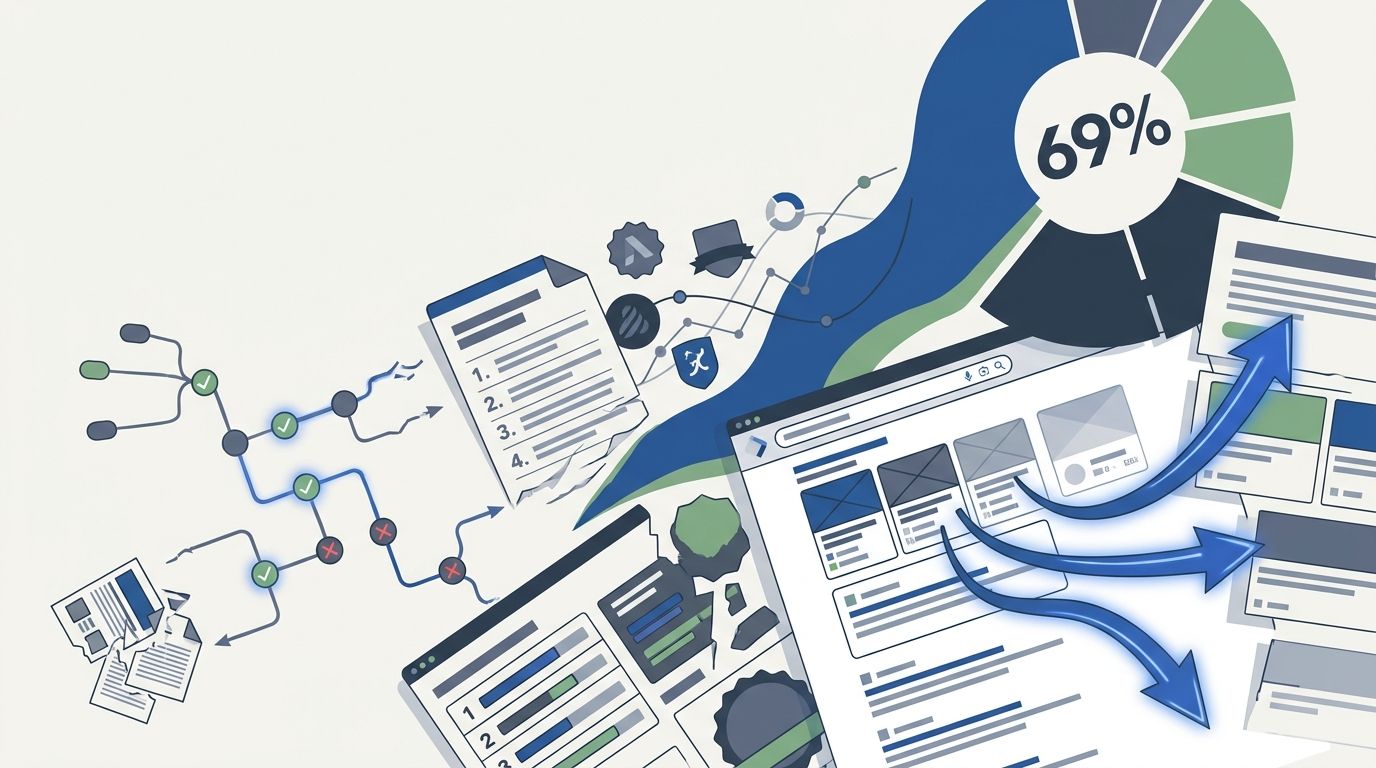
Software Companies' SEO Listicles Earn Citations But Lose 69% of AI Search Recommendations to Competitors
Self-promotional comparison pages that rank software tools earn citations in Google AI Overviews but lose the recommendation to competitors listed within those same pages 69% of the time, according to research published by Lily Ray in June 2026 that analyzed 100 B2B software queries across three mon
Explore more topics