
Software Companies' SEO Listicles Earn Citations But Lose 69% of AI Search Recommendations to Competitors
Self-promotional comparison pages that rank software tools earn citations in Google AI Overviews but lose the recommendation to competitors listed within those same pages 69% of the time, according to research published by Lily Ray in June 2026 that analyzed 100 B2B software queries across three mon
 Marcus Webb··5 min read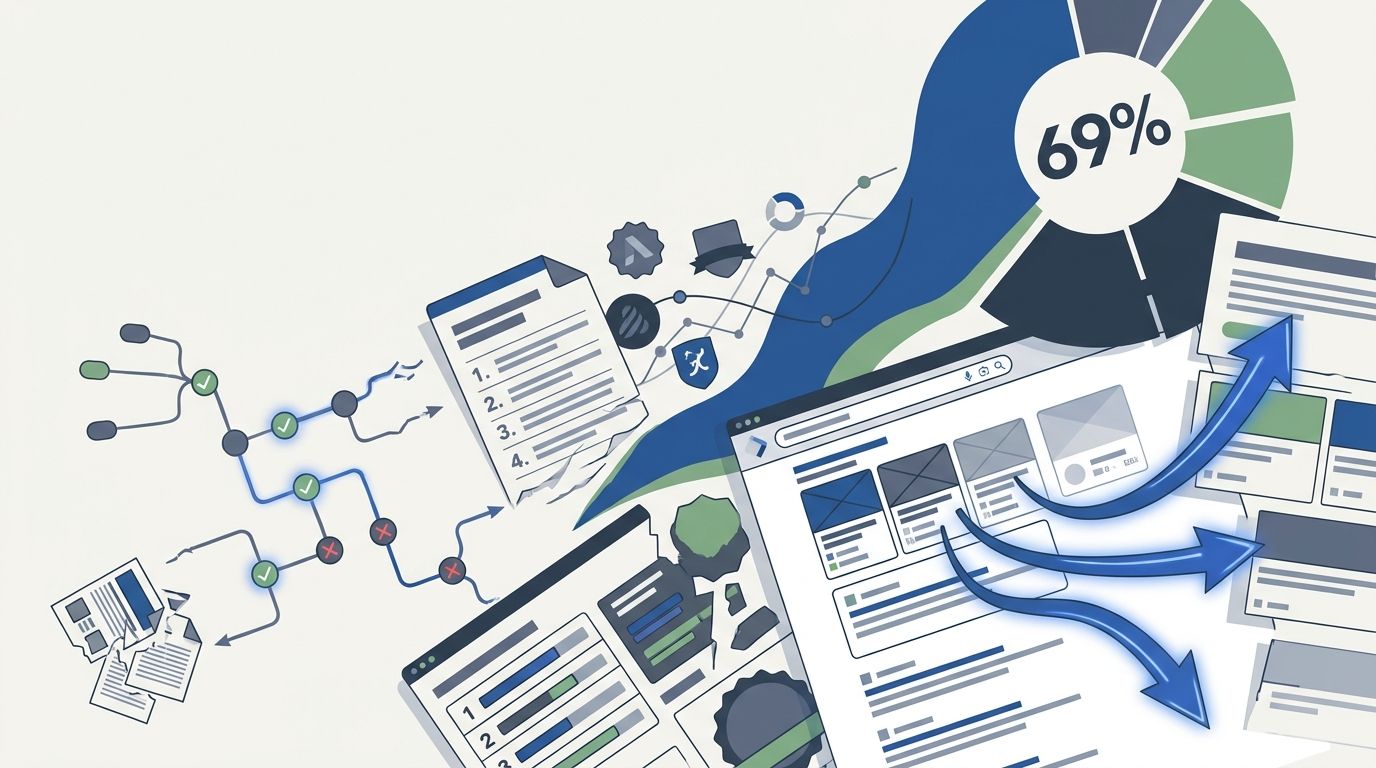
Software Companies' SEO Listicles Earn Citations But Lose 69% of AI Search Recommendations to Competitors
Self-promotional comparison pages that rank software tools earn citations in Google AI Overviews but lose the recommendation to competitors listed within those same pages 69% of the time, according to research published by Lily Ray in June 2026 that analyzed 100 B2B software queries across three months.
The findings, published on Search Engine Journal on July 7, quantify a structural problem for B2B software vendors that built organic visibility by publishing self-ranked category pages. The tactic delivered rankings and traffic in traditional search but now produces what Ray documented as a "citation-recommendation gap" in AI-powered answer engines.
Research Methodology and Scale
Ray analyzed 100 B2B queries matching the pattern "best [category] software" in Google's AI Overviews between April and June 2026, running each query three times to account for answer variation. Of the 100 queries tested, 80 produced an AI Overview. Across those 80 queries, Google cited self-promotional listicles 323 times as source material for its answers.
The study tracked two separate outcomes: whether Google cited a brand's page as a source, and whether the AI answer recommended that brand as a solution. In 224 of the 323 citations—69%—Google named the brand's page but recommended a competitor whose product appeared in the listicle's rankings instead.
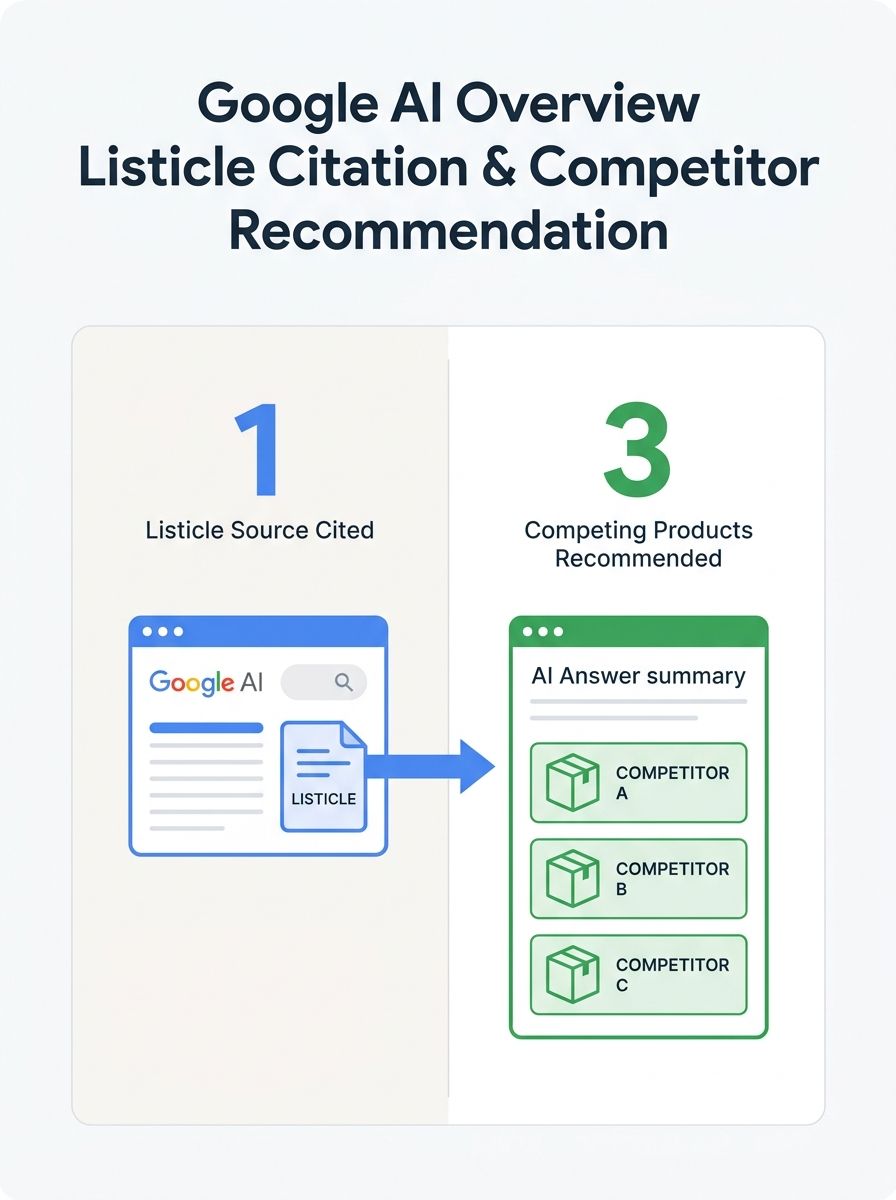
The pattern held across software categories including CRM, help desk, learning management systems, and SEO tools, according to the research. In one documented example, Google cited an Oasis LMS comparison page multiple times in both the answer body and sidebar, then recommended Kajabi, Thinkific, LearnWorlds, and Teachable—all four competitors ranked inside the Oasis-published piece.
Citation vs. Recommendation in AI Search
The research establishes a formal distinction between two outcomes that traditional SEO measurement combines into a single visibility metric. A citation indicates the AI engine used a page as source material and displayed that page's URL in its attribution list. A recommendation means the answer text explicitly told the user which product to choose.
Recommendations drive conversions, Ray's analysis shows. Citations provide brand exposure but do not direct buyer intent. The measurement gap matters because software companies optimize content to earn citations—a goal AI search delivers—while losing the commercial outcome those citations were intended to produce in traditional search results.
What an AI engine cites depends on the content structure and keyword targeting of the page itself, Ray found. What it recommends correlates with how many independent sites mention, review, and link to a brand across the broader web. Brands that won recommendations in Ray's dataset had substantially higher referring domain counts and appeared more frequently in AI answers from multiple engines, including ChatGPT and Perplexity, than brands that were cited but not recommended.
The finding aligns with broader AI search optimization research documented in frameworks targeting dual-engine visibility strategies, where citation volume alone fails to predict commercial outcomes.
Third-Party Coverage as the Ranking Signal
Ray's data identifies which content types produce AI recommendations. Google AI Overviews disproportionately cited Reddit, Forbes, YouTube, and other third-party domains when naming recommended products. User-generated reviews, independent comparisons, and creator-published walkthroughs appeared more frequently in recommendation text than vendor-controlled content.
The pattern suggests AI engines weight external validation more heavily than self-published claims when constructing product recommendations. A software company that publishes 50 optimized comparison pages on its own domain but generates no independent review coverage will earn citations but lose recommendations to competitors covered by third-party publishers, according to the documented behavior.
Ray's research recommends tracking "share of recommendations" as a distinct metric from "share of citations." The measurement requires running category queries across multiple AI engines, recording both the pages cited and the products recommended in each answer, then calculating how often a brand appears in recommendation text relative to citation frequency.
Measurement Protocol for AI Recommendation Share
The study outlines a five-step audit protocol for measuring whether AI search recommends a brand or merely cites its content. The process begins by compiling buyer-intent queries such as "best [category] software," "[competitor] alternatives," and category-specific comparison phrases that map to commercial search intent.
For each query, record two separate data points: the URLs Google AI Overviews cites as sources, and the specific product names the answer recommends to the user. Run each query multiple times, as AI answers vary by session and user context. Calculate the brand's share of recommendations—how often it appears in recommendation text across all queries—separately from its share of citations.
Extend the audit beyond Google to ChatGPT, Perplexity, and other AI answer engines to identify which publishers those platforms surface for the same category queries. The cross-engine view shows whether recommendation gaps persist across models or remain isolated to specific platforms.
The measurement framework differs from traditional SEO audits that track ranking position and click-through rate. AI search visibility requires different optimization signals than the content depth and keyword density that drove traditional organic performance, as documented in earlier search engine guidance.
Independent Coverage as the Remediation Strategy
Ray's research concludes that increasing AI recommendation frequency requires generating more independent brand mentions on third-party domains. Reviews, comparison articles, product walkthroughs, and user testimonials published by creators and industry sites—not by the vendor itself—correlate with higher recommendation rates in the dataset.
The study recommends affiliate programs as a scalable distribution model. Revenue-share agreements give creators a financial incentive to publish and maintain brand coverage without requiring per-placement commissioning. The model produces ongoing mention velocity rather than isolated placements, according to the research.
Affiliate channel structure includes partner recruitment, performance tracking, payout automation, and output quality monitoring. The sponsored research, published in collaboration with FirstPromoter, positions affiliate management platforms as the operational infrastructure for executing the strategy at scale.
Services Implications
SEO agencies managing B2B software clients or SaaS companies now face a content strategy inflection point. Self-promotional comparison pages that previously delivered rankings and conversions in traditional search results now redirect buyer intent to competitors in AI-powered answer engines at a documented 69% rate. The tactical shift requires reallocating content production resources from owned listicles toward strategies that generate independent third-party coverage.
Agencies should audit existing client content portfolios to quantify the citation-recommendation gap across their category queries. The measurement protocol Ray documented—tracking share of recommendations separately from share of citations—provides a new diagnostic framework for evaluating whether current content investments drive commercial outcomes in AI search or simply produce vanity visibility metrics. Clients paying for content that earns citations but loses recommendations are funding competitor acquisition at their own expense.
The remediation pathway Ray's research identifies—scaling third-party brand mentions through structured affiliate programs or creator partnerships—represents a channel expansion most SEO agencies do not currently operate. Agencies positioned to execute affiliate recruitment, performance tracking, and payout infrastructure alongside traditional content optimization will deliver measurable AI recommendation lift. Those that continue optimizing self-published comparison pages without addressing the independent coverage gap risk reporting citation wins while clients lose market share to competitors who appear in the recommendation text their content helped generate.
Marcus Webb
Digital marketing consultant and agency review specialist. With 12 years in the SEO industry, Marcus has worked with agencies of all sizes and brings an insider perspective to agency evaluations and selection strategies.
Related Articles
AI Models Recommend Fabricated Companies 94 Percent of Time When Retrieved Sources Include Them, Fractl Study Shows
Six of nine AI assistants recommended a fabricated company with no website or customers in 94 to 100 percent of test runs when its page appeared alongside real competitors, according to a controlled experiment published by Fractl September 13.
When AI Search Overviews Kill Your Click-Through Rate: Building a Dual-Engine Visibility Strategy for 2026
The "dual-engine SEO strategy" being pitched across agency sales decks right now will double your optimization costs while solving the wrong problem. AI Overviews have crushed organic click-through rates by up to 58% for position-one content, according to Ahrefs data from December 2025.
Cloviana Publishes Comprehensive AI Search Optimization Framework as B2B Buyer Research Shifts to ChatGPT and AI Platforms
Cloviana published a comprehensive guide to AI search optimization on June 25, 2026, outlining how B2B brands can optimize for visibility in AI-generated answers across ChatGPT, Claude, Perplexity, Google AI Overviews, and Gemini as 71% of B2B buyers now rely on AI chatbots for software research, ac
Explore more topics