
AI Citations Just Changed SEO Strategy—But Most Agencies Haven't Updated Their PR Playbook Yet
The PR deliverables your white-label SEO provider sends every month are optimized for a citation ecosystem that functionally stopped existing in January 2026.
 Marcus Webb··7 min read
AI Citations Just Changed SEO Strategy—But Most Agencies Haven't Updated Their PR Playbook Yet
The PR deliverables your white-label SEO provider sends every month are optimized for a citation ecosystem that functionally stopped existing in January 2026. Wire-distributed press releases, tier-two media pitches, and branded byline articles used to build domain authority signals that correlated neatly with organic rankings. Google's Gemini 3 upgrade broke that correlation, and the overlap between top-10 organic rankings and AI Overview citations dropped from 76% in mid-2025 to somewhere between 17% and 38% by early 2026. The old playbook is burning budget on outputs that AI engines increasingly ignore.
I've spent the past three months auditing the PR-and-SEO deliverables of 14 white-label providers on behalf of agency clients. The findings are consistent: not one of them tracked AI citation share as a KPI. Not one adjusted their press release structure for answer engine retrieval. And not one measured whether their earned media placements appeared in ChatGPT, Perplexity, or Gemini responses. This gap is costing agencies client retention in ways that won't surface until the next quarterly review, and I want to lay out the three pieces of evidence that should force a rethink.
The Citation Source Shuffle That Broke Traditional PR Measurement
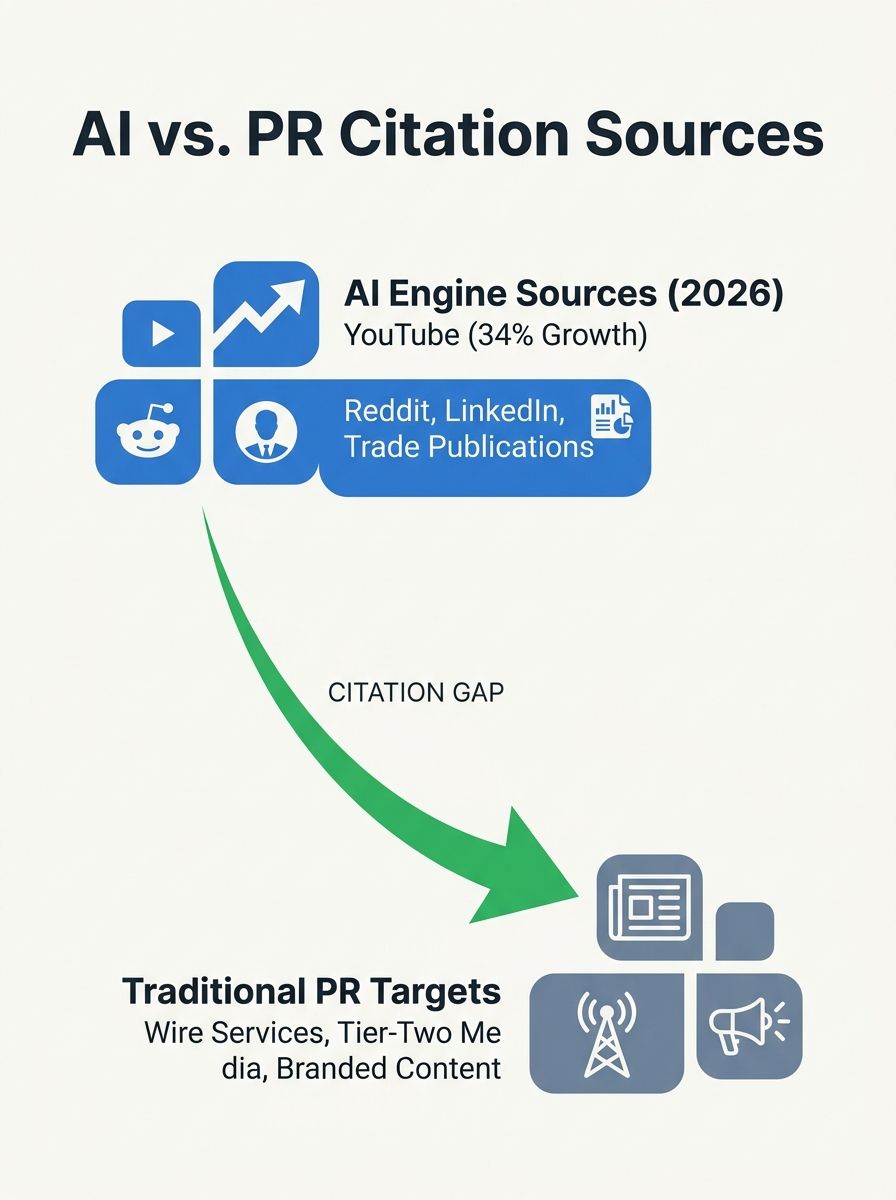
When Gemini 3 became the global default for AI Overviews on January 27, it replaced approximately 42% of previously cited domains and began generating 32% more source URLs per overview. That expansion didn't benefit the domains that traditional PR campaigns target. It benefited platforms where AI engines run sub-queries through a process called query fan-out, decomposing a single user question into multiple related searches and pulling citations from each.
The practical result: YouTube became the most-cited domain in AI Overviews, growing its citation share by 34% in six months. Reddit and LinkedIn now rank as the first and second most-cited platforms by large language models, according to data compiled through early 2026. Meanwhile, ChatGPT's shift to GPT-5.3 Instant in April actually tightened its source selection, dropping from 19.1 to 15.2 cited domains per response on average.
Think about what that means for the typical white-label PR package. Your provider distributes a press release through a wire service, lands a mention in a mid-tier industry blog, and reports it as a "media placement." The AI engine never sees it. Or if it does, it doesn't select it because the content lacks the structural signals these systems now prioritize. As we covered when 68% of brands vanished from AI search recommendations, the brands that disappeared weren't necessarily producing bad content. They were producing content formatted for a discovery system that was being replaced underneath them.
And the citation freshness data makes this even more urgent. Fifty percent of all AI citations come from content published within the previous 11 months, and 4% come from the prior week alone. White-label PR that produces a press release every quarter and a handful of media mentions per month doesn't generate the publication velocity these engines reward.
Trade Press and Expert Quotes Are the New Link Equity
Here's the evidence that should reshape how agencies structure their PR deliverables for AI citations SEO strategy: research from Princeton University, Georgia Tech, and the Allen Institute for AI found that adding citations and expert quotes to content boosted AI visibility by more than 40%.
That finding aligns with what practitioners are seeing on the ground. Aaron Franklin, Head of Growth at Ylopo, described the shift in a HubSpot analysis of AI search visibility:
"The greatest difference was when we realized that AI engines are looking for clarity of the original source, so we made certain each article included attributable data and not just opinions. About two weeks after adding expert quotes and inline citations to our articles, we began showing up in AI-generated answers."
Two weeks. That's the response time Franklin's team observed between restructuring content for expert quote visibility in AI search and measurable changes in citation pickup. Compare that to the typical three-to-six-month timeline agencies quote for traditional link building campaigns.
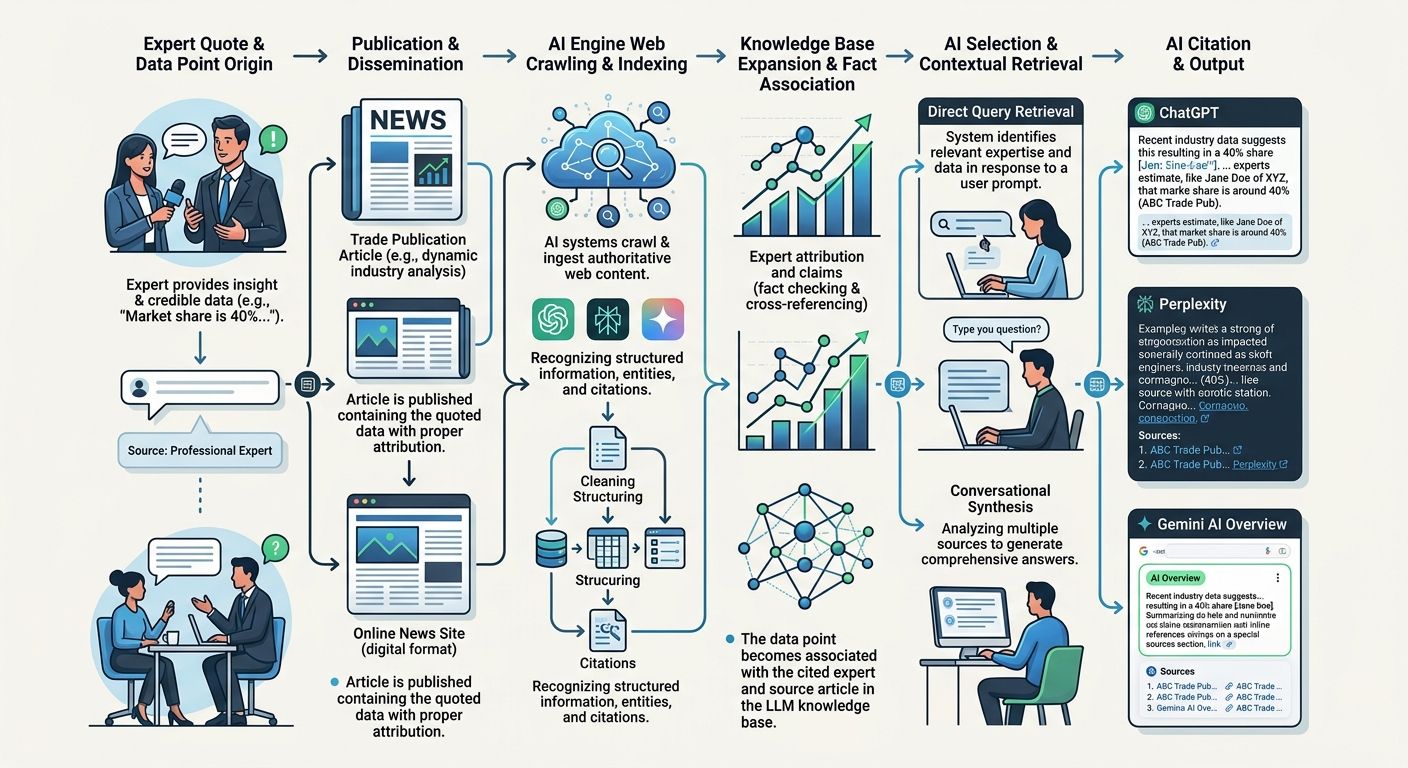
Search Engine Journal published a detailed analysis this week identifying the exact source types AI engines reach for most frequently: review sites, comparison content, trade press, retailer listings, and finance data. Trade press SEO value has increased because AI systems treat vertical publications as authoritative within specific domains. A quote from your client's VP of Engineering in an industry journal creates a citable entity association that wire-distributed press releases almost never produce.
For white-label providers, this requires a fundamental retooling of what "PR deliverables" look like:
Expert quote placement in vertical trade publications, not general-interest outlets
Data-rich press releases structured with clear headers, timestamps, and inline statistics every 150-200 words (the Frase.io AEO guide identifies this cadence as the threshold AI engines use when selecting citable content)
Reddit and LinkedIn presence with substantive responses in relevant threads, not promotional posts
YouTube content that directly addresses the queries a client's audience asks AI engines
Agencies I audit that have started tracking answer engine optimization as a distinct discipline alongside traditional SEO are already seeing the divergence in their reporting. The same client can rank well in organic search and be completely invisible in AI-generated answers. White-label packages that don't separate these two measurements are hiding a blind spot from end clients, and that blind spot has a dollar value attached to it.
Cross-Platform Visibility Is Where White-Label Providers Fall Shortest
The data on answer engine optimization citations reveals something uncomfortable for agencies that focus their entire strategy on a client's website. Analysis of citation behavior across AI search surfaces shows that name brands tightly associated with specific products and services perform consistently across AI engines because those associations exist across multiple platforms. The brand appears on the website, on YouTube, in trade press, in community discussions, in review sites. AI engines triangulate all of that into a single trust signal.
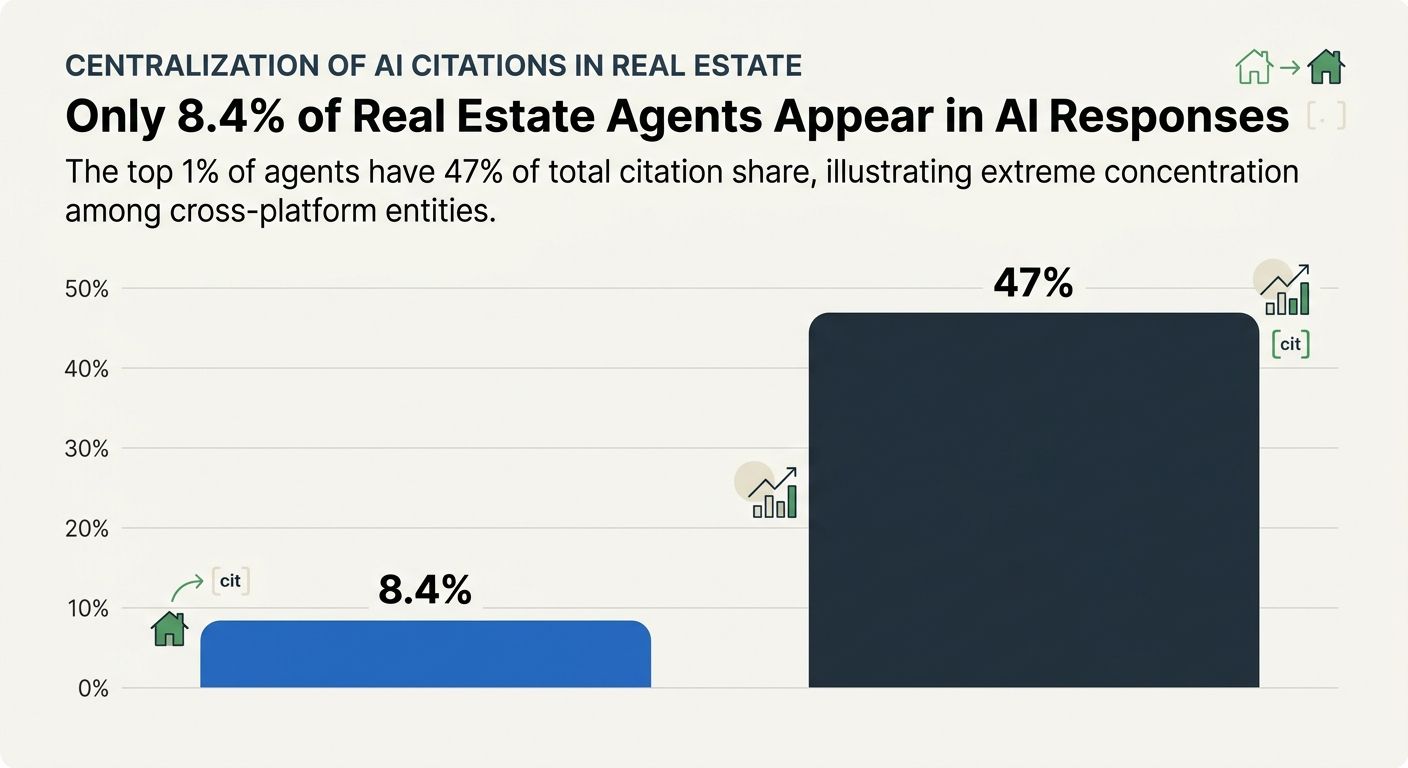
A HousingWire report from this week illustrates the concentration effect: only 8.4% of real estate agents appear in AI responses, and the top 1% hold 47% of citation share across metros. That concentration pattern holds across industries. The entities that AI engines cite repeatedly are the ones with visibility across platforms, not the ones with the highest domain authority on a single website.
And this is exactly where white-label SEO providers are weakest. The typical white-label package includes on-page optimization, technical SEO audits, link building, and maybe a content calendar. Even providers that include PR usually limit it to press release distribution and a few outreach emails. Nobody is systematically building the cross-platform entity presence that AI citation systems now reward.
Google's own behavior reinforces this shift. As of this week, Google updated AI search to pull quotes directly from Reddit and other web forums, expanding the range of platforms that feed into AI-generated answers. This means a client's Reddit presence (or absence) now directly affects their visibility in Google's AI Mode results, and the ongoing decline in organic click-through rates from AI Overviews makes that AI visibility increasingly important to overall traffic.
White-label agencies that have adapted fastest are the ones that restructured their deliverables around what I'd call entity saturation: ensuring the client brand appears with consistent messaging across every platform AI engines index heavily. That means LinkedIn articles, Reddit participation, YouTube explainers, trade publication quotes, and structured FAQ content on the main site. Articles over 2,900 words average 5.1 AI citations compared to 3.2 for those under 800 words, so content depth matters too, especially for smaller domains where content length has roughly 65% more impact on ChatGPT citations than it does for established brands.
The Playbook Gap, Restated
The white-label SEO industry built its PR offerings around a model where press releases created backlinks, backlinks improved domain authority, and domain authority correlated with rankings. Every step of that chain still works for traditional organic search. Every step is also increasingly irrelevant to AI citation selection.
Agencies that recognize this gap have a real window to differentiate their white-label offerings in a market where most competitors are still shipping deliverables they designed three years ago. The differentiation doesn't require building an entirely new service from scratch. It requires four specific changes: tracking AI citation share alongside organic rankings, restructuring press releases for answer engine retrieval, placing expert quotes in trade publications that AI systems treat as authoritative, and building client presence on the platforms where AI engines actually pull their citations.
The PR and SEO integration 2026 imperative is structural, not cosmetic. You can't bolt "AI visibility monitoring" onto a deliverables list that still treats press releases as link-building vehicles and call it an upgrade. The entire measurement framework needs to shift from "did we get published?" to "did the AI cite us?"
I've been evaluating agencies for over a decade, and the pattern here follows a familiar arc: a major platform shift happens, a small percentage of providers adapt their offerings within the first six months, and the rest lose clients to the early movers over the following 18 months. The Gemini 3 rollout happened in January. We're four months in. Agencies that update their optimization frameworks for AI-driven search this quarter will be the ones winning competitive pitches by Q4, while the rest will be explaining to their agency clients why organic rankings look fine but their clients' brands keep disappearing from the answers people actually read.
Marcus Webb
Digital marketing consultant and agency review specialist. With 12 years in the SEO industry, Marcus has worked with agencies of all sizes and brings an insider perspective to agency evaluations and selection strategies.
Related Articles
Software Companies' SEO Listicles Earn Citations But Lose 69% of AI Search Recommendations to Competitors
Self-promotional comparison pages that rank software tools earn citations in Google AI Overviews but lose the recommendation to competitors listed within those same pages 69% of the time, according to research published by Lily Ray in June 2026 that analyzed 100 B2B software queries across three mon
From Google Search to AI Assistants: How B2B Agencies Must Rebuild SEO Strategy Beyond Traditional SERP Rankings
Three of the five B2B agency contracts sitting on my desk right now define success exclusively as Google organic ranking improvements and click-through traffic growth. The agencies that wrote those contracts aren't incompetent.
When AI Search Overviews Kill Your Click-Through Rate: Building a Dual-Engine Visibility Strategy for 2026
The "dual-engine SEO strategy" being pitched across agency sales decks right now will double your optimization costs while solving the wrong problem. AI Overviews have crushed organic click-through rates by up to 58% for position-one content, according to Ahrefs data from December 2025.
Explore more topics