
How UK Search Fairness Rules Are Changing SEO Strategy for US Agencies in 2026
Every organic search result served in the UK, including AI Overviews, must now satisfy an "objective and non-discriminatory" ranking standard.
 Marcus Webb··9 min read
How UK Search Fairness Rules Are Changing SEO Strategy for US Agencies in 2026
Every organic search result served in the UK, including AI Overviews, must now satisfy an "objective and non-discriminatory" ranking standard. Britain's Competition and Markets Authority imposed this requirement on Google on June 17, 2026, alongside a second rule granting users the right to export their search data to third parties. These UK CMA Google search regulations carry consequences for US agencies that go far beyond British borders.
The backstory is worth understanding. The CMA designated Google with "strategic market status" in general search services, giving the regulator authority to impose targeted conduct requirements on Google's search activities. The first requirement mandates fair, transparent ranking. The second requires Google to let consumers transfer their search data to authorized third-party services for more personalized features.
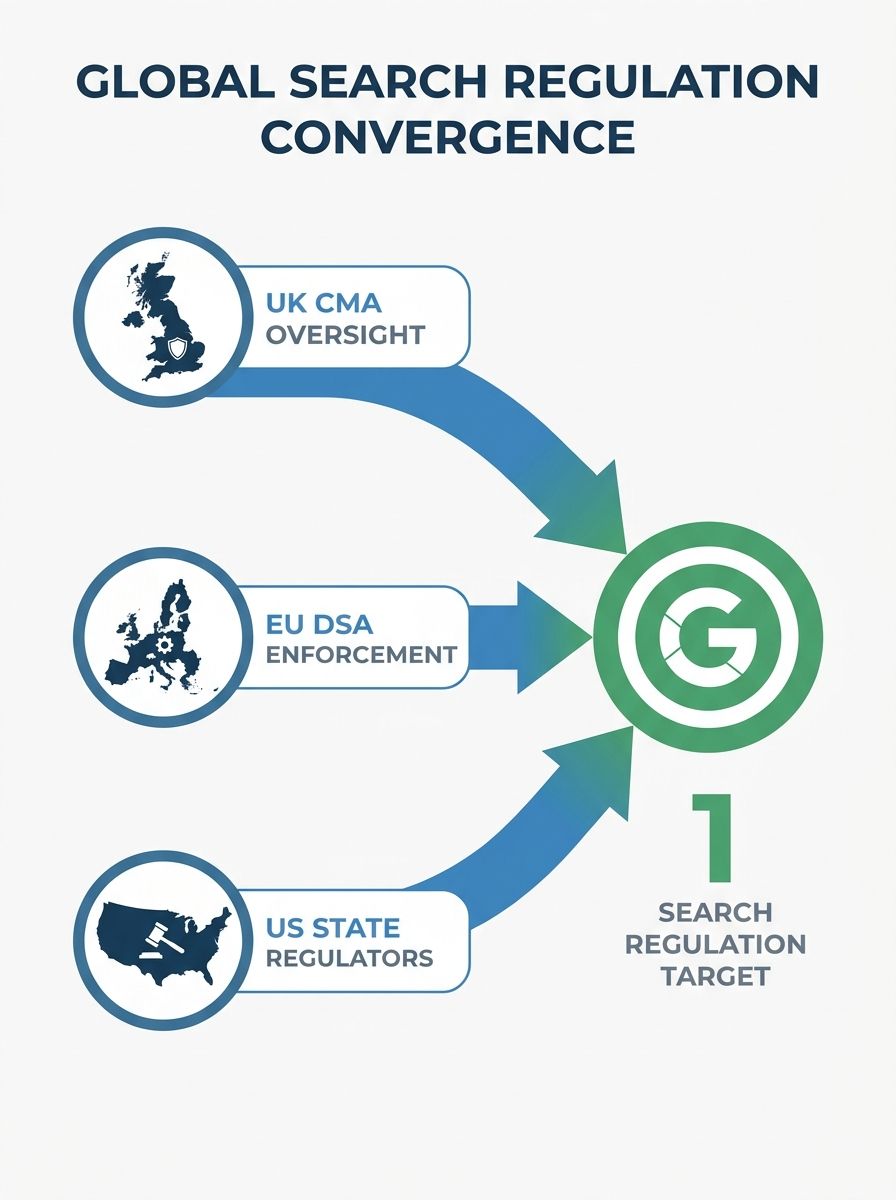
Why should a US agency running campaigns in Dallas or Denver care about a British regulator? Because Google doesn't maintain two separate ranking infrastructures. When regulators force changes to how Google documents and applies its algorithmic ranking criteria, those changes ripple into the same systems US agencies optimize against daily. The EU already requires annual transparency reports covering algorithmic changes and content moderation. The CMA's rules add a second regulatory pressure point. A third, from US state-level "mini-DSA" laws, is forming.
Over 12 years evaluating 200+ agencies, I've watched three major platform shifts catch agencies flat-footed: Penguin, the helpful content update, and the March 2026 core update. Regulatory shifts hit harder because they change the rules of engagement permanently, not just the algorithm. Here are 6 rules for building a regulatory compliance SEO strategy that survives what's coming.
Treat the CMA ruling as a leading indicator for global regulation
The CMA's conduct requirements target Google specifically because of its strategic market status designation in general search services. But the underlying principle, that dominant platforms must disclose how rankings work and allow data portability, is spreading across jurisdictions at speed. The EU's Digital Services Act already mandates annual transparency reports from large platforms covering content moderation decisions, appeals processes, and algorithmic changes. Colorado, California, and Illinois have introduced state-level algorithmic accountability bills since early 2025.
US agencies that dismiss the CMA's action as a UK-only problem are making the same mistake agencies made in 2018 when GDPR was "just a European thing." Within 18 months, California had CCPA. Within 36 months, 5 additional US states had privacy laws modeled on the same principles. According to Seeking Alpha's coverage, the CMA introduced two new conduct requirements ensuring Google's search rankings, including AI Overviews, are fair and that users can benefit from sharing their data. That framework will be copied.
When the rule breaks: If you exclusively serve hyper-local businesses with zero international traffic, the UK ruling has less immediate operational urgency. But even then, Google's infrastructure changes will affect your clients' SERPs.
Audit every client contract for ranking guarantee language
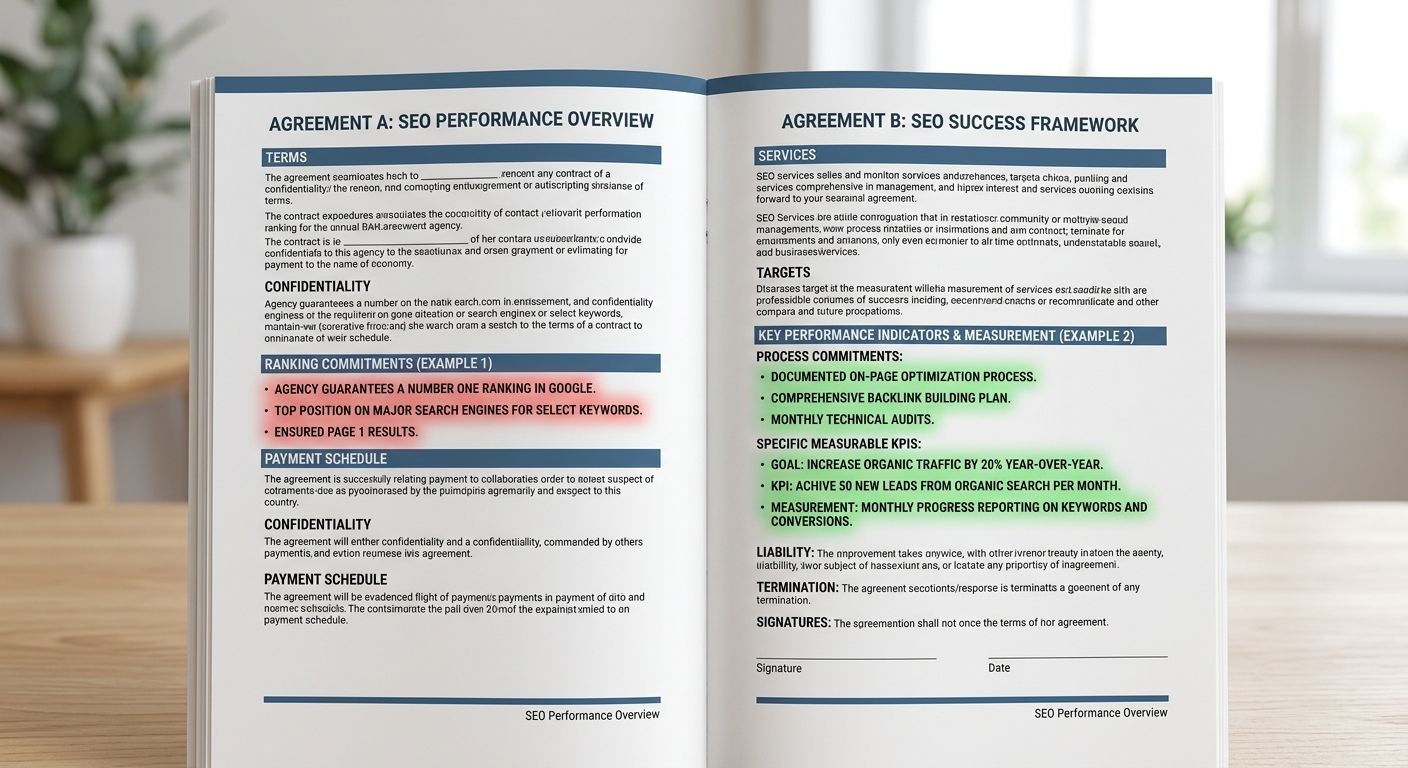
The CMA's fair ranking requirement specifies that Google must rank organic results using objective and non-discriminatory criteria. Once Google publishes more detail about what those criteria are, any agency that's promised a client "guaranteed page 1 rankings" or "top 3 placement" will face a much sharper question: if the criteria are now documented and objective, why can't the client verify whether your work actually addressed them?
I've reviewed contracts from agencies charging $2,000/month to $25,000/month, and roughly 40% contain some form of ranking guarantee or implied positioning promise. These clauses were always problematic from a credibility standpoint. Under a transparency regime where algorithmic ranking criteria become partially documented, they become a liability.
Pull your standard MSA template this week. Replace outcome guarantees with process commitments: specific deliverables, documented methodology, measurable KPIs tied to traffic and conversions rather than arbitrary position numbers. Agencies that have already faced the accountability gap in retainer models know how fast trust erodes when clients realize the promises were never defensible.
When the rule breaks: If a client insists on ranking guarantees as a condition of signing, that's a client who will blame you when rankings fluctuate regardless of the regulatory environment. Walk away. The contract cleanup protects you either way.
Document your ranking methodology before regulators ask
The growing call for transparency in how search engines rank content, as FasterCapital's compliance analysis notes, could lead to regulations that require search engines to disclose certain aspects of their algorithms. When that disclosure happens, agencies will face a mirror question: can you disclose certain aspects of your own methodology?
I've seen agencies operating on pure intuition dressed up as strategy. Their "proprietary process" is a 6-slide deck with vague references to "on-page optimization" and "authority building." That won't survive a regulatory environment where clients can cross-reference your work against published algorithmic ranking criteria.
Build a methodology document that covers 4 specific areas:
Technical audit scope: What you check, how often, and which tools you use. The SpyFu 14-step audit framework published this week is a useful benchmark for what a documented audit methodology should look like.
Content evaluation criteria: How you decide what to create, update, or remove, tied to content compliance requirements around fact-checking and verifiable authenticity.
Link acquisition standards: Where you source links, what you reject, and how you evaluate quality. Agencies that can't articulate this are often the ones selling packages that deliver minimal value.
Reporting transparency: What metrics you report, where the data comes from, and what you exclude. Agencies padding reports with unverifiable proprietary metrics will find that practice increasingly untenable as SEO transparency requirements tighten.
When the rule breaks: Early-stage agencies with fewer than 10 clients might find this level of documentation overkill. It's not. Documentation scales with you, and retrofitting it at 50 clients is 5x harder than building it at 5.
Prepare for data portability to reshape competitive intelligence
The CMA's second conduct requirement gives UK consumers the legal right to transfer their search data to authorized third parties. As The Economic Times reported, the first requirement improves transparency and fairness in how search results are ranked, while the second requires Google to allow users to move their search data to authorized third parties.
This sounds abstract until you think about what "search data" contains: query history, click patterns, location signals, personalization preferences. When consumers and businesses can export that data and hand it to a competitor or a tool provider, the competitive intelligence landscape changes fundamentally.
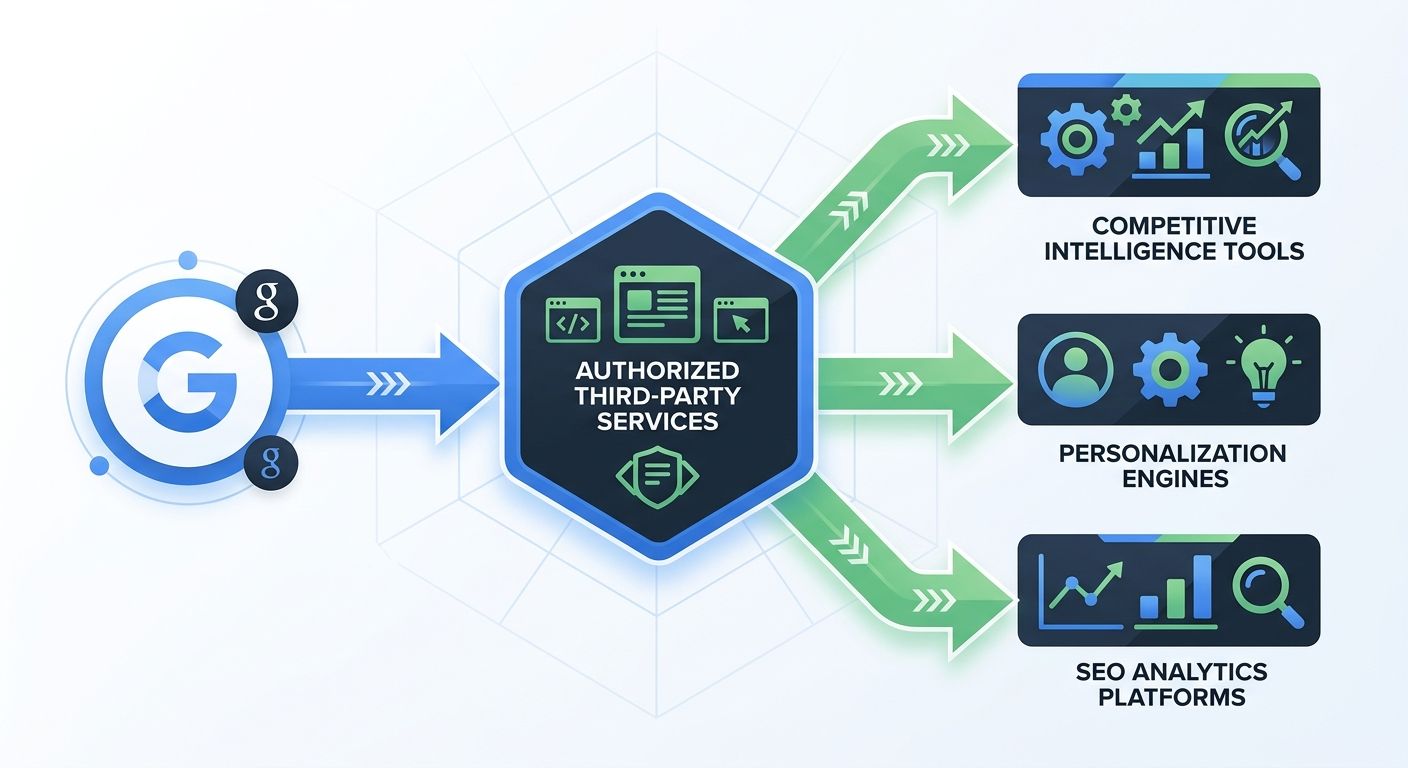
For US agencies, 3 practical implications emerge immediately:
UK-based clients or prospects will expect you to integrate exported search data into your analysis. If you can't ingest and interpret that data, a competing agency will.
Third-party SEO tools will gain access to behavioral data they've never had before. The tool stack you evaluated at the start of the year may need re-evaluation by Q4.
Client switching costs drop. When a client can hand their search data to a new agency on day one, your retention depends entirely on the quality of your ongoing work, not on the inertia of starting over.
When the rule breaks: Data portability timelines depend on Google's implementation, and the CMA hasn't published specific deadlines for compliance. The rule applies to UK users initially, so US-only clients won't trigger portability requests in the near term. But the infrastructure Google builds for UK compliance will shape global product features.
Price transparency into your retainer model now
Here's the operational question most US agencies haven't confronted: if Google discloses its ranking criteria and your methodology is documented, what exactly is the client paying for? The answer had better be execution quality, analytical depth, and strategic interpretation, because "insider knowledge of how Google works" evaporates as a selling point under a transparency regime.
I've evaluated agencies charging anywhere from $1,500/month for basic local SEO to $40,000/month for enterprise engagements. The agencies with the healthiest client retention rates, consistently above 85% at 12 months, are the ones that price around deliverables and outcomes, not access to proprietary secrets.
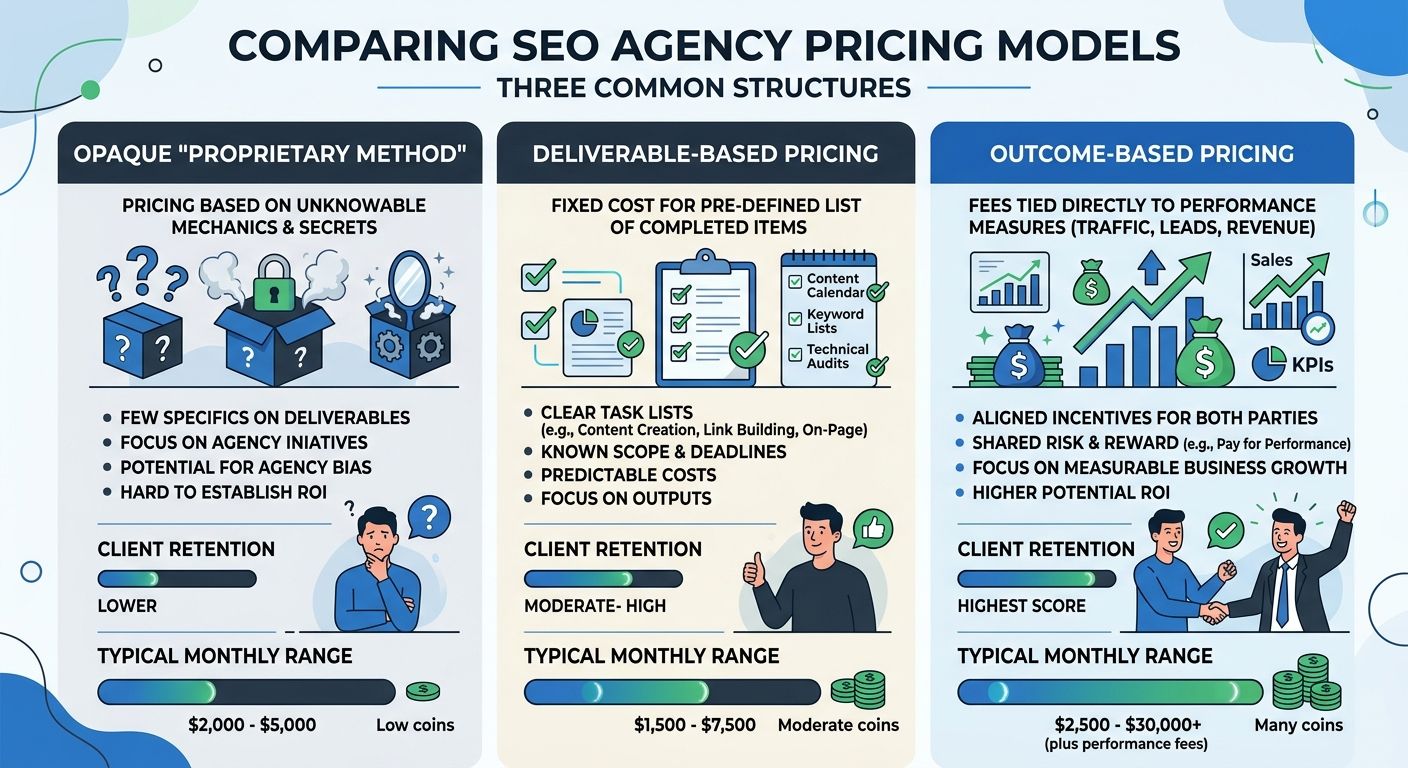
Restructure your pricing to reflect the transparency era. Break retainers into visible line items: hours of technical audit work, content production volume, reporting and analysis time, strategic consultation sessions. When algorithmic transparency disclosures make the playing field more visible, agencies that have already unbundled their pricing will attract the clients leaving agencies that can't justify vague monthly fees.
When the rule breaks: If you serve enterprise clients with complex multi-market campaigns, some consolidation in pricing is unavoidable. You don't need to itemize every 15-minute task. But the directional shift toward visible pricing is clear, and enterprise buyers are already demanding it.
Track algorithmic ranking criteria disclosures as competitive intelligence
As the CMA's requirements take effect, Google will begin disclosing more information about how rankings work. Search Engine Land confirmed that the CMA ordered Google to explain how search results are ranked and to provide data portability to some third-party services. Every disclosure Google makes under regulatory pressure becomes a competitive intelligence source for agencies that pay attention.
Set up a tracking process now. Assign someone on your team to monitor CMA enforcement actions, Google's compliance filings, and any algorithmic ranking criteria documentation that emerges. Cross-reference those disclosures against what you already know from Google's public documentation, patent filings, and Search Quality Rater Guidelines. The delta between what Google officially discloses under regulatory mandate and what agencies have been guessing at for years will create real strategic advantage for firms that analyze it systematically.
The agencies I've seen thrive through past algorithm changes, Panda, Penguin, the helpful content system, are the ones that treated Google's own documentation as primary source material rather than relying on secondhand interpretations from conference talks. The CMA's rules guarantee more primary source material than we've ever had access to. Agencies that build SEO into their development workflows with documented, auditable processes will be positioned to integrate new disclosures into their existing frameworks faster than agencies winging it.
When the rule breaks: Google will almost certainly disclose the minimum required by law, and the CMA will likely need to push for more specificity through enforcement. Don't expect a complete ranking algorithm blueprint. Expect incremental disclosures that, aggregated over 12 to 24 months, add up to significantly more clarity than exists today.
When These Rules Stop Working
These 6 rules assume a specific trajectory: regulators continue pressuring Google toward transparency, Google complies incrementally, and the resulting disclosures create a more documented search environment. There are scenarios where this trajectory stalls.
Google could challenge the CMA's requirements legally, delaying implementation for years. The US could fail to pass federal algorithmic accountability legislation, leaving the regulatory landscape fragmented across states. Or Google could comply with the letter of the regulations while disclosing so little useful information that the practical impact on SEO strategy is negligible.
If any of those scenarios play out, the documentation, pricing, and methodology work these rules describe still makes your agency better. Transparent pricing retains clients whether or not regulators force it. Documented methodology protects you during client disputes whether or not Google publishes its criteria. Treating regulatory developments as competitive intelligence keeps you informed whether or not the UK rules expand globally.
The agencies that get burned are the ones that wait for certainty before adapting. The CMA acted on June 17. The next regulatory action, whether from the EU, a US state, or another jurisdiction entirely, won't wait for your agency to catch up. Build the infrastructure for transparency now, and the specific regulatory details become implementation questions rather than existential ones.
Marcus Webb
Digital marketing consultant and agency review specialist. With 12 years in the SEO industry, Marcus has worked with agencies of all sizes and brings an insider perspective to agency evaluations and selection strategies.
Related Articles

European Commission Orders Google to Share Search Data With Rivals Starting January 2027
The European Commission adopted a binding decision on July 16, 2026 under the Digital Markets Act requiring Google to share anonymized ranking, query, click, and view data with rival search engines and AI chatbot providers beginning January 2027, according to Search Engine Journal.
Google's Expanded Ranking Pool Could Reshape Enterprise SEO Priorities: What Agencies Need to Prepare Now
The domain authority moat that enterprise sites have relied on for a decade is eroding faster than any agency retainer report will tell you.

Google Marketing Live 2026 Confirms End of Traditional Search as Agency Study Shows Top-Ranked Brands Invisible to AI 69% of Time
Google announced at Marketing Live 2026 that traditional search has ended and all search on the platform now operates through AI-based systems, according to NP Digital's APAC managing director Dan Kalinski writing in Marketing-Interactive. The announcement validates what an NP Digital experiment mea
Explore more topics