
SpyFu Publishes 14-Step SEO Audit Framework Targeting Technical Error Detection
SEO software provider SpyFu released a comprehensive 14-step audit framework on June 16, 2026, designed to help businesses identify technical errors that suppress search rankings, according to the company's published guide. The checklist addresses site crawlability, mobile optimization, Core Web Vit
 Marcus Webb··3 min read
SpyFu Publishes 14-Step SEO Audit Framework Targeting Technical Error Detection
SEO software provider SpyFu released a comprehensive 14-step audit framework on June 16, 2026, designed to help businesses identify technical errors that suppress search rankings, according to the company's published guide. The checklist addresses site crawlability, mobile optimization, Core Web Vitals, and structured data errors across websites competing under Google's 200-plus ranking factors and E-E-A-T quality guidelines.
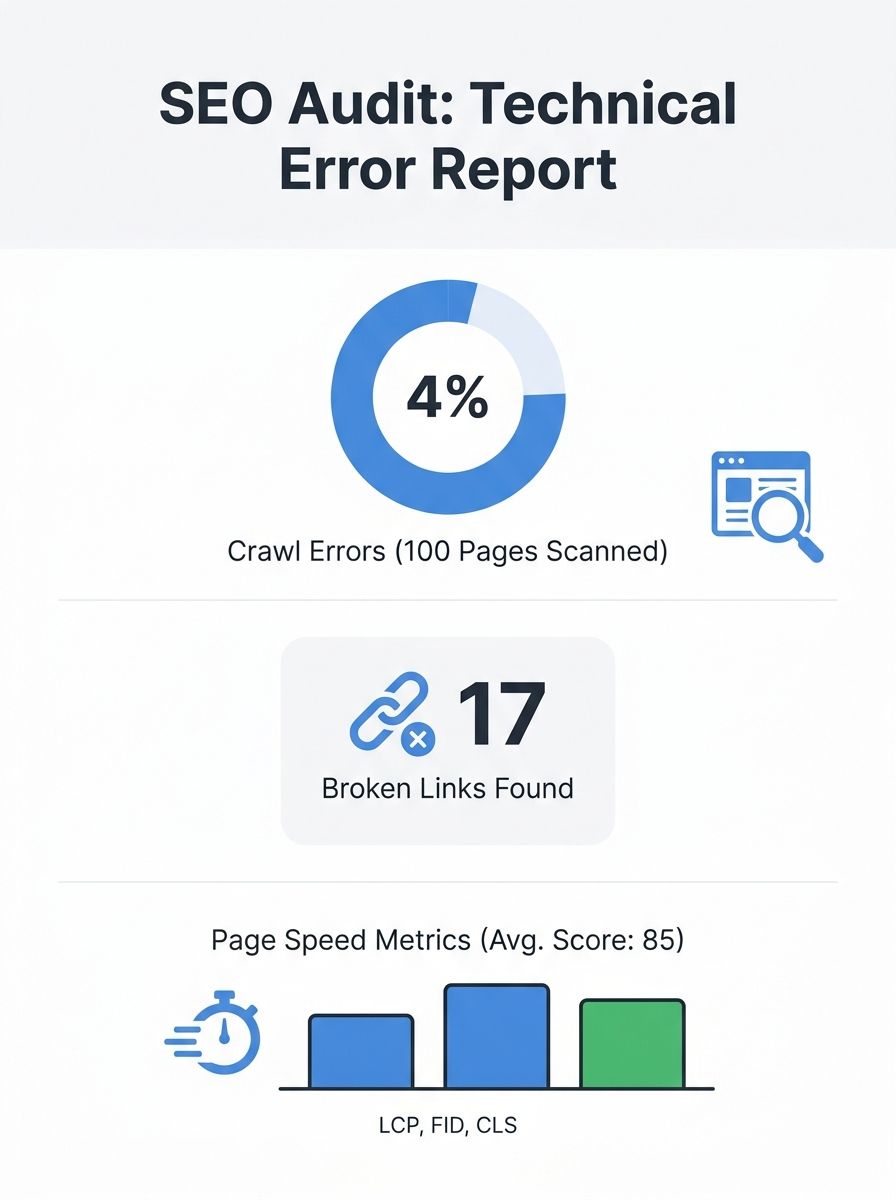
The framework arrives as technical SEO problems remain widespread across commercial websites. SpyFu's analysis found 50% of examined web pages contain duplicate content and indexation errors, 45% show broken image and alt tag issues, and 35% suffer from broken links, the guide states.
Core Audit Components Address Crawling and User Experience
The published checklist organizes site health checks into 14 sequential steps beginning with crawl diagnostics and extending through content quality review, mobile performance testing, and structured data validation. SpyFu recommends Screaming Frog's SEO Spider as the primary crawling tool, noting the software offers free access for the first 500 URLs before requiring a £149 annual subscription.
The audit protocol instructs users to configure crawlers to mimic Googlebot behavior, enable JavaScript rendering for dynamic sites, and capture page screenshots to verify proper rendering. SpyFu's framework emphasizes checking robots.txt files, robots meta tags, page speed metrics, and Core Web Vitals scores as foundational elements, according to the guide.
Technical priorities outlined in the checklist include eliminating duplicate content, repairing broken internal and external links, fixing redirect chains, and addressing indexing barriers that prevent search engines from accessing critical pages.
Framework Integrates Competitive Analysis and Keyword Research
Beyond technical diagnostics, the SpyFu audit methodology incorporates competitive benchmarking steps that compare site performance against direct search rivals. The guide directs marketers to analyze competitor keyword targeting, backlink profiles, and on-page optimization patterns to identify ranking gaps.
The checklist's keyword research component instructs users to evaluate existing organic traffic sources, map keyword intent to current page content, and identify opportunities where search volume exceeds competitive saturation. SpyFu positions title tag and meta description testing as distinct audit phases, recommending rewrites based on click-through rate analysis.
Internal linking optimization appears as step 12 in the sequence, with the guide emphasizing anchor text relevance and link equity distribution across high-priority pages. URL structure review and 301 redirect mapping close the technical portion of the audit before the final tracking and measurement phase.
Organizations struggling with persistent ranking plateaus after initial SEO investments may find diagnostic value in structured audit frameworks similar to SpyFu's approach, particularly when technical issues compound during website migrations or agency transitions fail to maintain search visibility.
Site Audit Tool Development Targets Workflow Integration
SpyFu disclosed plans for a dedicated Site Audit tool designed to simplify the 14-step process through automated prioritization and AI-generated optimization recommendations. The forthcoming platform will deliver title tag suggestions, meta description rewrites, and actionable fix sequences based on crawl findings, the company stated in the published guide.
The tool aims to integrate competitive intelligence data with site diagnostics, allowing users to benchmark technical health against ranking competitors within a unified interface. SpyFu has not announced a release date for the Site Audit platform.
The published framework joins a growing category of technical SEO resources as agencies identify site audits as client acquisition tools and businesses seek structured approaches to evaluating their technology stack investments.
Reading Between the Lines
SpyFu's timing positions this audit framework during a period when technical SEO fundamentals matter more than ever—not less—despite AI search's rise. The persistent prevalence of duplicate content across half of analyzed sites suggests many businesses still lack systematic diagnostic processes, creating opportunity for both in-house teams and agencies to demonstrate measurable value through structured technical cleanup.
The checklist's integration of competitive analysis with pure technical diagnostics reflects a practical reality: fixing broken links matters only if you're also targeting the right keywords and matching intent better than competitors. The dual focus acknowledges that technical excellence without strategic positioning delivers traffic but not conversions, while brilliant strategy atop a technically broken foundation delivers neither.
SpyFu's forthcoming Site Audit tool signals the market's shift toward platforms that compress multi-tool workflows into single interfaces with AI-assisted prioritization. Marketing managers evaluating agency partners or building in-house capabilities should note whether proposed audit processes match the systematic scope outlined here—14 distinct checkpoints covering crawlability through tracking—or simply repackage surface-level PageSpeed scores as comprehensive technical reviews.
Marcus Webb
Digital marketing consultant and agency review specialist. With 12 years in the SEO industry, Marcus has worked with agencies of all sizes and brings an insider perspective to agency evaluations and selection strategies.
Related Articles

SEO Tools Analysis Identifies 20 Leading SERP Tracking and Website Audit Platforms for 2026 Budget Tiers
TechyFlavors published a comprehensive analysis of 20 leading SEO tools on May 21, identifying the top SERP tracking and website audit platforms for 2026 across free and premium price tiers, according to the evaluation posted on the digital marketing publication's website.

SEO Intelligence Framework Separates Seven Measurement Layers as Eight-Product Comparison Shows Industry Vocabulary Fragmentation
A comparative field guide published September 22 positions website intelligence, AI visibility, and traditional SEO as distinct measurement layers after analyzing eight products serving overlapping markets, according to a 2026 analysis on dev.

The Invisible SEO Audit: Fixing Hidden Technical Problems Before Rankings Improve
Fifty-six percent of companies now run AI-driven SEO monitoring to catch invisible technical problems in real time, according to 2026 marketing data.
Explore more topics