
Digital Agency Analysis Identifies Technical SEO Audits as Untapped Revenue Stream for Client Acquisition
Kollox Web Solutions published a white paper analysis on June 1, 2026, positioning comprehensive technical SEO audits as a competitive differentiator for agencies pitching infrastructure diagnostics to clients experiencing traffic and conversion decline, according to the firm's published analysis. T
 Marcus Webb··3 min read
Digital Agency Analysis Identifies Technical SEO Audits as Untapped Revenue Stream for Client Acquisition
Kollox Web Solutions published a white paper analysis on June 1, 2026, positioning comprehensive technical SEO audits as a competitive differentiator for agencies pitching infrastructure diagnostics to clients experiencing traffic and conversion decline, according to the firm's published analysis. The analysis frames technical debt—server response times, crawl path inefficiencies, and data structure problems—as "silent revenue killers" that standard surface-level audits fail to detect.
The analysis argues that most businesses rely on superficial diagnostic tools that identify obvious errors without examining server logs, rendering pipelines, Core Web Vitals data, or internal link equity distribution, according to the paper. Kollox characterizes standard audits as insufficient for diagnosing what the firm calls "invisible architecture" problems—crawl traps, render-blocking resources, and inefficient database queries that compound over time.
Crawl Budget Waste as Diagnostic Entry Point
The Kollox analysis identifies crawl budget allocation as a primary audit focus area. The paper states that sites with bloated architecture—thin content, duplicate meta tags, or parameter-based URL proliferation—waste Googlebot's finite crawl time on low-value pages, according to the document.
The firm's diagnostic framework requires mapping a site's complete link graph to identify whether Google's crawler spends time on revenue-driving pages or navigates through what Kollox describes as "tag archives and session IDs." The analysis does not provide case study data or client examples demonstrating crawl budget optimization impact on organic traffic.
Google's own crawl budget guidance confirms that crawl demand and server capacity determine how many pages Googlebot processes per visit, a factor particularly relevant for large-scale e-commerce and enterprise sites with thousands of SKU pages.
Site Speed as Conversion Multiplier
Kollox's paper cites a 7% conversion rate decline for every 0.1-second delay in mobile load time, though the analysis does not attribute this figure to a specific study or date. The firm positions speed optimization as requiring dissection of critical rendering path components—server-side caching strategies, CDN configurations, and JavaScript bundle payload sizes.
The analysis argues that premium technical audits should measure Time to First Byte (TTFB) and First Contentful Paint (FCP) separately rather than relying on aggregate Lighthouse scores. Kollox describes third-party scripts as frequent "hijackers" of page speed, though the paper does not quantify the performance impact of specific script categories.
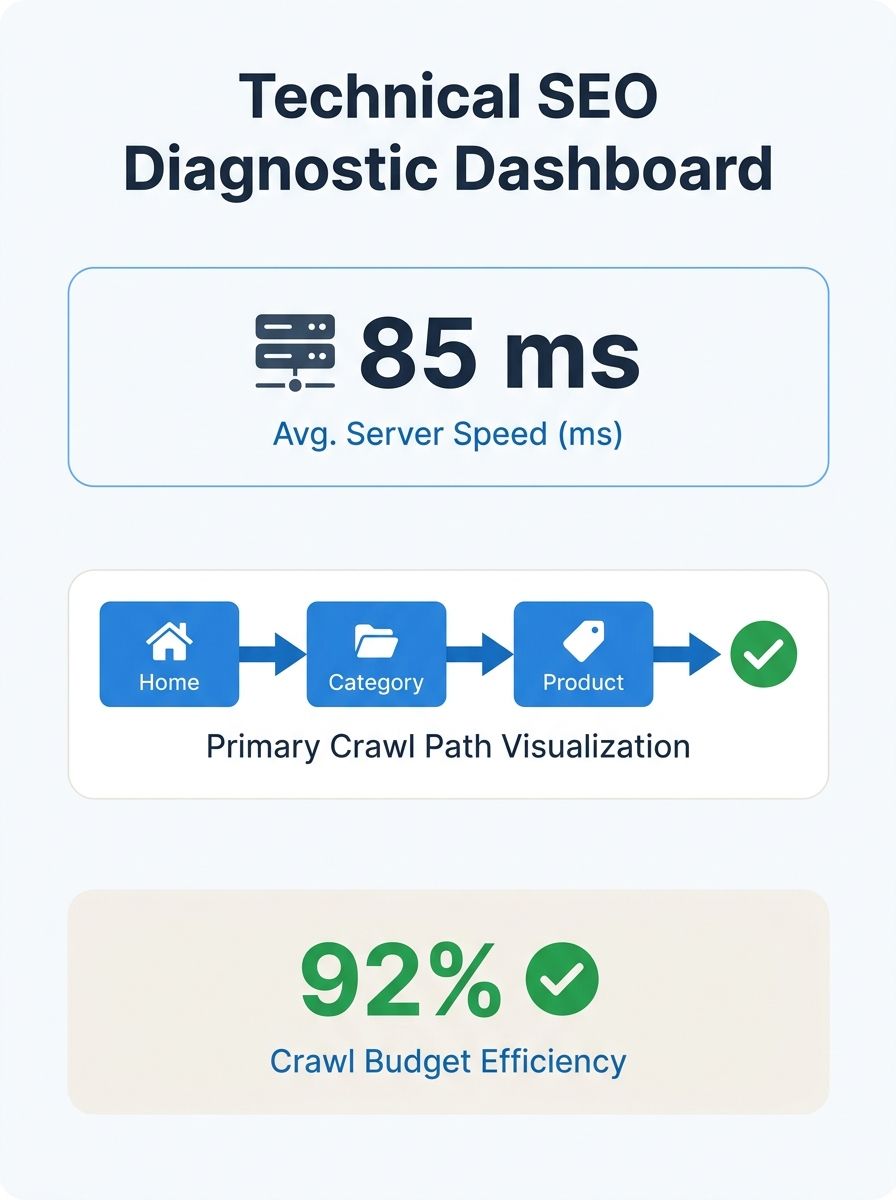
The firm's position aligns with Google's Core Web Vitals initiative, which evaluates page experience through loading performance, interactivity, and visual stability metrics that directly affect search rankings.
Custom Backend Infrastructure as Differentiation Strategy
The analysis positions custom backend panel development as a technical SEO service extension. Kollox argues that off-the-shelf content management solutions introduce technical debt through "bloated plugins" and inefficient database queries, according to the paper.
The firm's backend optimization approach targets sites managing high traffic volumes, contrasting a site "that struggles under a load of 1,000 visitors" with one "that scales gracefully to 100,000," though no performance benchmarks or client data support these capacity claims. The analysis frames custom backend development as eliminating dependency on third-party plugins while improving crawlability.
Kollox presents structured data implementation and server log analysis as components of its technical audit methodology. The firm states it uses server log analysis to understand how search bots and users interact with client sites, though the paper does not detail specific log analysis techniques or tools.
Agency Positioning and Service Pricing
The Kollox analysis positions technical SEO audits as "engineering discipline" rather than checklist-based services. The paper does not disclose audit pricing tiers or deliverable specifications but characterizes the firm's approach as building "leak-proof digital assets" through continuous optimization.
The white paper functions as a service positioning document for Kollox's own IT services practice, which the firm describes as specializing in "premium IT services" including backend panel development and mobile application architecture. The analysis does not cite third-party research, industry benchmarks, or case study ROI data.
Reading Between the Lines
Kollox's analysis illustrates how agencies can reframe technical SEO from a compliance checklist into a diagnostic service line that positions infrastructure problems as direct revenue threats. The white paper's emphasis on "hidden leaks" and "invisible architecture" creates urgency around problems clients may not perceive until they manifest as traffic declines.
The positioning strategy—technical debt as "silent revenue killer"—allows agencies to pitch audits as discovery rather than repair, potentially commanding higher fees for forensic analysis versus standard site scans. The framework positions agencies as engineering partners rather than marketing vendors, a distinction particularly relevant for B2B clients evaluating SEO service providers on technical credibility.
The absence of performance benchmarks or case study data in Kollox's paper reflects a common challenge in technical SEO sales materials: infrastructure improvements are difficult to isolate from other ranking factors and traffic variables. Agencies adopting this positioning strategy will need proprietary before-and-after data to substantiate diagnostic claims when competing for enterprise contracts.
Marcus Webb
Digital marketing consultant and agency review specialist. With 12 years in the SEO industry, Marcus has worked with agencies of all sizes and brings an insider perspective to agency evaluations and selection strategies.
Related Articles
SpyFu Publishes 14-Step SEO Audit Framework Targeting Technical Error Detection
SEO software provider SpyFu released a comprehensive 14-step audit framework on June 16, 2026, designed to help businesses identify technical errors that suppress search rankings, according to the company's published guide. The checklist addresses site crawlability, mobile optimization, Core Web Vit

The Invisible SEO Audit: Fixing Hidden Technical Problems Before Rankings Improve
Fifty-six percent of companies now run AI-driven SEO monitoring to catch invisible technical problems in real time, according to 2026 marketing data.

SEO Team Laid Off After Submitting 1,400 Unimplemented Recommendations Over 18 Months
An entire SEO department lost their positions in early 2026 after leadership determined the team failed to reverse organic traffic declines, despite documenting 1,400 improvement tickets across 18 months, according to a case study published in Search Engine Journal on May 13. The disconnect reveals
Explore more topics