
Search Engine Journal Publishes Three-Part Integrated Brief Framework to Unify SEO, PPC, and Content Strategy in AI Search Era
Search teams operating from separate priorities cost B2B firms qualified leads and budget efficiency even when targeting identical audiences, according to a planning framework published by Search Engine Journal on June 17, 2026. The three-section integrated search brief addresses siloed execution pa
 Marcus Webb··4 min read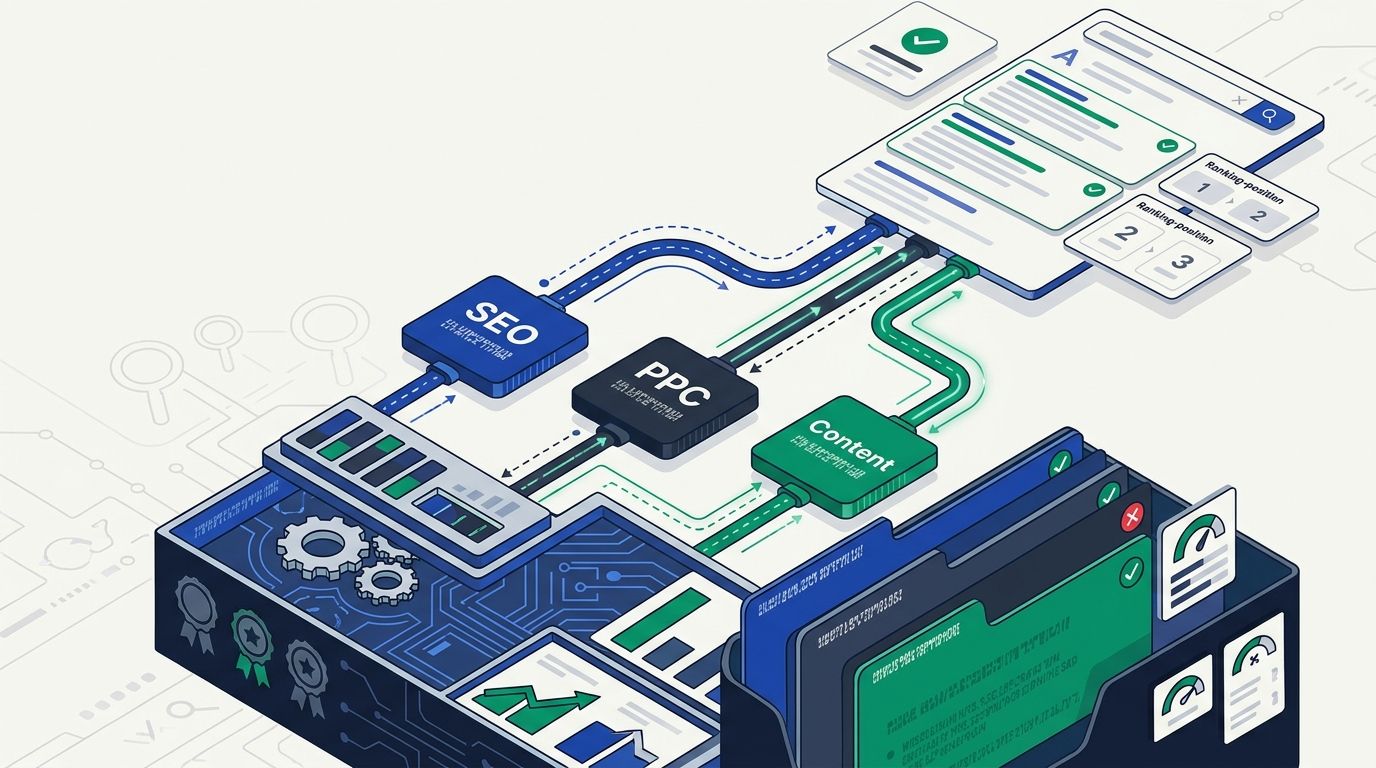
Search Engine Journal Publishes Three-Part Integrated Brief Framework to Unify SEO, PPC, and Content Strategy in AI Search Era
Search teams operating from separate priorities cost B2B firms qualified leads and budget efficiency even when targeting identical audiences, according to a planning framework published by Search Engine Journal on June 17, 2026. The three-section integrated search brief addresses siloed execution patterns that persist as Google's search results increasingly mix AI Overviews, text ads, shopping carousels, local packs, and AI Mode experiences within single result pages, the framework documentation shows.
The framework emerged from operational friction patterns SEJ documented in a B2B professional services case study. SEO teams requested blog content targeting priority topics for organic visibility, PPC managers needed landing page copy variations for ad group testing, and content departments worked website updates for mission-vision-values launches—all for the same commercial construction services audience, with zero coordination on search opportunity, channel roles, or measurement plans. The absence of a shared operating agreement created competing resource demands and duplicate targeting effort.
The Three-Component Unified Brief Structure
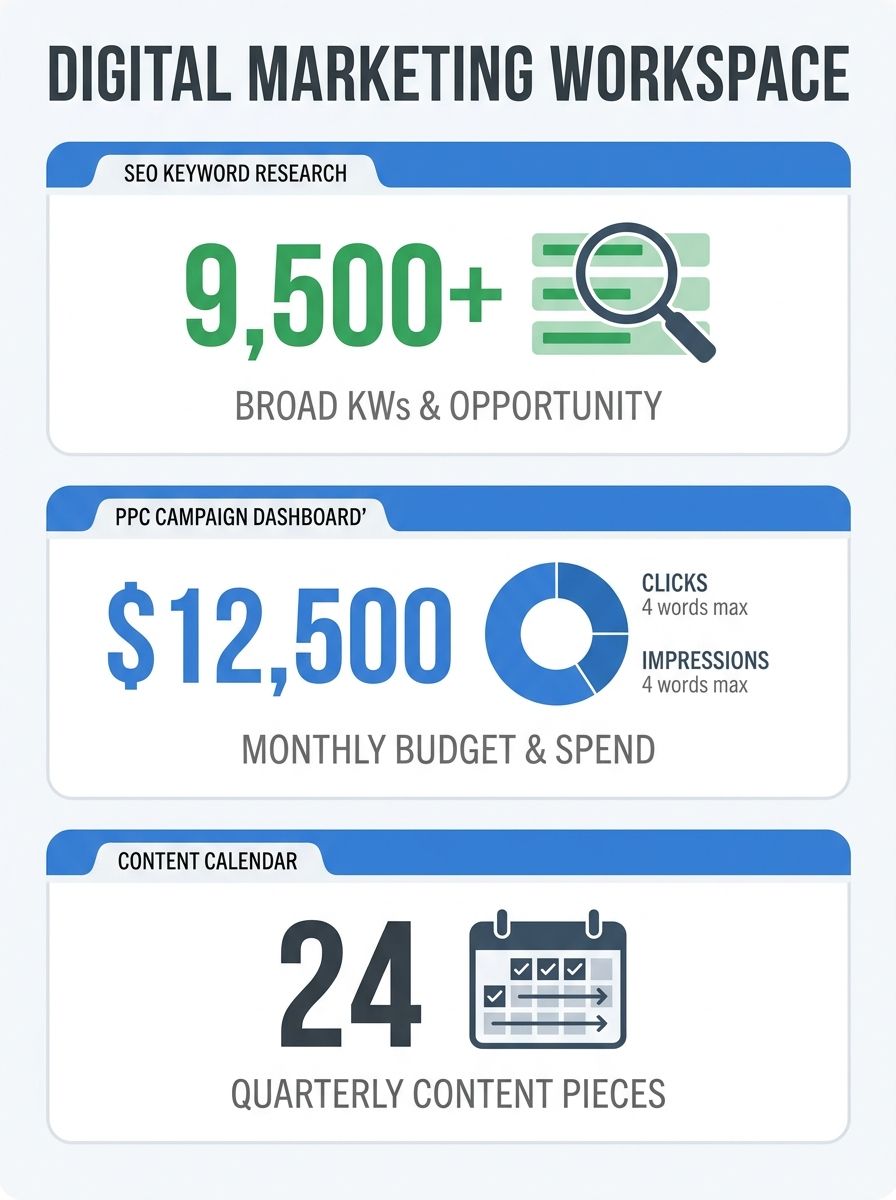
The framework specifies three mandatory sections that force cross-functional alignment before execution begins.
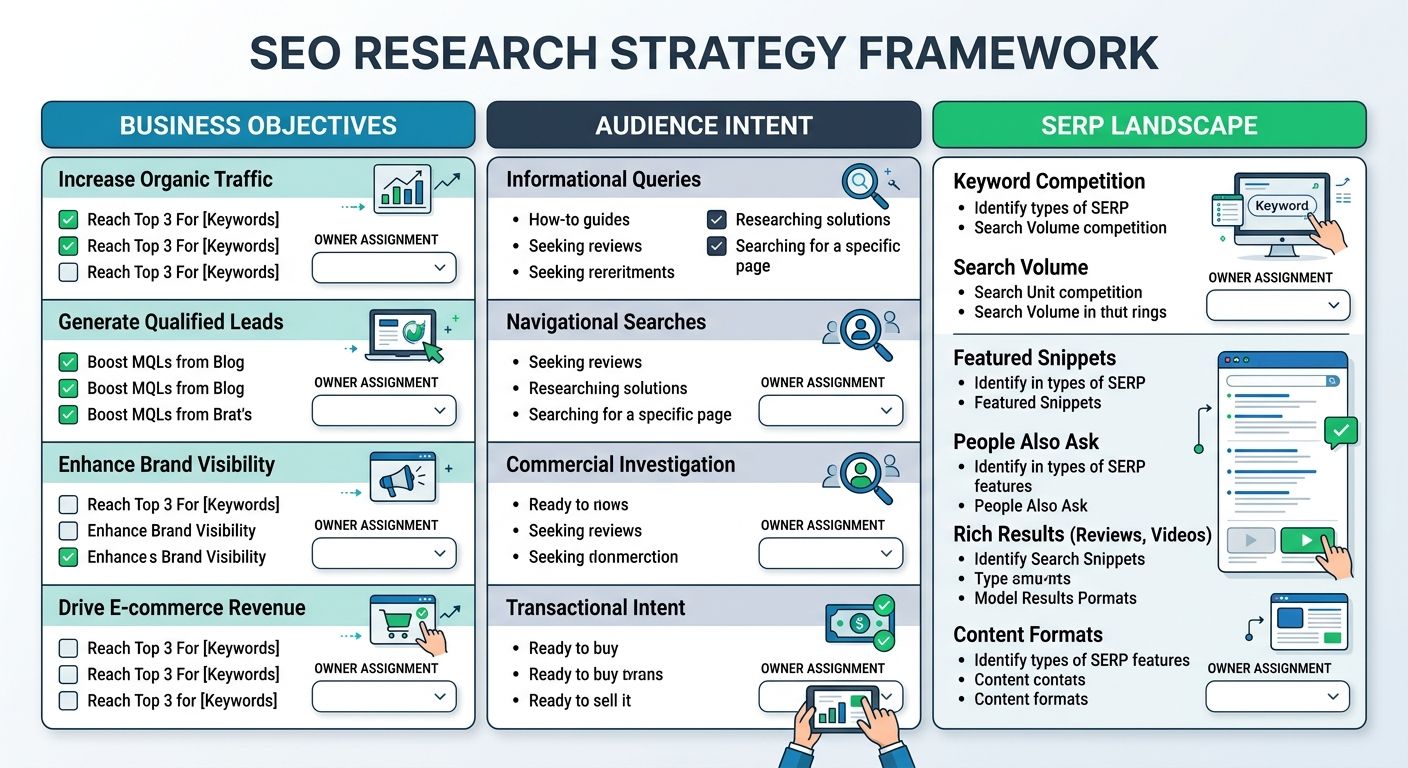
Section one requires teams to define a business objective rather than channel-specific metrics. Weak briefs open with "rank for X keyword" or "launch ads for Y service," according to the framework documentation. Outcome-focused briefs instead specify business goal, audience segment, desired action, primary business KPIs, secondary channel KPIs, timeframe, and owner names. The commercial construction case study evolved from a weak starting point of "improve visibility for warehouse automation services" to a unified objective: "increase qualified lead demo requests from mid-market operations leaders researching warehouse automation services by improving organic and paid coverage for solution-aware, comparison research, and vendor sourcing searches."
Section two maps audience behavior and search intent across both channels. The brief requires teams to document primary audience, buyer segment, buyer role, funnel stage, topic cluster, intent type, searcher need, and channel roles in a table format. The framework explicitly calls for teams to identify whether queries trigger traditional result sets, AI Overviews, or AI Mode experiences. Google's AI Mode documentation indicates these formats appear for queries requiring exploration, comparisons, reasoning, or prompt-style interactions beyond traditional decade-old search patterns, the framework notes. A bottom-funnel service query may need only paid ad coverage and a landing page; broader comparison queries demand deeper content supporting multiple journey paths.
Section three analyzes SERP landscape realities beyond internal keyword research. The framework cautions against letting briefs become "glorified keyword research reporting" focused on rankings rather than competitive environment. A single query can produce results mixing AI Overviews, text ads, shopping results, news blocks, video, and local packs—context that determines whether content investment, paid budget, or both deliver ROI for specific queries.
Cross-Channel Resource Coordination Requirements
The brief structure forces teams to answer whether SEO or PPC takes primary responsibility for each query cluster before content production begins. Channel role assignment prevents duplicate page creation and wasted ad spend on queries organic pages already serve effectively, according to the framework. The documentation recommends creating spreadsheet tables for the audience-intent section rather than narrative briefs, enabling shared reference documents that update as SERP features shift.
The timing coincides with mounting evidence that AI search features fragment traditional channel boundaries. Recent analysis showed search traffic to websites fell 25% over the past year as AI Overviews block clicks, while other data indicated Google delivers just 232 clicks per 1,000 queries to external sites. The integrated brief framework acknowledges these visibility challenges by requiring teams to explicitly plan for AI Overview and AI Mode query types rather than defaulting to traditional organic optimization.
Implementation Barriers in Agency and In-House Settings
The framework does not address organizational resistance to shared planning documents in settings where SEO, PPC, and content teams report to separate directors or operate under conflicting performance incentives. Agencies managing client accounts across multiple disciplines face similar coordination challenges when specialist teams bill hours independently. The brief template provides a structural artifact but requires executive mandate to override existing workflow patterns.
The documentation specifies fields for business KPIs and channel KPIs without guidance on measurement attribution when organic and paid channels both contribute to conversion paths. Multi-touch attribution models would determine how teams divide credit for outcomes the integrated brief aims to produce, but the framework leaves those decisions to implementing organizations.
The Takeaway
Marketing managers evaluating whether to adopt integrated search briefs should recognize the framework addresses a genuine operational gap—teams targeting the same audiences from separate planning documents—but implementation requires authority to enforce shared documentation across departments or agencies that currently operate autonomously. The three-section structure (business objective, audience intent, SERP analysis) delivers value when organizations commit to using it as a binding operating agreement before content production or campaign launches begin, not as retrospective documentation.
The framework's explicit accounting for AI Overview and AI Mode query types represents its clearest differentiation from traditional keyword planning templates. As Google's AI-first search interface mandates reshape user behavior and traditional blue links compete with AI summaries for attention, planning documents that force teams to map which queries trigger which search experiences will likely separate effective channel coordination from siloed execution. Agencies and in-house teams should test the brief format on a single high-priority campaign before attempting organization-wide adoption, then measure whether resource conflicts and duplicate targeting decrease in subsequent planning cycles.
Marcus Webb
Digital marketing consultant and agency review specialist. With 12 years in the SEO industry, Marcus has worked with agencies of all sizes and brings an insider perspective to agency evaluations and selection strategies.
Related Articles
Marketing Teams Face Three-Role Restructure as AI Search Citations Replace Traditional Rankings
Marketing organizations must restructure three core roles and reallocate 15% to 20% of quarterly budgets to capture visibility in AI-powered search platforms, according to a framework published August 31 by Search Engine Journal.

TrySight.ai Publishes Step-by-Step Framework for Optimizing Content Visibility in AI Search Platforms
TrySight.ai released a three-stage content optimization framework on August 2 designed to position brand content for citation in AI-powered search platforms including ChatGPT, Claude, and Perplexity, according to a guide published on the company's website.
Enterprise SEO Teams Get Structured Testing Framework for AI Search Performance Measurement
The inability to run controlled A/B tests on large language model responses has created a measurement gap that mid-market and enterprise SEO teams have struggled to close with traditional testing methods, according to a July 8 webinar announcement from seoClarity.
Explore more topics