
Stop Chasing AI Overviews: Why Optimizing for Traditional Blue Links Still Drives More Qualified B2B Pipeline in 2026
B2B marketing teams are redirecting budget toward AI Overview optimization based on a flawed assumption: that appearing in Google's AI-generated summaries produces the same pipeline outcomes as ranking in traditional organic results.
 Marcus Webb··8 min read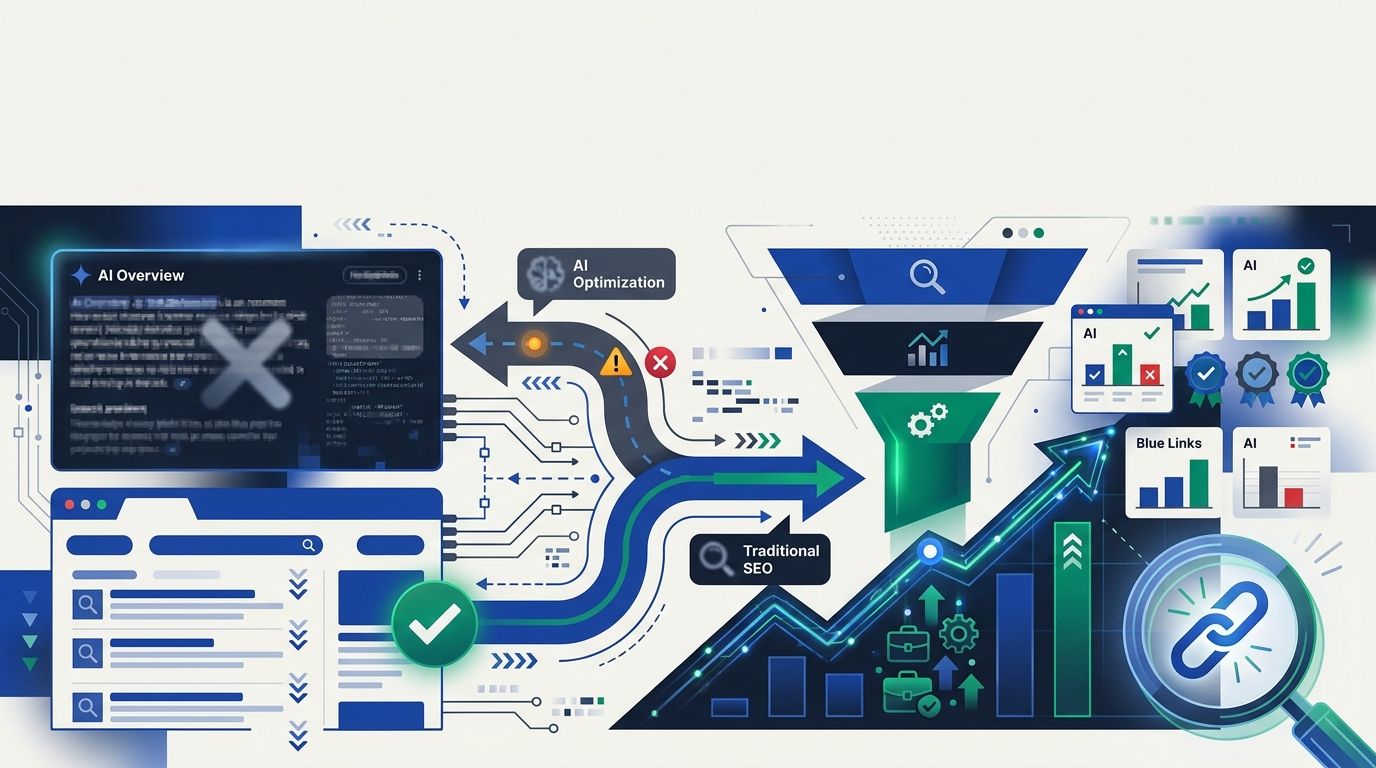
Stop Chasing AI Overviews: Why Traditional Blue Links Still Drive More Qualified B2B Pipeline
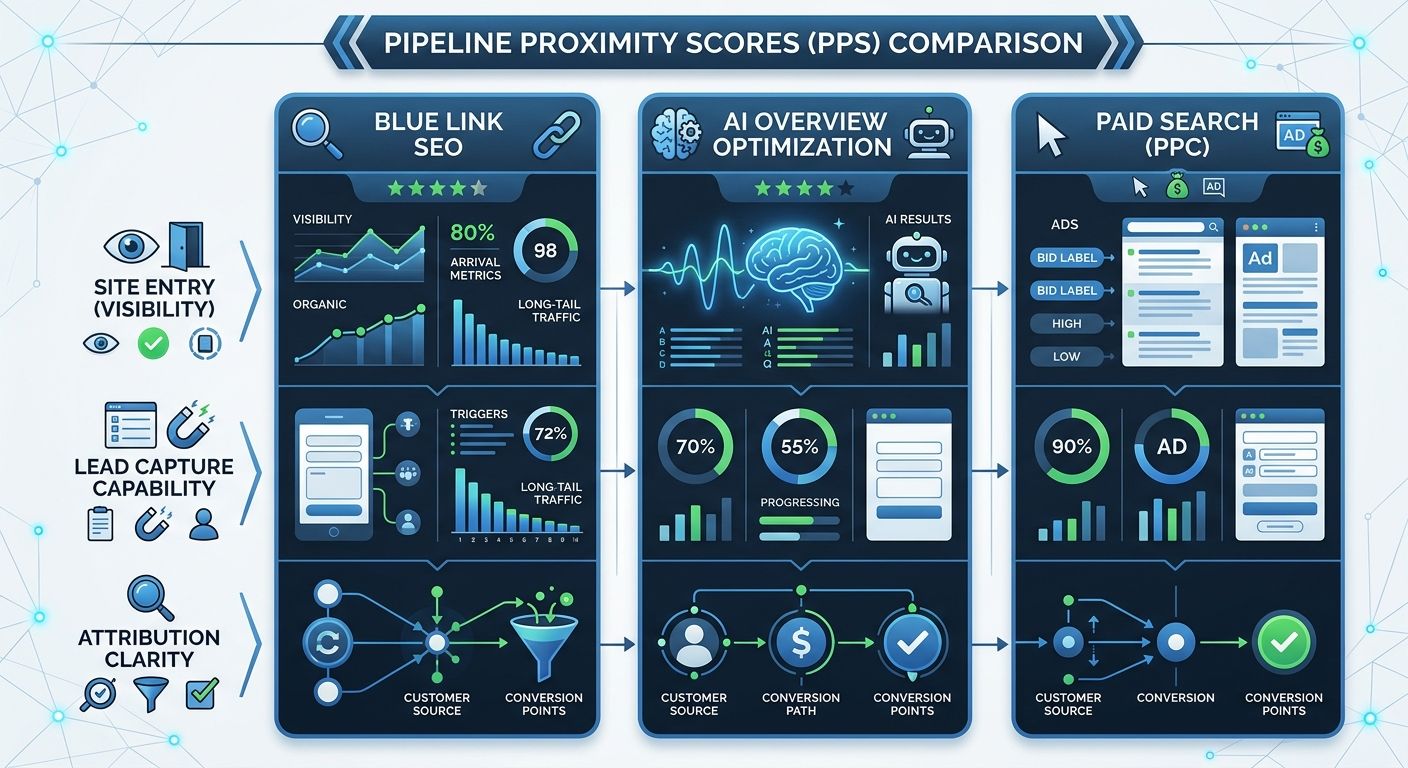
B2B marketing teams are redirecting budget toward AI Overview optimization based on a flawed assumption: that appearing in Google's AI-generated summaries produces the same pipeline outcomes as ranking in traditional organic results. The mechanism connecting search to B2B revenue runs through site entry, content engagement, and lead capture. AI Overviews structurally bypass all three.
How B2B Pipeline Actually Forms From Organic Search
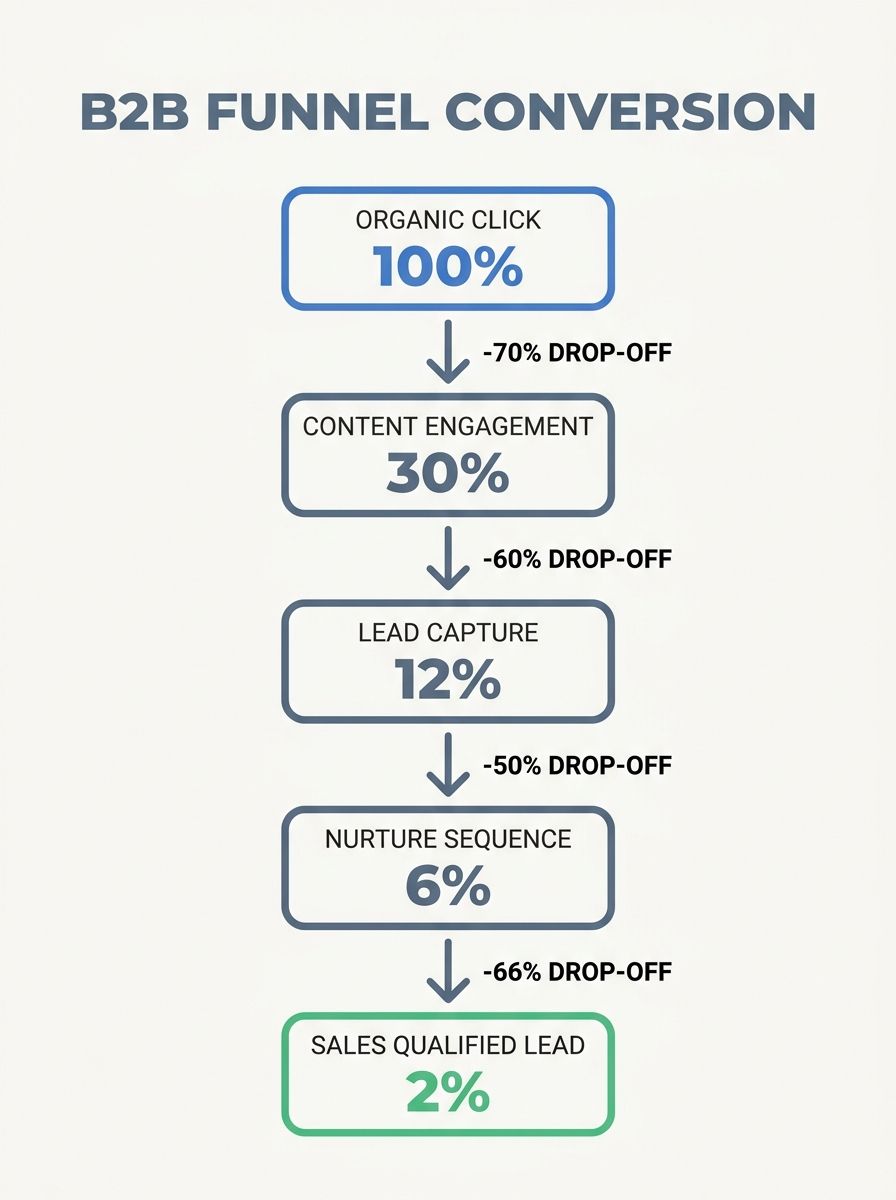
B2B pipeline from search doesn't start with a single click. It starts with a sequence of them. A B2B audience consumes around 4.5 pieces of content before reaching out to a salesperson, according to SiegeMedia data compiled by SeoProfy. Each of those content touches requires the prospect to land on your site, engage with a page, and either return later or enter a nurture sequence. The pipeline mechanism is cumulative across multiple sessions, spread over weeks or months.
This is the fundamental disconnect in the AI Overview optimization conversation. An AI-generated summary might mention your brand or cite your page. But it doesn't deliver a visitor who reads your case study, downloads your whitepaper, triggers a lead score update, and eventually books a demo. The entire B2B SERP strategy conversation needs to start here: with the difference between an impression and a site session.
First Page Sage's 2026 analysis found a three-year ROI of 702% for B2B SaaS companies investing in organic search. That return doesn't materialize from citations in AI-generated panels. It comes from visitors who enter through blue link results, engage with conversion-optimized pages, and progress through a sales funnel designed to capture and qualify them. The ROI math breaks down the moment you remove the site visit from the equation.
Per-seat SaaS models achieve even higher returns, hitting 728% ROI compared to 614% for usage-based and 652% for tiered pricing models, largely because predictable lifetime value calculations make organic traffic economics easier to model. Every one of those numbers depends on measurable on-site conversions originating from organic clicks. None of them depend on AI Overview citations.
Why Zero-Click Search Hurts B2B More Than B2C
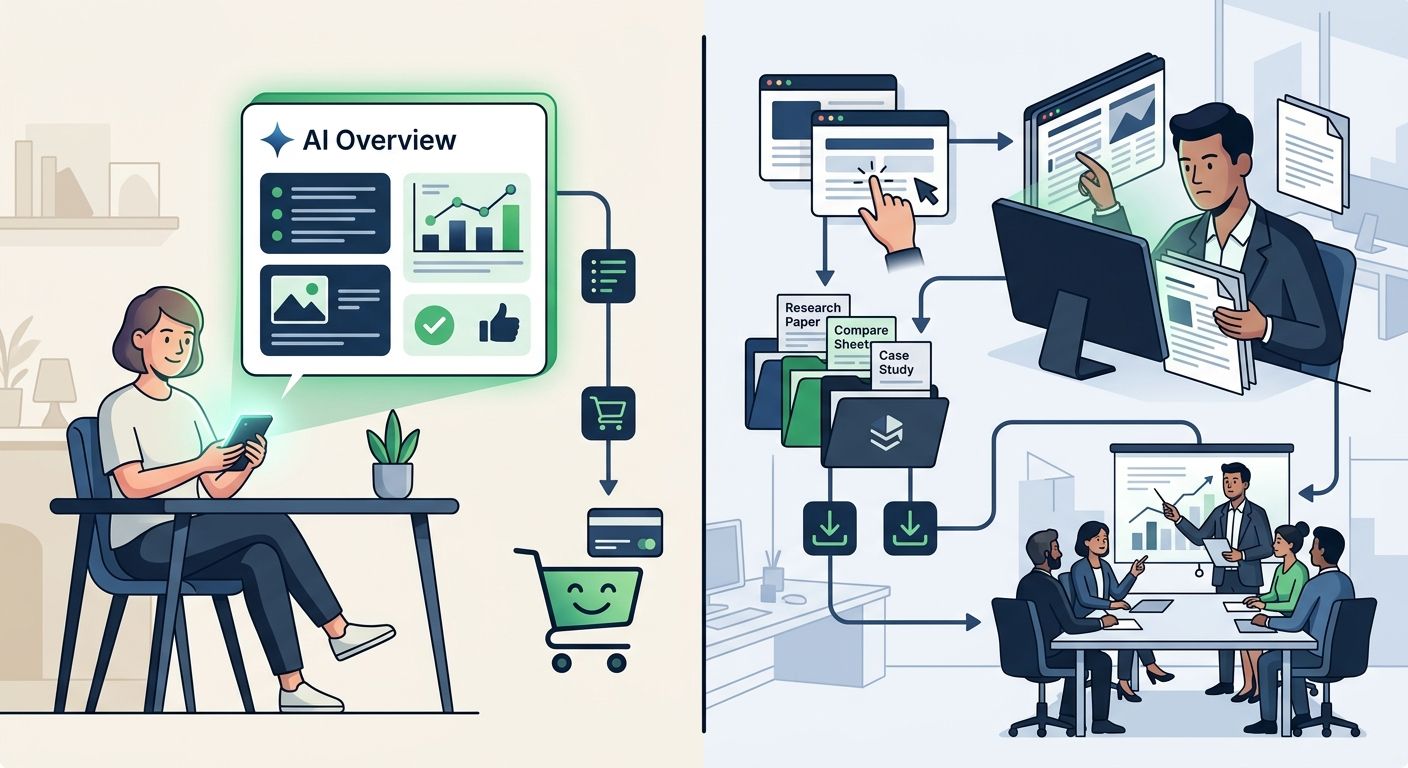
Why does the rise of zero-click search disproportionately damage B2B companies? Because B2B buying decisions can't be resolved in a summary paragraph. A consumer searching "best wireless earbuds under $100" can get a satisfactory answer from an AI Overview and buy directly. A procurement director evaluating enterprise data integration platforms needs to compare pricing tiers, read implementation case studies, assess compliance documentation, and loop in three other stakeholders before the first vendor call happens.
AI summaries correlate with fewer clicks and more zero-click sessions, according to analysis published by Rank Engine in February 2026, though the effect varies by query type. For informational B2C queries, zero-click results can still drive brand awareness that converts through other channels. For B2B queries, zero-click means the prospect got a surface-level answer and moved on without ever encountering your product's differentiation, your pricing structure, or your lead capture mechanisms.
The click-through rate damage is real: even a #1 ranked page now gets a smaller share of clicks when an AI summary appears above it. But here's what the panic over those numbers misses: the clicks that do happen on B2B queries carry disproportionate pipeline value. When a prospect scrolls past an AI Overview and clicks a blue link result, they're signaling that the summary didn't satisfy their need. They want depth. They want specifics. They're further along in their evaluation process than someone who accepts a surface-level answer. Those are the visitors who fill out "request a demo" forms.
Blue Links Create Entry Points That AI Citations Cannot
The blue link SEO value proposition for B2B comes down to a mechanical reality: traditional organic results send visitors to your domain. Once they arrive, your entire conversion infrastructure activates. Forms, gated content, retargeting pixels, chatbots, cookie-based personalization, behavioral scoring triggers. None of this fires from an AI Overview citation.
Consider the difference in data capture between the two paths. A prospect who clicks a blue link result and lands on your comparison page generates a session in your analytics, can be added to a remarketing audience, and potentially fills out a form if the content is strong enough. A prospect who reads your brand name in an AI Overview citation generates... an impression count in Google Search Console. You can't retarget them. You can't score them. You can't nurture them. You don't even know they exist.
This is where misreading keyword intent data compounds the problem. Agencies that chase AI Overview optimization for their B2B clients often target broad informational queries where AI Overviews dominate. Those queries were low-conversion even before AI Overviews existed. The better play is targeting commercial-investigation and transactional queries where blue links still capture the bulk of qualified clicks: queries like "enterprise data platform pricing comparison" or "SOC 2 compliant CRM vendors."
B2B SaaS websites that offer original research increased organic traffic by an average of 29.7% compared to those relying on generic content, according to Isoline data. Original research content is precisely the type of material that performs well in blue link rankings while being difficult for AI Overviews to fully summarize. A 3,000-word benchmarking report with proprietary data doesn't compress into a three-sentence AI panel. It drives clicks because prospects need the full dataset.
Content Depth Works as a Qualification Filter
This layer of the mechanism is the one B2B marketers most frequently overlook. Long-form, technically detailed content doesn't just rank well in traditional organic results. It also filters out unqualified visitors before they ever hit your pipeline.
An AI Overview treats every searcher the same: here's a summary, take it or leave it. Blue link content creates a self-selection gradient. A 2,500-word technical guide on API rate limiting for enterprise integrations will attract engineering managers evaluating platforms and repel casual browsers. The content itself acts as a qualification mechanism. Prospects who read 70% of a deep technical page and then click through to your pricing page are dramatically more likely to convert than prospects who scanned a three-line AI summary.
The editorial content strategy approach to lead generation outperforms programmatic approaches for exactly this reason. Editorial content carries depth, nuance, and specificity that both ranks in traditional results and pre-qualifies the reader. Programmatic content scales page counts but rarely delivers the engagement signals that B2B pipeline requires.
SEO ROI can reach as high as 12.2 times marketing spend for B2B companies, according to Powered by Search. That multiplier comes from the compounding effect of content that ranks, attracts, qualifies, and converts through an integrated funnel. Remove any step from that chain and the ROI collapses. AI Overview optimization removes the "attracts to your site" step and the "converts through your funnel" step simultaneously.
The Attribution Gap in AI Visibility Metrics
The emerging metrics around AI search visibility sound compelling in a pitch deck. Citation Share measures how often your brand appears in AI-generated summaries. LLM Conversion Rate attempts to track whether AI mentions lead to downstream actions. These metrics exist because the industry recognizes that AI search vs traditional SEO requires different measurement frameworks.
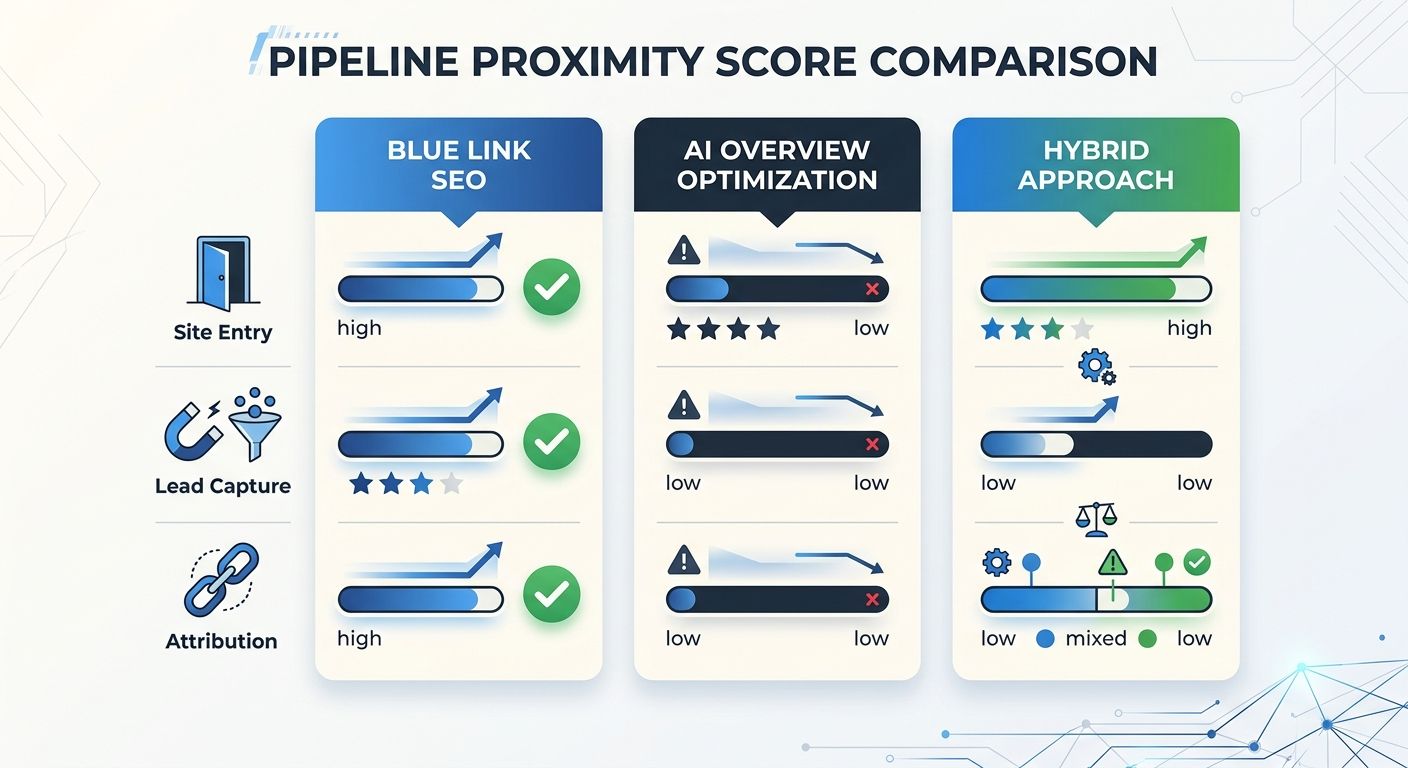
The problem: none of these metrics connect to B2B pipeline with anywhere near the reliability of traditional organic attribution. When a blue link click lands a visitor on your site, you can track them through Google Analytics, your CRM, your marketing automation platform, and your sales pipeline. You know which page they entered on, what content they consumed, when they converted to a lead, how they progressed through stages, and whether they became revenue. That attribution chain is well-established, battle-tested across millions of B2B transactions, and directly tied to the ROI benchmarks cited throughout this article.
AI Overview citations exist in a measurement gray area. Google Search Console now counts impressions for URLs that appear in both AI Overviews and blue link results, but the data doesn't distinguish between a user who saw your citation in an AI panel (and didn't click) versus one who saw your blue link (and did click). The impression counts are inflated relative to actual engagement. You're measuring visibility, not pipeline.
Many B2B SEO agencies have started offering AI visibility audits as a service line, and some of that work has genuine value for brand awareness monitoring. But when clients ask me whether those visibility metrics should influence budget allocation decisions for pipeline-focused campaigns, the answer is clear: allocate budget based on the channel that produces attributable, qualified opportunities. For B2B companies in 2026, that channel is still traditional organic search flowing through blue link results into on-site conversion paths.
The Hybrid Reality and Where This Model Breaks
The mechanism described above has real limitations, and I'd be doing you a disservice by pretending otherwise.
AI Overviews do influence B2B buying behavior at the top of the funnel. A CFO who asks Google "what is zero-trust network architecture" and sees your company cited in the AI Overview has received a brand impression that traditional attribution can't capture but that still carries value. For pure awareness-stage queries where you're competing against educational content from analysts and publications, AI Overview visibility matters. Dismissing it entirely would be as short-sighted as over-investing in it.
The model also faces pressure from a structural shift in how Google presents results. The changes announced at Google Marketing Live 2026 confirm that AI-generated responses will occupy an increasing share of SERP real estate. Blue links aren't disappearing, but their visual prominence is declining. Over a multi-year horizon, the share of qualified clicks flowing through traditional organic results will erode.
And AI-referred traffic does show promising engagement signals when it does arrive. Adobe data from early 2025 showed AI-referred visitors exhibiting lower bounce rates and browsing more pages per session than traditional organic traffic. If those engagement patterns hold as AI search matures, the pipeline math could shift.
But the shift hasn't happened yet for B2B pipeline specifically. The 702% three-year ROI, the 12.2x marketing spend multiplier, the 728% returns for per-seat SaaS models: those numbers were all generated through blue link traffic flowing into on-site conversion funnels. No comparable pipeline ROI data exists for AI Overview citations because the attribution infrastructure to measure it doesn't exist yet.
The practical conclusion: build content that ranks in traditional organic results and captures leads through on-site conversion paths. If that same content also earns AI Overview citations, great. But don't sacrifice the conversion-optimized structure that drives pipeline in order to chase citation formats that produce impressions without attribution. And if you're being told by an agency that intent-aligned SEO targeting is less important than AI visibility metrics, push back hard. Ask them to show you the pipeline data. They won't have it, because it doesn't exist at scale for B2B.
The mechanism that converts organic search into B2B revenue is well-understood and well-documented. Protect it first. Experiment with AI visibility second. And never confuse being cited with being chosen.
Marcus Webb
Digital marketing consultant and agency review specialist. With 12 years in the SEO industry, Marcus has worked with agencies of all sizes and brings an insider perspective to agency evaluations and selection strategies.
Related Articles
When AI Search Overviews Kill Your Click-Through Rate: Building a Dual-Engine Visibility Strategy for 2026
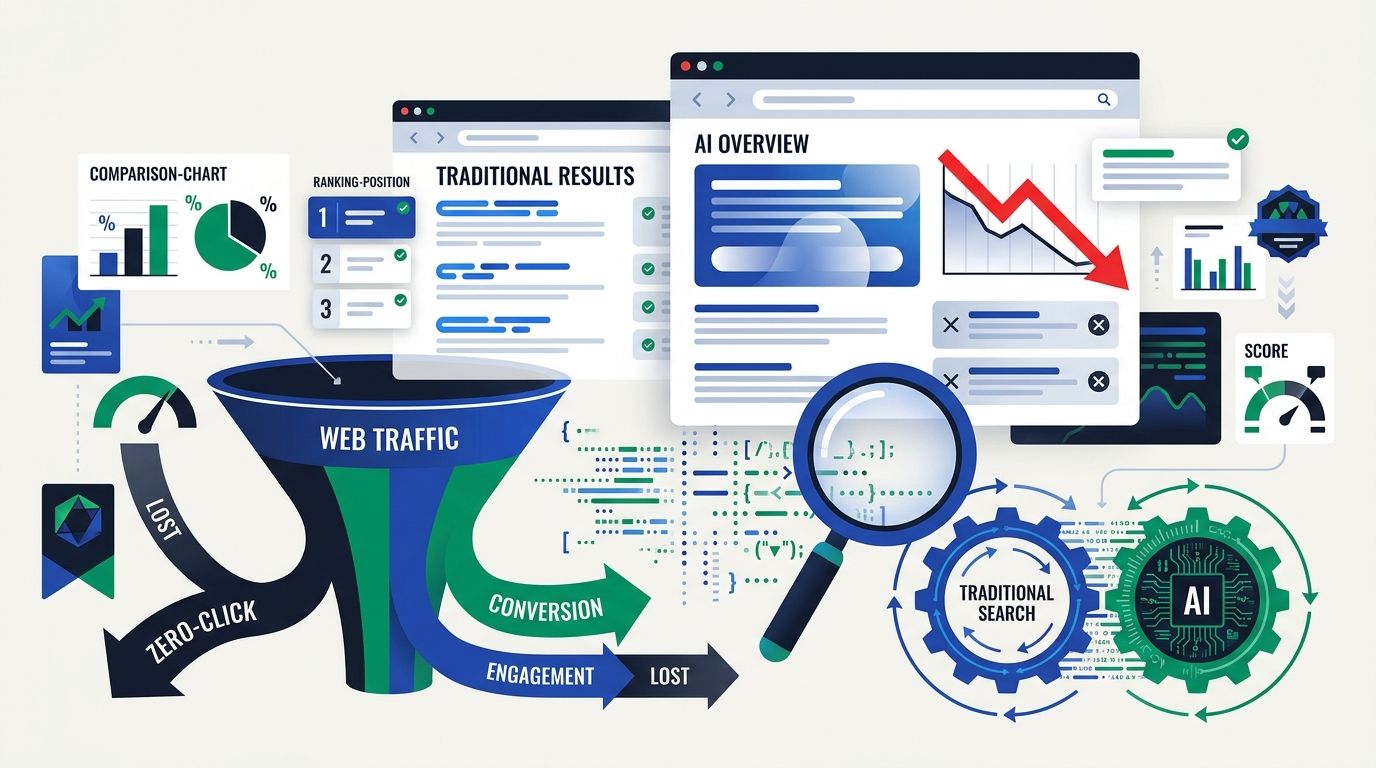
The "dual-engine SEO strategy" being pitched across agency sales decks right now will double your optimization costs while solving the wrong problem. AI Overviews have crushed organic click-through rates by up to 58% for position-one content, according to Ahrefs data from December 2025.
From Google Search to AI Assistants: How B2B Agencies Must Rebuild SEO Strategy Beyond Traditional SERP Rankings
Three of the five B2B agency contracts sitting on my desk right now define success exclusively as Google organic ranking improvements and click-through traffic growth. The agencies that wrote those contracts aren't incompetent.
Software Companies' SEO Listicles Earn Citations But Lose 69% of AI Search Recommendations to Competitors
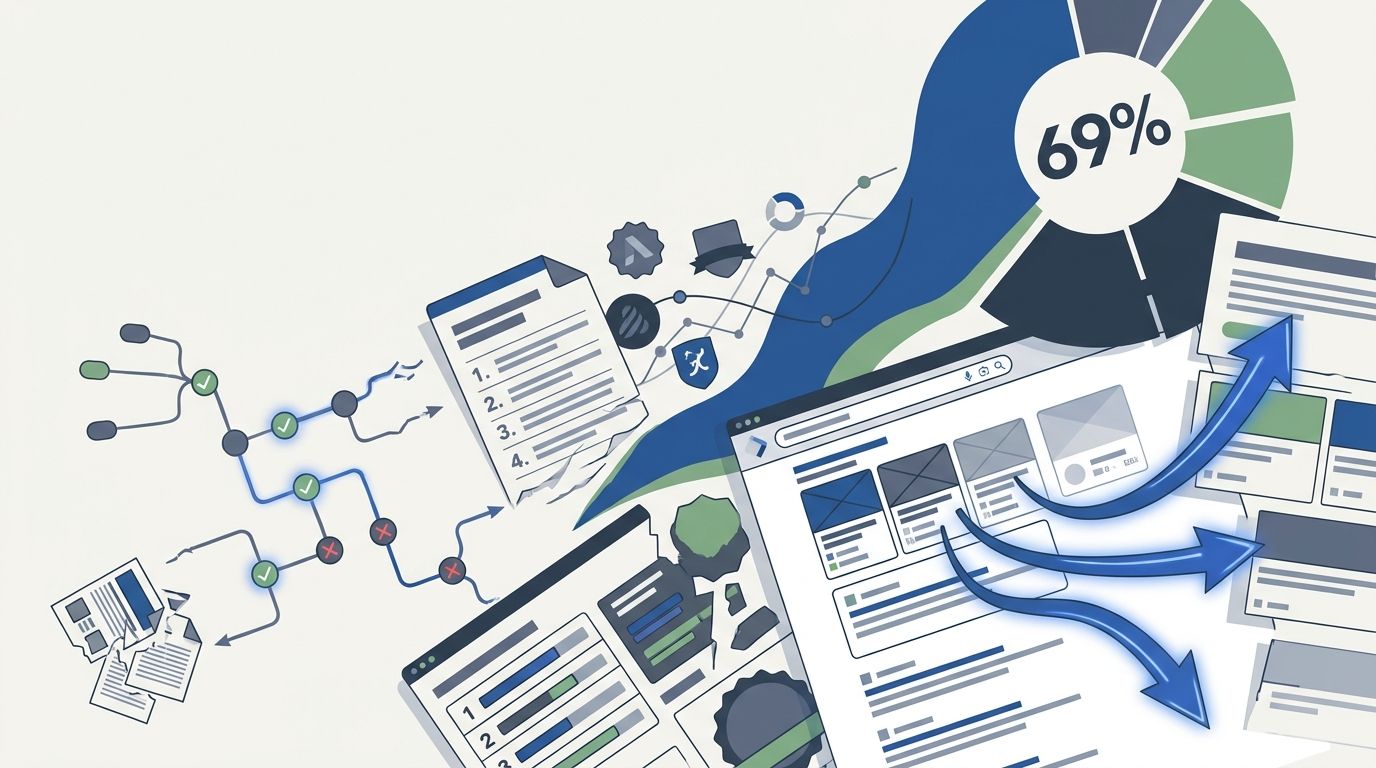
Self-promotional comparison pages that rank software tools earn citations in Google AI Overviews but lose the recommendation to competitors listed within those same pages 69% of the time, according to research published by Lily Ray in June 2026 that analyzed 100 B2B software queries across three mon
Explore more topics