
QUASA Reports 50,000-Position Ranking Gain Following Google's Largest Core Update in 25 Years
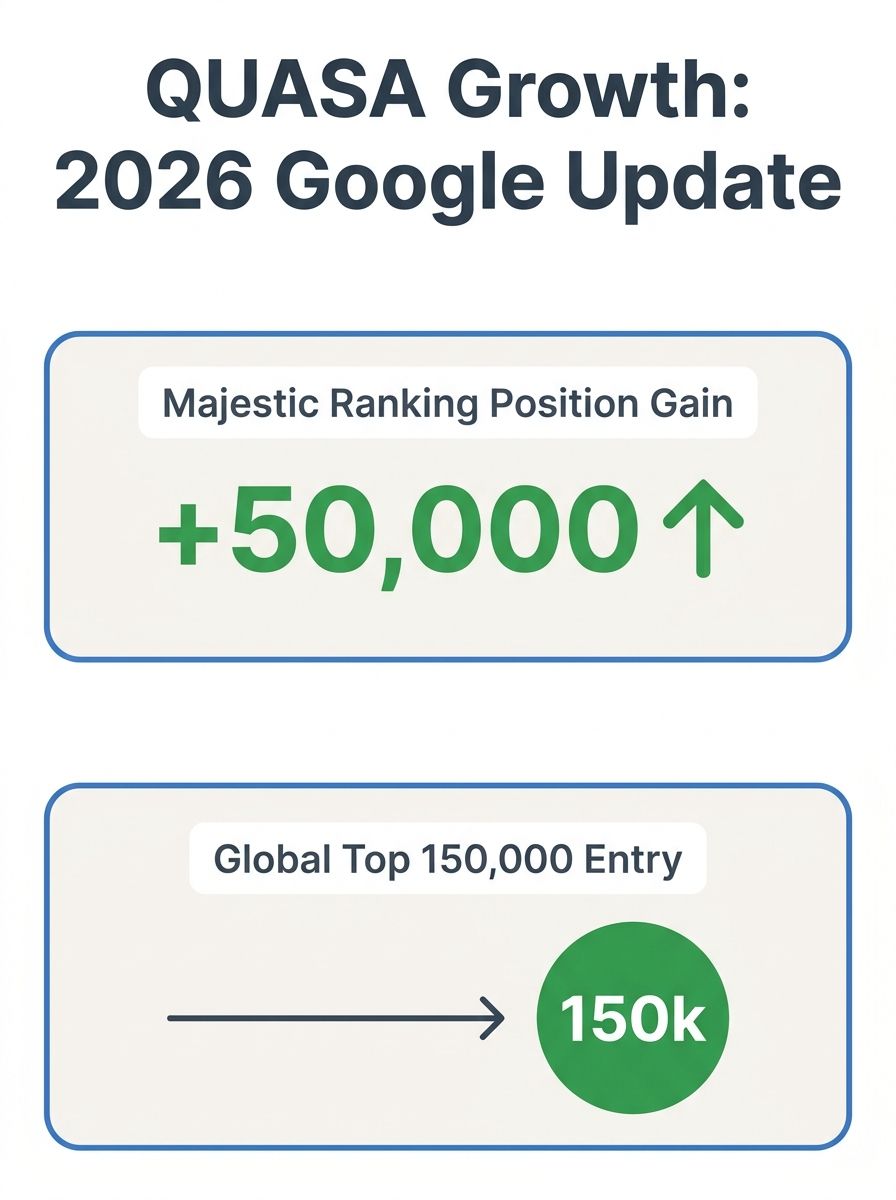
QUASA reported a 50,000-position gain in Majestic's global website ranking and entry into the Top 150,000 sites worldwide following Google's May 2026 Core Update, which ran from May 21 to June 2 and triggered the largest search result volatility in more than 25 years, according to the company's inte
 Marcus Webb··4 min read
QUASA Reports 50,000-Position Ranking Gain Following Google's Largest Core Update in 25 Years
QUASA reported a 50,000-position gain in Majestic's global website ranking and entry into the Top 150,000 sites worldwide following Google's May 2026 Core Update, which ran from May 21 to June 2 and triggered the largest search result volatility in more than 25 years, according to the company's internal analysis published June 6.
The update marked the second major core algorithm rollout of 2026, following turbulent March and February updates that reshuffled rankings across competitive verticals. Google announced the May update during its I/O 2026 conference, describing it as integrating advanced AI model capabilities directly into Search and introducing an AI-powered search field that represents the platform's largest visual redesign in over two decades.
QUASA operates in the AI tools and cryptocurrency sectors, verticals where organic visibility volatility has intensified as Google shifts toward AI-driven search experiences. The company reported increased organic traffic, longer average session duration, and higher visitor engagement following the update's completion on June 2.
Update Impact Exceeded March 2026 Rollout
The May update moved faster than typical core algorithm deployments. Google announced the rollout on Thursday, May 21, with major ranking shifts visible by Saturday, May 23, and larger movements recorded on May 30. QUASA's SEO team characterized the update as more impactful than the March 2026 rollout, with nearly one in five pages that previously ranked in the Top 10 disappearing entirely from the Top 100.
The update arrived during a period of concentrated algorithm activity. Google deployed a spam-fighting update and a February Discover refresh earlier in the year, compounding ranking uncertainty for sites in competitive commercial niches. QUASA's analysis found that the May update's rapid rollout compressed typical stabilization windows, creating steeper traffic swings for sites unprepared for AI-focused quality signals.
Google's I/O 2026 presentation confirmed that the update prioritized pages compatible with AI agent interactions, where users engage with search results through conversational queries rather than traditional blue-link clicks. This architectural shift places additional pressure on sites to demonstrate clear user value beyond keyword optimization, particularly in verticals where AI Overviews and AI Mode already reduce organic click-through rates.
Position Volatility Reached Historic Levels
QUASA's monitoring data showed 76.03 percent of URLs ranking in positions one through three changed positions during the update. The churn extended through lower result tiers, with 88.39 percent of Top 10 URLs shifting and 97.99 percent of Top 100 URLs moving. The position volatility exceeded levels recorded during Google's March 2024 Core Update that penalized topic-cluster content strategies, according to QUASA's comparison of historical algorithm events.
The extreme movement percentages indicate that Google recalibrated ranking signals at a foundational level rather than making incremental adjustments to existing quality thresholds. Sites relying on domain authority alone without demonstrating intent-matched content saw rankings decline, aligning with patterns observed in Google's previous core updates that rewarded intent-matched pages over domain authority.
QUASA attributed its ranking gains to content depth, original expertise, and practical usefulness—factors the company described as increasingly critical as AI-generated content proliferates. The update reinforced quality signals introduced in Google's E-E-A-T framework, where demonstrable experience and expertise carry more weight than content volume or backlink counts in isolation.
Recovery Rates Declined From Previous Update
Only 32.20 percent of domains negatively affected by the March 2026 update recovered rankings during the May rollout, down from 24.10 percent recovery rates following earlier 2026 algorithm events. The declining recovery percentage suggests that sites penalized in one core update face steeper barriers to regaining visibility in subsequent rollouts, particularly when ranking losses stem from fundamental content quality or user experience deficiencies rather than temporary technical issues.
QUASA recommended that site owners avoid immediate content overhauls in response to ranking drops, citing Google's guidance to wait seven to ten days after full rollout before making strategic changes. The company noted that the earliest reliable Search Console comparison window begins June 9, allowing site owners to distinguish genuine traffic trends from short-term volatility.
The recommendation contrasts with common agency responses to core updates, where clients often pressure consultants to implement rapid fixes during active rollout periods. QUASA advised patience during the typical two-to-six-week stabilization window, characterizing radical changes during this period as risky. The guidance aligns with recovery playbooks developed for sites experiencing major traffic drops during algorithm transitions.
What This Means for Business Owners
Companies operating in competitive AI, cryptocurrency, and technology verticals face elevated ranking volatility as Google integrates AI-driven search experiences. QUASA's reported success—a 50,000-position Majestic gain and entry into the global Top 150,000—demonstrates that sites prioritizing original expertise and practical user value can gain visibility even during the largest algorithm overhauls in two decades. Business owners evaluating SEO agency performance should examine how consultants navigated the May–June 2026 update, particularly whether agencies maintained or improved client rankings in competitive commercial niches.
The declining recovery rates (32.20 percent in May versus 24.10 percent previously) signal that sites penalized in one core update face compounding difficulty regaining lost ground. This pattern places greater emphasis on proactive quality management rather than reactive fixes after rankings drop. Companies should pressure agencies to demonstrate how their content strategies align with Google's AI-focused quality signals before algorithm events occur, not after traffic losses materialize.
The update's emphasis on content compatible with AI agent interactions creates structural advantages for sites that answer user questions directly and demonstrate clear expertise. Business owners in AI, fintech, and technology sectors should audit whether their current content serves traditional keyword-focused search or addresses conversational queries that AI agents surface. Sites that delay this strategic shift may face compounding visibility losses as Google continues deploying autonomous search agents that prioritize answer quality over domain metrics.
Marcus Webb
Digital marketing consultant and agency review specialist. With 12 years in the SEO industry, Marcus has worked with agencies of all sizes and brings an insider perspective to agency evaluations and selection strategies.
Related Articles
Google's August 2026 Core Algorithm Update Shifts Rankings for 45% of Tracked Sites
Google's August 2026 core algorithm update caused ranking shifts for 45% of tracked websites while rewarding Core Web Vitals compliance with traffic gains between 12% and 28% and penalizing scaled AI content, according to SEO Vendor's recovery framework published August 8.

Google Launches May 2026 Core Update During I/O Week as Search Box Gets AI-Powered Redesign
Google began rolling out its May 2026 core update on May 21, the second core update this year and the fourth confirmed ranking update of 2026, according to the Google Search Status Dashboard. The rollout coincides with Google I/O announcements including the largest Search box redesign in over 25 yea
Google's May Core Update Rewarded Intent-Matched Pages Over Domain Authority, Analysis Shows
Sites that closely matched query intent, market origin, and expected result type gained visibility in Google's May 2026 core update while authority alone failed to predict winners, according to SISTRIX visibility data analyzed by international SEO consultant Aleyda Solis for the period May 26 throug
Explore more topics