
Google's May Core Update Rewarded Intent-Matched Pages Over Domain Authority, Analysis Shows
Sites that closely matched query intent, market origin, and expected result type gained visibility in Google's May 2026 core update while authority alone failed to predict winners, according to SISTRIX visibility data analyzed by international SEO consultant Aleyda Solis for the period May 26 throug
 Marcus Webb··3 min read
Google's May Core Update Rewarded Intent-Matched Pages Over Domain Authority, Analysis Shows
Sites that closely matched query intent, market origin, and expected result type gained visibility in Google's May 2026 core update while authority alone failed to predict winners, according to SISTRIX visibility data analyzed by international SEO consultant Aleyda Solis for the period May 26 through June 2.
The analysis measured domain visibility shifts in the US and UK during the final week of the rollout, which Google confirmed complete on June 2. The dataset represents one tool's measurements in two markets and may not reflect patterns in other regions or ranking trackers.
Solis characterized the pattern as a "reset" where the destination type matters for each individual query rather than domain authority serving as a blanket success predictor. Authority still plays a role in rankings, she noted, but by itself fails to fully explain which sites benefited and which declined.
Authority Metrics Proved Insufficient Predictor
High-authority domains experienced visibility drops despite their established reputation signals. The New York Times domain nytimes.com and the National Institutes of Health domain nih.gov both lost ground during the measured period, according to the SISTRIX data.
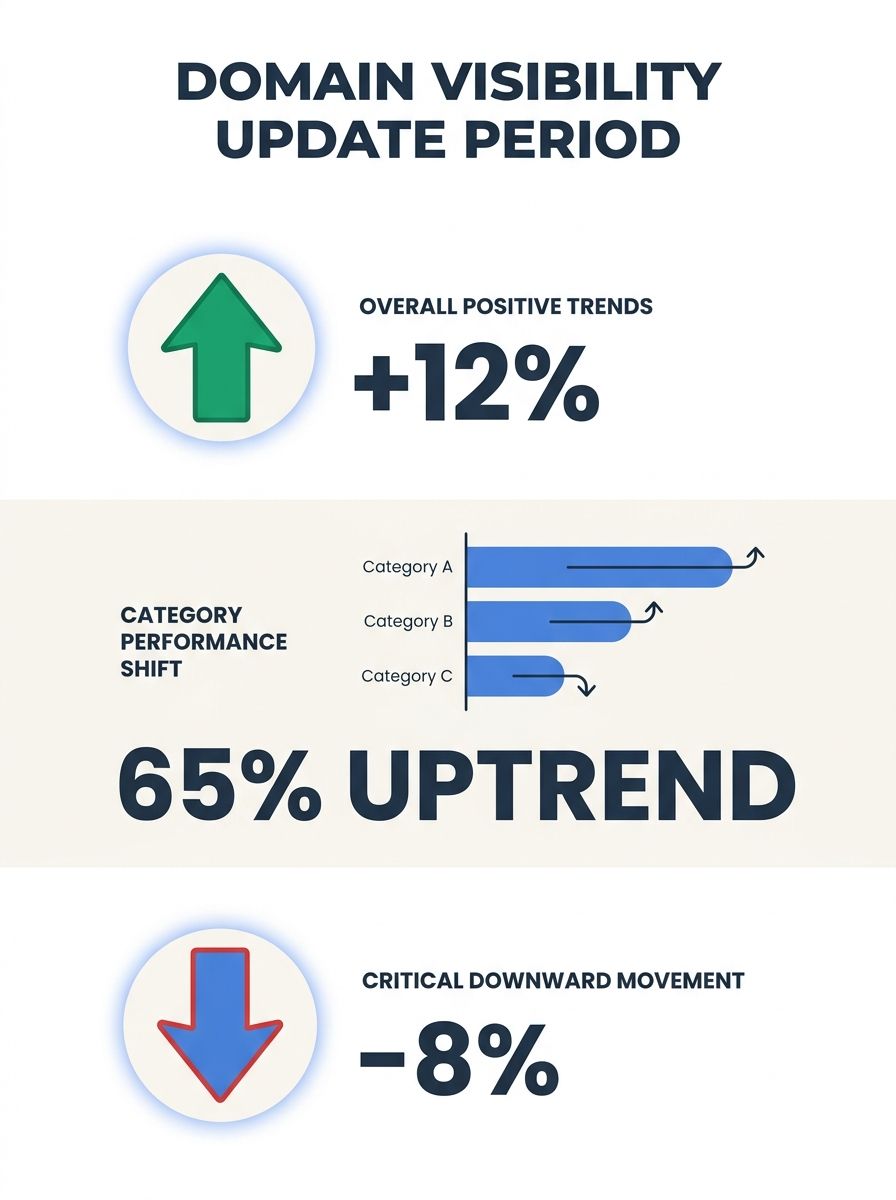
Original sources gained visibility while third-party aggregators of the same information declined. In the UK index, cambridge.org rose 40.9% while the pronunciation tool youglish.com fell 69.6%. The education category as a whole showed no clear directional trend, indicating that source type alignment with query intent mattered more than topical categorization.
The pattern suggests keyword intent matching became more determinative than domain metrics alone. Sites serving as the primary source for information types sought in specific queries gained advantage over sites that repackaged or aggregated that information.
Market-Specific Domains Displaced Global Counterparts
Local retail domains gained visibility in their home markets while .com versions of the same brands declined for those same users. Amazon.co.uk rose 21.3% in the UK index while amazon.com fell 54.6% for UK searchers, the analysis showed. In the US index, the .com domains held roughly flat positions.
The market-specific shifts align with Solis's prior research on AI search behavior across ten markets, which found most clicks flowing to local domains rather than global defaults. She recommended international businesses audit their rankings for wrong-market visibility and evaluate country-specific signals.
The UK data suggested Google's systems increasingly routed queries to domains matching the searcher's market even when global alternatives carried higher authority metrics. Market fit appeared to function as a qualifying filter before authority weighting applied.
Category-Level Analysis Obscured Query-Level Patterns
The visibility data did not support broad category narratives of winners or losers. Forums and Q&A platforms pulled back, with reddit.com down 23.8% in the UK, but larger social platforms and video sites held flat to positive. Major marketplaces including trip.com and indeed.com gained visibility, contradicting any "aggregators lost" interpretation.
Solis noted the forum pullback could represent a durable correction or end-of-rollout volatility that stabilizes in subsequent weeks. Google's core update documentation recommends waiting at least one week after rollout completion before drawing conclusions from Search Console data, placing the earliest reliable measurement window around June 9.
Different ranking tools measure visibility through distinct methodologies and can rank the same domains differently, Solis cautioned. The SISTRIX findings represent one early signal rather than a settled picture of the update's impact.
Solis described the May patterns as a continuation of trends she identified in the March 2026 core update, which she characterized as a move toward stronger default destinations. For each valuable query, she recommended auditing which result type gained visibility after the update and confirming the business's page matches that type rather than serving as a weaker echo of the source that owns the intent.
Services Implications
SEO agencies advising clients on recovery strategies from the May update face a diagnostic requirement beyond traditional authority audits. The Solis analysis indicates that page-type alignment with query intent now functions as a qualifying threshold before authority metrics determine final ranking positions. Agencies should conduct query-by-query audits identifying which result types—original source, local variant, primary marketplace, direct answer—gained visibility for client target keywords, then map client pages against those winning types rather than against competitor domain authority alone.
The market-specific displacement pattern creates immediate action items for international businesses. Companies ranking with .com domains in non-US markets should audit whether market-appropriate ccTLDs exist and carry sufficient country signals. For mid-market companies operating across multiple regions, the visibility cost of wrong-market defaults may justify earlier investment in localized domain infrastructure than traditional growth models recommended.
The absence of category-level patterns eliminates shortcut recovery strategies. Agencies cannot reliably recommend "add more original research" or "reduce aggregated content" as blanket responses without query-level evidence that original sources won for the specific intents the client targets. The update rewards precise intent matching, which requires more granular competitive analysis than prior algorithm shifts demanded.
Marcus Webb
Digital marketing consultant and agency review specialist. With 12 years in the SEO industry, Marcus has worked with agencies of all sizes and brings an insider perspective to agency evaluations and selection strategies.
Related Articles

QUASA Reports 50,000-Position Ranking Gain Following Google's Largest Core Update in 25 Years
QUASA reported a 50,000-position gain in Majestic's global website ranking and entry into the Top 150,000 sites worldwide following Google's May 2026 Core Update, which ran from May 21 to June 2 and triggered the largest search result volatility in more than 25 years, according to the company's inte

Google's August 2026 Core Algorithm Update Shifts Rankings for 45% of Tracked Sites
Google's August 2026 core algorithm update caused ranking shifts for 45% of tracked websites while rewarding Core Web Vitals compliance with traffic gains between 12% and 28% and penalizing scaled AI content, according to SEO Vendor's recovery framework published August 8.

Google Launches May 2026 Core Update During I/O Week as Search Box Gets AI-Powered Redesign
Google began rolling out its May 2026 core update on May 21, the second core update this year and the fourth confirmed ranking update of 2026, according to the Google Search Status Dashboard. The rollout coincides with Google I/O announcements including the largest Search box redesign in over 25 yea
Explore more topics