
DuckDuckGo Traffic Hits All-Time High as Google Mandates AI-First Search Interface
DuckDuckGo recorded an all-time traffic high on June 1, 2026, and saw iPhone app installs nearly double in early June compared to the previous week, according to comments the company made to BGR, as Google unveiled a mandatory AI-centered redesign of Google Search at its I/O 2026 event in mid-May. T
 Marcus Webb··4 min read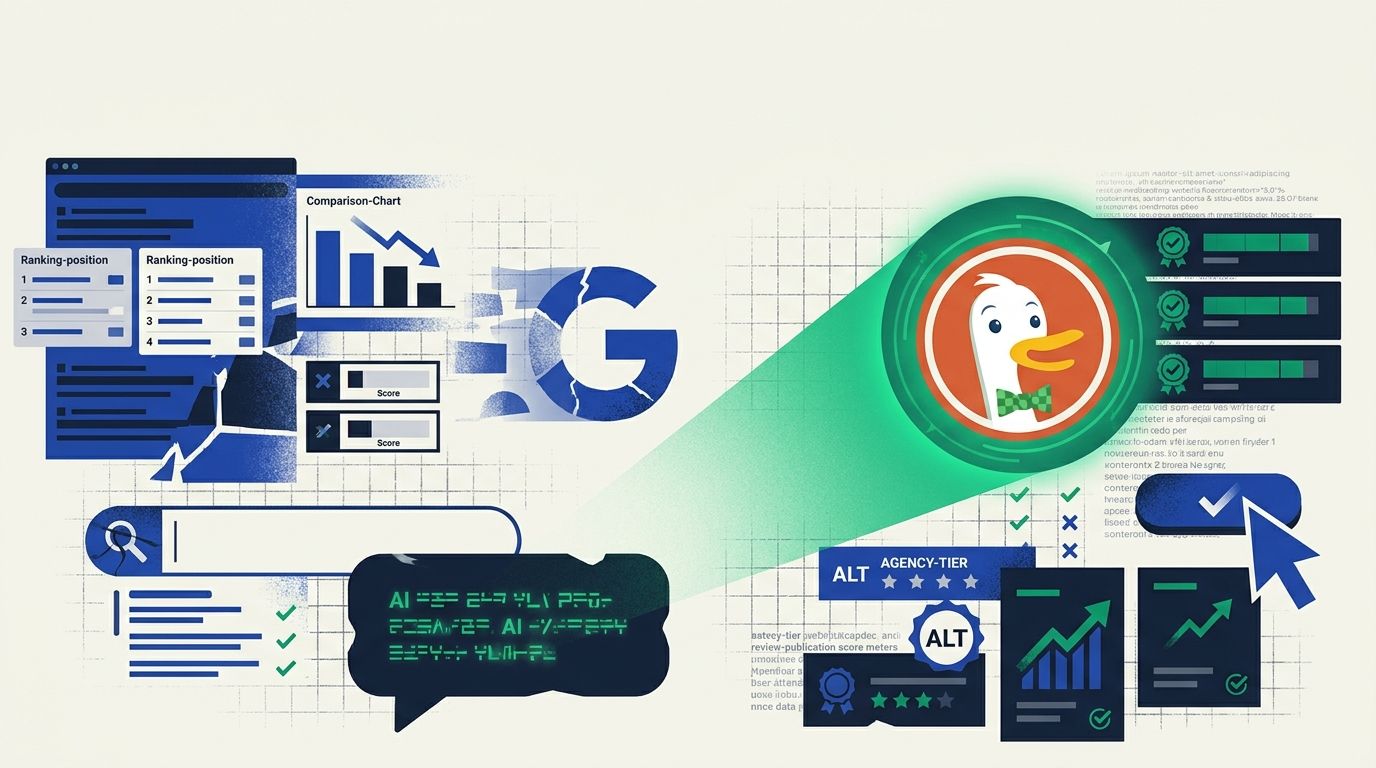
DuckDuckGo Traffic Hits All-Time High as Google Mandates AI-First Search Interface
DuckDuckGo recorded an all-time traffic high on June 1, 2026, and saw iPhone app installs nearly double in early June compared to the previous week, according to comments the company made to BGR, as Google unveiled a mandatory AI-centered redesign of Google Search at its I/O 2026 event in mid-May. The privacy-focused search engine's browser application reached the third position in the App Store's utilities chart in early June, making it the second-most downloaded browser after Google Chrome during that period.
Google Search Redesign Eliminates Traditional Interface
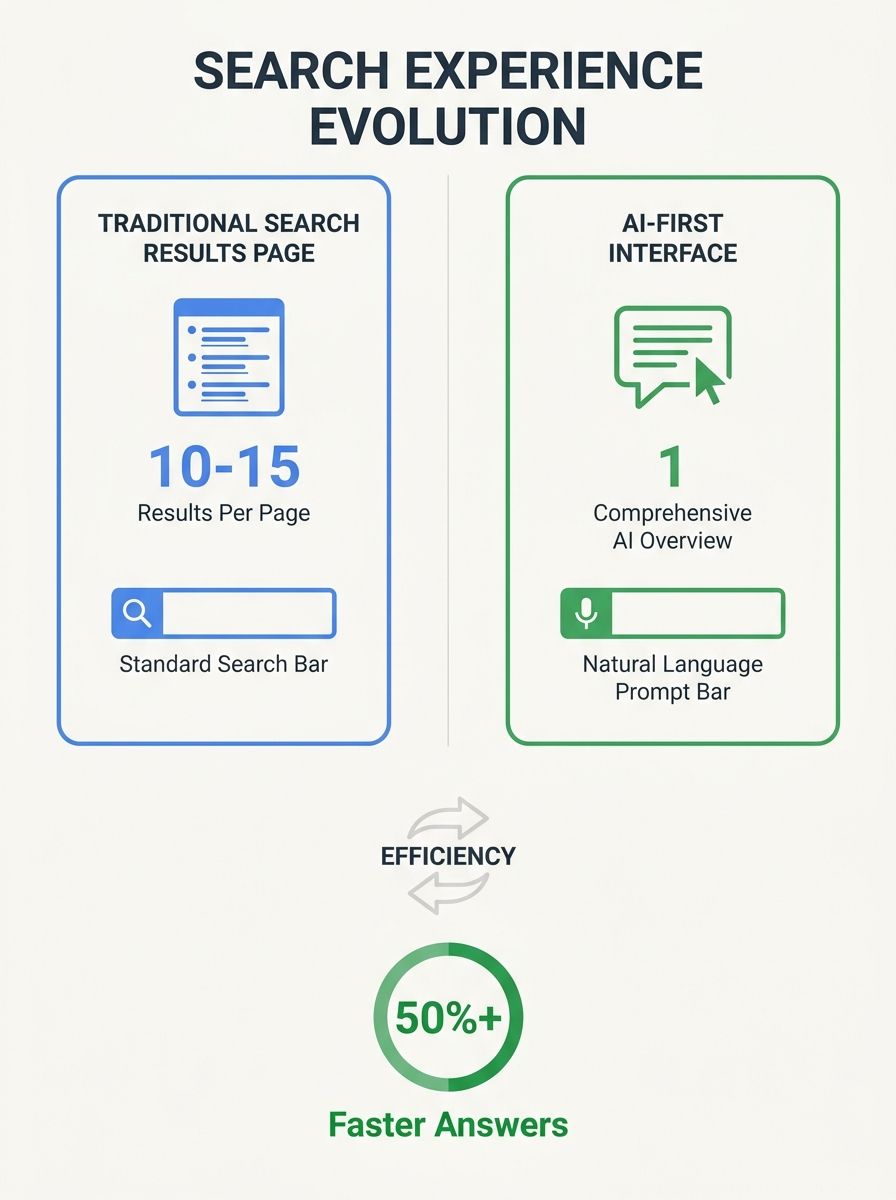
Google announced what it characterized as the largest change to Google Search in 25 years at its I/O 2026 developer conference in mid-May. The redesign replaces the traditional search bar with a dynamic interface accepting natural language prompts similar to standalone ChatGPT and Gemini applications, according to the company's presentation materials. The new interface supports multimodal search allowing users to attach images, files, and videos to text prompts, and introduces AI agents for tasks including shopping cart management across merchants and event reminders.
The redesign makes AI-generated features the default experience with no option to disable them and return to standard search results pages. This represents a shift from earlier AI implementations including 2023's Search Generative Experience and 2024's AI Overviews, which users could avoid or ignore. The mandatory nature of the new interface distinguishes it from optional AI Mode conversations Google introduced earlier, which required users to select a separate menu option.
App Store Rankings Reflect User Migration Patterns
DuckDuckGo's browser application ranked eleventh in the App Store utilities chart as of June 13, down from its early-June peak at third position but still elevated compared to pre-I/O levels. Google maintains an 85% market share in U.S. search as of May 2026, according to Statcounter data, making the DuckDuckGo traffic spike statistically modest but directionally significant for a market that has remained stable for years.
The privacy-focused search engine launched a "NoAI" search page that disables all AI-generated features including answers, images, and suggestions, offering users explicit control over AI exposure. This stands in contrast to Google's approach, which embeds AI throughout the search experience without user-level configuration options.
Technical errors accompanied the rollout. Searches for the word "disregard" triggered conversation reset errors rather than returning dictionary definitions, with the AI interpreting the term as a command to ignore previous chat context. Google resolved these specific issues, but the errors echoed earlier AI Overviews problems including a recommendation to add glue to pizza that drew widespread criticism in 2024.
Institutional Shifts Beyond Consumer Behavior
The European Parliament announced a switch to Qwant, a French search engine, in June 2026 as part of Europe's broader initiative to promote local technology solutions and reduce dependence on non-EU platforms, according to the announcement. While the timing followed Google's I/O event, the Parliament's decision reflected regulatory and sovereignty concerns rather than direct reaction to the Google Search redesign.
The shift in search landscape dynamics following Google's AI-first strategy affects not only consumer search habits but also the visibility assumptions underlying organic search strategies. Agencies advising clients on search visibility now face a bifurcated environment where traditional blue-link optimization competes for attention with AI-generated answer boxes that may provide information without directing traffic to external websites.
What This Means for Business Owners
Businesses relying on organic search traffic face a strategic decision point as Google's mandatory AI interface fundamentally alters how users interact with search results. The DuckDuckGo traffic surge—though small in absolute terms given Google's market dominance—signals that a segment of search users values control over AI exposure enough to switch platforms. For SEO-dependent businesses, this creates two parallel optimization challenges: maintaining visibility in Google's AI-generated features while monitoring whether meaningful traffic segments migrate to alternative search engines that preserve traditional result formats.
The inability to toggle off AI features in Google Search means businesses can no longer assume users will see standard result listings even when AI-generated answers fail or prove inadequate. Companies should audit current traffic sources to quantify what percentage arrives through traditional organic listings versus AI-generated features, establishing a baseline to track migration patterns. Diversification strategies that reduce dependence on any single search platform—including expanded presence on DuckDuckGo, Bing, or industry-specific search tools—merit evaluation for organizations where search traffic directly drives revenue.
The mandatory nature of Google's AI interface also introduces technical risk that SEO agencies must account for in client engagements. Early errors like the "disregard" search failure demonstrate that AI-first systems can break basic informational queries, creating periods where businesses lose visibility through no fault of their own optimization work. Service agreements should address how these platform-level failures affect performance guarantees, and agencies should develop monitoring protocols to detect when AI-generated features malfunction in ways that suppress client visibility.
Marcus Webb
Digital marketing consultant and agency review specialist. With 12 years in the SEO industry, Marcus has worked with agencies of all sizes and brings an insider perspective to agency evaluations and selection strategies.
Related Articles

Google Announces AI-Powered Search Engine Running on Gemini Model at I/O 2026
Google announced at its I/O 2026 developer conference that Search will transition to an AI-powered answer engine running on the Gemini 2.5 Flash model, marking what the company described as its largest search overhaul in 25 years, according to coverage published July 13 by Laire Digital.
Google Redesigns Search Around AI Agents in Largest Platform Overhaul Since 2001
Google announced a fundamental redesign of its Search platform at Google I/O 2026, introducing AI agents, conversational interactions, and custom-generated interfaces in what the company described as the biggest update to the search box in more than 25 years, according to Storyboard18.
Google Adds Further Exploration Links to AI Overviews as Publisher Traffic Decline Reaches 58 Percent
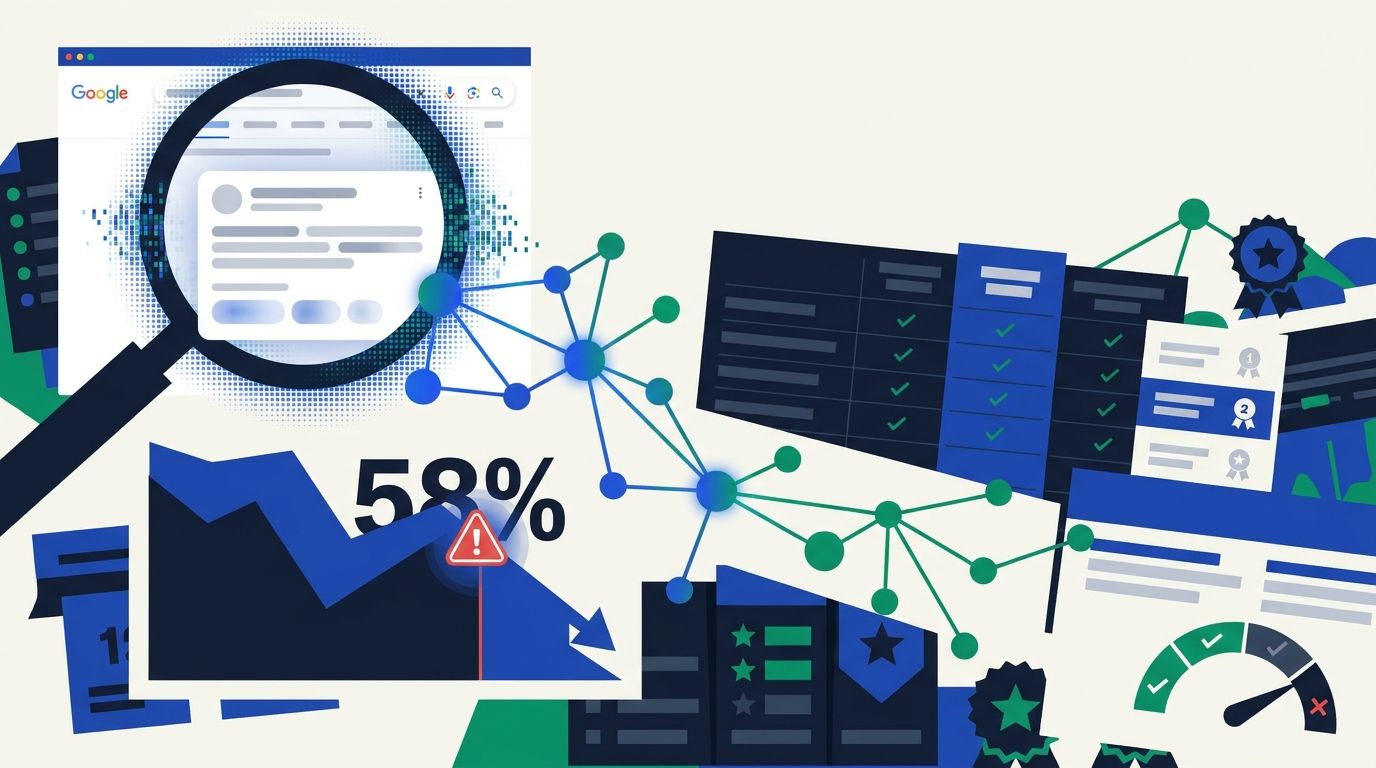
Google deployed five updates to AI Overviews and AI Mode on May 6, 2026, designed to direct more traffic to publisher websites, according to The Next Web. The rollout arrives as the search giant faces antitrust lawsuits from Penske Media and a European Commission investigation into whether AI-genera
Explore more topics