
Google Search Delivers Just 232 Clicks Per 1,000 Queries to External Websites, SparkToro Data Shows
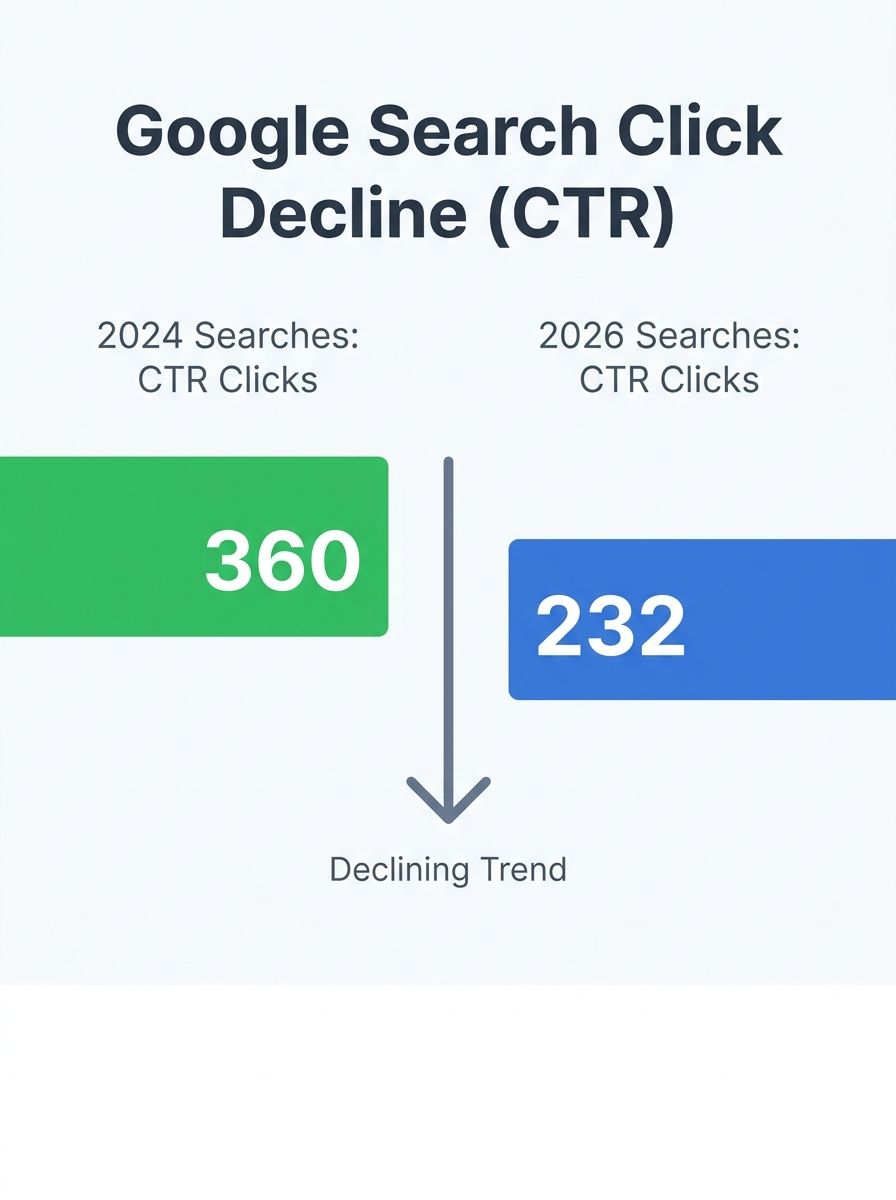
SparkToro analysis of Similarweb clickstream data shows 232 of every 1,000 U.S. Google searches produced a click to the open web between January and April 2026, down from 360 clicks per 1,000 searches in the firm's 2024 study, according to a report published June 10 by SparkToro co-founder Rand Fish
 Marcus Webb··3 min read
Google Search Delivers Just 232 Clicks Per 1,000 Queries to External Websites, SparkToro Data Shows
SparkToro analysis of Similarweb clickstream data shows 232 of every 1,000 U.S. Google searches produced a click to the open web between January and April 2026, down from 360 clicks per 1,000 searches in the firm's 2024 study, according to a report published June 10 by SparkToro co-founder Rand Fishkin. The decline represents a 35.6% drop in open-web clicks per thousand searches year-over-year.
The data shows 68% of U.S. searches ended without any click during the four-month period. Of searches that did produce a click, 66% led to pages on the open web, 27% went to Alphabet-owned properties including YouTube, Maps, and AI Mode, and 6% went to paid advertisements.
Zero-Click Searches Accelerate
Post-search behavior broke into three categories in the Similarweb panel: 39% of searches ended with no further action, 29% led to a new query in Google's search bar, and 32% produced at least one click.
The share of searches producing a click fell from 41% in 2024 data to 32% in 2026, a 9.51 percentage-point drop representing a 22% decline. Searches leading to another search query rose 7 percentage points over the same period.
Fishkin attributed the acceleration primarily to AI Overviews, citing Ahrefs data showing AI Overviews appear on more than 20% of searches with click-through rates nearly 60% lower when one is displayed. Separate Ahrefs traffic tracker data recorded an 8 percentage-point drop in Google's share of traffic to monitored sites between June 2025 and May 2026.
Paid Click Share Rises, With Caveats
Paid advertisements' share of all clicks rose from 1% in the 2024 data to 6% in 2026. Fishkin cautioned the increase may appear steeper than reality because the 2024 Datos panel included a higher-than-average share of users running ad blockers, which hid or minimized search ads. The true 2024 paid figure was likely higher.
The 2026 analysis uses Similarweb's U.S. desktop and mobile panel data from January through April, weighted as two-thirds mobile and one-third desktop. Searches in the Google mobile app, where zero-click behavior is likely higher than in browsers, are not included in the panel.
Google's Counter-Narrative
Google Vice President of Search Liz Reid has stated organic click volume is "relatively stable" and that AI Overviews mostly remove "bounce clicks", visits where users grab a fact and leave. Google has not published data supporting either claim.
SparkToro's data tracks clicks per search, not total click volume. Reid's statements concern total volume, which can hold steady if query growth offsets a falling click rate. The panel data shows the per-search rate falling; whether total volume is stable remains unverified by Google.
Fishkin compared the findings across panels from three data providers: the now-defunct Jumpshot panel for 2016 and 2019 figures, Datos for 2024, and Similarweb for 2026. He described the cross-year comparison as "a bit of apples and oranges."
AI Mode as Variable
AI Mode accounted for 0.34% of searches in the January-April dataset. Google stated usage has passed 1 billion monthly users and that queries are more than doubling each quarter. SparkToro plans to publish zero-click figures for Europe, the United Kingdom, and Canada in coming days and will repeat the analysis within six to twelve months.
For disclosure, SparkToro sells audience research software, and Fishkin is publishing a book on zero-click marketing with co-author Amanda Natividad.
Why This Matters Now
SEO professionals evaluating search traffic expectations now have a concrete figure: 232 clicks per 1,000 searches. Traffic forecasts built on 2024 click rates (360 per 1,000) are overestimating open-web reach by 55%. Agencies presenting organic search projections to clients need revised baseline assumptions, particularly for informational queries where AI Overviews appear most frequently.
The data validates what mid-market CMOs have reported anecdotally for six months: Google's shift from search tool to AI agent is compressing click volume faster than query growth can offset. Fishkin noted SEO "matters as much as ever" but directs agencies toward categories still producing clicks: branded searches, local business queries, and high-intent transactional terms. Marketing managers allocating budget across channels should weight the declining utility of traditional organic search against owned audience channels where zero-click dynamics don't exist.
The 22% year-over-year decline in click-producing searches is the steepest metric change SparkToro tracked. If AI Mode adoption follows Google's stated doubling trajectory, the 232-per-1,000 figure may be obsolete by year-end, making the next quarterly analysis critical for agencies setting 2027 client expectations.
Marcus Webb
Digital marketing consultant and agency review specialist. With 12 years in the SEO industry, Marcus has worked with agencies of all sizes and brings an insider perspective to agency evaluations and selection strategies.
Related Articles
Search Traffic to Websites Fell 25% Over Past Year as AI Overviews Block Clicks, a16z Data Shows
Search traffic to websites dropped from approximately 500 million visits per month in mid-2025 to around 335 million by May 2026, a decline of roughly 25% over the past year, according to Ahrefs data cited by venture capital firm a16z in a report published June 14. Every other major traffic channel,
Ranking #1 on Google Now Delivers 58% Fewer Clicks Than It Used To, Gravitate Analysis Finds
A first-position Google ranking now delivers 58% fewer clicks than the same ranking delivered before AI Overviews began appearing in search results, according to an analysis released July 9, 2026 by Gravitate, a Vancouver-based digital marketing agency.

AI Search Platforms Layer Atop Google Rather Than Replace It, Similarweb Tracking Shows
Ninety-five percent of ChatGPT's 494 million users also used Google during the March-May 2026 tracking period, according to Similarweb's "2026 Generative AI Landscape" report released July 24.
Explore more topics