
Ranking #1 on Google Now Delivers 58% Fewer Clicks Than It Used To, Gravitate Analysis Finds
A first-position Google ranking now delivers 58% fewer clicks than the same ranking delivered before AI Overviews began appearing in search results, according to an analysis released July 9, 2026 by Gravitate, a Vancouver-based digital marketing agency.
 Marcus Webb··4 min read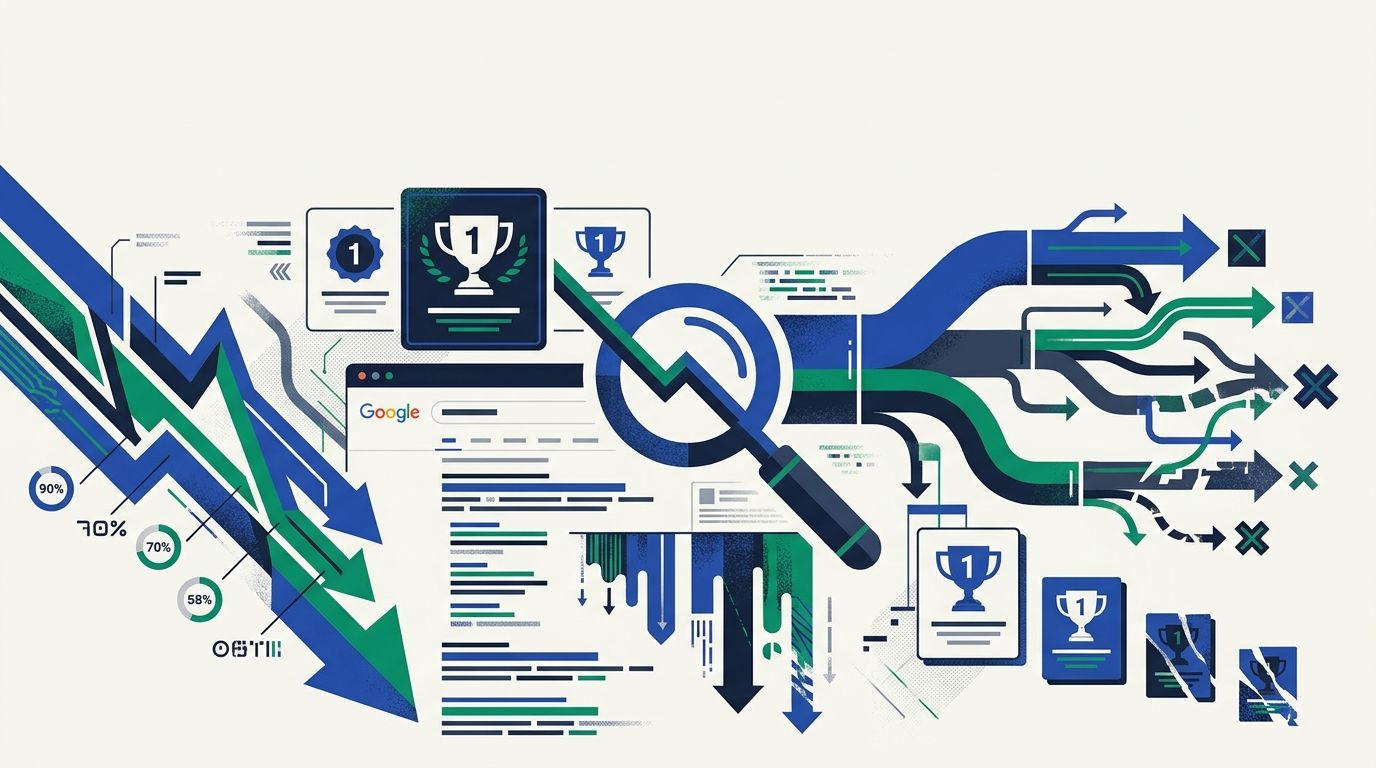
Ranking #1 on Google Now Delivers 58% Fewer Clicks Than It Used To, Gravitate Analysis Finds
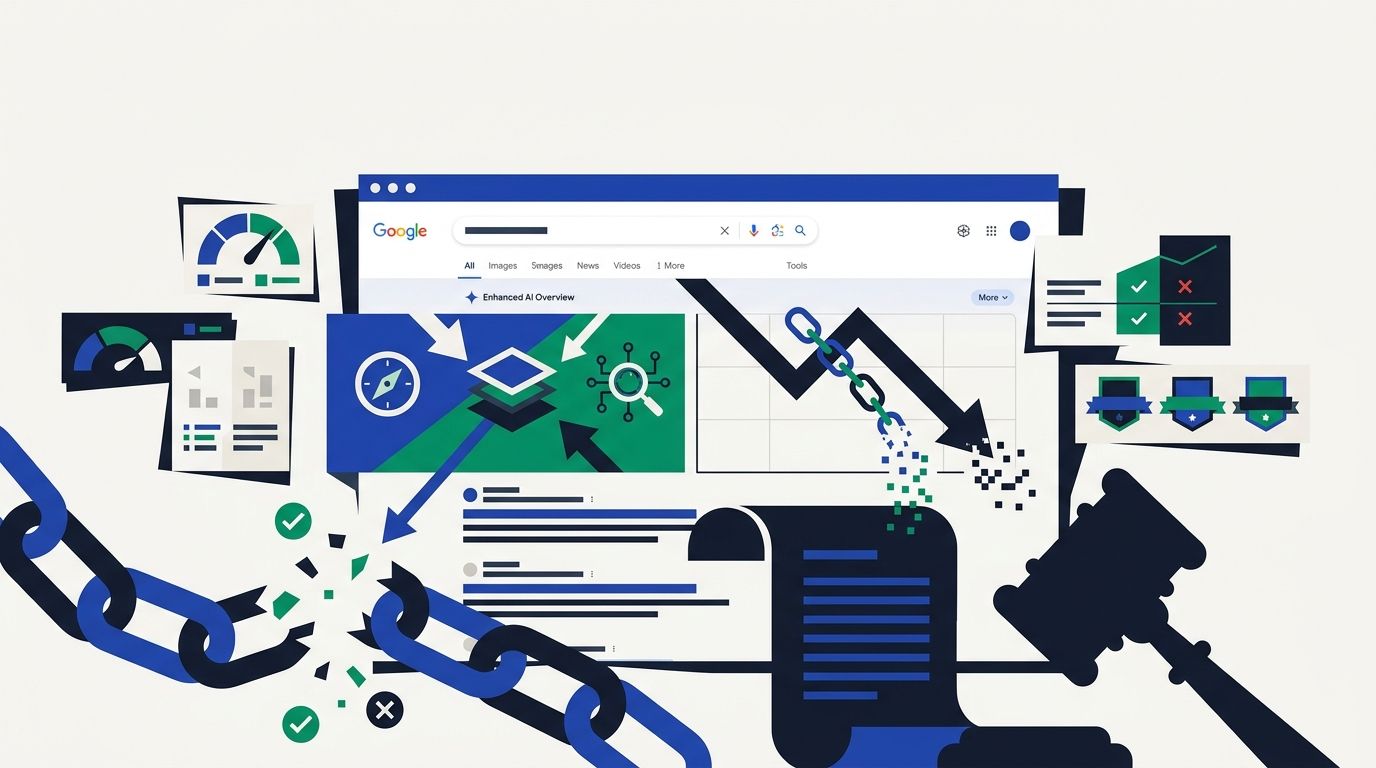
A first-position Google ranking now delivers 58% fewer clicks than the same ranking delivered before AI Overviews began appearing in search results, according to an analysis released July 9, 2026 by Gravitate, a Vancouver-based digital marketing agency. The analysis, which synthesized data from Ahrefs, Pew Research Center, SparkToro, and Chartbeat, demonstrates that AI Overviews have accelerated a decade-long decline in the percentage of Google searches that result in clicks to external websites.
Click-Through Collapse Doubles in Nine Months
The 58% click reduction represents nearly double the impact measured nine months earlier. Ahrefs published an initial analysis in April 2025 showing a 34.5% click-through rate decline for first-position results when AI Overviews appeared. By December 2025, the same methodology applied to 300,000 keywords tracked through Google Search Console data showed the reduction had grown to 58%, according to Ahrefs' February 2026 publication of the findings.
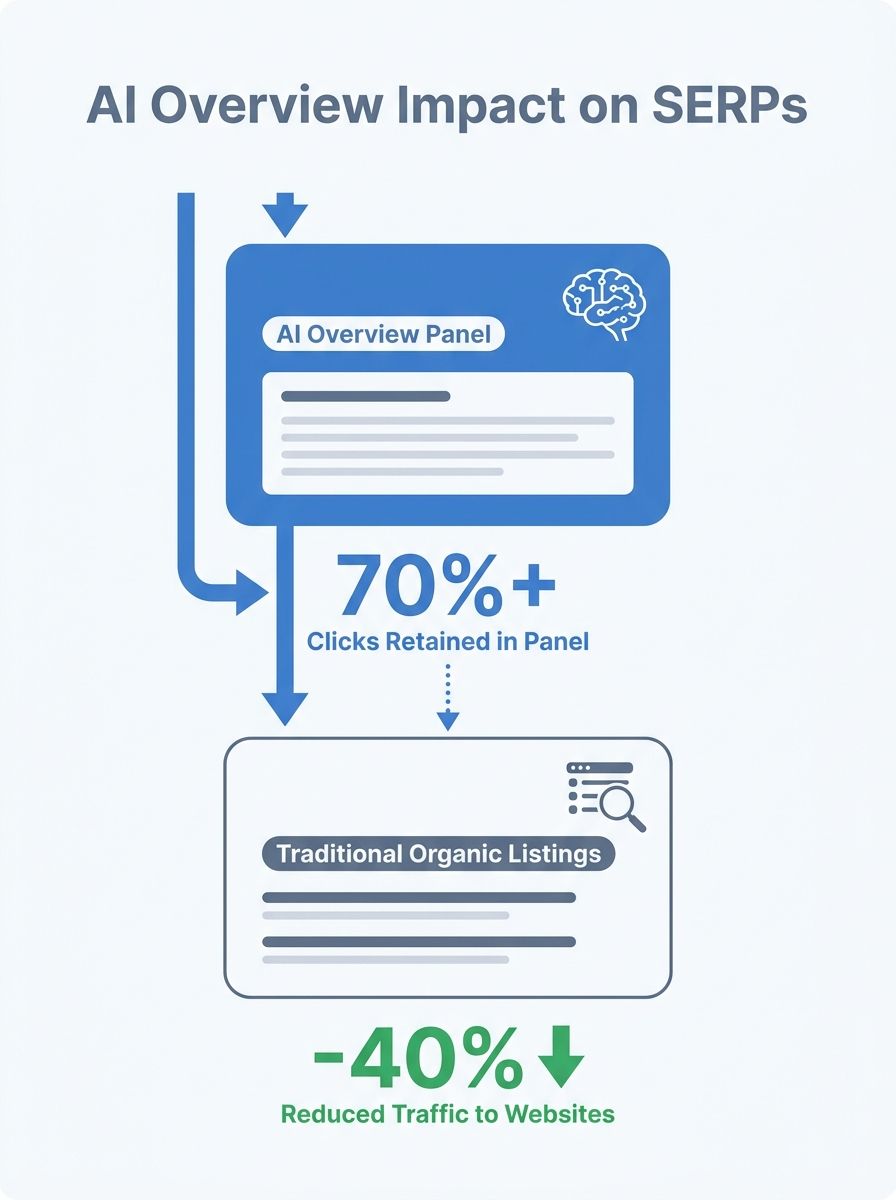
Pew Research Center behavioral tracking from March 2025 corroborated the pattern through direct observation. Researchers monitored 900 U.S. adults navigating 68,879 Google searches and recorded which links users clicked. On queries surfacing an AI Overview, 8% of search sessions resulted in a click to a traditional organic link. On queries without AI Overviews, 15% of sessions ended in a click to an organic result—a 47% reduction in click probability.
The links embedded inside AI Overviews themselves captured only 1% of total clicks, according to the Pew data. This means the feature that displaces organic click-through traffic returns almost none of that traffic to the sources it cites.
Zero-Click Search Behavior Reaches Record High
Google searches ending without any click to an external website reached 68% in the United States in 2026, according to SparkToro research conducted with Similarweb. The zero-click rate rose nearly seven percentage points from approximately 60.45% two years earlier and climbed from an estimated 45% a decade ago. For every 1,000 Google searches conducted today, fewer than 320 result in a user navigating to a website outside Google's properties.
The pattern predates AI Overviews but has intensified since their rollout. SparkToro's 2024 study based on Datos clickstream panel data measured a 58.5% zero-click rate in the U.S. and 59.7% in Europe, demonstrating that users were already ending sessions on Google result pages before AI features became widespread. The introduction of AI Overviews accelerated rather than created the behavior, according to the Gravitate analysis.
Google processes more searches than at any point in its history while simultaneously returning the smallest percentage of that query volume as referral traffic to external publishers, the analysis noted. Open web traffic from Google reached its lowest point in the past decade.
Publisher Referral Traffic Declines By One-Third Globally
Total publisher referral traffic via Google search dropped approximately 33% globally in 2025, according to combined data from Press Gazette, Chartbeat, and the Society of News Editors. The decline reached 38% in the United States and 17% in Europe.
Business Insider lost 55% of its Google referral traffic during the period. Forbes and HuffPost each lost approximately 50% of their referral traffic from Google, according to Press Gazette data. The analysis emphasized that these publishers operate established domains with recognized authority rather than sites targeted by Google's spam and low-quality content policies. The traffic losses stem from Google satisfying more queries within its own ecosystem rather than sending users to external sources.
Businesses maintaining strong search visibility have watched website traffic decline despite ranking performance, the analysis stated. The disconnect between rankings achieved and traffic delivered represents a structural shift in how search results function rather than a visibility problem, according to the findings.
March 2024 Core Update Compounded Traffic Loss
Google's March 2024 core update, which the company stated reduced low-value content from search results by 45%, compounded the traffic decline for many websites. The update represented one of Google's largest algorithm changes in recent years and resulted in pages or entire site sections losing rankings or being de-indexed, according to the analysis.
The combination of AI Overview deployment and algorithmic changes creates attribution challenges for diagnosing traffic loss. Sites experiencing declines may incorrectly identify a single cause when multiple factors contribute, the Gravitate analysis noted.
The shift toward building visibility strategies that account for both AI Overview citations and traditional blue-link traffic has become necessary as the search landscape bifurcates. Google's deployment of Gemini-powered search features represents what the company described as its largest search change in 25 years and continues to alter how users interact with result pages.
Services Implications
SEO service providers must recalibrate client expectations around ranking-to-traffic conversion. A first-position ranking that historically delivered predictable traffic now produces 58% fewer clicks when AI Overviews appear—a metric that directly impacts ROI calculations and campaign success benchmarks. Agencies presenting ranking improvements without contextualizing the click-through environment risk overstating the business value delivered.
The 68% zero-click rate requires agencies to develop dual optimization strategies: one targeting traditional organic visibility and another pursuing citation placement within AI-generated answers. Clients paying for SEO services should expect agencies to track both blue-link rankings and AI Overview appearance rates, measure citation frequency when overviews appear, and demonstrate how content strategy adapts to capture visibility in both channels. The data showing only 1% of clicks going to links inside AI Overviews means citation alone does not replace lost organic traffic.
Budget allocation discussions should account for the compressed traffic yield from organic rankings. Businesses investing in content production to target keywords now need roughly double the ranking volume to achieve the same traffic outcomes measured in 2023. Service agreements should specify whether deliverables include AI-answer optimization or focus exclusively on traditional SERP positioning, as the skills and reporting requirements differ substantially between the two objectives.
Marcus Webb
Digital marketing consultant and agency review specialist. With 12 years in the SEO industry, Marcus has worked with agencies of all sizes and brings an insider perspective to agency evaluations and selection strategies.
Related Articles
Search Traffic to Websites Fell 25% Over Past Year as AI Overviews Block Clicks, a16z Data Shows
Search traffic to websites dropped from approximately 500 million visits per month in mid-2025 to around 335 million by May 2026, a decline of roughly 25% over the past year, according to Ahrefs data cited by venture capital firm a16z in a report published June 14. Every other major traffic channel,
Google Adds Further Exploration Links to AI Overviews as Publisher Traffic Decline Reaches 58 Percent
Google deployed five updates to AI Overviews and AI Mode on May 6, 2026, designed to direct more traffic to publisher websites, according to The Next Web. The rollout arrives as the search giant faces antitrust lawsuits from Penske Media and a European Commission investigation into whether AI-genera
Google Introduces Further Exploration Links to AI Overviews as Publishers File Antitrust Suits Over 58 Percent Traffic Decline
Publishers filed antitrust lawsuits and European Commission complaints against Google as AI Overviews correlated with a 58 per cent click-through rate decline, prompting the search giant to introduce five traffic-restoration features on May 6, 2026, according to The Next Web.
Explore more topics