
The SEO Agency Dependency Audit: Identifying (and Eliminating) Hidden Blockers Before They Kill Your Rankings
Across 200+ agency evaluations, the factor that best predicts whether an SEO campaign will stall within its first 90 days has nothing to do with keyword strategy, content quality, or link profiles.
 Marcus Webb··8 min read
The SEO Agency Dependency Audit: Identifying (and Eliminating) Hidden Blockers Before They Kill Your Rankings
Across 200+ agency evaluations, the factor that best predicts whether an SEO campaign will stall within its first 90 days has nothing to do with keyword strategy, content quality, or link profiles. The predictor is unresolved dependencies: access gaps, approval bottlenecks, and dev-queue conflicts that nobody maps during onboarding.
The six rules below form what I call the Dependency Audit Framework: a pre-engagement checklist that identifies SEO project dependencies, surfaces agency onboarding blockers, and prevents the ranking roadblocks that derail campaigns before any real work ships. I've refined these principles over 12 years of watching campaigns die from operational friction rather than strategic weakness. Every rule applies whether you're hiring your first agency or switching to your fourth.
Map every access dependency before the contract closes
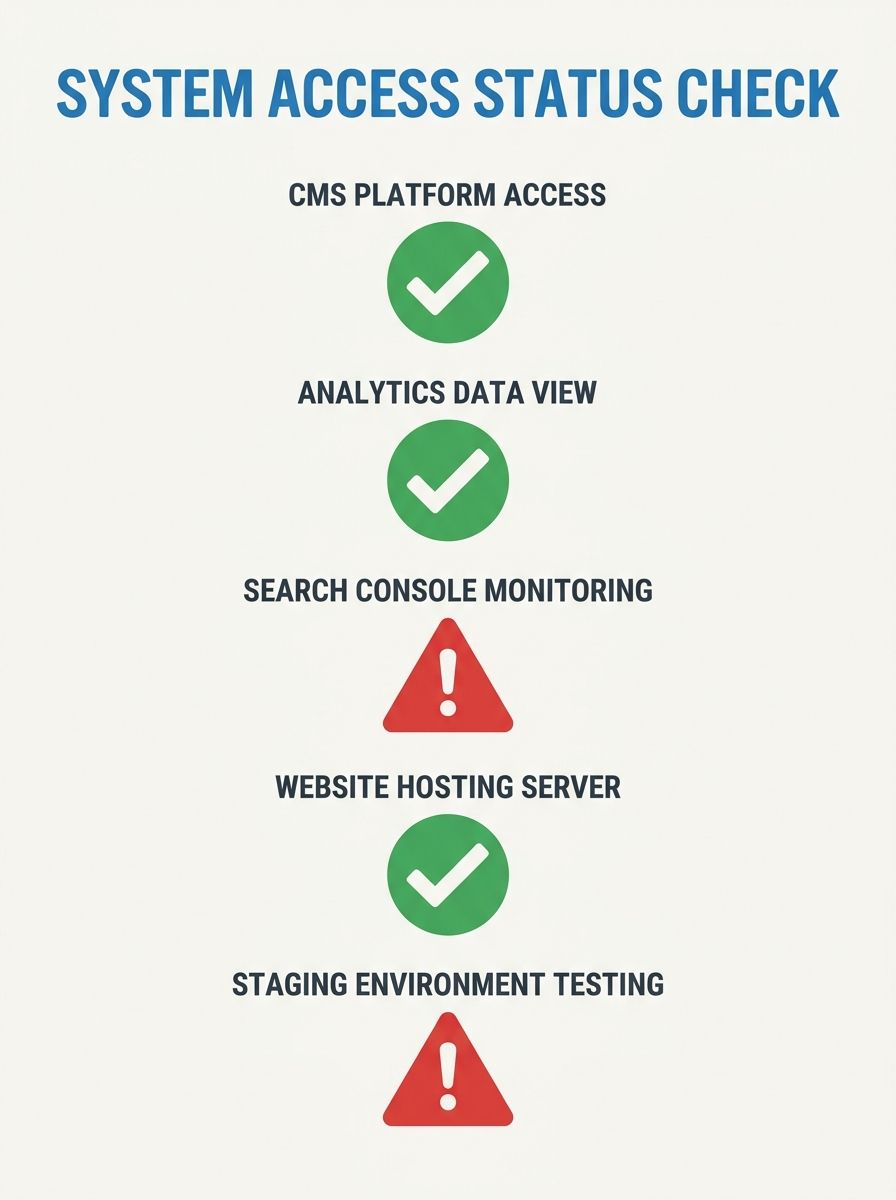
The fastest way to create SEO campaign delays is to sign an agency contract without confirming who controls access to your CMS, analytics platforms, Search Console, hosting environment, and CDN configuration. According to Stacc's onboarding analysis, access delays are the most common reason onboarding stalls. One agency in their dataset cut onboarding from 28 days to 3 days by solving access provisioning alone.
Here's what a dependency access map looks like in practice:
System | Access Owner | Current Status | Typical Turnaround |
|---|---|---|---|
Google Search Console | IT Department | Requires ticket | 3–5 business days |
CMS (WordPress/Shopify/Custom) | Marketing Lead | Direct access | Same day |
Google Analytics 4 | Data Team | Requires approval | 7–10 business days |
Hosting/CDN (Cloudflare, AWS) | DevOps | Requires VP sign-off | 5–14 business days |
Staging Environment | Engineering | Sprint-dependent | 2–4 weeks |
If your agency hasn't asked you to fill out something like this before contracts are signed, that's a red flag worth investigating. When you're auditing an agency's real track record, ask how they handle access provisioning. The best agencies I've evaluated treat it as a deal prerequisite, not a post-signing afterthought.
Name exactly one approver per workflow on day one
Enterprise SEO campaigns require navigating complex stakeholder approval processes, coordinating across multiple departments, and managing implementations that can impact thousands of pages. But the approval chain itself becomes a ranking roadblock when three or four people need to sign off on every title tag change, every redirect, every new page.
Optimatio.io's process documentation states the principle clearly: "fewer approvers = faster campaigns." Their recommendation is that you should know by week one who approves what, and write it down somewhere your whole team can see.
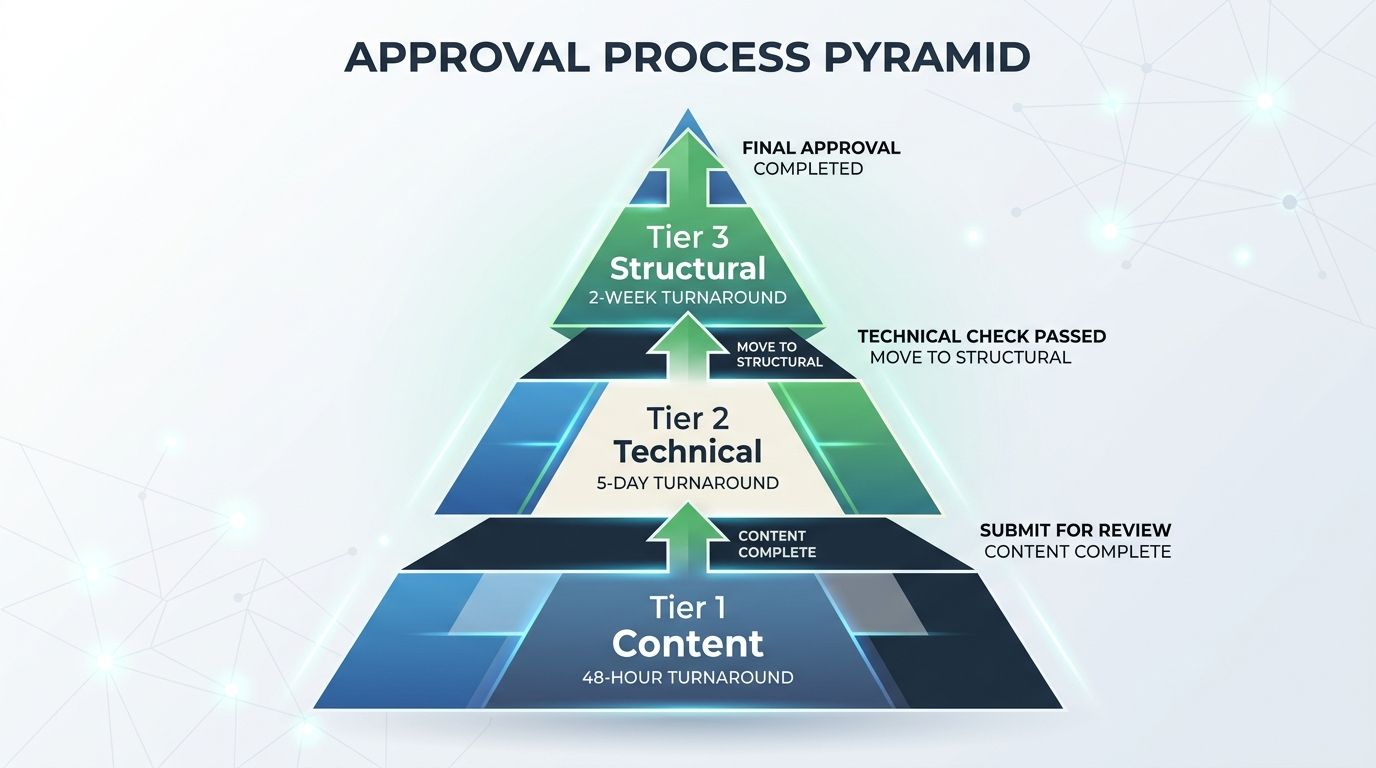
I recommend splitting technical approvals for SEO into three tiers:
Tier 1 (Content changes): One marketing stakeholder who can approve title tags, meta descriptions, heading changes, and new content within 48 hours
Tier 2 (Technical changes): One engineering lead who can approve redirects, schema changes, robots.txt edits, and sitemap modifications within 5 business days
Tier 3 (Structural changes): One VP-level approver for URL migrations, domain changes, CMS platform switches, and architecture overhauls within 2 weeks
When any tier requires committee approval, tickets stack up faster than your agency can execute. I've watched campaigns where 14 redirect requests sat in a Jira queue for 11 weeks because nobody had clear ownership. The SEO work was done. The implementation never shipped.
Run a CMS publishing test within 72 hours of kickoff
Don't take anyone's word that CMS access works. Publish a test page within the first 72 hours of the engagement: a noindexed draft, a staging edit, anything that proves the agency can actually push changes live. One development agency reported reducing post-launch SEO fixes by 73% by implementing a gate system that catches problems before they cascade, saving approximately 40 hours per project.
The 72-hour publishing test reveals problems that access provisioning alone doesn't surface:
Can the agency actually edit title tags, or does the CMS template override them?
Does the staging environment reflect production, or is it running a 6-month-old build?
Are there content freezes, release windows, or deployment schedules that block publishing during certain weeks?
Does the CDN cache need manual purging after changes, adding hours or days to each update?
If your agency is building SEO into your CI/CD pipeline, this test also validates that SEO changes can flow through the same deployment workflow as feature code. When they can't, every SEO recommendation becomes a standalone engineering ticket competing for sprint priority against product features.
Separate dev-queue dependencies from content dependencies
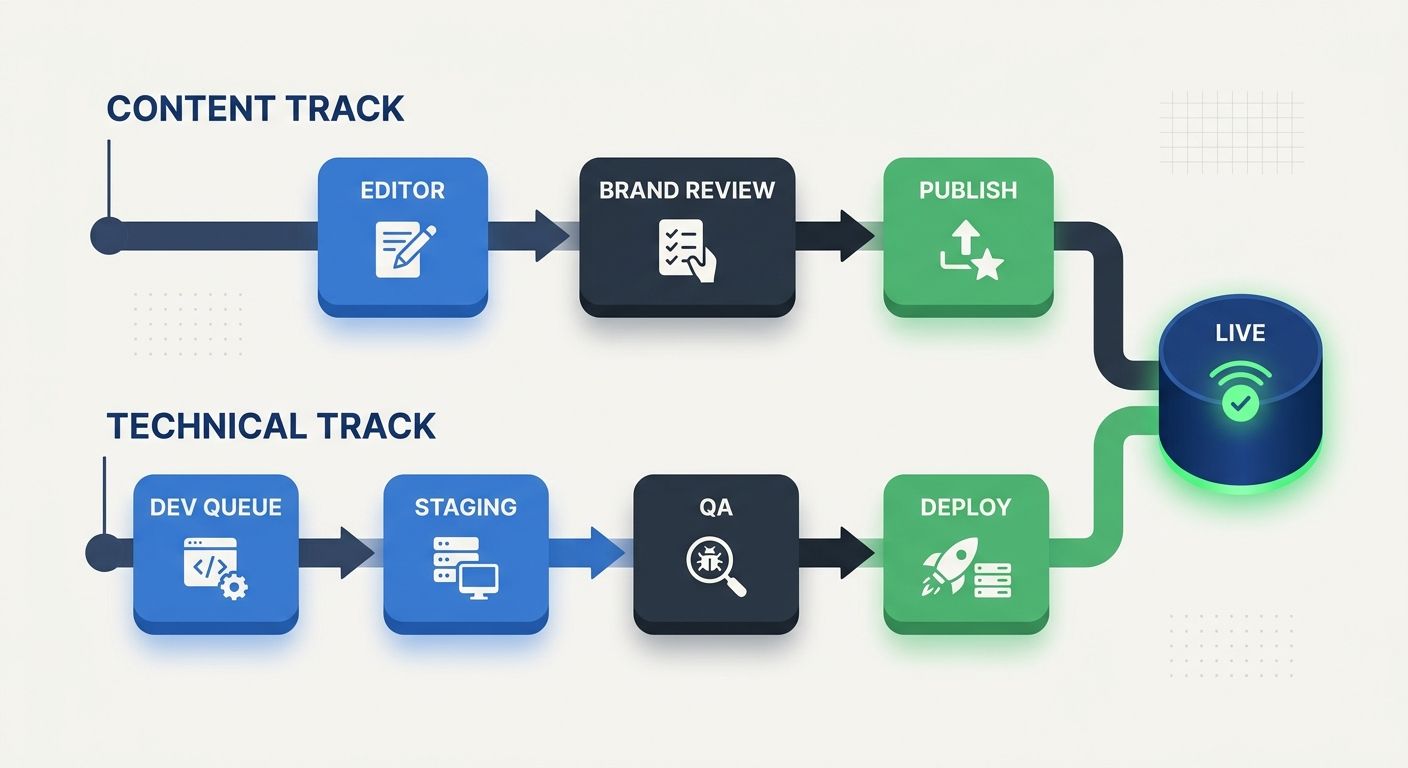
The most destructive assumption in agency SEO is treating "implementation" as a single workstream. Content implementation and technical implementation run through completely different organizational pipelines, and conflating them guarantees that one blocks the other.
Content dependencies typically involve writers, editors, brand reviewers, and legal teams. Technical dependencies involve developers, DevOps engineers, QA testers, and release managers. When your agency submits a batch of recommendations that mixes title tag rewrites with JavaScript rendering fixes, the entire batch gets routed to engineering, and the content changes that a marketing coordinator could have shipped in an afternoon sit in a dev queue for weeks.
According to Monday.com's SEO project management analysis, parallel workflows allow multiple streams of work to progress simultaneously rather than waiting for sequential completion. Speed is a competitive advantage in SEO, and structured management accelerates the path from ideation to indexed pages.
Your agency should deliver two separate implementation documents with every recommendation cycle:
A content implementation doc with changes that marketing can ship without engineering involvement
A technical implementation doc with changes that require developer time, staging validation, and deployment scheduling
This separation alone typically cuts implementation timelines by 40–60%, because content changes no longer wait behind dev sprints. If your agency delivers a single blended document, ask them to restructure it. The 15 minutes it takes them to split the recommendations saves your team weeks of unnecessary waiting.
Build escalation triggers into every dependency
Why do blocked tickets stay blocked for weeks? Because most agencies treat stalled implementations reactively. A recommendation sits in a queue, nobody follows up for three weeks, and by the time someone notices, the competitive window for that keyword cluster has closed. You need defined escalation triggers that fire when dependencies exceed their stated turnaround times.
ApproveThis documented an integration with DeepCrawl that enables conditional escalation when critical errors surface during an approval process, automatically adding approvers when tickets stall. Their system also supports external collaboration where clients or contractors can approve or reject via email without accessing the crawling platform directly. The core principle applies even if you don't use those specific tools: SEO shouldn't stop because someone is out of office.
Define escalation triggers like these in your agency contract or statement of work:
If a Tier 1 approval exceeds 48 hours, the backup approver is automatically notified
If a Tier 2 approval exceeds 7 business days, the VP-level sponsor receives a summary of blocked items and their estimated ranking impact
If any critical technical fix (broken canonical tags, dropped pages from index, server errors on key landing pages) exceeds 72 hours without acknowledgment, the agency escalates directly to the executive sponsor
When you're fixing hidden technical problems before rankings improve, the speed of the fix matters as much as identifying it. A crawl error detected on Monday that gets resolved on Friday is manageable. The same error sitting unresolved for six weeks compounds into an indexing problem that takes months to recover from.
Audit your dependency map every quarter
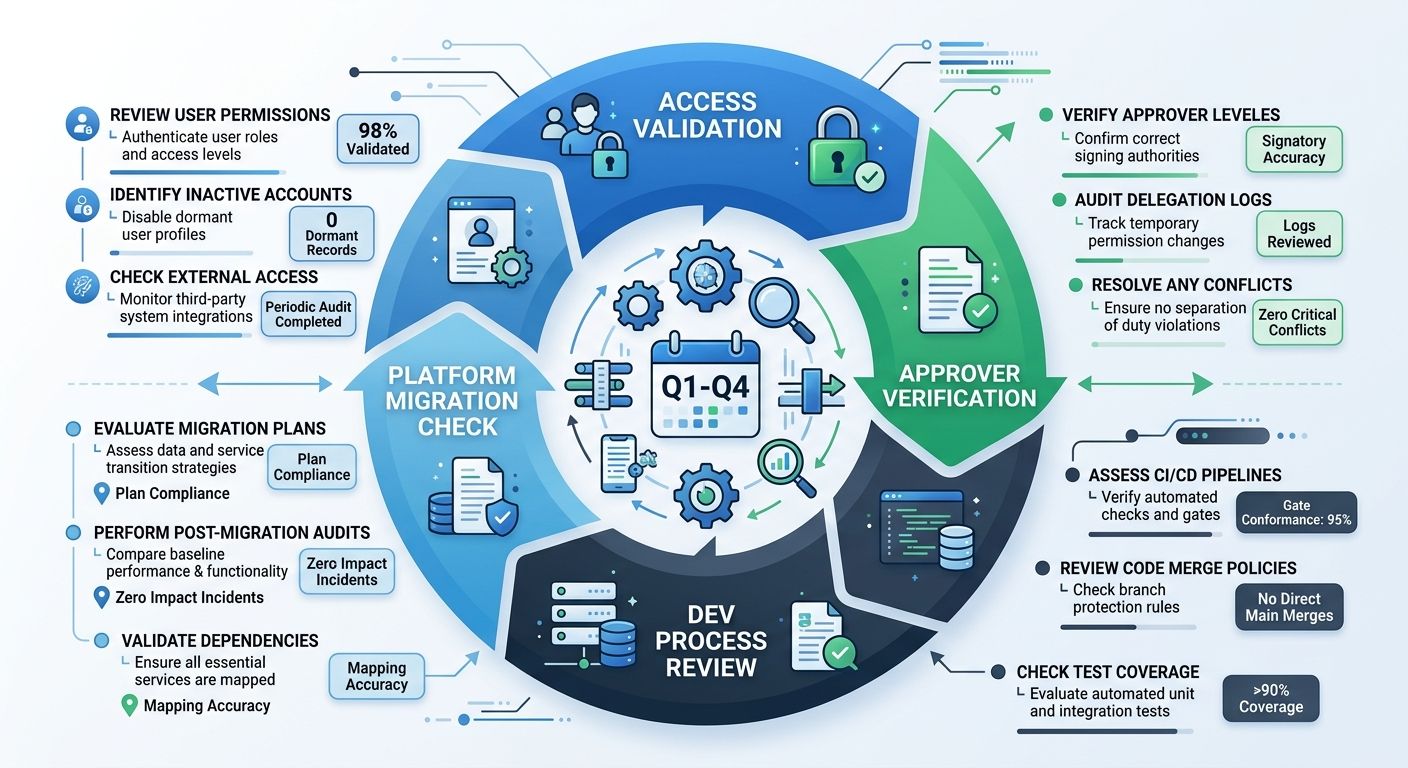
Dependencies shift in ways that nobody announces. The marketing director who approved content changes in Q1 moved to a different role in Q2. The dev team that shipped SEO tickets same-sprint adopted a new release cadence that adds two weeks of lead time. The CMS migration that was "on the roadmap" is now live, and nobody updated the agency's access credentials.
LinksOcially's enterprise audit framework emphasizes that organizations need to review workflow structure, ownership clarity, and publishing controls regularly to determine whether they can execute consistently without introducing recurring SEO debt. At scale, the cost of uncertainty compounds rapidly: organizations that scale content investment on top of broken infrastructure increase technical debt and make performance harder to recover.
Your quarterly dependency audit should answer four questions:
Are all access credentials still valid and functional? (Run the publishing test again.)
Has the named approver for any tier changed roles, and if so, who replaces them?
Has the dev team's release cadence or sprint structure changed in ways that affect SEO ticket priority?
Are there upcoming platform migrations, redesigns, or infrastructure changes that will invalidate current workflows?
If you're consolidating your agency tech stack, the quarterly audit is also the right time to verify that tool access hasn't drifted. Agencies inheriting login credentials from previous vendors, or running crawlers against staging URLs that no longer mirror production, create data quality problems that look like ranking drops but are actually measurement failures.
When the Dependency Audit Itself Becomes the Delay
There's a failure mode worth naming: the dependency audit turns into its own blocker. I've watched teams spend six weeks perfecting their RACI matrix, documenting every possible workflow scenario, and building elaborate approval hierarchies before allowing their agency to touch a single page. That defeats the entire purpose of this framework.
The dependency audit should take a single meeting, 90 minutes at most, during the sales process or immediately after contract signing. You fill out the access map. You name one approver per tier. You run the publishing test. You confirm the dev team's sprint cadence. And then you start the actual SEO work.
If your agency pushes back on this process, consider why. Agencies that resist pre-engagement dependency mapping often rely on the chaos of undefined workflows to justify extended timelines and additional billable hours. A Mistrata case study documented an agency that reduced client onboarding from 28 days to 3 days by restructuring their process. The previous 4-week timeline was a patchwork of manual steps and scattered communication across email, spreadsheets, and project boards. The work itself never required four weeks. The organizational friction did.
The agencies I've respected most over the past 12 years don't treat dependency auditing as overhead or as a box to check during onboarding. They treat it as the first deliverable, because they know that the fastest path to ranking improvements runs through clean operational infrastructure. Every week spent fighting for CMS access or waiting on approval chains is a week their competitors are publishing, indexing, and climbing.
Marcus Webb
Digital marketing consultant and agency review specialist. With 12 years in the SEO industry, Marcus has worked with agencies of all sizes and brings an insider perspective to agency evaluations and selection strategies.
Related Articles
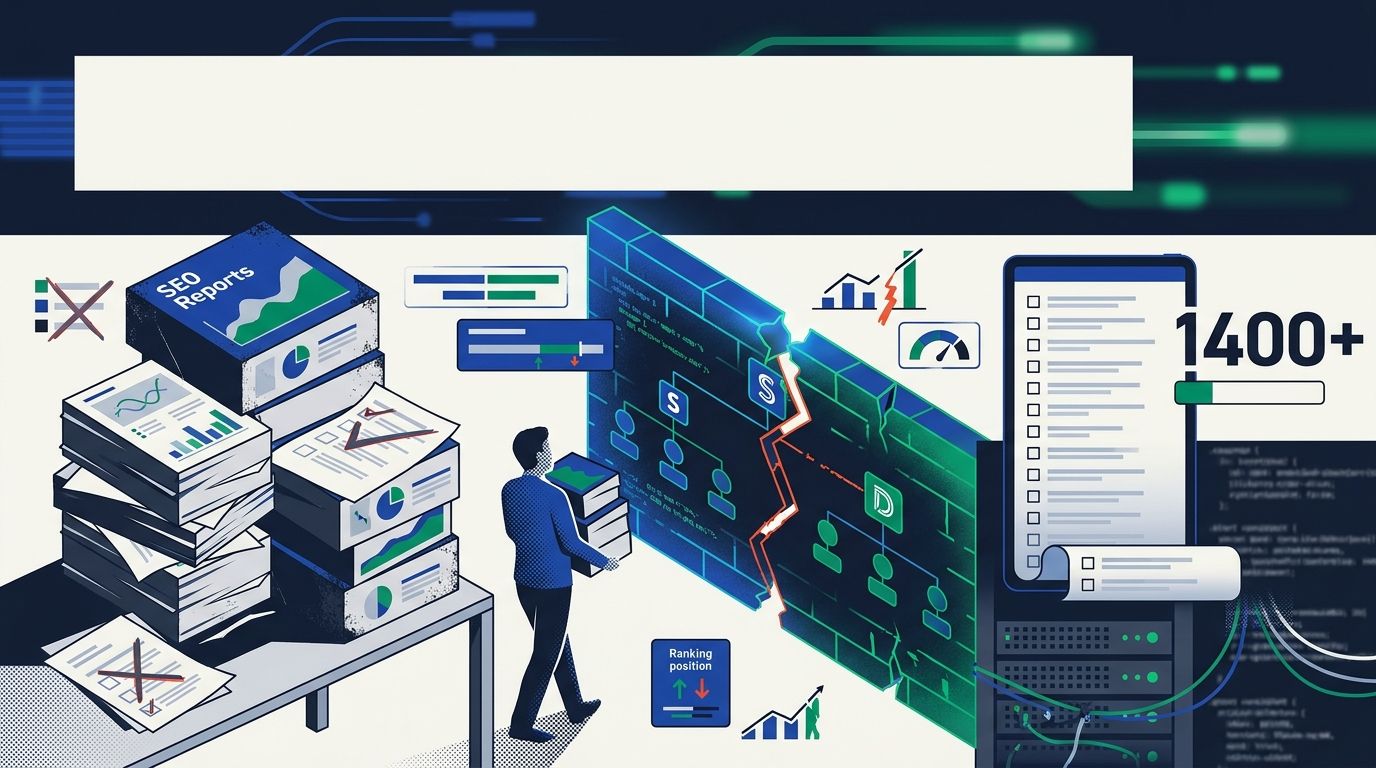
SEO Team Laid Off After Submitting 1,400 Unimplemented Recommendations Over 18 Months
An entire SEO department lost their positions in early 2026 after leadership determined the team failed to reverse organic traffic declines, despite documenting 1,400 improvement tickets across 18 months, according to a case study published in Search Engine Journal on May 13. The disconnect reveals

The SEO Debugging Workflow: A Framework for Diagnosing Visibility Drops in Under 48 Hours
A five-layer diagnostic sequence (crawl, render, index, rank, click) applied in strict dependency order isolates the root cause of organic visibility drops faster than any other method I've tested across 200+ agency evaluations.
The Technical SEO Workflow Gap: Why Agencies Miss Critical Infrastructure Tasks Before Publishing
Content published without pre-flight technical checks is the single largest source of fixable ranking failures I find when auditing white-label SEO operations. Not thin content, not bad link profiles, not poor keyword targeting.
Explore more topics