
Google Launches June 2026 Spam Update Targeting Low-Quality Content Across All Languages
Google deployed a global spam-focused algorithm update on June 24, 2026, designed to reduce the visibility of websites violating the company's spam policies, according to an announcement from Advait Technology Labs. The June 2026 Spam Update applies across all languages and regions and is expected t
 Marcus Webb··4 min read
Google Launches June 2026 Spam Update Targeting Low-Quality Content Across All Languages
Google deployed a global spam-focused algorithm update on June 24, 2026, designed to reduce the visibility of websites violating the company's spam policies, according to an announcement from Advait Technology Labs. The June 2026 Spam Update applies across all languages and regions and is expected to complete its rollout within several days of the initial launch date.
Update Scope and Rollout Timeline
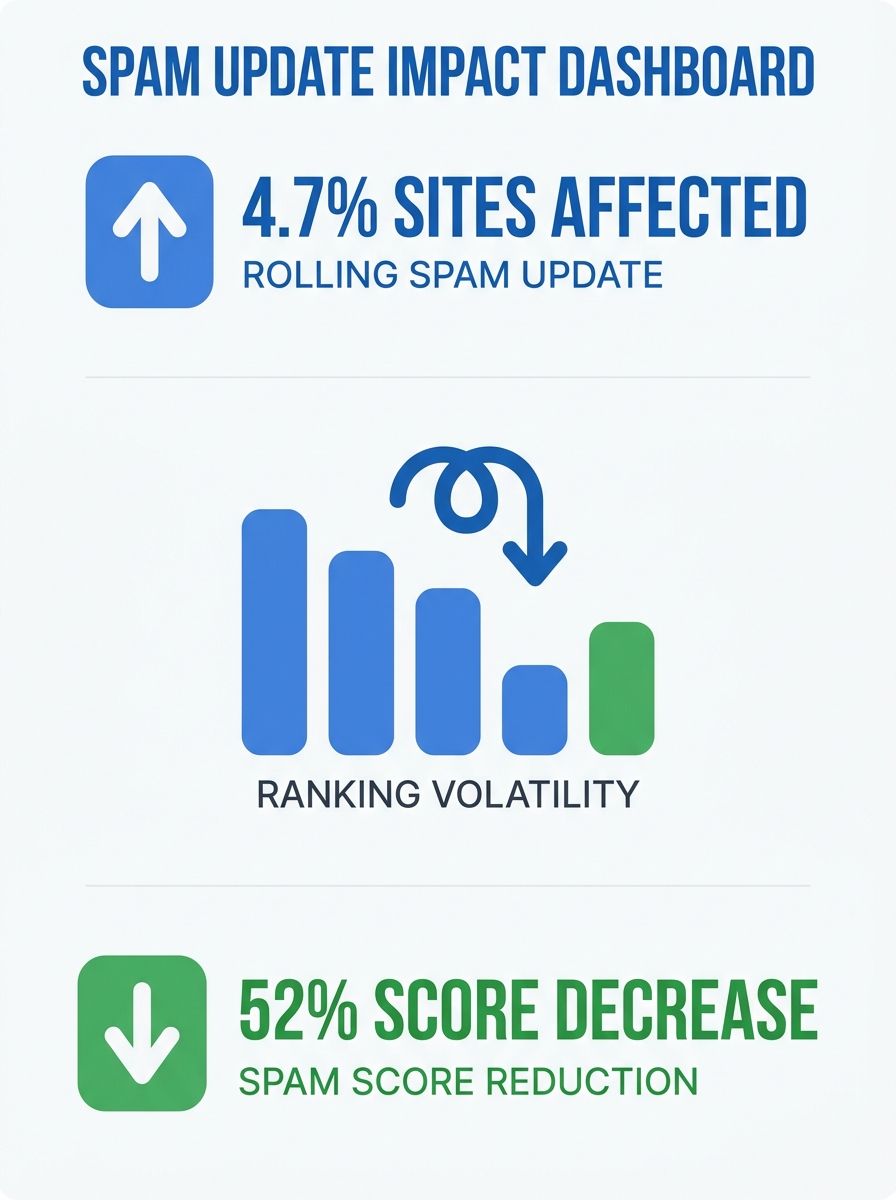
The June 2026 Spam Update operates as a standalone algorithm change separate from Google's broader core updates. Unlike core updates that evaluate overall content quality and relevance, spam updates specifically identify and demote websites employing manipulative ranking tactics. The rollout period spans multiple days, during which ranking fluctuations are expected as Google's automated spam detection systems process indexed pages globally.
The update does not target specific industries or site types but rather evaluates compliance with Google's Search Essentials guidelines. Websites following those guidelines face minimal risk of negative ranking impact, according to the source material.
Targeted Spam Practices
Google's June 2026 Spam Update identifies seven primary violation categories. Sites publishing thin or low-quality content providing minimal original value may experience ranking declines. Keyword stuffing—the excessive repetition of target phrases to manipulate rankings—remains a spam signal flagged by the update.
Unnatural link-building tactics including purchased backlinks or participation in link exchange schemes trigger authority reductions. Hidden content or cloaking practices that display different material to search engines versus human visitors violate core guidelines. Automatically generated spam content produced solely for ranking manipulation without human oversight faces demotion.
The update also flags doorway pages created to rank for specific queries and redirect users, deceptive redirects that send visitors to unexpected destinations, and hacked or compromised pages serving malicious content. Businesses employing SEO agencies should verify that no legacy tactics from these categories remain active on their properties.
AI-Generated Content Treatment
Google does not automatically penalize AI-generated content under the June 2026 Spam Update, the source material clarifies. The search engine evaluates quality, originality, accuracy, and usefulness regardless of whether human writers or AI tools produced the text. AI-generated content becomes problematic only when it is thin, repetitive, factually inaccurate, produced at scale without human oversight, or created solely to manipulate rankings.
This policy continues Google's stated position that content creation methods matter less than the final output's value to users. Marketing teams using AI writing tools should maintain editorial review processes and ensure each published piece provides genuine utility. Sites operating at scale with minimal human oversight face elevated risk under spam-detection systems that flag patterns inconsistent with quality guidelines.
Impact Detection and Ranking Fluctuation Signals
Website owners should monitor specific metrics to identify whether the June 2026 Spam Update affected their properties. Sudden organic traffic declines during or immediately after the rollout period may indicate impact, though normal ranking volatility occurs during any algorithm change. Ranking drops across multiple pages simultaneously warrant investigation, particularly when previously stable positions shift.
Reduced keyword visibility across search results—especially for terms that historically drove traffic—signals potential penalties. Businesses often notice fewer inquiries, calls, or conversions when search visibility decreases, making lead-generation metrics an early warning indicator.
Google advises waiting until the rollout completes before making reactive changes, as rankings fluctuate throughout multi-day deployment windows. Premature modifications can obscure whether observed changes stem from the update itself or from site-level adjustments made during the volatile period.
Post-Update Audit Framework
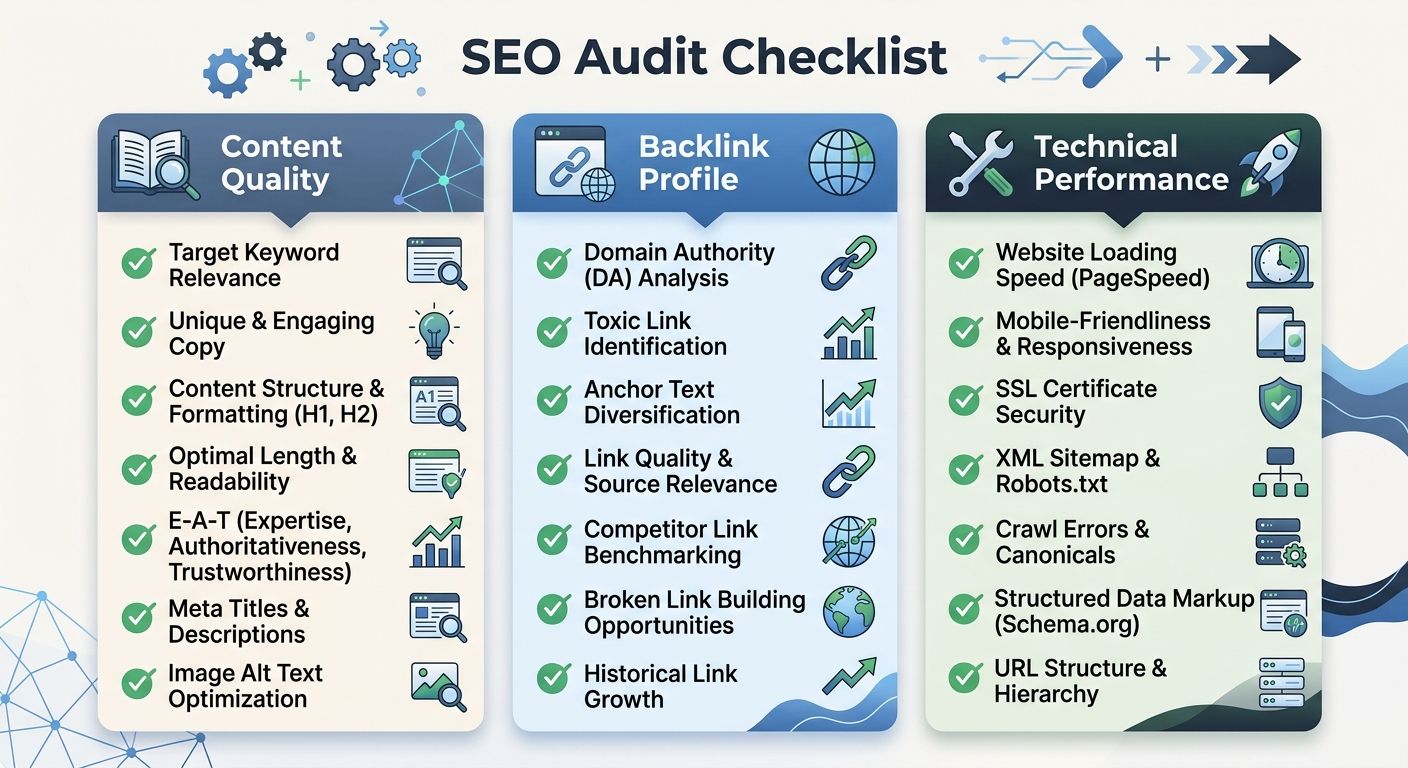
Businesses affected by ranking declines should conduct comprehensive SEO audits rather than implementing rushed fixes. Content quality reviews should evaluate whether published material genuinely helps users answer questions or solve problems, focusing on originality, accuracy, depth, readability, and user experience—Google's primary quality signals.
Backlink profile audits should identify incoming links from spam directories, link schemes, irrelevant websites, or low-quality domains. Businesses should disavow toxic links and shift focus toward earning high-quality backlinks through valuable content rather than manipulative outreach. The Invisible SEO Audit framework addresses hidden technical problems that compound spam-related penalties.
Technical SEO reviews should verify page speed, mobile usability, internal linking structure, crawlability, indexing status, and Core Web Vitals performance. These factors help search engines evaluate site quality more effectively. E-E-A-T (Experience, Expertise, Authoritativeness, Trustworthiness) signals require strengthening through author bylines, customer testimonials, case studies, and demonstrated industry expertise.
Previous algorithm updates targeting black hat SEO tactics have established precedent for Google's increasing automation of spam detection. The June 2026 update represents continued refinement of those systems rather than a fundamental policy shift.
Services Implications
SEO agencies managing client portfolios should prioritize immediate compliance audits across all accounts to identify exposure to the seven flagged spam categories. The multi-day rollout window creates a finite opportunity to remediate violations before ranking impacts solidify—sites flagged during the initial detection phase face steeper recovery paths than those addressed proactively. Agencies should document pre-update baseline rankings and traffic levels to separate update impact from seasonal fluctuations or concurrent site changes.
The explicit AI content clarification provides agencies with clear positioning for clients concerned about AI-assisted content strategies: quality and utility determine outcomes, not creation methodology. This guidance supports scaling content operations with AI tools while maintaining the human editorial oversight that distinguishes professional output from bulk-generated spam. Agencies should implement or formalize review workflows that document human involvement in AI-assisted content creation, creating audit trails that demonstrate compliance with quality standards.
Long-term, the June 2026 Spam Update reinforces the competitive advantage that quality-focused SEO services hold over low-cost providers relying on legacy tactics. Businesses evaluating agency proposals should verify that recommended strategies exclude the flagged practices—particularly link schemes and thin content at scale—and include the audit frameworks needed to maintain compliance as Google's spam detection systems evolve. Monthly reporting should now incorporate spam-risk monitoring alongside traditional ranking and traffic metrics, giving clients visibility into proactive compliance management before algorithm changes trigger reactive damage control.
Marcus Webb
Digital marketing consultant and agency review specialist. With 12 years in the SEO industry, Marcus has worked with agencies of all sizes and brings an insider perspective to agency evaluations and selection strategies.
Related Articles

Google Launches Third Spam Algorithm Update of 2026 Affecting All Languages Globally
Google initiated a global spam algorithm update on August 18 at 9:27 AM Pacific, marking the third such deployment in 2026, according to the company's Search Status Dashboard. The rollout affects all languages and may require several days to complete.

Google's June 2026 Spam Update Targets AI Citation Manipulation as Violation of Core Search Policies
Google's June 2026 spam update, which began rolling out on June 24, explicitly treats efforts to manipulate AI-generated search responses—including buying citations or altering AI Overviews—as violations of the company's spam policies, according to Search Engine Journal. The update expands Google's

Google Launches September 2026 Spam Update Affecting All Languages Globally
Google launched its September 2026 spam update on September 24 at 9:15 a.m. PDT, targeting manipulative search practices globally across all languages, according to the company's Search Status Dashboard.
Explore more topics