
SEO Agency Excell Industries Publishes 2026 Trends Framework Emphasizing AI-Powered Search and Core Web Vitals
Digital marketing agency Excell Industries published an SEO trends framework on August 21 identifying AI-powered search optimization, user intent alignment, and Core Web Vitals performance as dominant ranking factors heading into the second half of 2026, according to a guide posted to the firm's web
 Marcus Webb··3 min read
SEO Agency Excell Industries Publishes 2026 Trends Framework Emphasizing AI-Powered Search and Core Web Vitals
Digital marketing agency Excell Industries published an SEO trends framework on August 21 identifying AI-powered search optimization, user intent alignment, and Core Web Vitals performance as dominant ranking factors heading into the second half of 2026, according to a guide posted to the firm's website. The framework positions artificial intelligence as "the new normal" in search and declares that exact keyword matching has been replaced by semantic understanding across Google's ranking systems.
The publication arrives seven months after Google's March 2026 core algorithm update shifted rankings for 45% of tracked sites, a deployment that elevated entity-rich content and penalized thinner pages. Excell's framework responds to that shift by outlining seven tactical areas where businesses should reallocate resources to maintain organic visibility as traditional keyword-centric strategies lose effectiveness.
AI-Generated Summaries Redefine Visibility Metrics
Excell Industries named AI-powered search summaries as the dominant structural change for 2026, stating that search engines now generate immediate answers rather than displaying traditional blue-link results. The framework advises businesses to position themselves as sources that AI systems "trust enough to reference" rather than optimizing solely for click-through traffic.
The guidance aligns with observations from AI search platforms that now layer atop Google rather than replace it, creating a dual-visibility challenge where rankings and AI citations require separate optimization strategies. Excell recommends publishing original research, citing credible sources, adding expert opinions, and structuring content to answer questions directly—tactics designed to increase the likelihood of citation in AI-generated summaries.
The framework contrasts this approach with legacy SEO methods. "Content that repeats existing articles is unlikely to perform well," the guide states, positioning originality and depth as prerequisites for visibility in AI-mediated search environments.
Search Intent Prioritized Over Exact Keyword Density
The Excell framework declares that Google's semantic understanding has rendered exact keyword matching obsolete, noting that queries such as "best SEO software," "top SEO platforms," and "which SEO software should I use" now receive nearly identical treatment despite different wording. The agency advises content creators to answer "every related question users might have" rather than repeating target keywords.
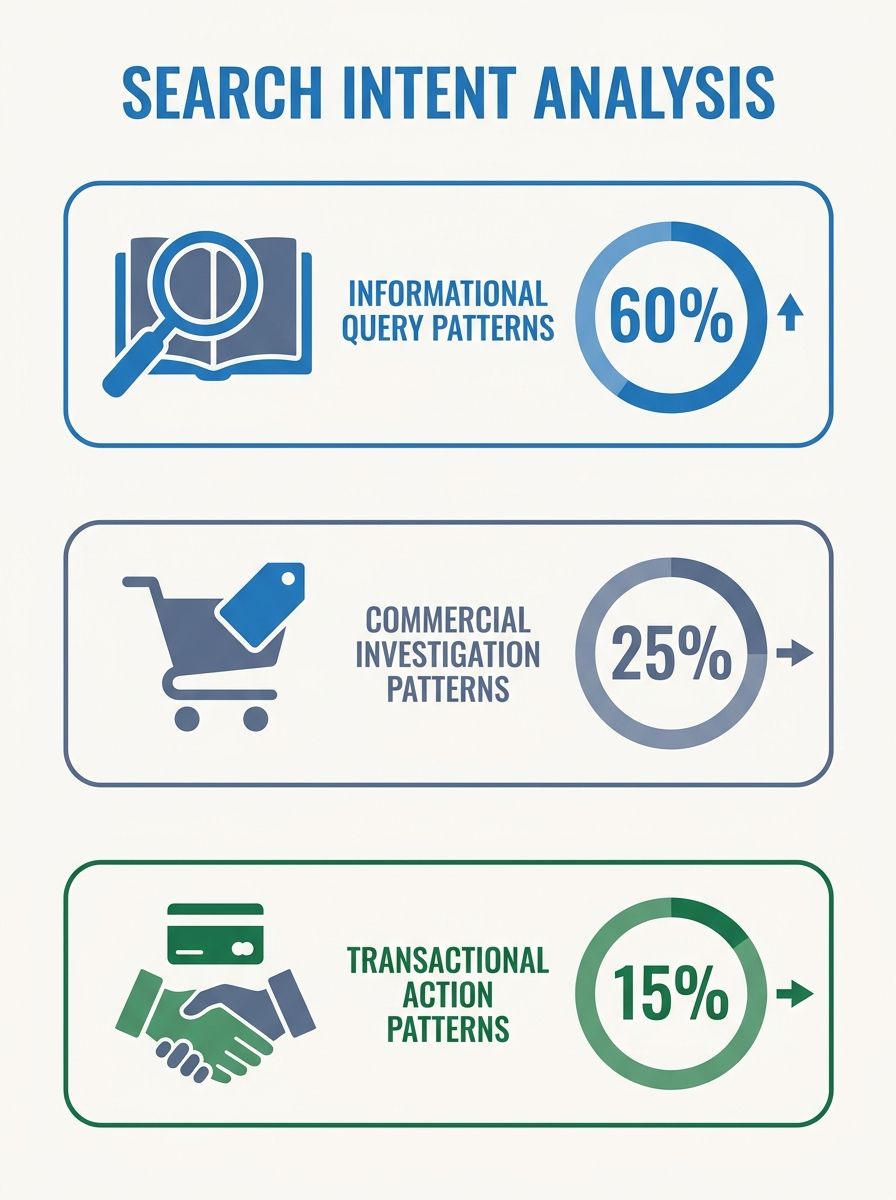
The publication categorizes search intent into four types—informational, commercial, transactional, and navigational—and recommends matching content structure to user goals. A commercial-intent query like "best SEO agency" requires product comparisons and feature evaluations, while an informational query such as "what are SEO trends 2026" demands explanatory depth without sales language.
This intent-first approach mirrors guidance from enterprise SEO teams now building structured testing frameworks for AI search performance, where query classification precedes content production.
Core Web Vitals and E-E-A-T Remain Central to Rankings
Excell Industries reaffirmed Core Web Vitals—page speed, interactivity, and visual stability—as critical ranking factors, stating that technical performance improvements deliver "immediate, measurable ranking boosts." The framework positions site speed optimization, mobile responsiveness, and structured data implementation as non-negotiable baseline requirements.
The agency also highlighted Google's E-E-A-T framework (Experience, Expertise, Authoritativeness, Trustworthiness) as an increasingly dominant quality signal. Recommended tactics include showcasing real-world case studies, displaying author credentials, earning backlinks from authoritative domains, and maintaining accurate contact information.
These priorities echo findings from Chicago-based agencies reporting visibility gains from combined traditional and AI search optimization strategies, where technical SEO foundations enable better performance in both conventional rankings and AI answer engines.
Content Quality Metrics Eclipse Volume-Based Strategies
The framework warns against "thin content" and keyword stuffing, declaring that Google's Helpful Content System continues to reward original insights, practical advice, and accurate information over content volume. Excell advises businesses to publish fewer, more comprehensive pieces rather than high-frequency, low-depth articles.
This guidance directly contradicts scaled content approaches. Recent data showed that scaled AI content campaigns face de-indexation as Google's crawl budget models reject mass-production strategies, validating Excell's quality-over-quantity positioning.
The agency also emphasized content updates, recommending that businesses refresh existing pages with current statistics and new examples rather than publishing duplicate material on emerging topics.
The Takeaway
Excell Industries' framework codifies observations that have emerged throughout 2026: AI-mediated search has fundamentally shifted what constitutes "optimization," and businesses clinging to pre-2024 tactics—exact keyword density, thin content, link volume—will see continued erosion in organic traffic. The agency's emphasis on Core Web Vitals and E-E-A-T signals offers actionable direction for CMOs and marketing managers evaluating whether their current SEO partners are adapting to these structural changes.
For business owners assessing agency performance, the framework's core themes—AI citation optimization, intent mapping, technical performance, and content originality—serve as evaluation criteria. Agencies still reporting on keyword rankings alone without addressing AI answer visibility or Core Web Vitals performance are operating with outdated metrics. The publication reinforces that competitive SEO in the second half of 2026 requires simultaneous optimization for traditional search rankings and AI-generated answer environments, a dual-engine approach that many legacy providers have yet to implement.
Marcus Webb
Digital marketing consultant and agency review specialist. With 12 years in the SEO industry, Marcus has worked with agencies of all sizes and brings an insider perspective to agency evaluations and selection strategies.
Related Articles
Google Marketing Live 2026 Confirms End of Traditional Search as Agency Study Shows Top-Ranked Brands Invisible to AI 69% of Time
Google announced at Marketing Live 2026 that traditional search has ended and all search on the platform now operates through AI-based systems, according to NP Digital's APAC managing director Dan Kalinski writing in Marketing-Interactive. The announcement validates what an NP Digital experiment mea
Answer Engine Optimization Framework Published as Corporate Digital Strategy Shifts to AI-Mediated Discovery
Answer Engine Optimization emerged as a strategic framework for corporate digital presence in an analysis published August 22 by The Upgrade Curve newsletter, defining the practice as making organizational expertise easier to understand and surface within AI-mediated discovery experiences that now p

TrySight.ai Publishes Step-by-Step Framework for Optimizing Content Visibility in AI Search Platforms
TrySight.ai released a three-stage content optimization framework on August 2 designed to position brand content for citation in AI-powered search platforms including ChatGPT, Claude, and Perplexity, according to a guide published on the company's website.
Explore more topics