
Answer Engine Optimization Framework Published as Corporate Digital Strategy Shifts to AI-Mediated Discovery
Answer Engine Optimization emerged as a strategic framework for corporate digital presence in an analysis published August 22 by The Upgrade Curve newsletter, defining the practice as making organizational expertise easier to understand and surface within AI-mediated discovery experiences that now p
 Marcus Webb··3 min read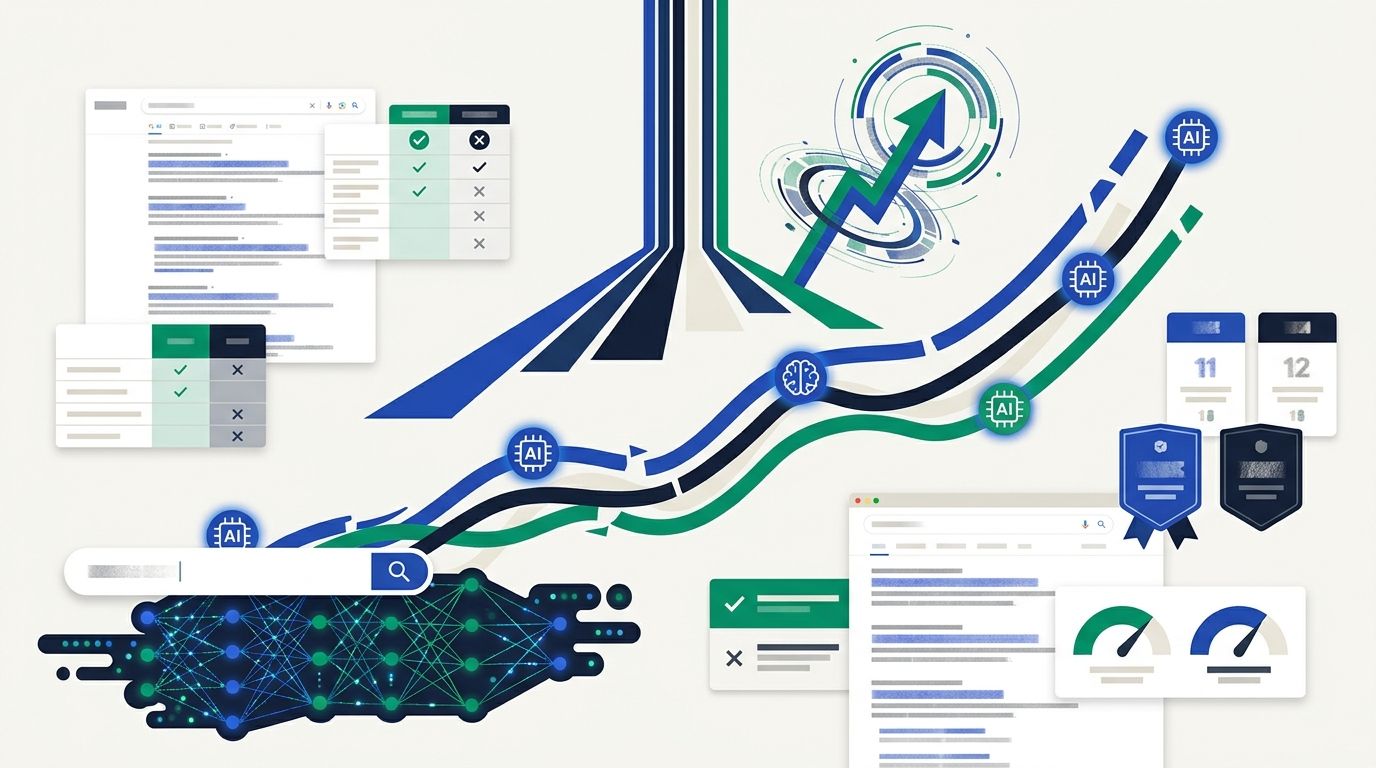
Answer Engine Optimization Framework Published as Corporate Digital Strategy Shifts to AI-Mediated Discovery
Answer Engine Optimization emerged as a strategic framework for corporate digital presence in an analysis published August 22 by The Upgrade Curve newsletter, defining the practice as making organizational expertise easier to understand and surface within AI-mediated discovery experiences that now precede traditional website visits.
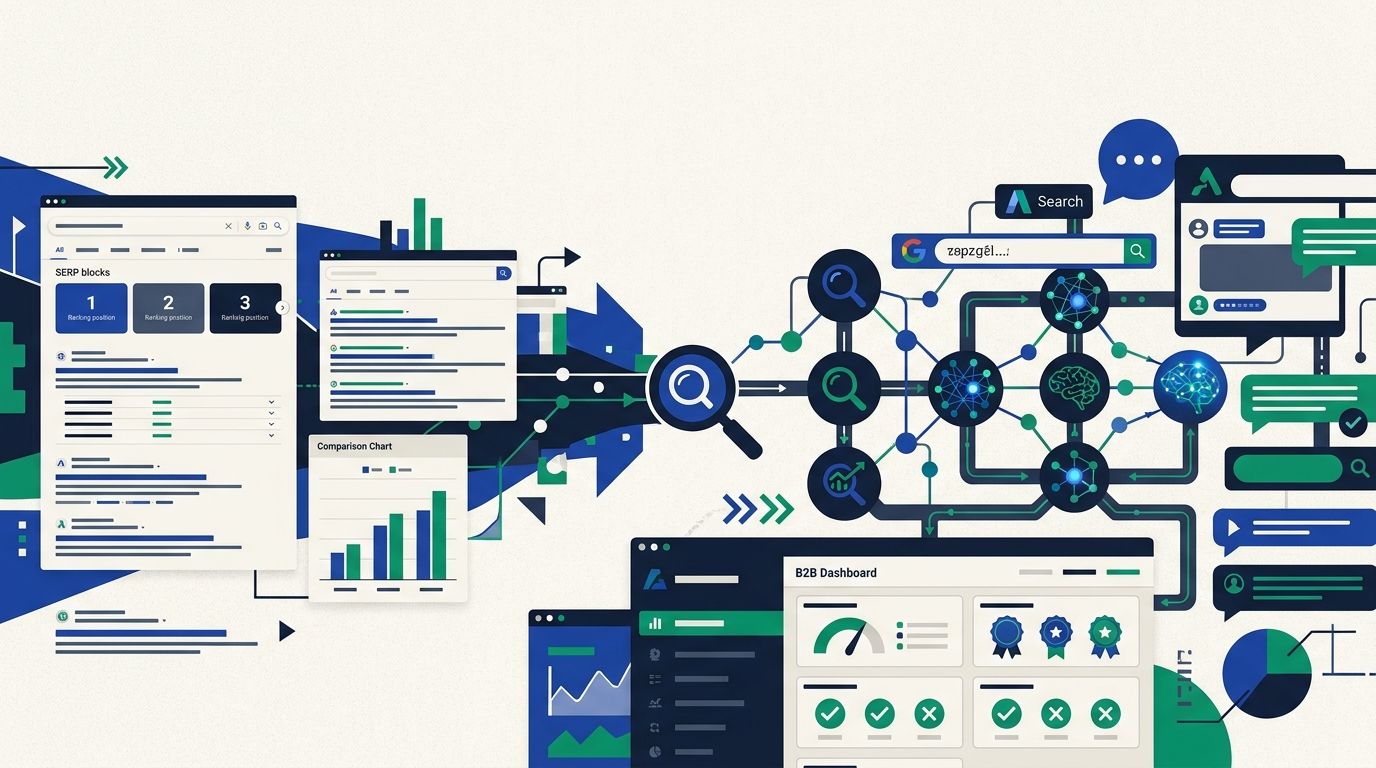
The framework identifies a shift from the traditional "Search → Ranking → Click → Conversion" sequence to a new buyer path: "Question → AI Answer → Source → Consideration → Decision," according to the analysis. The distinction creates what the newsletter describes as a visibility challenge distinct from search engine ranking—whether a company appears when AI systems synthesize answers to customer problems.
AI-Synthesized Answers Change Discovery Economics
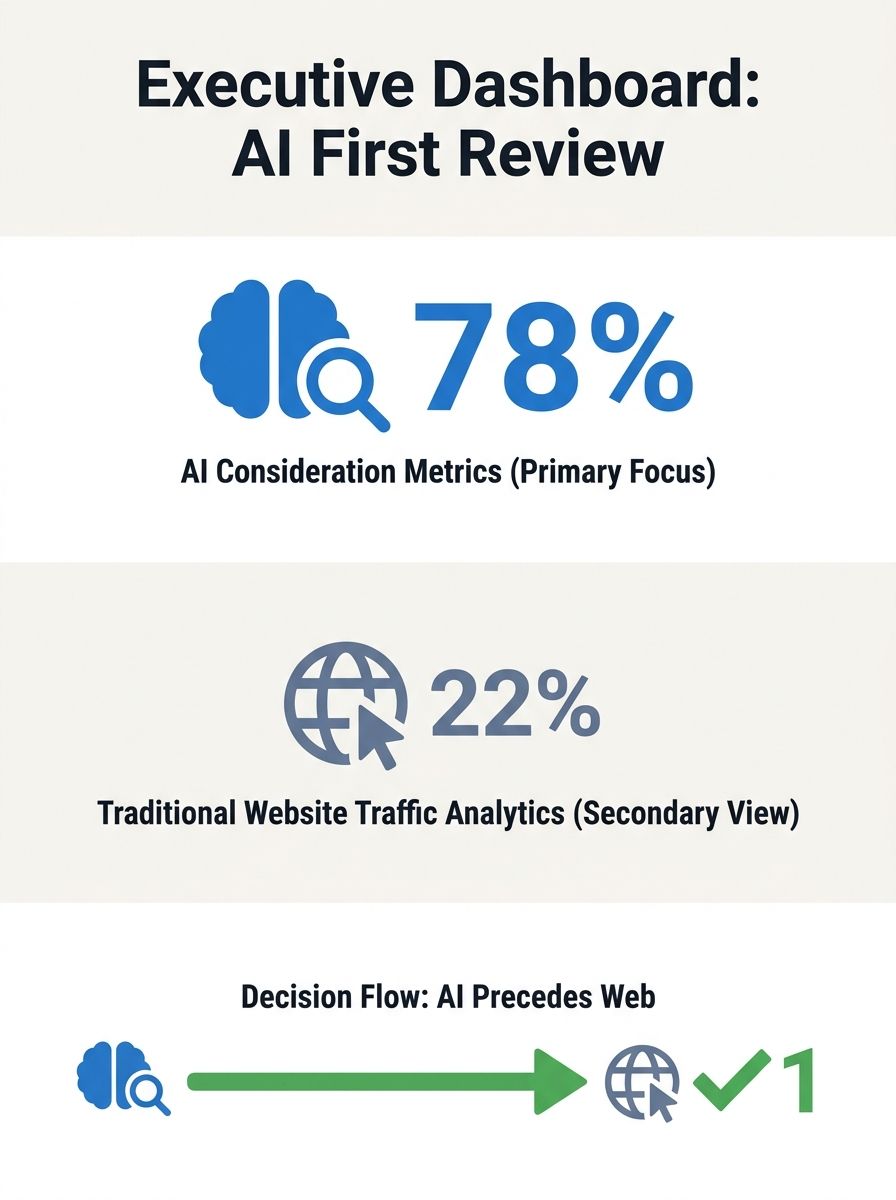
Customers increasingly encounter brands before visiting websites, the framework notes, when AI systems field questions about which companies merit consideration, how solutions compare, or which vendors fit specific situations. The website in these scenarios functions as "evidence behind the destination's answer" rather than the destination itself, according to the August 22 analysis.
The shift introduces consideration loss as a funnel risk invisible to conventional analytics. The framework illustrates the problem through an enterprise software buyer who asks AI to identify platforms for a 500-person organization, then requests comparisons and implementation-speed rankings—never encountering a company excluded from all three answer sets, the newsletter stated. By the time the buyer reaches traditional search results, the shortlist has already formed without the excluded vendor appearing in any AI-synthesized response.
Traditional discovery metrics—traffic, rankings, impressions, leads, conversion rates, customer acquisition cost—remain valid but miss the earlier question of whether a company was considered at all, according to the framework. AI Mode queries now triple traditional search length as users pose complex natural-language questions that AI systems can synthesize rather than forcing customers to perform information comparison themselves.
Knowledge Layer Requirements Span Departments
The framework defines AEO more broadly than optimizing content for AI answers, positioning it instead as "the practice of making an organization's expertise easier to understand, retrieve, evaluate, and potentially surface within answer-oriented discovery experiences." That scope requires clarity, structure, authority, evidence, accessibility, and consistency—attributes that span marketing, sales, product, technology, communications, customer success, and leadership rather than residing within SEO teams alone, the analysis stated.
Websites should function as knowledge assets that communicate identity, positioning, audience, problems solved, solutions delivered, expertise qualifications, evidence supporting claims, differentiation from alternatives, customer experience, and market authority, according to the framework. "The better that layer becomes, the stronger the foundation for both traditional discovery and AI-mediated discovery," the newsletter stated.
The strategic question shifts from "What keywords should we rank for?" to "What questions should our company be known for answering?" according to the analysis. A financial technology company targeting keywords like "fintech platform" and "payment processing" may miss the customer's actual decision process reflected in questions such as "How do I reduce payment processing costs?" or "What payment infrastructure is best for a growing company?" the framework noted.
Enterprise B2B SEO leaders now differentiate through AI-answer optimization as the practice matures from keyword targeting to question authority, with software companies' SEO listicles earning citations but losing 69% of AI recommendations to competitors who structure expertise for answer-engine retrieval.
Services Implications
SEO agencies advising clients on 2026 digital strategy face a scope expansion from ranking optimization to discovery architecture. The AEO framework described in The Upgrade Curve analysis positions agency service portfolios at an inflection point—clients hiring for keyword rankings may be solving the wrong problem if their expertise never surfaces when AI systems synthesize answers to buyer questions. Agencies that continue selling traditional ranking deliverables without auditing whether clients appear in AI-mediated consideration sets risk delivering metrics that mask funnel leakage at the awareness stage.
The cross-departmental nature of AEO implementation creates a consulting opportunity distinct from tactical SEO execution. An agency audit that reveals a client loses consideration before losing clicks identifies a visibility gap that keyword research and backlink campaigns cannot address. The fix requires restructuring how the organization explains itself digitally—touching content strategy, site architecture, structured data, FAQ design, thought leadership publishing, and executive positioning. Agencies positioned to diagnose consideration loss and coordinate cross-functional fixes deliver strategic value beyond rank tracking.
The measurement challenge inherent in AEO—tracking whether a company appears in AI-generated answers to unbranded queries—demands new tooling and reporting frameworks. Agencies that wait for clients to request AEO services will trail those proactively auditing AI search platform performance and presenting consideration data alongside traditional traffic reports. The companies that dominate AI-mediated discovery in 2027 will be those whose agencies began restructuring their knowledge layers in 2026.
Marcus Webb
Digital marketing consultant and agency review specialist. With 12 years in the SEO industry, Marcus has worked with agencies of all sizes and brings an insider perspective to agency evaluations and selection strategies.
Related Articles
NEWMEDIA.COM Publishes Enterprise SEO Framework Targeting AI Answer Visibility and Site-Wide Governance
NEWMEDIA.COM released an enterprise SEO framework on July 2 positioning large-scale organic search as a governance discipline that must now optimize for AI-powered answer engines alongside traditional rankings, according to an analysis drawing on the agency's work across $3.5 billion in client reven
Cloviana Publishes Comprehensive AI Search Optimization Framework as B2B Buyer Research Shifts to ChatGPT and AI Platforms
Cloviana published a comprehensive guide to AI search optimization on June 25, 2026, outlining how B2B brands can optimize for visibility in AI-generated answers across ChatGPT, Claude, Perplexity, Google AI Overviews, and Gemini as 71% of B2B buyers now rely on AI chatbots for software research, ac
From Google Search to AI Assistants: How B2B Agencies Must Rebuild SEO Strategy Beyond Traditional SERP Rankings
Three of the five B2B agency contracts sitting on my desk right now define success exclusively as Google organic ranking improvements and click-through traffic growth. The agencies that wrote those contracts aren't incompetent.
Explore more topics