
AI Mode Queries Now Triple Traditional Search Length as Non-Text Inputs Reach 16% of Volume
AI Mode queries average three times the length of traditional search inputs and incorporate non-text elements in more than 16% of searches, according to a May 19, 2026 analysis published by Shivani Mohan, Google's vice president of Data Science and UXR.
 Marcus Webb··4 min read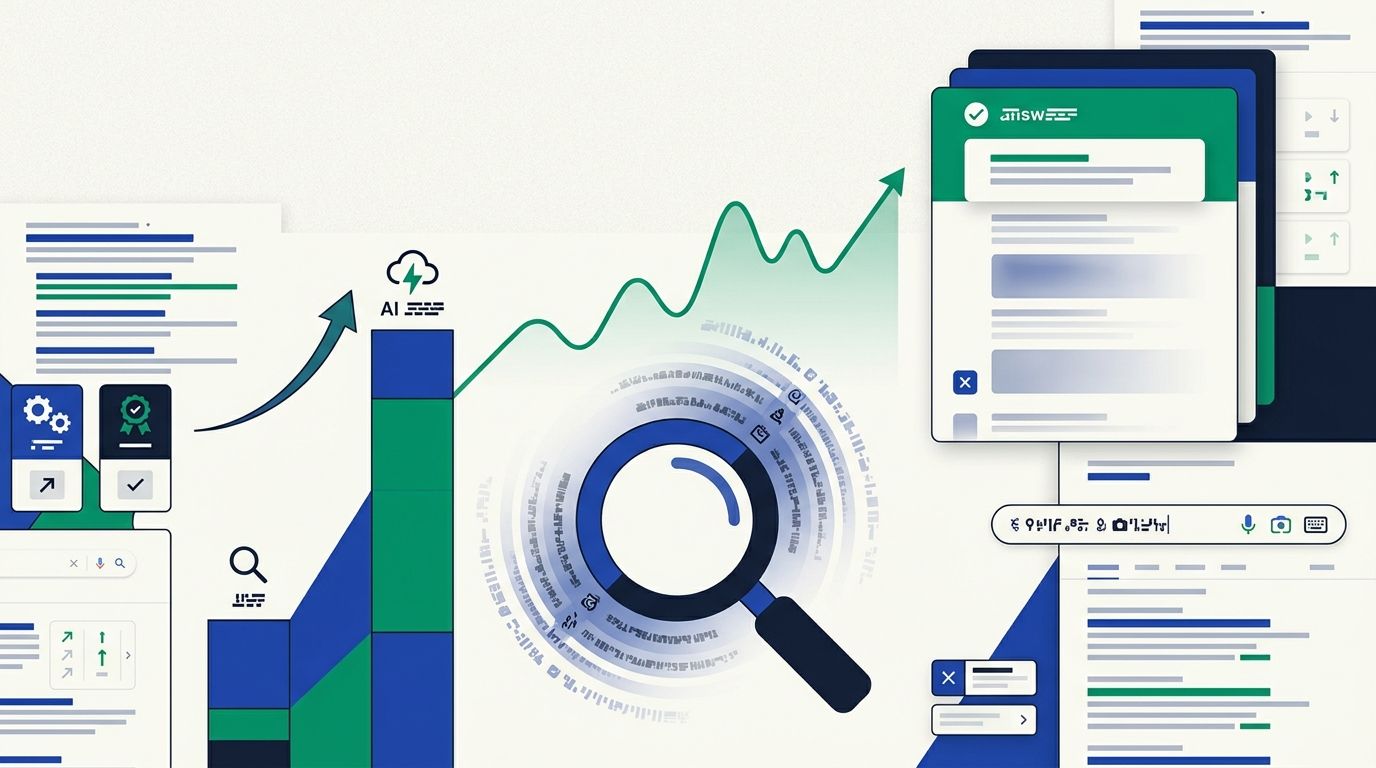
AI Mode Queries Now Triple Traditional Search Length as Non-Text Inputs Reach 16% of Volume
AI Mode queries average three times the length of traditional search inputs and incorporate non-text elements in more than 16% of searches, according to a May 19, 2026 analysis published by Shivani Mohan, Google's vice president of Data Science and UXR. The platform has surpassed 1 billion monthly active users globally, with query volume more than doubling each quarter since launch.
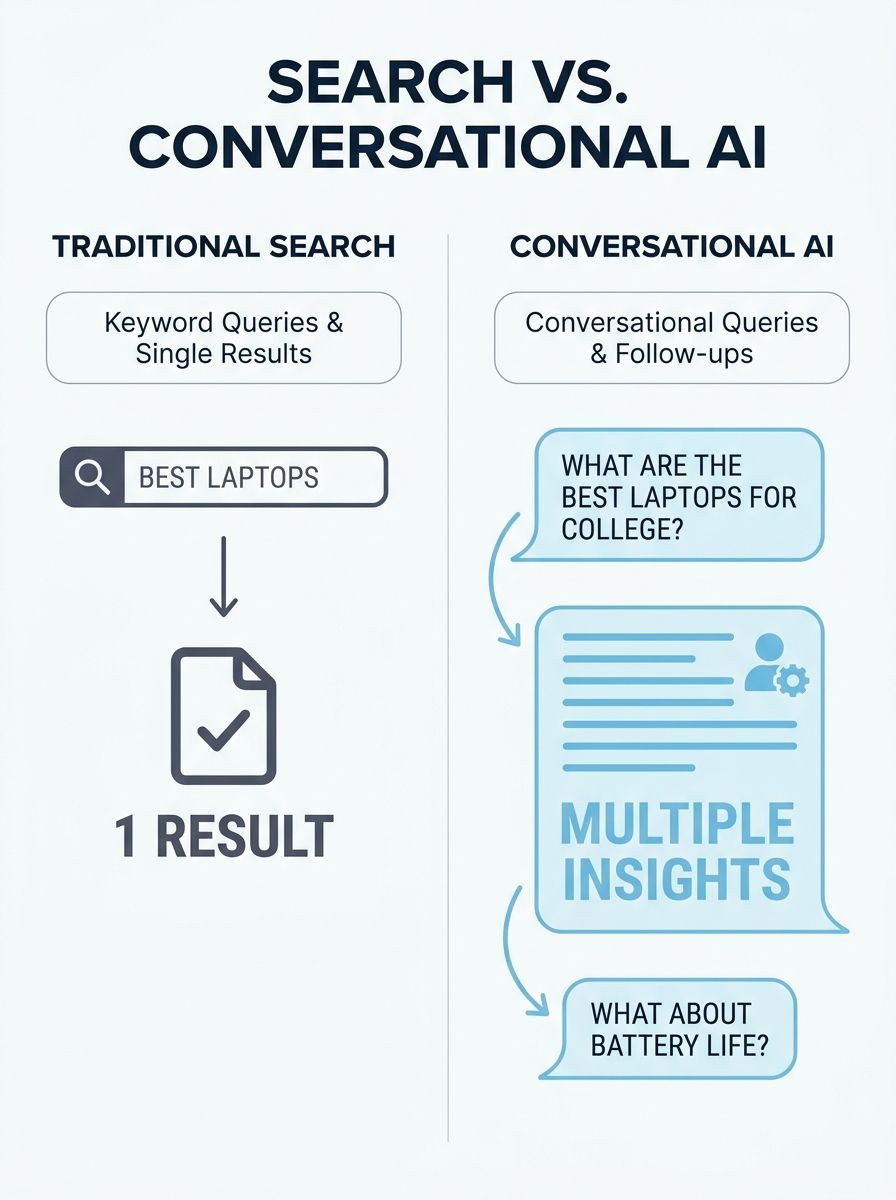
The data reveals a fundamental change in how users frame information requests. Rather than typing fragmented keywords, searchers now ask complete questions mirroring natural conversation. The most common first words in AI Mode queries—"what," "how," "I," "is," and "can"—reflect interrogative phrasing that replaces the noun-heavy short-head terms that dominated desktop search strategy for two decades, according to Mohan's report published on the Google blog.
Image-based queries are growing more than 40% month over month, Mohan reported. Follow-up refinement queries are climbing at the same rate, indicating users treat AI Mode as an iterative conversation rather than a single-shot keyword lookup.
Five Task-Based Query Categories Replace Keyword Groupings
Google's analysis segments AI Mode behavior into five distinct modes: Explore, Decide, Learn, Create, and Do. Each category corresponds to a specific user task and exhibits different growth trajectories.
Explore queries—open-ended brainstorming searches—are growing 30% faster than overall AI Mode traffic. Decide queries built around comparison language such as "which of" and "which one" are growing 40% faster than the platform average. Learn queries help users understand new concepts and investigate professional development topics. Do queries tied to planning tasks including workout routines, travel itineraries, and household budgets are growing 80% faster than AI Mode queries overall over the past six months, Mohan stated. Image creation queries in AI Mode have more than tripled since the start of 2026.
The shift from keyword-based to task-based search represents a structural change in user behavior rather than incremental ranking-factor adjustments, the analysis indicates.
Content Architecture Must Prioritize Immediate Answers Over Narrative Arcs
The query-length data carries direct implications for page structure. Content that buries primary answers beneath introductory paragraphs creates extraction barriers for AI-powered search systems that assemble multi-source summaries, according to the source analysis.
The recommended approach mirrors journalistic inverted-pyramid structure, which emerged as an industry standard between 1880 and 1890 when telegraph costs and physical typesetting constraints forced editors to place critical facts first. Generative search engines operate under similar computational limits today—they must identify and extract the core answer quickly or move to the next source.
Entity-dense opening sentences anchored with specific brand names, geographic markers, exact dates, and verified numerical values improve algorithmic readability and reduce AI hallucination risk, the framework suggests. Scannable hybrid layouts using short two-to-three-sentence paragraphs followed by ordered lists or structured tables allow search crawlers to extract discrete data points more reliably than prose-heavy narrative blocks.
The transformation affects established content briefs built around head terms and related keywords. SEO teams that structure pages to support traditional desktop search patterns may lose visibility in AI-synthesized answers that prioritize immediate data retrieval, similar to how AI search platforms now layer atop Google rather than replacing it entirely.
Growth Metrics Point to Multi-Year User Behavior Transition
The 1 billion monthly active user milestone represents rapid adoption, but the differentiated growth rates across query categories indicate uneven market maturity. Do-mode planning queries growing 80% faster than the platform average suggest practical task completion drives sustained engagement more than exploratory browsing.
The more than 40% monthly growth in image-based queries points to multimodal input becoming standard rather than experimental. One in six searches now includes something other than text—whether image, voice, or conversational follow-up—a proportion that has climbed steadily since AI Mode launch.
Traditional one-shot keyword queries still dominate desktop search volume, but the query-doubling growth rate in AI Mode indicates a parallel ecosystem emerging rather than a gradual transition. Enterprise SEO teams now differentiate themselves by optimizing for both traditional rankings and AI-answer visibility simultaneously.
The conversational refinement pattern—users starting a search then continuing with follow-up questions—creates attribution challenges for content teams accustomed to measuring performance through single-visit conversions. A user may engage with three to five separate sources during a single AI Mode session before reaching a decision point.
Why This Matters Now
Business owners and marketing managers evaluating SEO agencies face a strategic decision: whether to maintain desktop-optimized content structures while AI Mode adoption accelerates, or invest in dual-optimization frameworks that serve both traditional and conversational search. The data indicates agencies that recommend wholesale content rewrites may be overreacting to early-stage adoption metrics, but teams that dismiss AI Mode as a niche use case risk ceding ground in a market segment growing faster than traditional search.
The three-times-longer query length and task-based categorization fundamentally change how content must be structured to earn visibility. Pages built around gradual narrative arcs that withhold the primary answer until paragraph five or six create algorithmic extraction barriers that favor competitors who answer the question in sentence one. Chicago SEO agencies reporting visibility gains from combined traditional and AI optimization strategies suggest the dual-framework approach delivers measurable returns today rather than speculative future positioning.
The 80% growth rate in Do-mode planning queries identifies a specific opportunity: content serving practical task completion appears to drive sustained AI Mode engagement more reliably than exploratory Explore-mode browsing. Agencies that can demonstrate measurable citation rates in AI-synthesized answers—not just traditional SERP rankings—offer a verifiable performance metric that separates tactical experimentation from strategic positioning in a market segment crossing 1 billion monthly users.
Marcus Webb
Digital marketing consultant and agency review specialist. With 12 years in the SEO industry, Marcus has worked with agencies of all sizes and brings an insider perspective to agency evaluations and selection strategies.
Related Articles
Google Launches May 2026 Core Update During I/O Week as Search Box Gets AI-Powered Redesign
Google began rolling out its May 2026 core update on May 21, the second core update this year and the fourth confirmed ranking update of 2026, according to the Google Search Status Dashboard. The rollout coincides with Google I/O announcements including the largest Search box redesign in over 25 yea
Google Announces AI-Powered Search Engine Running on Gemini Model at I/O 2026
Google announced at its I/O 2026 developer conference that Search will transition to an AI-powered answer engine running on the Gemini 2.5 Flash model, marking what the company described as its largest search overhaul in 25 years, according to coverage published July 13 by Laire Digital.

AI Search Platforms Layer Atop Google Rather Than Replace It, Similarweb Tracking Shows
Ninety-five percent of ChatGPT's 494 million users also used Google during the March-May 2026 tracking period, according to Similarweb's "2026 Generative AI Landscape" report released July 24.
Explore more topics