
Scaled AI Content Campaigns Face De-Indexation as Google's Crawl Budget Models Reject Mass-Production Strategies
Enterprise programmatic AI content initiatives are triggering manual penalties and de-indexation at scale as Google's crawl budget allocation models reject mass-produced pages that lack sustained user engagement signals, according to an analysis published by Search Engine Journal on July 14, 2026.
 Marcus Webb··3 min read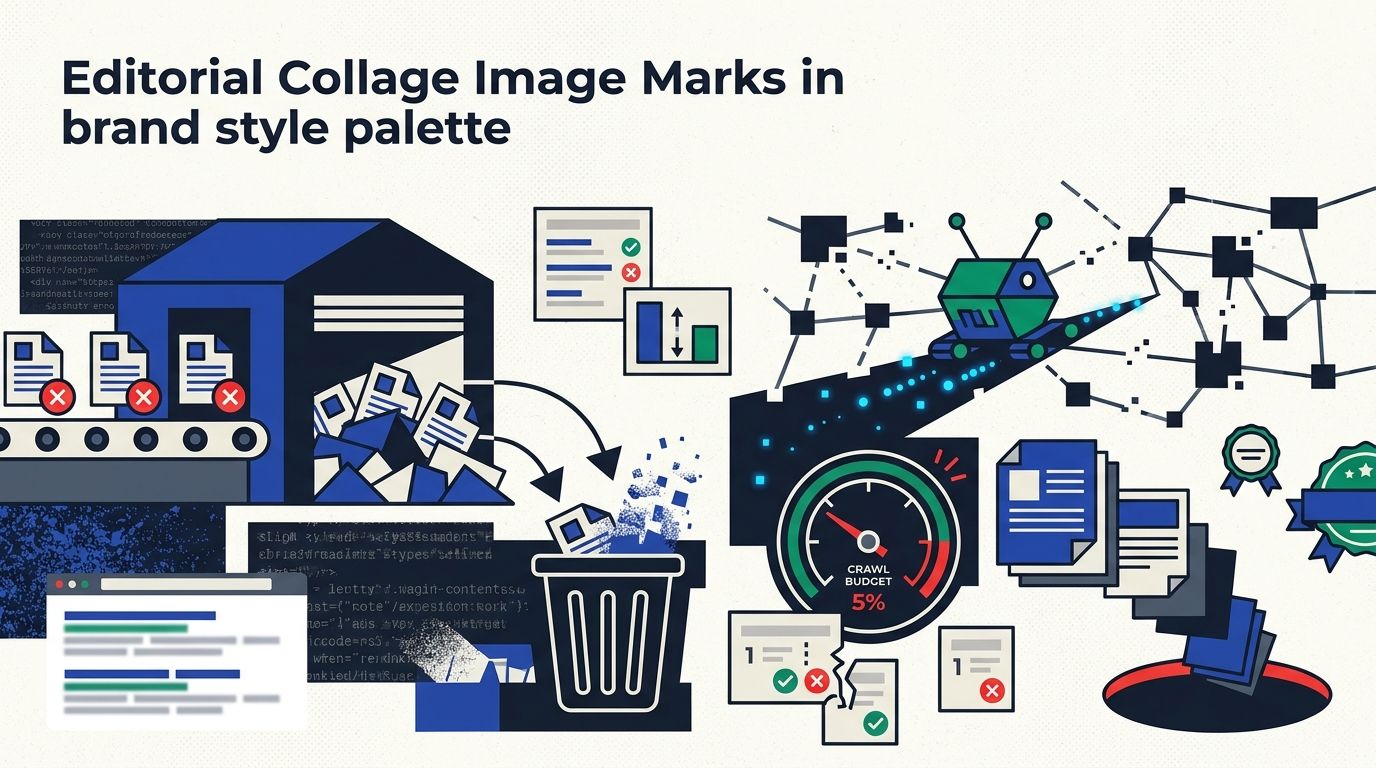
Scaled AI Content Campaigns Face De-Indexation as Google's Crawl Budget Models Reject Mass-Production Strategies
Enterprise programmatic AI content initiatives are triggering manual penalties and de-indexation at scale as Google's crawl budget allocation models reject mass-produced pages that lack sustained user engagement signals, according to an analysis published by Search Engine Journal on July 14, 2026. The mechanics of failure center on resource constraints rather than content quality alone.
Google Allocates Crawl Resources Based on Three Economic Factors
Google manages crawl infrastructure using resource allocation models tied to perceived inventory, demand signals, and domain authority metrics, the report states. When sites introduce hundreds or thousands of new URLs suddenly, Google evaluates whether the domain's baseline authority justifies the processing cost.
Sites that flood Google's index with thin or repetitive AI-generated pages trigger throttling mechanisms. "Just because Google gives you the resources to index your pages initially, it does not mean it will grant them to you indefinitely," the analysis notes.
The three primary evaluation elements are perceived inventory (total volume of URLs versus deemed-useful content), demand (user and algorithmic interest in the topics), and URL/domain popularity measured through link equity rather than third-party authority metrics.
Freshness Boost Creates Temporary Indexing Illusion Before Collapse
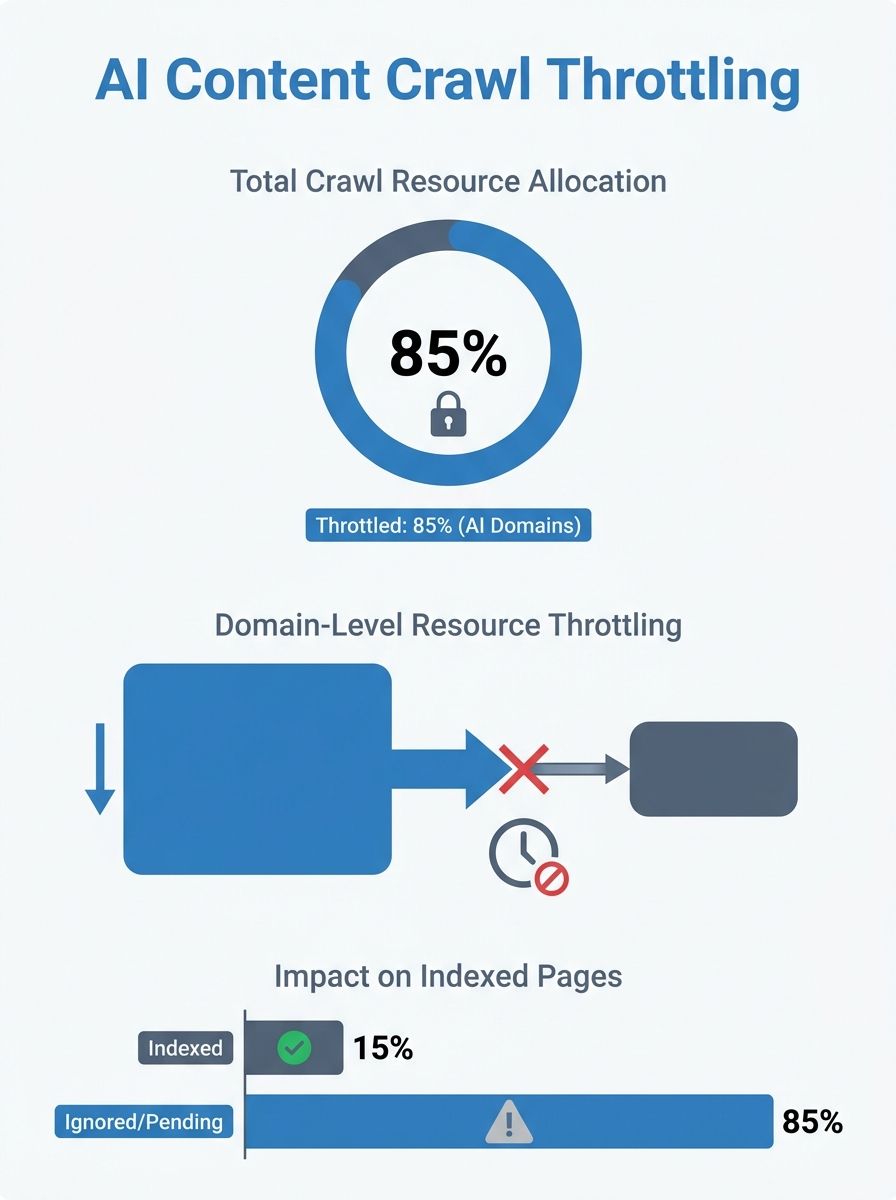
Many programmatic AI campaigns show strong initial performance before systematic collapse, driven by Google's temporary freshness signals. The analysis documents a consistent pattern: initial launch generates high indexation, time decay eliminates user signals and links, content falls below quality thresholds, and crawl budgets are throttled leading to de-indexation.
"Google's algorithms naturally give a temporary indexing and visibility boost to brand-new content to see how users interact with it," according to the report. Once newness wears off, content must accumulate active user signals including clicks and engagement to remain indexed.
URLs that fail to generate sustained engagement face crawl frequency reductions. The report cites a 130-to-140-day recrawl threshold as a standard SEO benchmark, with programmatic AI content often facing much shorter windows of 75 days before high de-indexation risk.
Manual Penalties for Scaled Content Abuse Target Automated Publishing Patterns
Google has increased manual actions targeting "Scaled Content Abuse" on sites using large language models to generate hyper-specific query pages or mass auto-translate content without editorial oversight, the analysis states. These penalties prove difficult to recover from because they signal Google no longer trusts the site's foundational publishing mechanism.
The systems detect specific automation footprints including mass-produced pages swapping single keyword placeholders without localized utility, direct AI translation lacking cultural or currency localization, and thousands of articles summarizing existing search results without new information.
"A manual action for Scaled Content Abuse is incredibly difficult to recover from," the report notes. Recovery requires removing substantial content volumes and beginning intensive rebuild processes.
The failure pattern stems from treating SEO as a rigid checklist rather than understanding indexing economics. Sites assuming pages with title tags, H1 elements, and coherent AI text deserve ranking ignore Google's fundamental requirement for information gain and genuine demand signals.
What Happens Next
SEO agencies evaluating AI content strategies for clients now face documentation requirements showing how programmatic initiatives will generate sustained user engagement beyond initial freshness windows. The crawl budget economics outlined in the Search Engine Journal analysis provide a framework for auditing whether scaled content campaigns carry de-indexation risk before deployment.
Agencies can use the 75-to-140-day recrawl threshold as a testing parameter, monitoring whether AI-generated page clusters maintain crawl frequency after the freshness boost expires. Sites with baseline domain authority insufficient to justify large inventory expansions face higher risk of systematic throttling regardless of individual page quality.
The shift toward AI-powered search running on Gemini models adds complexity, as agencies must now optimize for both traditional crawl economics and AI answer extraction. Teams building dual-engine visibility strategies should prioritize information gain signals that satisfy both Google's indexing thresholds and generative answer platforms' citation requirements.
Marcus Webb
Digital marketing consultant and agency review specialist. With 12 years in the SEO industry, Marcus has worked with agencies of all sizes and brings an insider perspective to agency evaluations and selection strategies.
Related Articles

Programmatic SEO vs. Editorial Content Strategy: Which Approach Wins for Lead Generation in B2B Markets
Programmatic SEO templates generated 55.5% of one B2B SaaS company's total site traffic (over 1.1 million monthly visits) according to a 2026 case study tracked by Averi.ai. But that traffic didn't produce pipeline until an editorial content layer was already in place.
Google's March 2024 Core Update Penalized Topic-Cluster Content Strategies Brands Spent Three Years Building
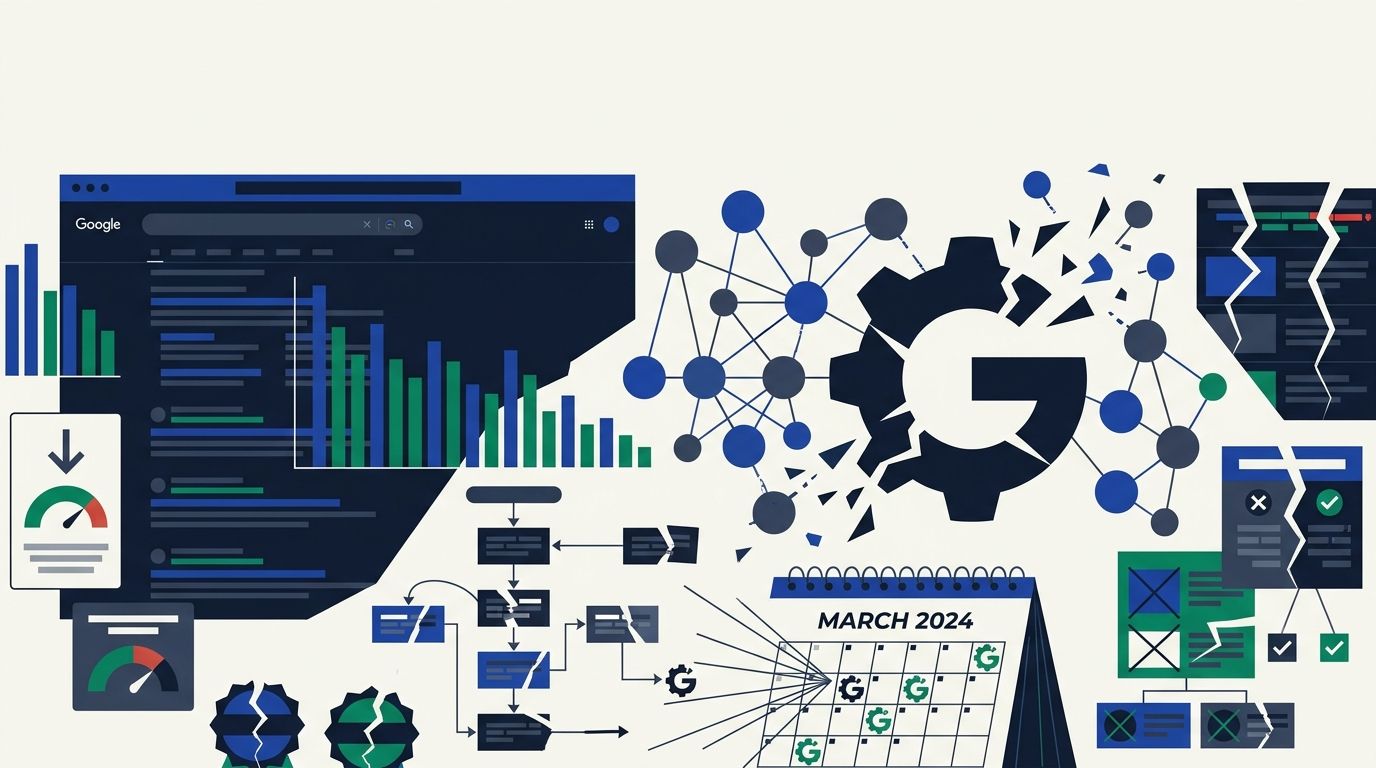
Google's March 2024 Core Update eliminated approximately 40 percent of low-quality, unoriginal content from search results, according to Search Engine Journal, targeting the exact topic-cluster content strategies that mid-size and enterprise brands spent 2021 through 2024 building at scale. Many org
Google Officials Link Site-Wide Quality Assessment to Page Indexing Decisions in Non-Indexed Content
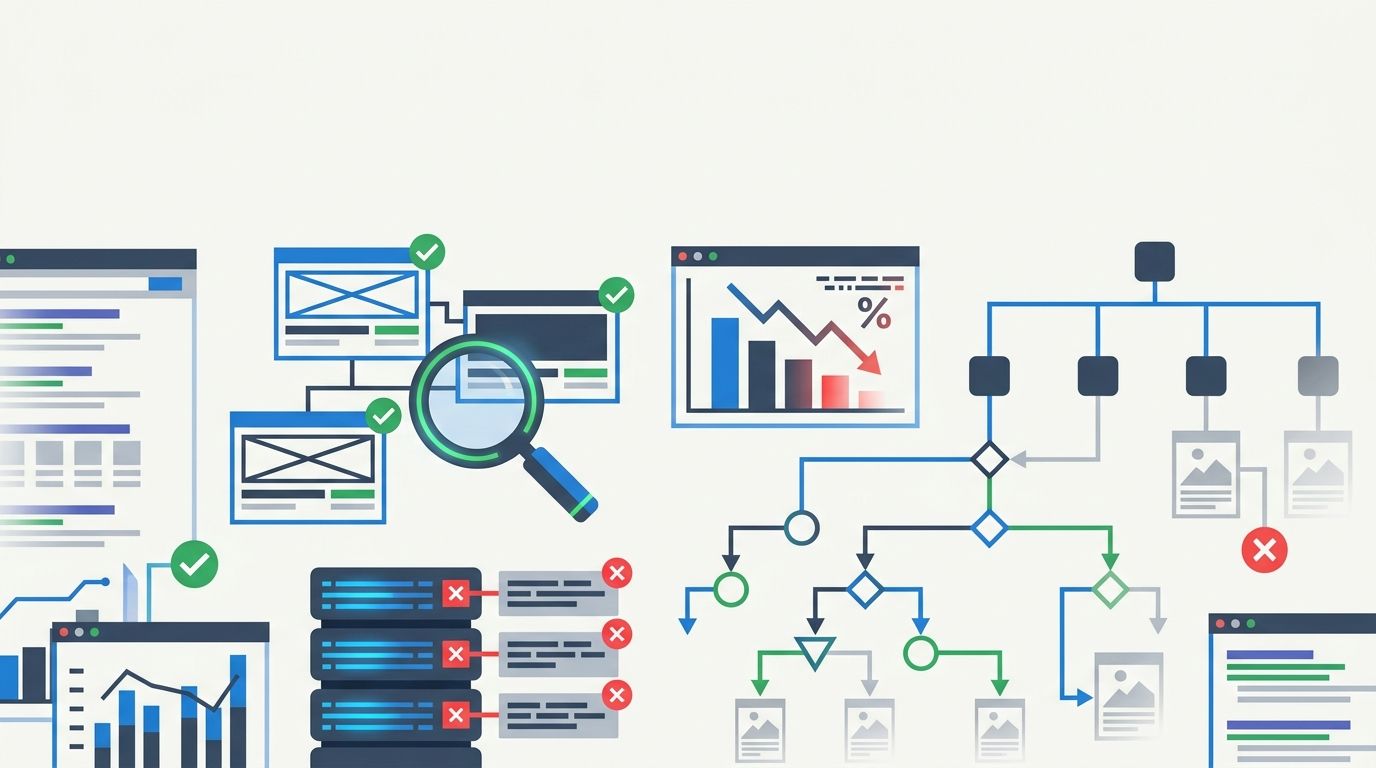
Google search engineers Martin Splitt and John Mueller explained on July 17 that the company's indexing systems reduce crawl frequency and page inclusion when algorithms detect site-wide quality concerns, according to a discussion published by Search Engine Journal.
Explore more topics