
Schema Markup for Reviews: The Technical SEO Checklist Every Agency Misses
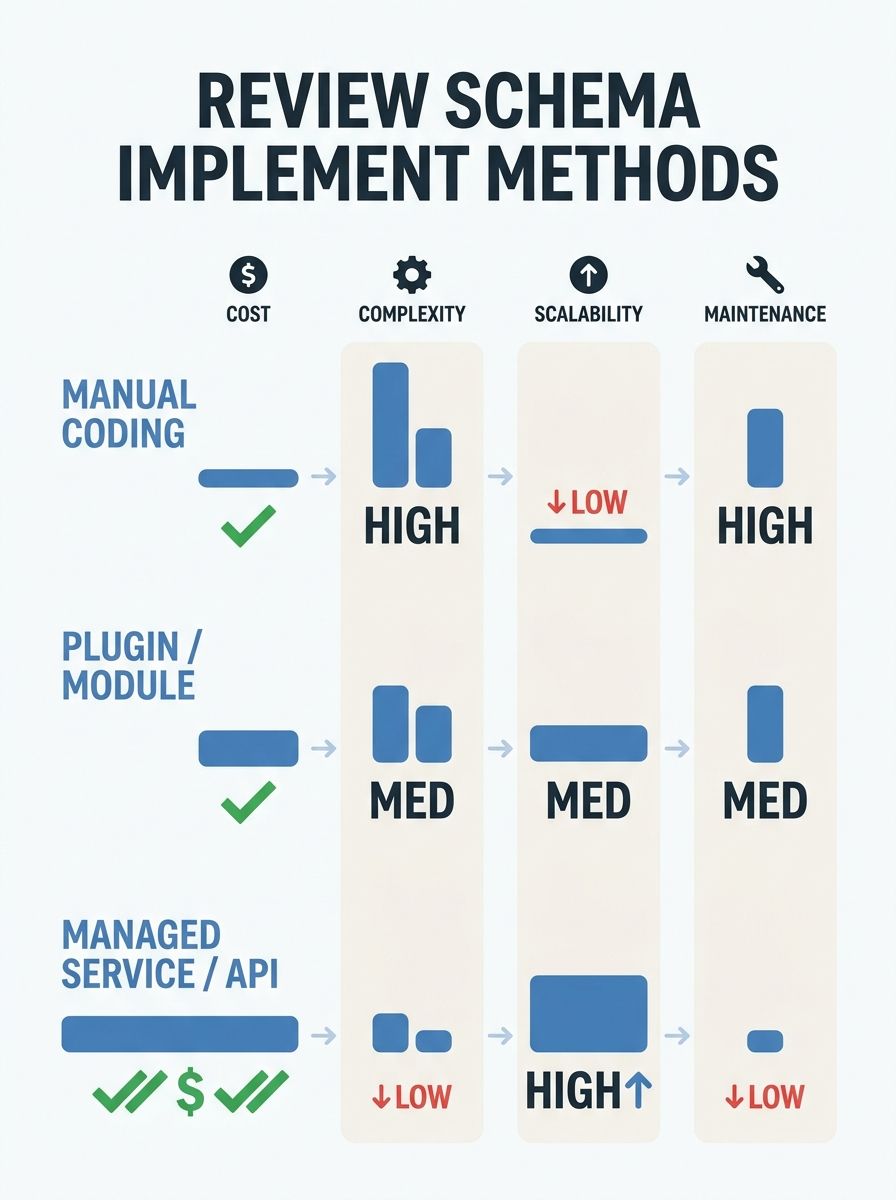
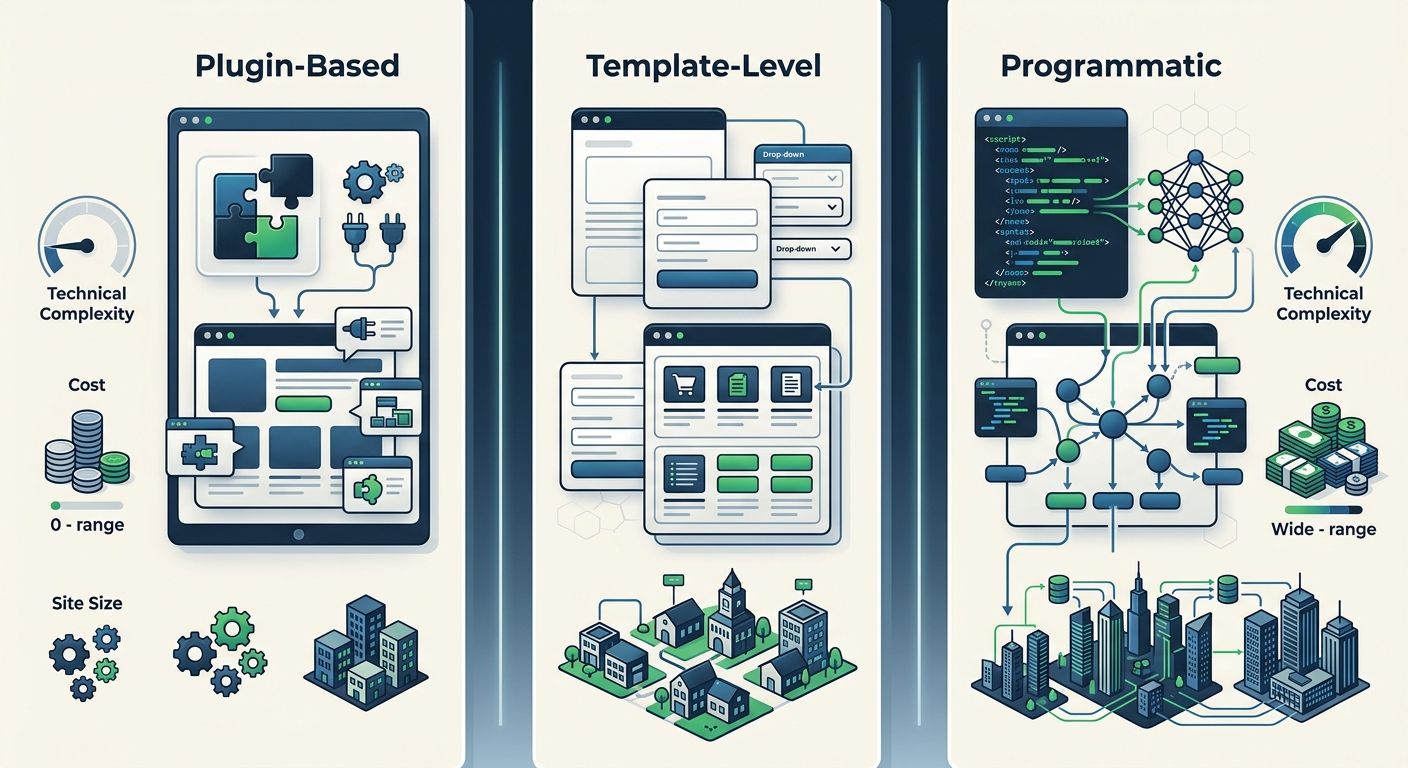
Three implementation paths exist for getting star ratings into your search listings through review schema markup SEO: plugin-based automation, template-level JSON-LD injection, and fully programmatic generation.
 Marcus Webb··8 min read
Schema Markup for Reviews: The Technical SEO Checklist Every Agency Misses
Three implementation paths exist for getting star ratings into your search listings through review schema markup SEO: plugin-based automation, template-level JSON-LD injection, and fully programmatic generation. The agency you're evaluating almost certainly defaults to one of these, and which one they choose reveals more about their technical depth than any credentials page ever will.
I've audited structured data implementations from over 200 agencies. The pattern is consistent: agencies that treat review schema as a checkbox item lose their clients' rich results within months. Agencies that treat it as infrastructure keep those gold stars showing up in search for years. The difference comes down to implementation method, ongoing validation, and whether the structured data actually reflects what's visible on the page.
This comparison will help you evaluate which approach fits your site, your budget, and your agency's actual capabilities. Because when pages with rich results, including star ratings, experience 20-40% higher click-through rates than standard listings, the stakes of getting this wrong are real.
Plugin-Based Review Schema
If you're running WordPress or Shopify, the temptation is obvious. Install a plugin, configure a few settings, and watch star ratings appear in search results. Agencies billing under $2,000/month for SEO retainers almost always go this route. The onboarding is fast, the cost is minimal ($0-80/month depending on the plugin), and the client gets visible results quickly.
The popular options work well enough for small sites. Shopify's Schema Plus for SEO, WordPress plugins like Rank Math and Yoast, and Wix's built-in schema types all generate structured data for ratings without requiring anyone to touch code. Practical Ecommerce's review of schema tools confirms that these platforms handle basic review and product schema generation reliably for standard configurations.
But here's where agencies consistently miss the mark with plugin-based approaches:
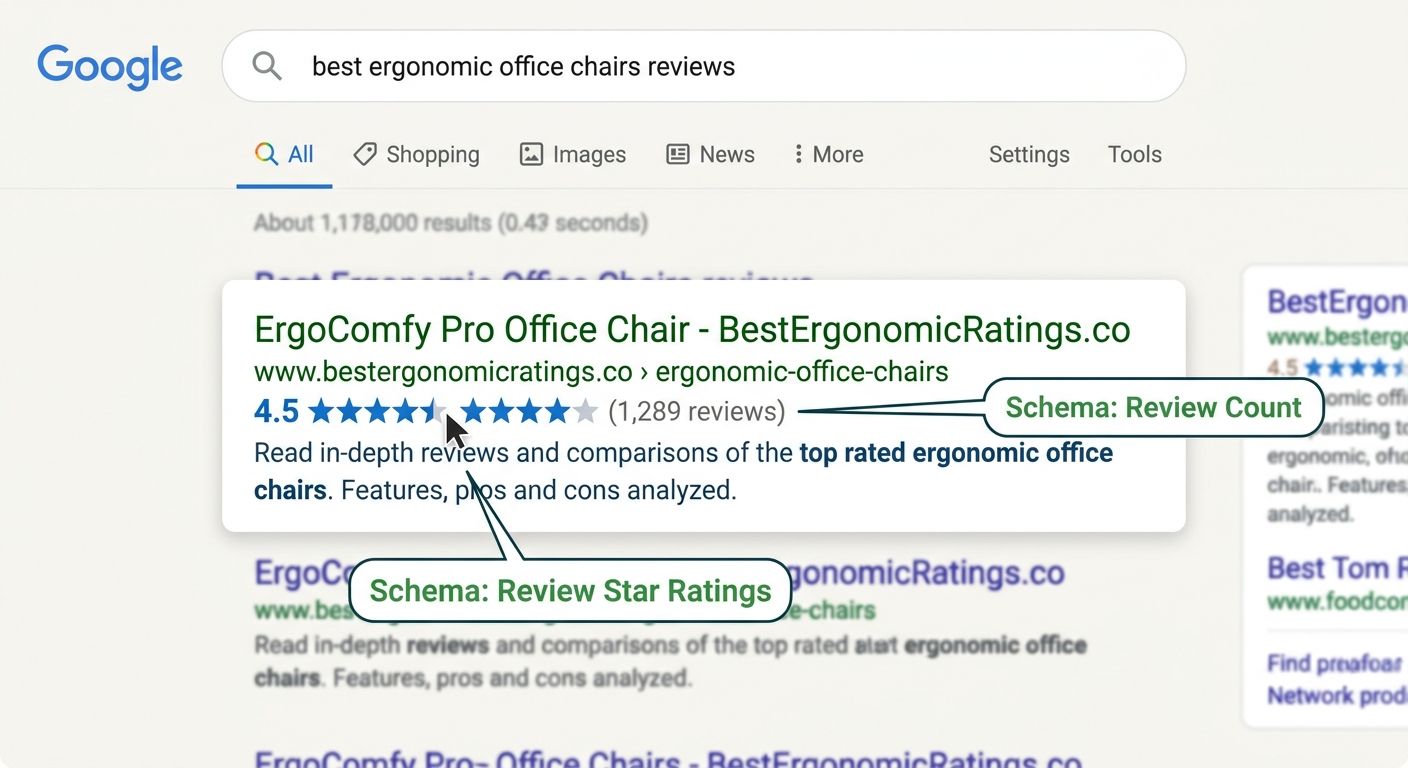
Schema drift is endemic. Plugins generate markup based on database fields, and when product availability changes, prices update, or reviews get moderated, the structured data can fall out of sync with the visible page content. Google's documentation is explicit: review content must be visible on the page, without requiring login or extra clicks, and the markup must match what users actually see.
Customization hits a wall. Plugins typically support standard schema types but struggle with nested structures. If you need AggregateRating properties embedded within a LocalBusiness or Product type with specific offer details, plugins either can't do it or require workarounds that create validation errors.
Plugin conflicts are real. Two schema plugins running simultaneously will output duplicate structured data, which confuses Google's parsers and can suppress rich results entirely. I've seen this on at least 30 client sites where a previous agency installed one plugin and the new agency added another without removing the first.
When plugins make sense
Sites with fewer than 500 pages, a single product type or service category, and a development budget under $3,000 can genuinely benefit from plugin-based star ratings SERP implementation. The key is choosing one plugin, configuring it properly, and running JSON-LD review validation through Google's Rich Results Test after every major template or content change.
If you're evaluating an agency and they propose a plugin-only approach for a site with 5,000+ product pages, that should raise questions about their technical depth. It's a signal worth probing during the vetting process, similar to checking whether agency credentials translate to actual client outcomes.
Template-Level JSON-LD Injection
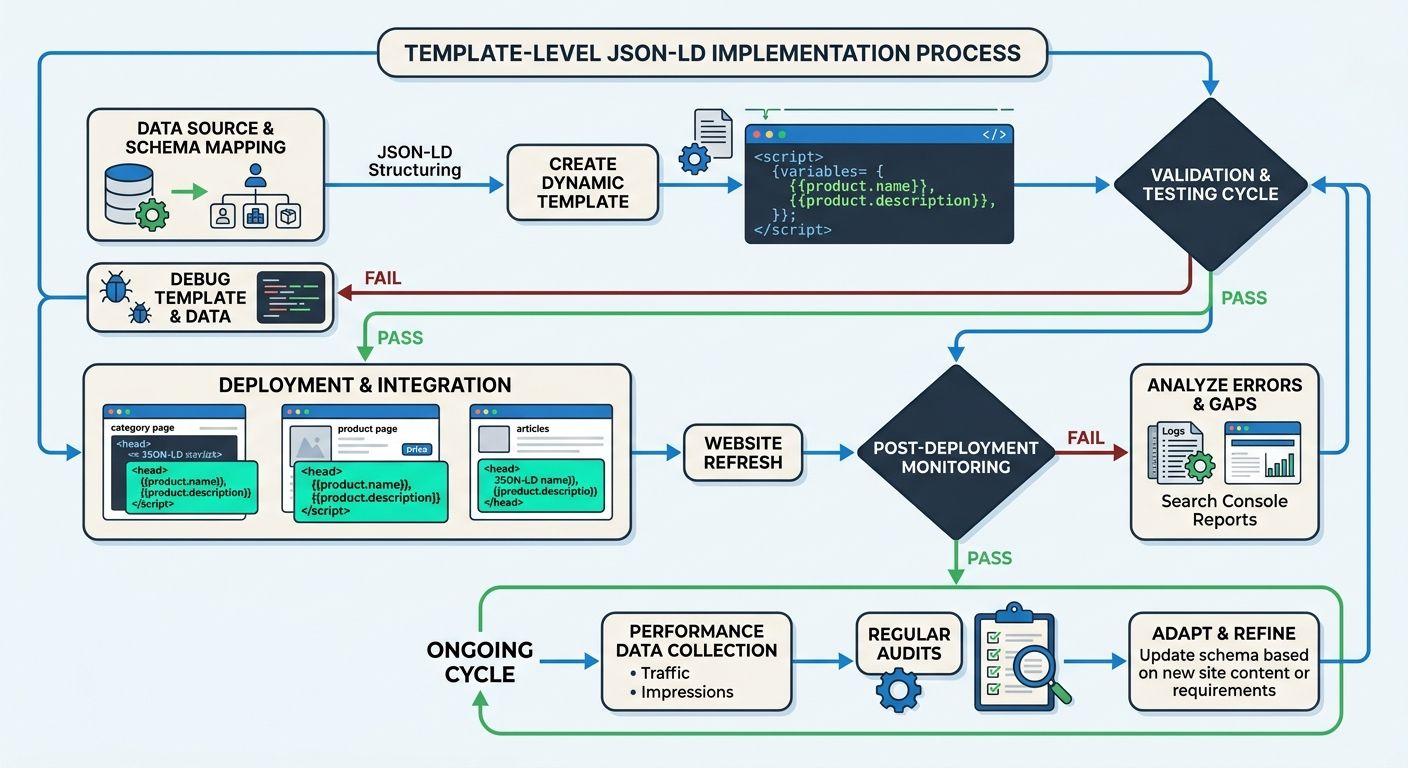
This is where the bulk of mid-tier agencies operate, and it's the approach I recommend for most businesses spending $3,000-10,000/month on SEO. Template-level injection means writing JSON-LD blocks directly into your site's page templates, using dynamic variables from your CMS or database to populate the structured data fields.
The technical concept is straightforward: instead of relying on a plugin to generate your markup, a developer embeds the JSON-LD script in your product template, service page template, or location page template. The template pulls live data (review count, average rating, reviewer names, dates) directly from whatever system stores your reviews.
This approach offers significant advantages over plugins. You control exactly what properties appear in the markup. You can nest AggregateRating within Product, LocalBusiness, or any other schema.org type. And because the structured data is generated from the same data source that powers your visible page content, the risk of schema drift drops substantially.
Google's guidelines for review snippet structured data require specific properties depending on whether you're marking up individual reviews or aggregate ratings. For AggregateRating, you need at least one of ratingCount or reviewCount. For individual Review markup, you need author (as a Person entity), datePublished, and either reviewBody or reviewRating. Template-level implementation lets you map each of these fields precisely to your data model.
The tradeoffs you should know about
Template-level JSON-LD injection requires developer involvement. Not massive involvement, but enough that you need either an in-house developer or an agency with actual dev resources. Expect $2,000-6,000 for initial implementation across your major page templates, plus ongoing costs of $500-1,500 per quarter for maintenance and validation.
The quarterly maintenance matters more than agencies admit. When you redesign a page template, add a new product category, or switch review platforms, the structured data needs updating. If nobody owns that task, your review schema breaks silently. Google's Search Console will flag errors in the Enhancements report, but only if someone is actually checking it.
This is the same infrastructure gap that causes technical SEO tasks to fall through the cracks at agencies. The initial implementation gets done because it's in the project scope. The ongoing validation doesn't happen because nobody built it into the maintenance workflow.
What to ask during agency evaluation
When an agency proposes template-level JSON-LD, ask these questions:
Who writes the structured data: an SEO strategist, a developer, or both working together?
How do you validate the markup after deployment? (Acceptable answers include Google's Rich Results Test, the Schema.org Markup Validator, and Search Console monitoring. Unacceptable answers are vague references to "checking it.")
What's your process when we change review platforms or redesign a template?
Do you audit for content parity between the visible page and the structured data?
An agency that answers all four clearly has a real structured data workflow. An agency that stumbles on questions three and four probably implements schema once and forgets about it.
Programmatic JSON-LD Generation
For sites with 10,000+ pages, multiple product types, reviews aggregated from several platforms, or frequent inventory changes, programmatic generation is the appropriate approach. This means building a middleware layer or server-side function that automatically generates and injects JSON-LD based on live data, applies business logic to determine which pages qualify for review markup, and validates output before it reaches the browser.
This is expensive. Initial implementation runs $8,000-25,000 depending on site complexity, and you'll need ongoing engineering support. Agencies that can genuinely execute this type of structured data for ratings work are typically charging $10,000+/month retainers and have dedicated development teams.
The advantages at scale are substantial. Programmatic generation can enforce validation rules before markup hits production, preventing the errors that plugin and template approaches only catch after deployment. It can handle complex nesting, like embedding AggregateRating within Product schema that also includes Offer data with price and availability. And it scales linearly: adding a new product category doesn't require touching templates, because the generation logic handles new content types automatically.
Google's product snippet documentation specifies properties including name, offers, review, and aggregateRating. At enterprise scale, keeping all of these synchronized across thousands of pages without programmatic enforcement is effectively impossible.
Where agencies oversell this approach
I've reviewed proposals from agencies recommending programmatic JSON-LD generation for 200-page service businesses. That's like hiring an architecture firm to design a garden shed. The complexity isn't warranted, the cost isn't justified, and the client ends up paying for engineering overhead that delivers the same result a $3,000 template implementation would achieve.
The honest indicator for programmatic generation: if your site has dynamic pricing, rotating inventory, reviews from multiple aggregation sources, or pages generated automatically from a product database, you probably need it. If your site has stable service pages with reviews collected through a single platform, you don't.
This matters when you're auditing your existing reviews for hidden SEO value. The audit might reveal that your review data is scattered across Google Business Profile, Trustpilot, and your own CMS. Consolidating those into consistent structured data requires programmatic thinking, even if the full middleware build isn't necessary.
The AI search dimension
Structured data for ratings feeds directly into how AI systems interpret your content. Microsoft's Bing team has stated publicly that schema markup helps their LLMs understand page content, and research indicates that language models grounded in structured knowledge graphs achieve dramatically higher accuracy than those working from unstructured text alone. If your strategy includes optimizing for AI search engines alongside traditional results, the quality of your structured data matters even more than it did two years ago.
How To Choose Between These Three
The decision framework is simpler than agencies make it sound, and it maps to three variables: site size, data complexity, and budget.
Plugin-based is the right call for sites under 500 pages with a single review source, a development budget under $3,000, and an agency retainer under $2,000/month. Ask the agency to specify which plugin, confirm no conflicting schema plugins exist, and require quarterly validation reports using Google's Rich Results Test.
Template-level JSON-LD fits the majority of businesses: 500-10,000 pages, one or two review sources, and willingness to invest $3,000-6,000 upfront plus quarterly maintenance. This is where you should push your agency hardest on process. The implementation itself is standard work. The differentiation between good and bad agencies shows up in validation workflow, content parity checks, and how they handle template changes over time.
Programmatic generation is warranted for enterprise e-commerce, multi-location businesses with hundreds of service areas, or any site where review data comes from three or more sources. If an agency recommends this approach, they should be able to show you similar implementations they've built. If they can't, they're likely subcontracting the development work, and you should know who's actually writing the code.
The biggest red flag across all three approaches is an agency that never mentions validation. Any competent team will reference the Schema.org Markup Validator, Google's Rich Results Test, and Search Console's Enhancements reports as part of their standard workflow. An agency that implements review schema markup SEO without a validation and monitoring plan is building something that will break the moment your site changes, and you won't know it broke until your rich results disappear and your click-through rates drop with them.
When I evaluate agencies for clients, I weight the schema implementation conversation heavily. The agency's answer to "how do you handle review structured data?" tells me whether they understand technical SEO as ongoing infrastructure or treat it as a one-time project deliverable. The agencies that maintain rich results year after year are the ones treating it as infrastructure, and that distinction should influence your hiring decision more than any pitch deck.
Marcus Webb
Digital marketing consultant and agency review specialist. With 12 years in the SEO industry, Marcus has worked with agencies of all sizes and brings an insider perspective to agency evaluations and selection strategies.
Related Articles

The Invisible SEO Audit: Fixing Hidden Technical Problems Before Rankings Improve
Fifty-six percent of companies now run AI-driven SEO monitoring to catch invisible technical problems in real time, according to 2026 marketing data.

Building SEO into Your Development Workflow: The Technical Checklist Developers Actually Use
The technical SEO implementation checklist pinned to your dev team's project board tells you more about who to hire than any portfolio review or coding interview ever will. Agencies that integrate SEO-first development practices into their build process ship sites that perform from day one.
Beyond Rankings: How Google Reviews Drive Hidden SEO Value Your Agency Isn't Auditing
Straight North's analysis of Google's hidden ranking signals surfaced a conclusion that should make every white-label SEO provider uncomfortable: the reason most agencies ignore reviews in their audits is the same reason Google trusts them. Reviews are hard to game.
Explore more topics