
AI Search Systems Shift Cognitive Load From Query Formation to Post-Synthesis Verification
AI search systems transfer cognitive work from the query and retrieval phase to a post-synthesis verification phase rather than eliminating that work entirely, according to an analysis published August 27 by Search Engine Journal examining how generative search platforms restructure user evaluation
 Marcus Webb··3 min read
AI Search Systems Shift Cognitive Load From Query Formation to Post-Synthesis Verification
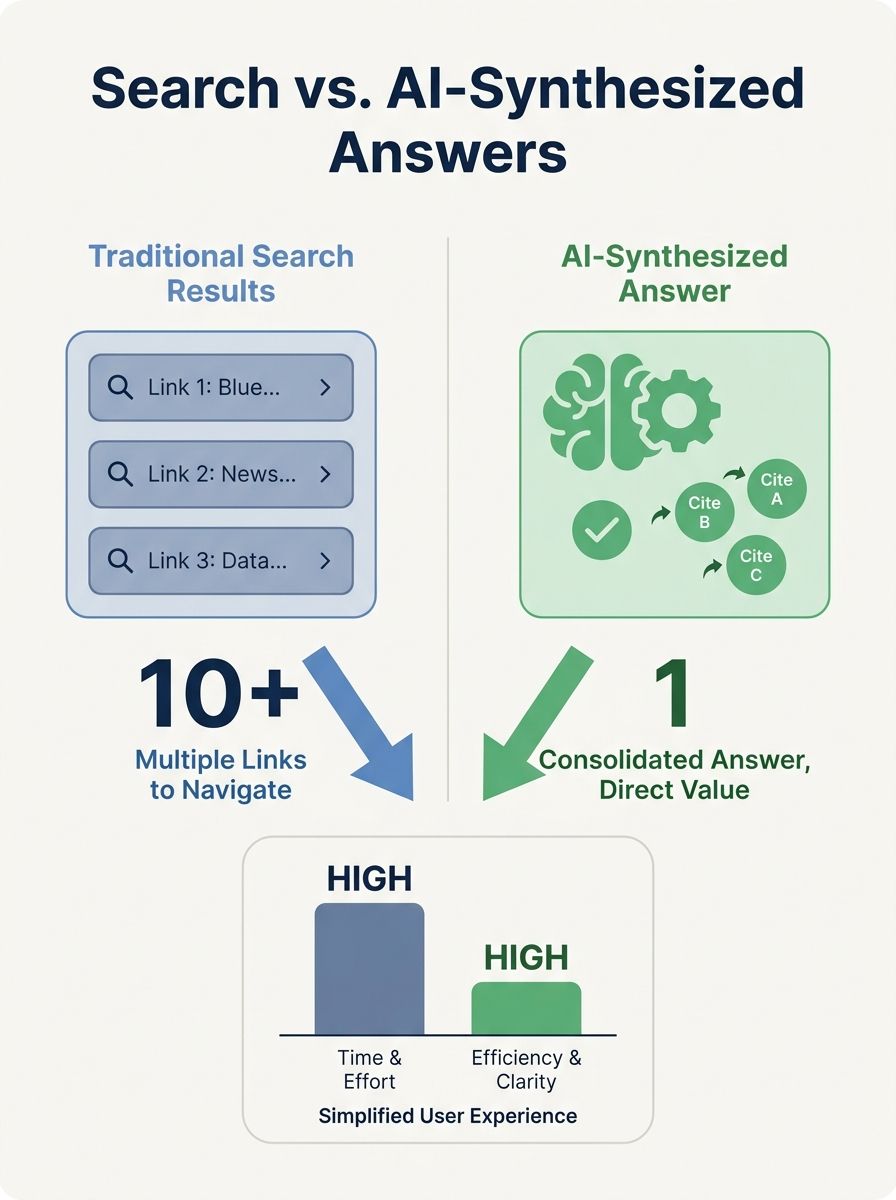
AI search systems transfer cognitive work from the query and retrieval phase to a post-synthesis verification phase rather than eliminating that work entirely, according to an analysis published August 27 by Search Engine Journal examining how generative search platforms restructure user evaluation tasks. The shift places answer assembly before evidence inspection, inverting the traditional search model where users encountered supporting material before forming conclusions.
Traditional Search Distributed Cognitive Load Across Search Process
Traditional search engines required users to formulate queries, scan result lists, open pages, compare sources, and synthesize findings into usable answers. Query formulation imposed particularly high cognitive demands, according to research on cognitive load distribution during web search cited in the analysis. Users allocated mental resources to choosing effective search terms, evaluating result relevance, reconciling conflicting information, and determining when they had gathered sufficient material.
That process made the path from source to conclusion visible. Users built understanding while moving through candidate documents, encountering supporting evidence and contradictions before reaching final judgments.
Generative Systems Complete Synthesis Before User Sees Evidence
A 2026 ACL study comparing traditional and generative web search documented the structural difference. Traditional search returns ranked lists of independent pages, while generative search retrieves information and synthesizes it into coherent responses before displaying results, the study found. The research identified meaningful differences across generative systems in source diversity, retrieval behavior, synthesis strategy, and stability.
Microsoft Research's analysis of 200,000 anonymized Bing Copilot conversations found that gathering information and writing ranked among the most common user activities. The system performed information provision, assistance, writing, teaching, and advising tasks that previously fell to the user.
The shift toward AI-mediated discovery changes what users evaluate. Instead of building answers from visible evidence, users now audit assembled responses and verify citations that appear after synthesis.
Citations Increase Trust Without Reducing Verification Risk
Reference links and citations increased trust in generative search results even when those references were incorrect or hallucinated, researchers Haiwen Li and Sinan Aral found in a large-scale experiment on human trust in AI search. People who trusted results more spent less time evaluating them, the study showed.
"Citations can reduce the consumer's perceived verification cost without reducing the actual verification risk," the Search Engine Journal analysis stated. The answer appears more inspectable, but users must still determine whether cited material supports claims, whether relevant evidence was omitted, and whether the system reconciled conflicting sources correctly.
That verification burden differs from traditional search evaluation. Users no longer observe the evidence-gathering process directly. They judge the output of retrieval, filtering, and synthesis steps the system completed before displaying results.
Machine Constraints Shape Human Evaluation Tasks
AI systems face finite constraints involving retrieval scope, context windows, source selection criteria, competing information handling, token limits, and output length restrictions. Those machine constraints determine what evidence users eventually evaluate. When an answer system selects a subset of available evidence, compresses it, and generates a response, users judge a process they did not observe.
The analysis distinguished this from applying psychological concepts directly to AI systems. "LLMs do not experience cognitive load," the piece noted. Cognitive load remains a human psychological concept describing working memory constraints. Jakob Nielsen's framework treating cognitive load as a budget of roughly four meaningful chunks describes the human limitation, not machine processing.
The distinction matters because differences in how AI search platforms handle model swaps and retrieval strategies create variance in what users must verify.
Services Implications
SEO agencies designing content strategies for AI-mediated search environments must account for the verification phase rather than optimizing solely for answer inclusion. Content that supports post-synthesis fact-checking—structured data, clear sourcing, statement-level citations, and reconciliation of competing claims—addresses the cognitive task users now face when auditing AI-generated responses.
The shift from evidence-first to synthesis-first changes keyword strategy priorities. Query optimization must consider both the initial retrieval phase that feeds AI systems and the verification queries users issue when checking assembled answers. Agencies should measure whether client content appears in AI synthesis outputs and whether it surfaces during user verification searches.
Testing frameworks should include verification-behavior metrics alongside traditional answer-appearance tracking. The analysis suggests that citation presence alone does not guarantee content authority if users reduce evaluation effort when citations appear trustworthy. Enterprise SEO measurement approaches should quantify whether content supports accurate synthesis and whether it ranks for follow-up verification queries users issue after encountering AI-generated answers.
Marcus Webb
Digital marketing consultant and agency review specialist. With 12 years in the SEO industry, Marcus has worked with agencies of all sizes and brings an insider perspective to agency evaluations and selection strategies.
Related Articles
Five Major AI Search Engines Return Completely Different Answers to Identical Query in New Test
A technical developer testing five AI search engines with the same question received five distinct answers citing entirely different sources, according to a report published today on DEV Community. Google AI Overviews recommended GitHub Actions, ChatGPT suggested GitLab CI, Perplexity cited an unfam
Google Updates Official AI Search Documentation, Clarifies Agency Optimization Practices Are Not Separate Disciplines
Google updated its official guidance on AI-generated search results in 2025, explicitly stating that "Generative Engine Optimization" and "Answer Engine Optimization" are not distinct practices from traditional search engine optimization, according to documentation published by the company. The upda
Why AI Search Visibility Requires a Different SEO Checklist Than Google's Blue Links
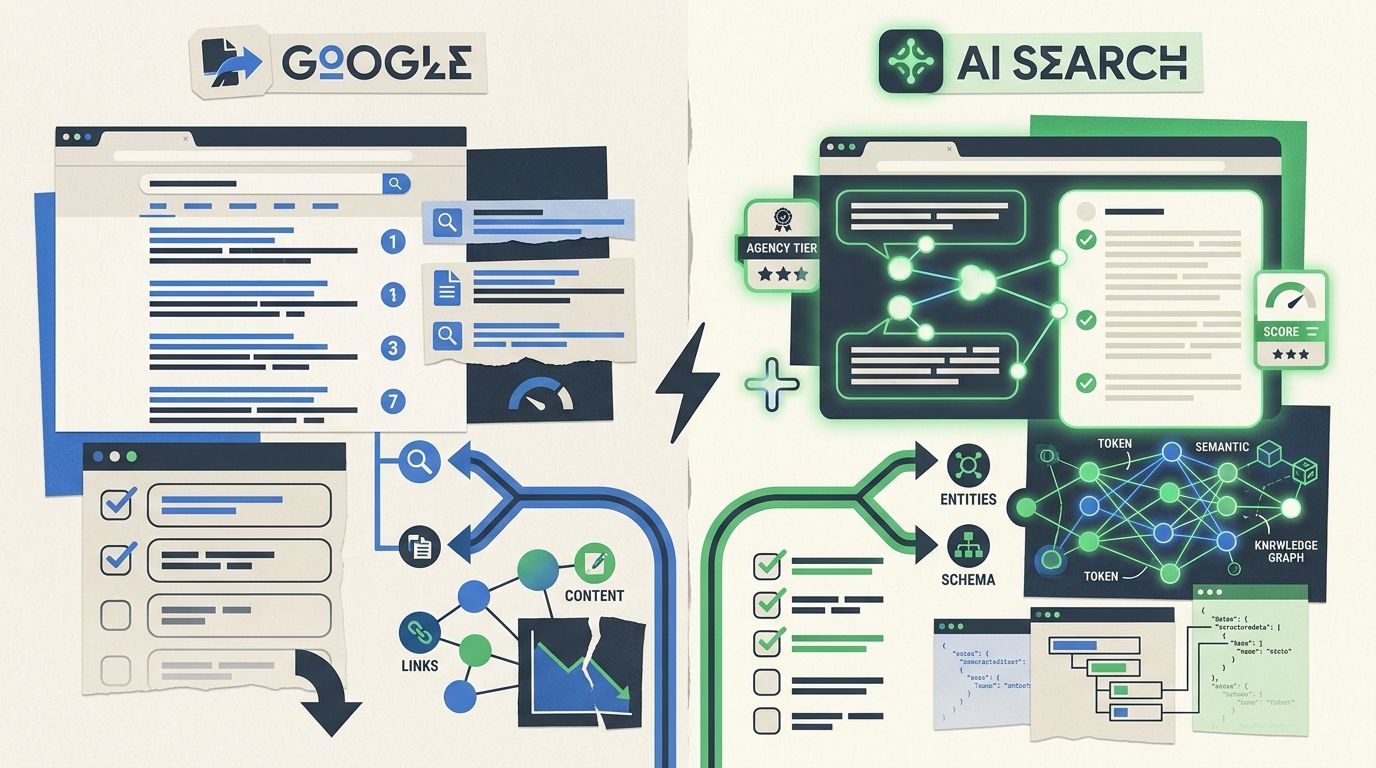
Traditional SEO checklists produce passing grades on sites that are invisible to ChatGPT, Perplexity, and Google AI Overviews.
Explore more topics