
SEO Platform GadgetsFarms Publishes Website Migration Framework Detailing Redirect Strategy and Traffic Protection
GadgetsFarms published a website migration framework on August 27 addressing URL inventory management, redirect mapping, and organic traffic preservation during platform moves, according to the guide released on the platform's blog.
 Marcus Webb··4 min read
SEO Platform GadgetsFarms Publishes Website Migration Framework Detailing Redirect Strategy and Traffic Protection
GadgetsFarms published a website migration framework on August 27 addressing URL inventory management, redirect mapping, and organic traffic preservation during platform moves, according to the guide released on the platform's blog. The framework identifies six migration types—domain changes, protocol shifts, CMS platform swaps, URL restructuring, design rebuilds, and international relocations—and outlines pre-launch validation steps aimed at preventing ranking loss.
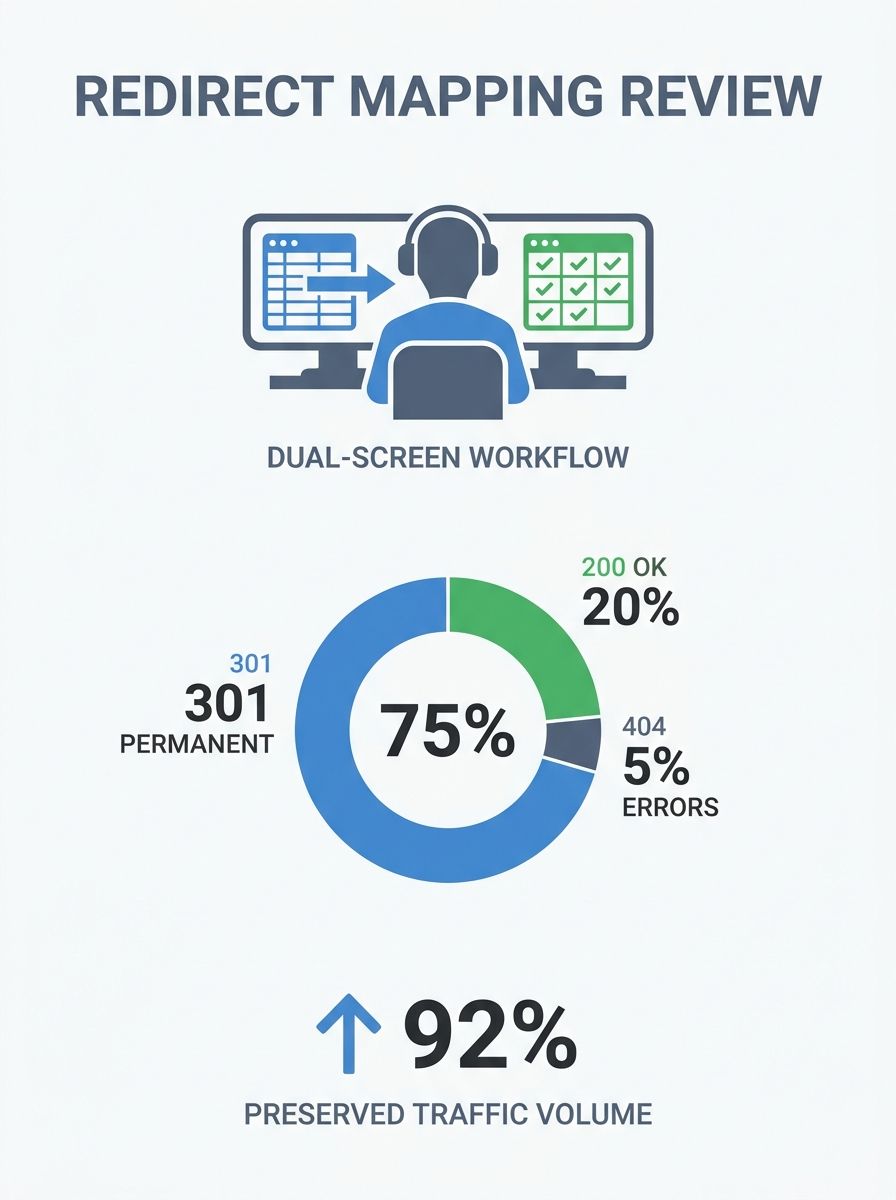
The guide quantifies expected traffic impact during properly executed migrations. A retailer moving 3,200 URLs with a tested 301 redirect plan should expect a 5% to 12% organic traffic decline in the short term, the framework states, while incomplete redirect mapping can produce traffic crashes exceeding 40%. The publication positions redirect planning as the central protection mechanism, recommending one-to-one URL mapping rather than consolidating old pages onto homepage destinations.
URL Inventory and Redirect Mapping Protocol
The framework directs migration teams to compile URL inventories from eight data sources before launch: XML sitemaps, Google Search Console exports, 12-to-18-month analytics landing page records, backlink databases, server logs, crawl data, paid search destinations, and email campaign links. Each cataloged URL should carry status code data, organic session counts, conversion metrics, backlink tallies, target keyword classification, canonical URL notation, and the planned redirect destination, according to the guide.
GadgetsFarms specifies redirect logic rules in the published framework. Old product pages should direct to identical product pages when inventory persists; discontinued products redirect to the nearest category or replacement item; blog posts map to the same article or closely related content; deleted low-value pages may return 410 status codes when no replacement exists. The guide prohibits redirect chains—sequences where one URL redirects through intermediate addresses before reaching the final destination—and redirect loops.
"Redirect chains should be rare by now, but they still appear after many launches," the framework states. "One old URL points to a staging URL, then to a temporary URL, then to the final page." The guide notes search engines can follow chains but recommends avoiding them to preserve signal clarity and crawl efficiency.
On-Page Signal Preservation and Technical Validation
The published framework instructs teams to preserve ranking signals during template transitions. Title tags should remain relevant and unique; meta descriptions should transfer or improve; H1 tags should align with page intent; body content should not face cuts without justification; internal links should use final URLs; canonical tags should point to preferred URLs; structured data should validate without major errors; images should retain alt text and compressed file sizes, according to the recommendations.
GadgetsFarms identifies Core Web Vitals testing as a mandatory pre-launch check. The framework warns that new designs introducing heavy scripts, large hero images, or slow third-party tags can degrade user experience and search performance. Speed testing should occur on actual page templates rather than homepage-only reviews, the guide specifies.
The framework calls for staging-site crawls before launch, with indexation blocked but internal testing permitted. Each template requires review for indexability status, HTTP status codes, canonical tags, pagination logic, hreflang implementation, robots directives, and mobile rendering behavior. XML sitemaps should contain only final indexable URLs, and robots.txt files should not block critical sections—the guide notes entire sites have launched with staging "disallow all" rules still active, causing immediate visibility damage.
Launch Monitoring and Recovery Protocols
GadgetsFarms outlines a launch-day checklist with assigned task ownership: DNS, hosting, SSL, and CDN confirmation; redirect rule deployment; staging noindex removal from live environments; XML sitemap upload; robots.txt verification; Search Console property setup; analytics tag validation; and initial crawl error checks. The framework recommends treating launch day as "boring" through thorough pre-work completion.
Post-launch monitoring should track rankings for top 20-to-50 landing pages, Google Search Console crawl errors and index coverage, organic traffic by landing page and channel, site speed metrics, and conversion rates, according to the published recommendations. The guide advises retaining old domain data for comparison and fixing crawl issues rapidly when detected. A pre-launch technical validation checklist published earlier this year covers overlapping ground on preventing ranking loss during migrations.
The framework identifies phased migrations as safer than simultaneous multi-component changes. When business requirements mandate comprehensive launches—combining domain shifts, platform swaps, and design overhauls—the guide calls for intensified pre-launch verification. Migration complexity directly correlates with SEO risk exposure, the framework notes.
Context and Outlook
The GadgetsFarms framework arrives as website migrations remain a recurring risk event for SEO teams managing platform upgrades and domain consolidations. The 40% traffic-crash scenario described in the guide reflects migration failures still occurring despite established best practices—suggesting execution gaps persist across agency and in-house teams. The emphasis on redirect testing and crawl validation addresses technical debt patterns that surface during platform transitions, particularly when developers unfamiliar with search engine requirements lead implementation.
The framework's URL inventory methodology—pulling from eight distinct data sources rather than relying on sitemap exports alone—reflects the fragmented nature of enterprise content tracking. Sites accumulate URLs through campaign launches, temporary promotions, and legacy CMS exports that never appear in current sitemaps, creating blind spots during migration planning. The 12-to-18-month analytics window recommendation captures seasonal traffic patterns and ensures high-value evergreen content receives redirect protection.
Migration planning frameworks like this one serve dual purposes: providing implementation checklists for internal teams and establishing evaluation criteria for CMOs assessing agency capabilities. The specificity around redirect logic, status code handling, and signal preservation offers measurement points for auditing vendor-led migrations before and after launch.
Marcus Webb
Digital marketing consultant and agency review specialist. With 12 years in the SEO industry, Marcus has worked with agencies of all sizes and brings an insider perspective to agency evaluations and selection strategies.
Related Articles

The Website Migration SEO Checklist: Pre-Launch Technical Validation That Prevents 90% of Ranking Loss
Pre-launch technical validation centered on 301 redirect integrity, staging crawlability, and traffic-weighted URL prioritization prevents the vast majority of organic ranking loss during website migrations.

Website Domain Migration Without Ranking Loss: The Complete 301 Redirect and Authority Preservation Playbook
A domain migration preserves rankings when three things execute correctly: complete 1:1 URL mapping with permanent 301 redirects, a pre-migration technical SEO audit that benchmarks every ranking signal worth protecting, and aggressive post-launch monitoring for at least 12 weeks.

Website Migrations Trigger 50% Traffic Drops That Persist Up to 18 Months When SEO Teams Miss Launch Window, Analysis Shows
Website migrations that exclude SEO teams during planning cause organic traffic drops exceeding 50 percent and require 12 to 18 months of recovery work, according to a Search Engine Journal technical analysis published June 5, 2026. The research distinguishes normal post-migration volatility (10-30
Explore more topics