
Website Domain Migration Without Ranking Loss: The Complete 301 Redirect and Authority Preservation Playbook
A domain migration preserves rankings when three things execute correctly: complete 1:1 URL mapping with permanent 301 redirects, a pre-migration technical SEO audit that benchmarks every ranking signal worth protecting, and aggressive post-launch monitoring for at least 12 weeks.
 Marcus Webb··9 min read
Website Domain Migration Without Ranking Loss: The Complete 301 Redirect and Authority Preservation Playbook
A domain migration preserves rankings when three things execute correctly: complete 1:1 URL mapping with permanent 301 redirects, a pre-migration technical SEO audit that benchmarks every ranking signal worth protecting, and aggressive post-launch monitoring for at least 12 weeks. Skip any one, and data from 892 tracked migrations shows recovery averaging 523 days.
The Pre-Migration Audit That Separates Competent Agencies from Negligent Ones
Seventeen percent of websites never recover their pre-migration organic traffic, even after 1,000 days. That figure, drawn from an analysis of nearly 900 domain migrations tracked across multiple SEO toolsets, should reframe how you evaluate any agency proposing a migration. The question you need answered before signing a statement of work isn't "can your agency migrate our site?" but rather "what does your pre-migration audit actually document, and how granular is the benchmark data you'll collect?" I've reviewed migration proposals from over 40 agencies in the past three years, and the single most reliable predictor of a botched migration is an agency that treats the audit as a formality rather than the foundation of the entire project.
A proper website migration SEO checklist starts with a full crawl of the existing domain. Every URL, every canonical tag, every piece of structured data, every internal link, every page-level metric that matters. Webflow's migration checklist recommends recording search rankings, traffic, and key performance metrics so you can compare results after launch. That sounds obvious, but I've watched agencies skip this step on six-figure contracts. They'll crawl the site, sure, but they won't export page-level organic traffic, they won't document which URLs carry the most backlink authority, and they won't map which pages are being cited in AI search results. The pre-migration benchmark has to be exhaustive because post-migration, you need to know exactly where traffic dropped and why.
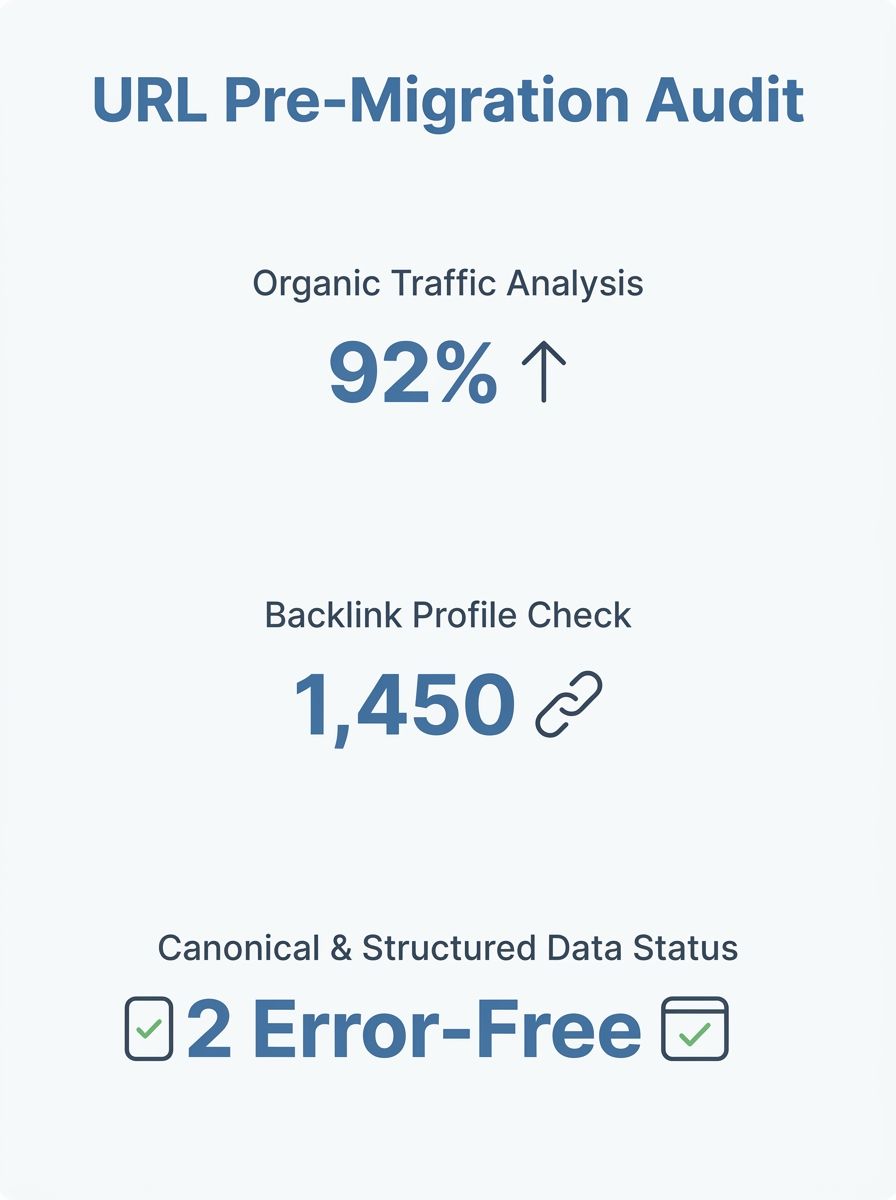
What separates an agency running a competent technical SEO migration audit from one going through the motions? Three deliverables. First, a complete URL inventory with page-level traffic, backlink counts, and ranking positions for tracked keywords. Second, a documented crawl showing all existing redirects, canonical chains, and orphaned pages on the old domain. Third, a structured data audit confirming which pages carry schema markup, author attribution, and E-E-A-T signals that feed into both traditional rankings and AI-driven search features. If your agency's migration proposal doesn't explicitly reference all three, you're looking at a team that's going to wing the hard parts. As Marcel Digital's migration checklist emphasizes, you should conduct a full SEO audit to confirm that all pages, content, links, tags, and mobile elements are accounted for before launch day.
The Wise.com migration (formerly TransferWise) illustrates what disciplined pre-migration work can produce at scale. Traffic initially collapsed from 32 million to 12.9 million monthly visits after the domain change. But because the team had mapped every URL, preserved redirect integrity, and monitored recovery signals daily, they didn't just recover. They eventually scaled to 205 million monthly visits. That outcome required the kind of granular pre-migration documentation that most agencies either can't or won't produce. When you're evaluating an agency's migration capabilities, ask them to walk you through the Wise case or a comparable one. If they can't articulate why that recovery worked, they don't understand the mechanics well enough to protect your traffic.
The same diligence applies to preserving internal linking structures and authority flow across the migration. Internal links are invisible equity, and agencies that rebuild a site's navigation and page hierarchy without mapping how authority currently flows through internal links will fracture the very signals they're supposed to be protecting. I've seen agencies rebuild a site's information architecture from scratch during a migration, eliminating dozens of contextual internal links that had been quietly driving rankings for years. The fix is straightforward: crawl the internal link graph before migration, document it, and rebuild it on the new domain with the same or better structure.
Where 301 Redirect Strategy Falls Apart in Practice
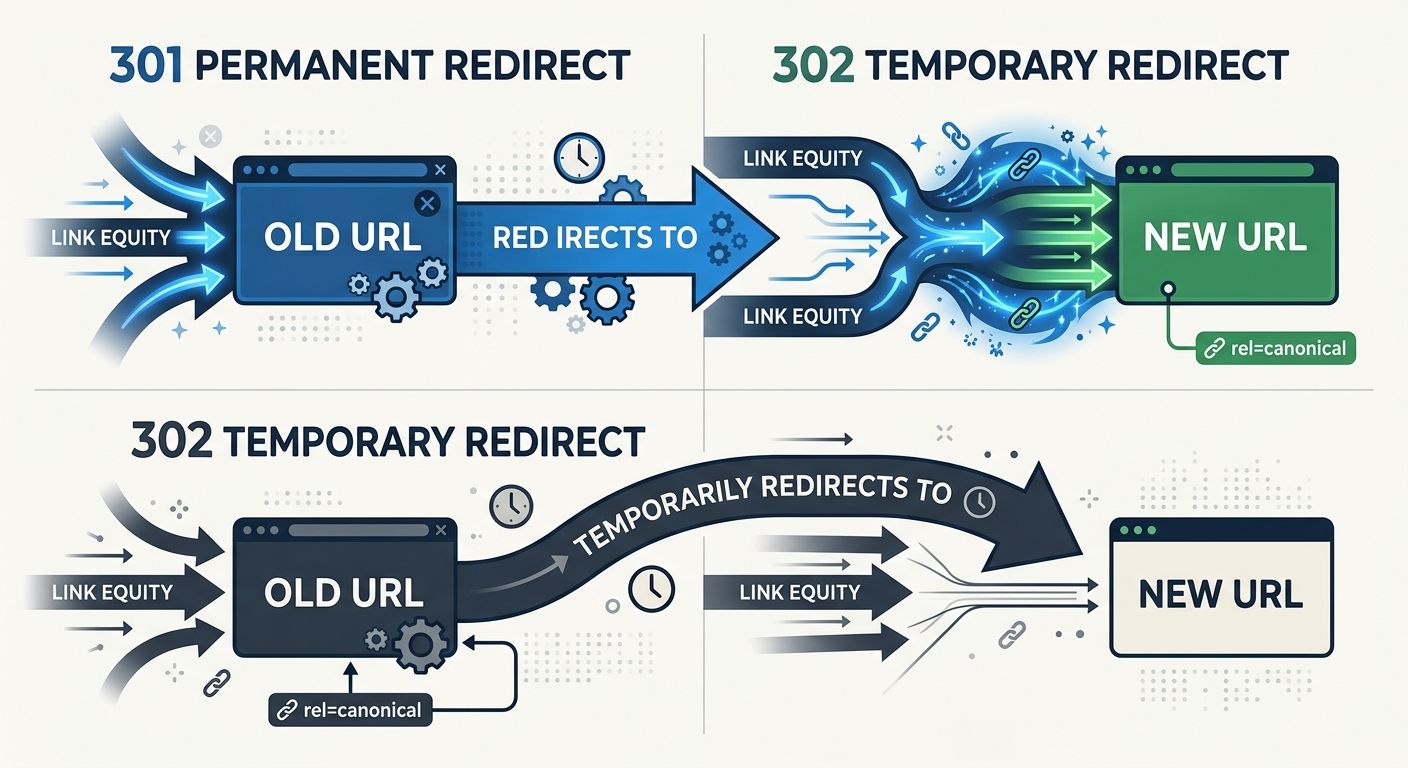
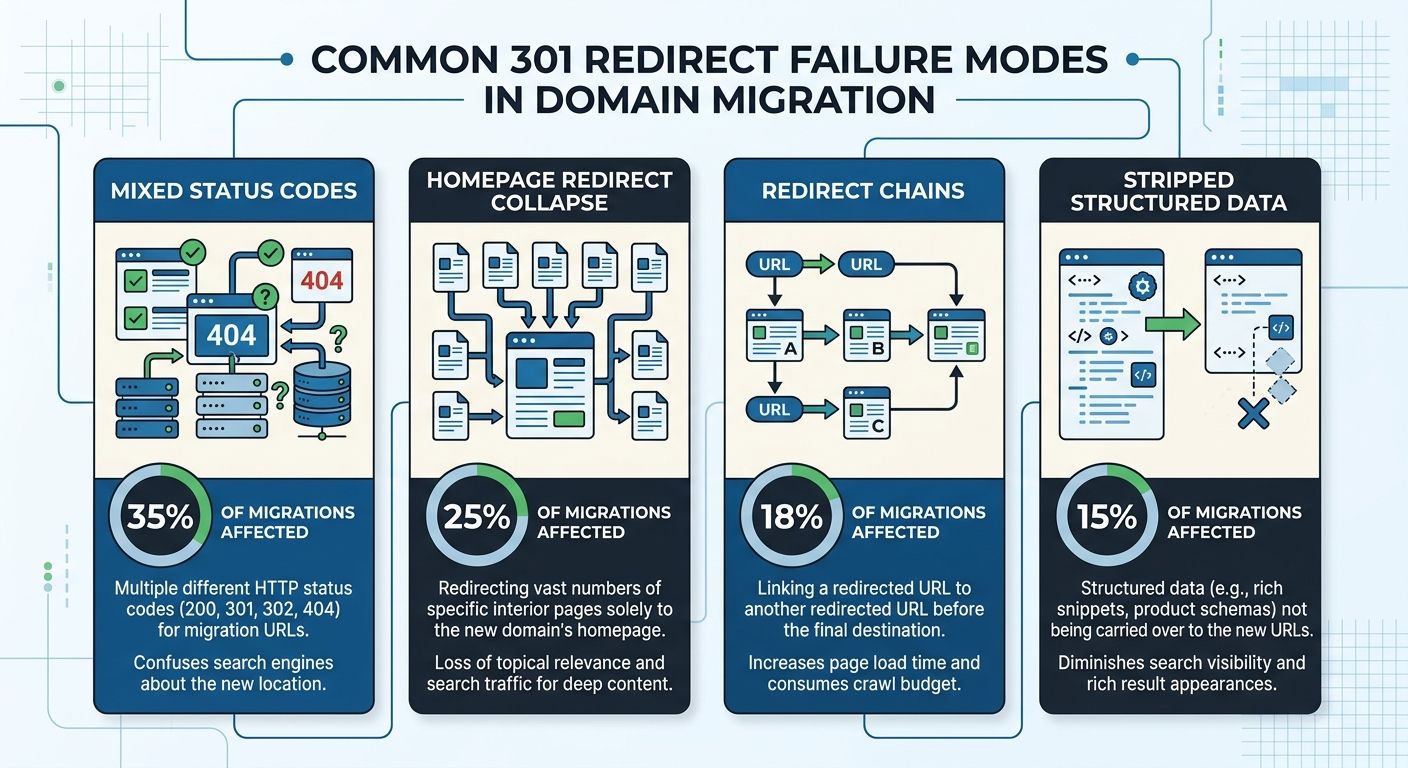
Moz's redirect documentation states plainly that cross-domain redirects require 301 status codes sitewide, and that search engines scrutinize these redirects more heavily than same-domain URL changes. A 301 redirect signals a permanent move and transfers 90 to 99 percent of link equity from the old URL to the new one. Use a 302 (temporary) redirect instead, and search engines retain the old URL as the canonical version, which means your new domain accumulates zero authority from the redirect. This is the kind of mistake that sounds too basic for a professional agency to make, and yet I encounter it on roughly one in five migration audits I review. The agency sets up redirects, but a mix of 301s and 302s end up in production because nobody audited the HTTP response codes after deployment.
The second failure mode is redirect mapping that collapses multiple old URLs into a single destination, typically the homepage. Americaneagle.com's migration guide is explicit about this: map each old URL to its most relevant new counterpart to maintain ranking power. Redirecting your old domain's 200 service pages, blog posts, and category pages to one homepage URL tells Google that none of your old content has a true equivalent on the new site. The result is predictable. Google drops rankings for every keyword those old pages held, because the redirect destination is contextually irrelevant. A proper 301 redirect strategy for domains requires 1:1 mapping, old URL to equivalent new URL, for every page that carries organic traffic or meaningful backlink authority.
Redirect chains represent the third common breakdown. When a URL redirects to another URL that redirects to yet another URL before reaching the final destination, each hop degrades the equity passed through the chain and adds latency. Google's own documentation confirms that redirect chains dilute PageRank at every step. Agencies create these chains unintentionally during migrations, especially when the old domain already had redirects in place from previous URL restructuring. The fix is to collapse every chain into a single hop: old URL goes directly to final destination URL, no intermediaries. I've audited sites post-migration where chain depths reached four or five hops, with the agency completely unaware because nobody had crawled the redirect paths after launch. Any agency handling preserving domain authority during migration should be validating redirect paths, not just redirect existence.
The fourth failure is one I've started watching for more carefully since Google's search landscape shifted toward AI-generated answers. Structured data, author bios, and schema markup often get stripped during migration because the new site's templates don't carry them over. When an old page had FAQ schema, review markup, or product schema feeding into rich results, and the new page loads without any of it, you've lost visibility in search features that drove a meaningful share of clicks. As AI search engines increasingly cite pages based on structured signals, losing schema during migration means losing visibility in the exact channels that are growing fastest.
The Recovery Window and What Realistic Monitoring Looks Like
Post-migration ranking recovery typically takes 4 to 12 weeks when everything is executed correctly, according to practitioner reports corroborated across multiple SEO forums and case studies. But that 4-to-12-week window assumes clean 301 redirects, proper 1:1 URL mapping, preserved meta data, and no major technical regressions. Without a proper SEO strategy, 50 percent or more traffic loss is common, and the documented case of a major retailer that rejected detailed redirect recommendations during a £7.6 million redesign resulted in an estimated £3.8 million in revenue lost within the first month alone. The gap between "4 weeks" and "never" is entirely a function of execution quality, which means the agency you choose determines the outcome far more than the migration itself.
Post-migration ranking recovery starts with daily monitoring in Google Search Console. You're watching for crawl errors, indexation rates on the new domain, and any spikes in 404 responses. Moz's recovery guide recommends monitoring search crawler behavior through server logs using tools like Screaming Frog's Log Analyzer, alongside tracking indexation, rankings, and traffic trends. The reason server logs matter is that Search Console data has a 48-to-72-hour delay, and when something goes wrong in the first 24 hours of a migration, you need to catch it in real time. An agency that tells you they'll "check Search Console next week" after launch day is an agency that doesn't understand how narrow the window is for catching silent failures.
The silent decay pattern is the most dangerous post-migration scenario, and it's the one agencies are least equipped to catch. Core branded keywords and high-traffic head terms often recover within the first two to four weeks, which creates the illusion that the migration went smoothly. But long-tail keywords, deeper content pages, and conversion-oriented landing pages can quietly lose rankings over weeks without triggering any alarms in a dashboard built around aggregate traffic numbers. If you've been through the SEO debugging framework for diagnosing traffic drops, you'll recognize this pattern: surface metrics look stable while the underlying performance degrades at the page and query level. Your agency should be monitoring keyword-level and page-level rankings against the pre-migration benchmark data, not just total organic sessions.
Semrush's migration checklist recommends setting up backlink monitoring on the new domain immediately after migration so you can track whether inbound links are resolving correctly through the 301 redirects. Backlinks pointing to old URLs that return 404 errors instead of redirecting represent direct authority loss, and every day those broken paths persist is a day your new domain fails to inherit the equity those links carried. One practical step that separates careful agencies from careless ones: they'll keep the old domain active and serving redirects for a minimum of 12 months, often longer. Agencies that let the old domain expire or stop serving redirects after 90 days are cutting off equity transfer before search engines have finished processing the migration. When evaluating agencies for this kind of work, ask directly how long they maintain the old domain's redirect infrastructure. The answer tells you whether they understand how technical SEO workflows actually play out over time, or whether they're optimizing for project closure speed.
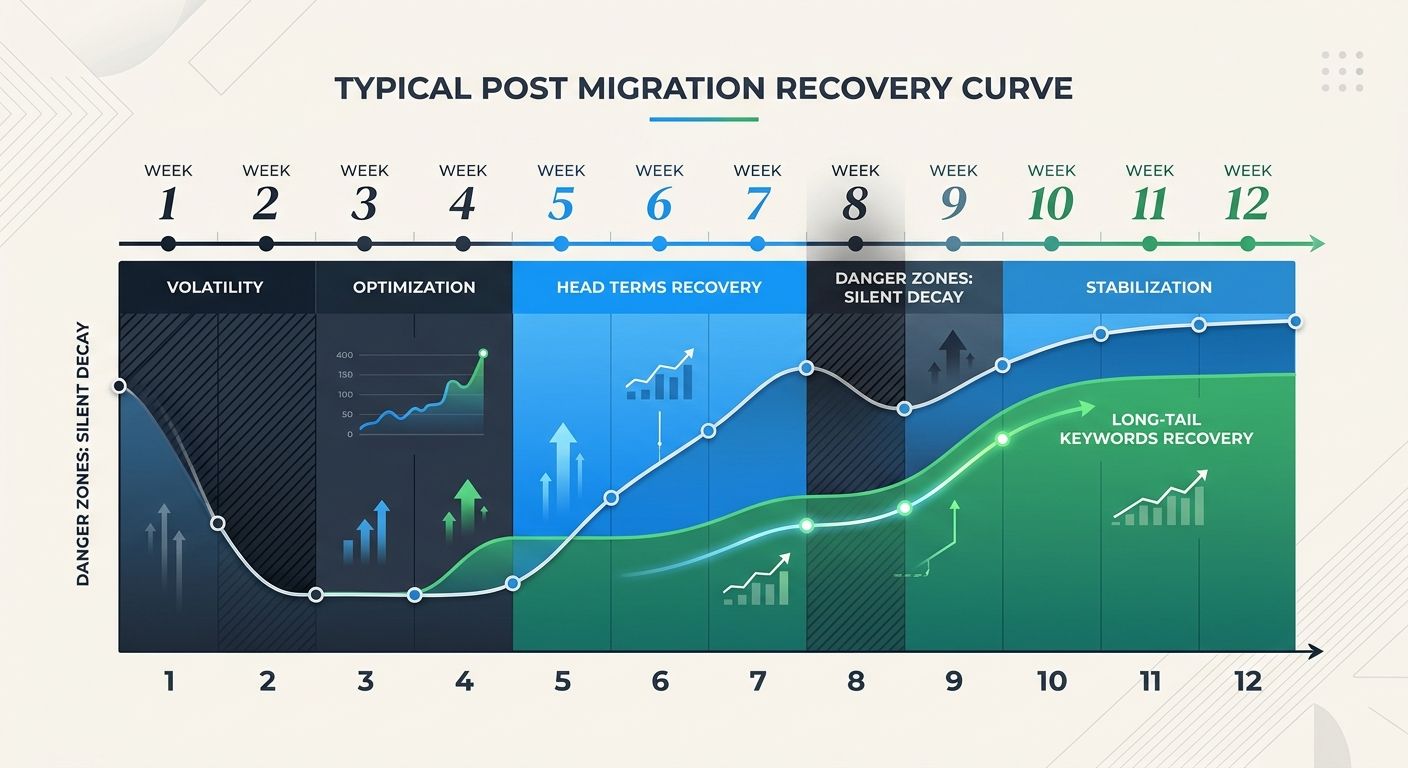
HireRoad's migration provides a useful counterpoint to the horror stories. They merged three separate domains into a single property, tested nearly 1,000 individual redirects before launch, and exceeded their traffic expectations by 14.5 percent one year post-migration with no meaningful dip at any point. That result required months of pre-migration planning and a testing methodology that treated every redirect as a discrete item requiring validation. The ratio of planning time to execution time matters: industry data suggests 30 to 40 percent of total project hours should go to planning on enterprise migrations, with execution and monitoring splitting the remainder.
Where the Industry's Confidence Exceeds Its Evidence
The standard advice on domain migration is remarkably consistent across every guide, checklist, and agency pitch deck I've reviewed. Use 301 redirects, map URLs 1:1, benchmark before launch, monitor after. And that advice is correct. But the confidence with which agencies promise clean migrations obscures a genuine uncertainty: we don't have reliable data on how AI-driven search systems handle domain migrations differently from traditional crawl-and-index pipelines. Google's AI Overviews, Perplexity, and similar systems build citation graphs that reference specific URLs. When those URLs change, we're assuming the 301 redirect signal propagates through AI citation systems the same way it propagates through traditional ranking systems. That assumption hasn't been tested at scale, and the agencies I've spoken with are guessing, even the good ones.
The 523-day average recovery figure and the 17 percent permanent loss rate both predate the current era of AI-integrated search. Those numbers were calculated against a search ecosystem where Google's traditional crawler was the primary consumer of redirect signals. With Google redesigning search around AI agents and multiple AI search engines now returning different answers to identical queries, the migration playbook is operating on assumptions that may be partially outdated. I'm not arguing the fundamentals are wrong. 301 redirects remain essential, pre-migration audits remain essential, post-launch monitoring remains essential. But the specific recovery timelines and success rates that agencies cite when pitching migration work should come with more caveats than they currently do.
What I tell clients evaluating agencies for migration work is this: the agency's technical competence matters, but their honesty about uncertainty matters more. An agency that guarantees zero traffic loss during a domain migration is either lying or doesn't understand the variables involved. The agencies I trust with migration work are the ones that show me their monitoring plan for the first 90 days, explain exactly how they'll diagnose and respond to ranking declines, and acknowledge that some outcomes are outside their direct control. The mechanics of a clean migration are well-documented. The confidence that every migration will be clean is not something any honest practitioner should be selling.
Marcus Webb
Digital marketing consultant and agency review specialist. With 12 years in the SEO industry, Marcus has worked with agencies of all sizes and brings an insider perspective to agency evaluations and selection strategies.
Related Articles
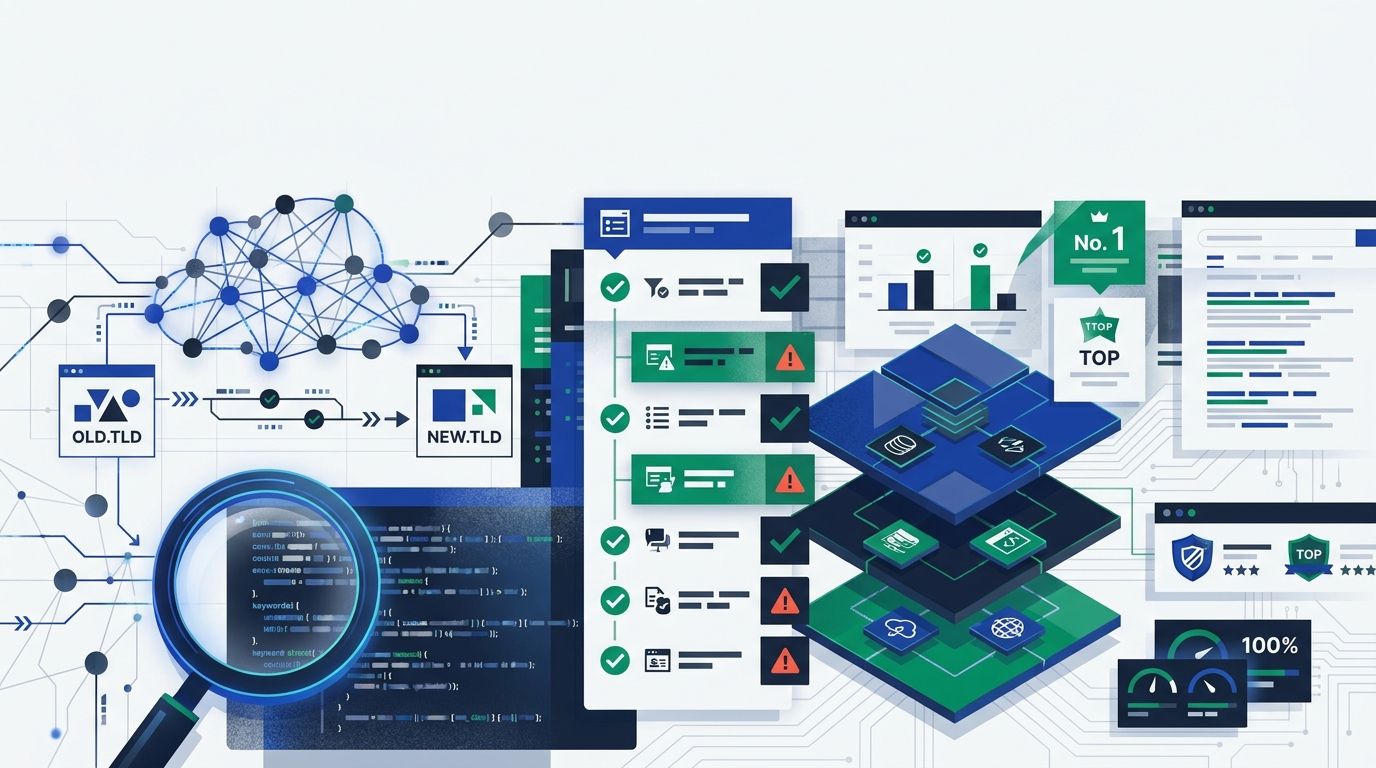
The Website Migration SEO Checklist: Pre-Launch Technical Validation That Prevents 90% of Ranking Loss
Pre-launch technical validation centered on 301 redirect integrity, staging crawlability, and traffic-weighted URL prioritization prevents the vast majority of organic ranking loss during website migrations.
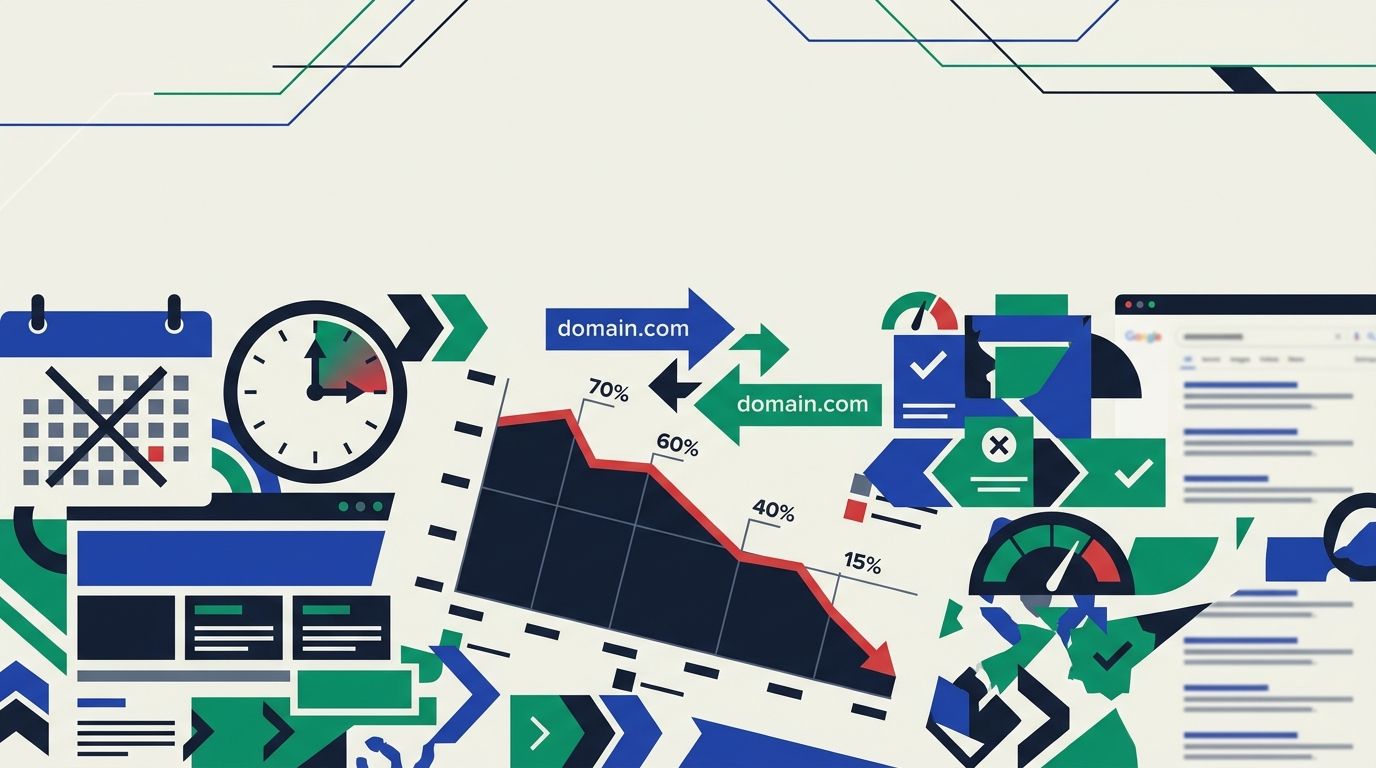
Website Migrations Trigger 50% Traffic Drops That Persist Up to 18 Months When SEO Teams Miss Launch Window, Analysis Shows
Website migrations that exclude SEO teams during planning cause organic traffic drops exceeding 50 percent and require 12 to 18 months of recovery work, according to a Search Engine Journal technical analysis published June 5, 2026. The research distinguishes normal post-migration volatility (10-30

SEO Platform GadgetsFarms Publishes Website Migration Framework Detailing Redirect Strategy and Traffic Protection
GadgetsFarms published a website migration framework on August 27 addressing URL inventory management, redirect mapping, and organic traffic preservation during platform moves, according to the guide released on the platform's blog.
Explore more topics