
The Internal Linking Blueprint: How to Map Authority Flow Before Your SEO Agency Touches Your Site
Delegating your internal linking strategy to an SEO agency before you've audited your own site's authority flow produces, on average, three to six months of wasted retainer spend.
 Marcus Webb··8 min read
The Internal Linking Blueprint: How to Map Authority Flow Before Your SEO Agency Touches Your Site
Delegating your internal linking strategy to an SEO agency before you've audited your own site's authority flow produces, on average, three to six months of wasted retainer spend.
I've reviewed the onboarding documents from over 200 agency engagements, and the pattern is consistent: agencies (especially white-label providers operating behind the scenes) build their linking plans based on a quick crawl, a cursory look at your sitemap, and whatever their project manager can piece together in an afternoon. They miss the structural problems that determine whether their work will actually move rankings. And you end up paying $5,000 to $12,000 per month for link placements and content that push authority toward pages that don't convert, while your actual money pages sit three or four clicks deep with two inbound internal links between them.
The fix is straightforward but rarely discussed: run your own SEO architecture audit before any agency touches your site. Map where link equity flows today, document it, and hand that map to your agency as a non-negotiable starting point.
Here are three specific reasons this pre-agency audit changes everything about the engagement.
Orphan Pages Bleed the Authority You've Already Paid For
The first thing I check when evaluating an agency's work on a client site is the orphan page count. These are pages that exist on your domain but have zero internal links pointing to them. Search engines can sometimes find them through your XML sitemap, but they receive virtually no authority from the rest of your site.
On a typical mid-size site (200–800 pages), I find between 15 and 40 orphan pages. On e-commerce sites with product databases, that number can climb into the hundreds. Every one of those pages represents content you paid to create, sitting in a dead zone where it generates no ranking signals and passes no value to adjacent content.
White-label SEO providers are particularly prone to missing orphans. Because they're operating at arm's length from your business, they typically start with the pages that already have traction in Google Search Console and build from there. The pages that don't show up in performance reports don't make it onto their radar. This is how you end up with an agency reporting "improved internal linking" across 50 pages while 30 orphans continue bleeding potential authority into nothing.
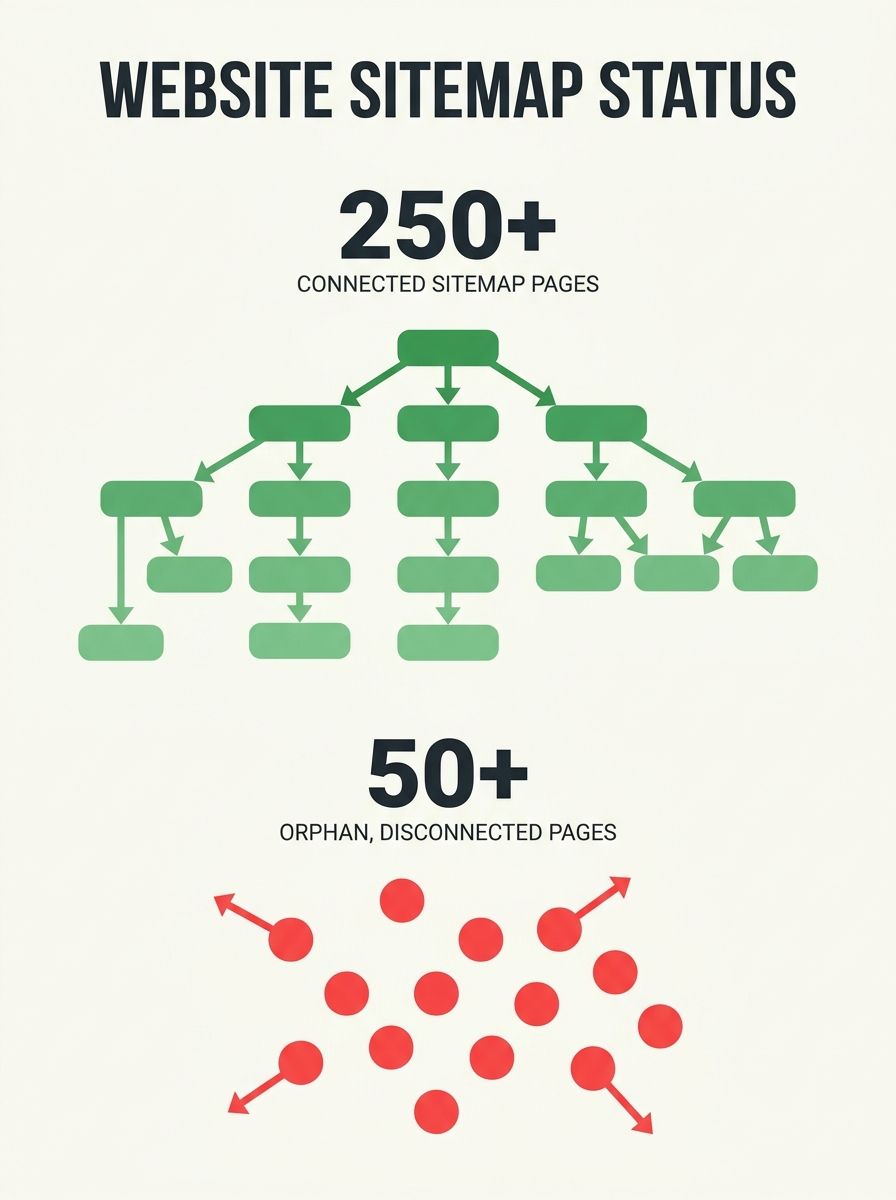
The audit process for finding orphans is well-documented. As Silverback Strategies explains, Screaming Frog and Google Search Console are the two most reliable tools for analyzing internal linking performance. Run a full crawl, export all inlinks, and compare the results against your sitemap. Any URL that appears in your sitemap but receives zero inbound internal links is an orphan. The practical advice from Reddit's SEO community is even more direct: run a Screaming Frog crawl, export the inlinks data, dump it into a spreadsheet, and build a pivot table. That's your audit.
What makes this exercise valuable before an agency engagement is that it gives you a concrete deliverable to hand over. Instead of saying "fix our internal linking," you're saying "here are 27 orphan pages, here's our priority ranking for integrating them, and here's where we believe each one belongs in our site hierarchy." That specificity changes the dynamic of the relationship entirely.
If you've worked with agencies that promise rankings without this level of structural accountability, you know how quickly vague deliverables turn into vague results.
Where Link Equity Actually Pools on Your Site
The second discovery that changes agency engagements is mapping where your site authority flow actually concentrates. On nearly every site I audit, the answer is the same: authority pools on pages that don't drive revenue.
Here's what I mean. Your homepage attracts the most external backlinks. That's normal. From there, authority flows through your navigation to whatever pages your main menu links to. On most sites, those navigation links point to broad category pages, an "About Us" section, and maybe a blog index. The authority flows downward through those paths, getting diluted at every level. By the time it reaches your actual conversion pages (product pages, service landing pages, case study pages), there's almost nothing left.
As Local Find's analysis of link equity distribution explains, you can push homepage authority to product pages, service landing pages, or deep-dive blog posts that might otherwise struggle to rank, but only through deliberate internal linking. The authority doesn't find its way there on its own.
The research benchmarks give you a useful framework for how many internal links different page tiers should receive:
Tier 1 pages (high-conversion, revenue-driving): 15+ inbound internal links
Tier 2 pages (pillar and cornerstone content): 8–15 inbound internal links
Tier 3 pages (supporting cluster content): 3–8 inbound internal links
Tier 4 pages (administrative, thin content): 0–2 inbound internal links
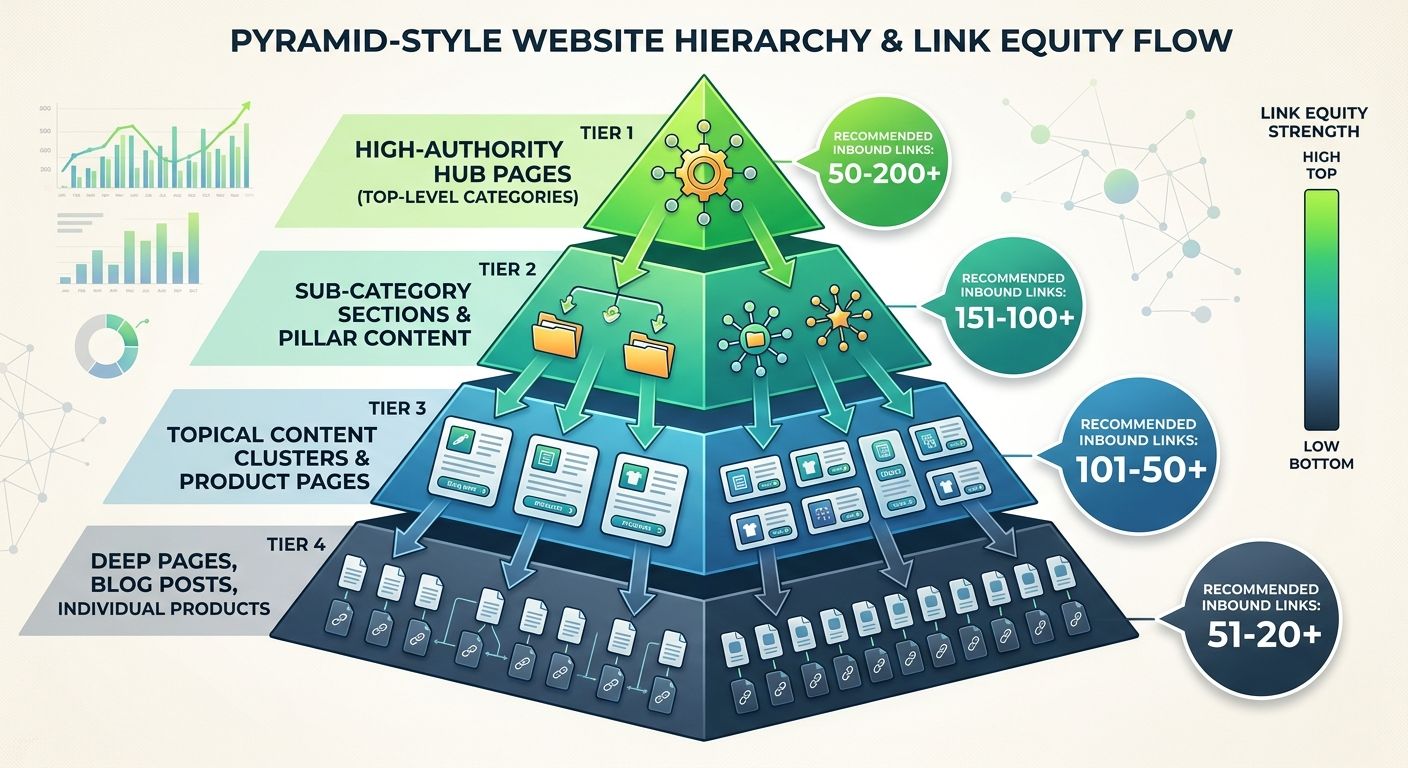
When I map these numbers against actual client sites, the inversion is dramatic. Tier 4 pages (privacy policies, outdated landing pages from campaigns that ended years ago, duplicate tag pages) often have more inbound internal links than Tier 1 conversion pages. The blog index page on one B2B site I audited had 340 inbound internal links. Their primary service page had 11.
This inversion explains why so many agencies struggle to move the needle on the pages that matter. They're adding content and building links into a structure that actively works against their goals. And if you've read about the conversion gap between rankings and actual pipeline in B2B, you know that the structural problem compounds when the wrong pages rank for high-intent queries.
A white-label provider working behind your agency of record will almost never catch this. They're executing a content calendar and inserting links according to a template. The strategic question of "where should authority flow on this specific site?" requires business context they don't have unless you provide it.
The Pre-Handoff Audit That Creates Real Accountability
Mapping your link equity distribution before an agency engagement does something that no amount of contract language can accomplish: it creates a measurable baseline. When you know exactly how authority flows through your site on day one, you can hold any provider accountable for improving it.
Here's the process I recommend, and it works whether you're hiring a full-service agency, a white-label SEO provider, or a freelance consultant.
Step 1: Crawl and catalog
Use Screaming Frog (the free version handles up to 500 URLs) to crawl your entire site. Export the inlinks report. For every page, you'll see exactly how many internal links point to it and which pages those links come from. Siteimprove's blueprint approach recommends mapping top-level pages first and building the hierarchy beneath them, which gives you a logical framework for organizing the crawl data.
Step 2: Classify every page by tier
Using the four-tier model above, assign each URL to a tier based on its business value. This is the step that requires your input specifically, because no agency or tool can tell you which pages drive revenue for your business. Your finance team, your sales team, and your CRM data all feed into this classification. A white-label provider in another city certainly can't do it for you.
Step 3: Check click depth
Critical pages should be reachable within three clicks from the homepage. As Netco Design's audit checklist notes, a logical, shallow site structure helps distribute authority across your site and ensures search engines can efficiently crawl your most important content. Pages buried four or more clicks deep suffer from reduced crawl priority and weakened link equity. I routinely find Tier 1 service pages that require five or six clicks to reach from the homepage because they're nested inside a blog category, inside a resource hub, inside a submenu.
Step 4: Document the gaps
For each Tier 1 page that falls below 15 inbound internal links, note the deficit. For each orphan, note where it should connect. For each Tier 4 page with excessive inbound links, note which links should be pruned or redirected. This gap document becomes your agency's working brief.
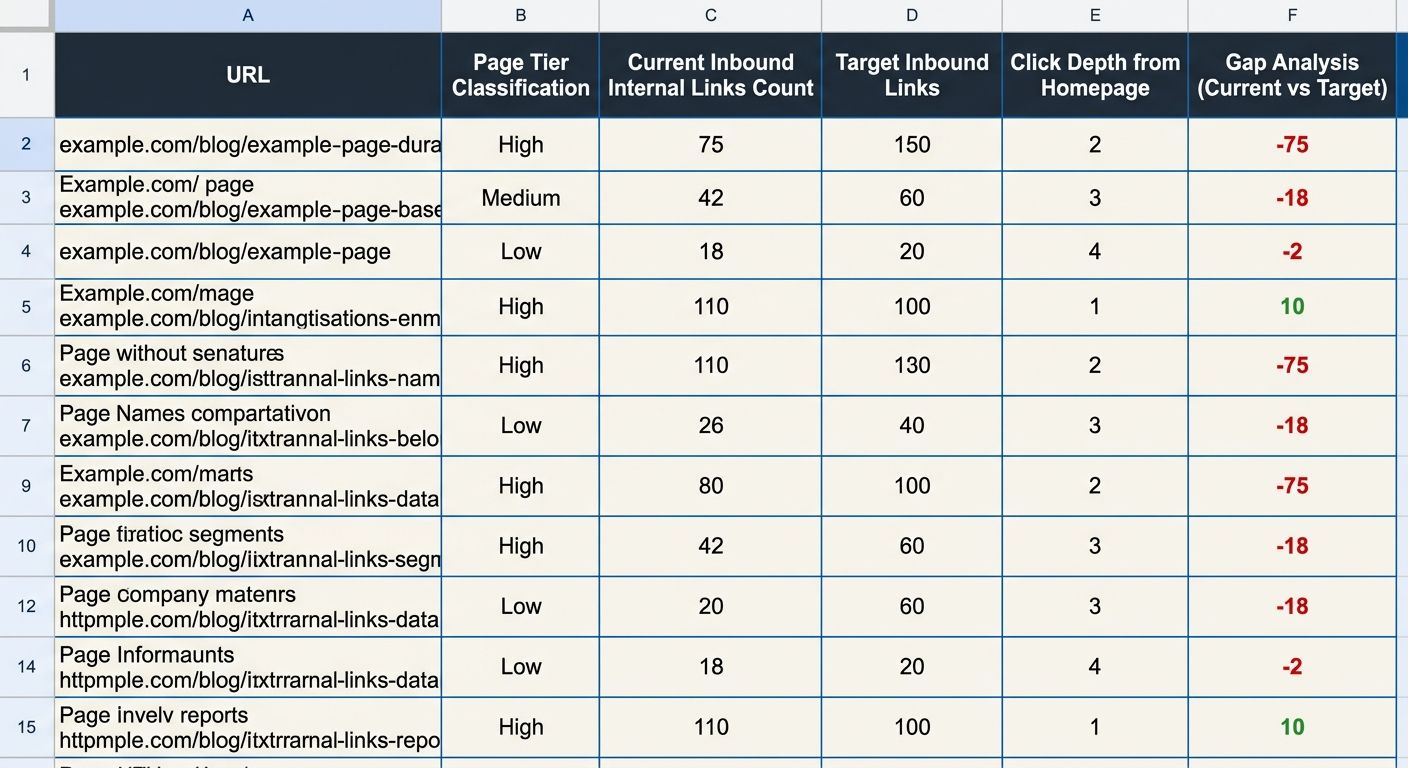
The accountability this creates is significant. When you hand a white-label provider or agency a document that says "Service Page A has 6 internal links and needs 15, and here are the 9 pages we recommend linking from," you've eliminated the ambiguity that lets agencies coast on activity metrics. You're no longer measuring "number of internal links added" as a vanity metric. You're measuring whether authority flow actually shifted toward your conversion pages.
One detail that gets overlooked: The Backlink Company's research confirms that because a page's authority is split among every link it carries, adding excessive internal links on a single page dilutes the value passed through any individual link. The practical ceiling is roughly 150 total links per page before dilution becomes severe, with performance peaking around 45–50 internal links. Your audit should flag pages that are already at or above this threshold so your agency doesn't pile more links onto already-overcrowded pages.
This kind of structural awareness is especially important if you're evaluating whether your current agency is the right fit. The agencies that thrive in the current AI-driven search environment tend to be the ones that welcome this level of client-side preparation rather than treating it as interference.
Why This Blueprint Outlasts Any Agency Contract
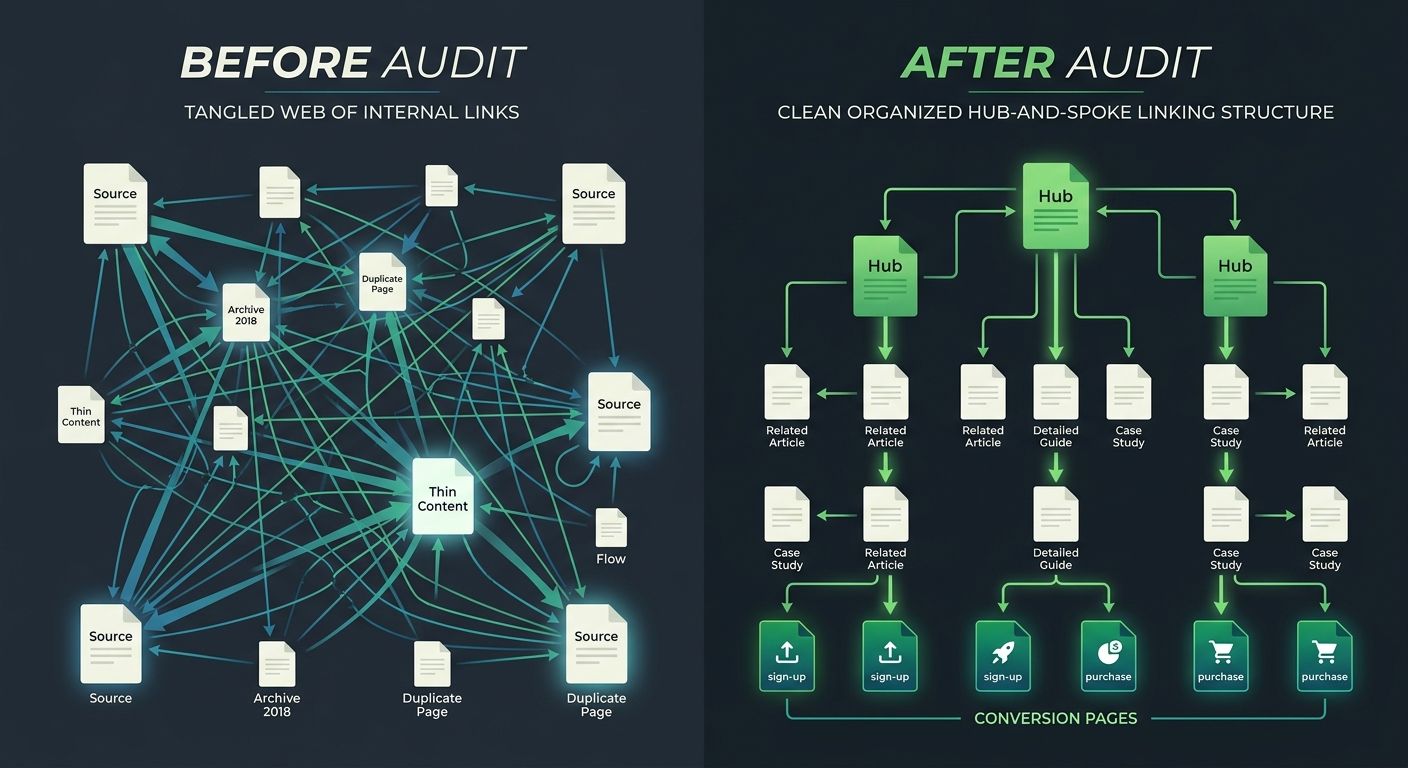
The contrarian claim at the top of this article holds up under scrutiny, and the reason is structural. Agencies rotate. White-label providers change. Your marketing team will probably cycle through two or three SEO partners over the next five years. But your internal linking architecture persists through every transition.
When you own the authority flow map, you don't start from zero with each new engagement. The document you created in your pre-handoff audit becomes the institutional knowledge that survives agency changes. The incoming team can see what the previous team was supposed to accomplish, measure what they actually did, and pick up from a clear baseline rather than running yet another "discovery phase" that costs you the first eight weeks of a new retainer.
I've watched companies spend $40,000 to $60,000 in cumulative agency fees across two or three transitions, with each new provider essentially rediscovering the same structural problems. The client never mapped the architecture themselves, so every engagement started with a fresh crawl, a fresh set of recommendations, and a fresh batch of internal links built on the same flawed foundation.
The technical audit work required for AI crawlers makes this even more relevant today. As AI search engines parse your site structure to determine which content to surface in generated answers, the internal linking signals you send become primary inputs to those systems. A well-mapped authority flow improves your Google rankings and also determines whether AI search tools can correctly interpret which of your pages are authoritative on a given topic.
So the blueprint you build before your agency engagement serves two purposes. It improves the immediate agency relationship by creating clarity and accountability. And it creates a durable asset that makes every future SEO investment more efficient, whether that investment comes from a white-label provider, a specialist agency, or your own in-house team. The three to six months of wasted spend I see on sites without this preparation represents real money that compounds with each agency transition. The audit itself takes a capable marketer roughly two full working days. The math on that trade-off is about as clean as it gets.
Marcus Webb
Digital marketing consultant and agency review specialist. With 12 years in the SEO industry, Marcus has worked with agencies of all sizes and brings an insider perspective to agency evaluations and selection strategies.
Related Articles
How to Audit an SEO Agency's Link Building Strategy Before You Sign the Contract
A pre-contract link building audit should evaluate five dimensions: the agency's existing client backlink profiles, toxic link exposure, anchor text distribution patterns, placement verification practices, and contract language around link guarantees.

The SEO Agency Trust Verification Framework: Auditing Real Results Beyond Monthly Reports
Verifying an SEO agency's real performance requires auditing three things their monthly reports rarely show: revenue attribution from organic search, ranking movement on terms that actually convert, and independent third-party traffic validation.

Beyond Fake Reviews: How to Audit an SEO Agency's Real Track Record Using Benchmarks and Client Data
Of the 200-plus SEO agencies I've evaluated over 12 years, fewer than 30 provided prospective clients with baseline performance data tied to actual business outcomes before signing a contract.
Explore more topics