
Why Recognition Beats Rankings in 2026: How SEO Agencies Should Pivot Their Authority Strategy
The slide deck that convinced a $4M ARR fintech company to sign a 12-month agency retainer showed fourteen keyword ranking improvements, zero AI citation metrics, and no mention of entity authority anywhere in the strategy section.
 Marcus Webb··8 min read
Why Recognition Beats Rankings in 2026: How SEO Agencies Should Pivot Their Authority Strategy
The slide deck that convinced a $4M ARR fintech company to sign a 12-month agency retainer showed fourteen keyword ranking improvements, zero AI citation metrics, and no mention of entity authority anywhere in the strategy section. I reviewed that contract in April, and it crystallized something I'd been noticing across dozens of similar evaluations: the gap between what agencies are selling and what actually produces visibility in the current search ecosystem has become dangerously wide. Zero-click searches now account for roughly 69% of queries, Google's AI Overviews serve 2 billion monthly users, and AI-generated answers are intercepting the very queries that agencies celebrate ranking for. If your agency is still selling you on position one as the primary measure of SEO performance, you're paying for a metric that's losing its connection to actual business outcomes.
This is the fundamental tension I see in nearly every agency evaluation I conduct: the tools still track positions one through ten, the reports still celebrate green arrows, and the invoices still tie deliverables to ranking targets. But the way people find and choose businesses has shifted underneath all of that. As Ashley Liddell wrote in a widely-shared Search Engine Land piece, visibility now depends on authority, citations, entity clarity, and brand presence across the broader web, and SERP position alone doesn't capture it. The agencies that understand this distinction are the ones worth hiring. The rest are optimizing for a scoreboard that fewer people are looking at.
The Ranking Paradox and Why It Should Change Your Hiring Criteria
Here's the scenario I keep encountering in client reviews. A B2B company ranks on page one for its core commercial keywords. The agency sends a monthly report showing stable or improving positions. Yet organic-sourced pipeline has flattened or declined. When we dig into what's actually happening, the answer is almost always the same: AI Overviews or featured snippets are answering the query directly, and the company's brand isn't the one being cited in those responses. The ranking exists in a technical sense, but the visibility has evaporated.
This paradox matters enormously when you're evaluating agencies, because it exposes a fundamental disagreement about what SEO success even means. An agency that defines authority through backlink volume and keyword positions is operating with a framework built for a search experience that's rapidly shrinking. Research from The Digital Bloom's 2026 AI Citation report found that informational content now primarily builds the authority signals that earn AI citations, which then drive higher-intent traffic to product and conversion pages. The chain has an extra link in it now, and agencies that don't account for that link are delivering incomplete work.
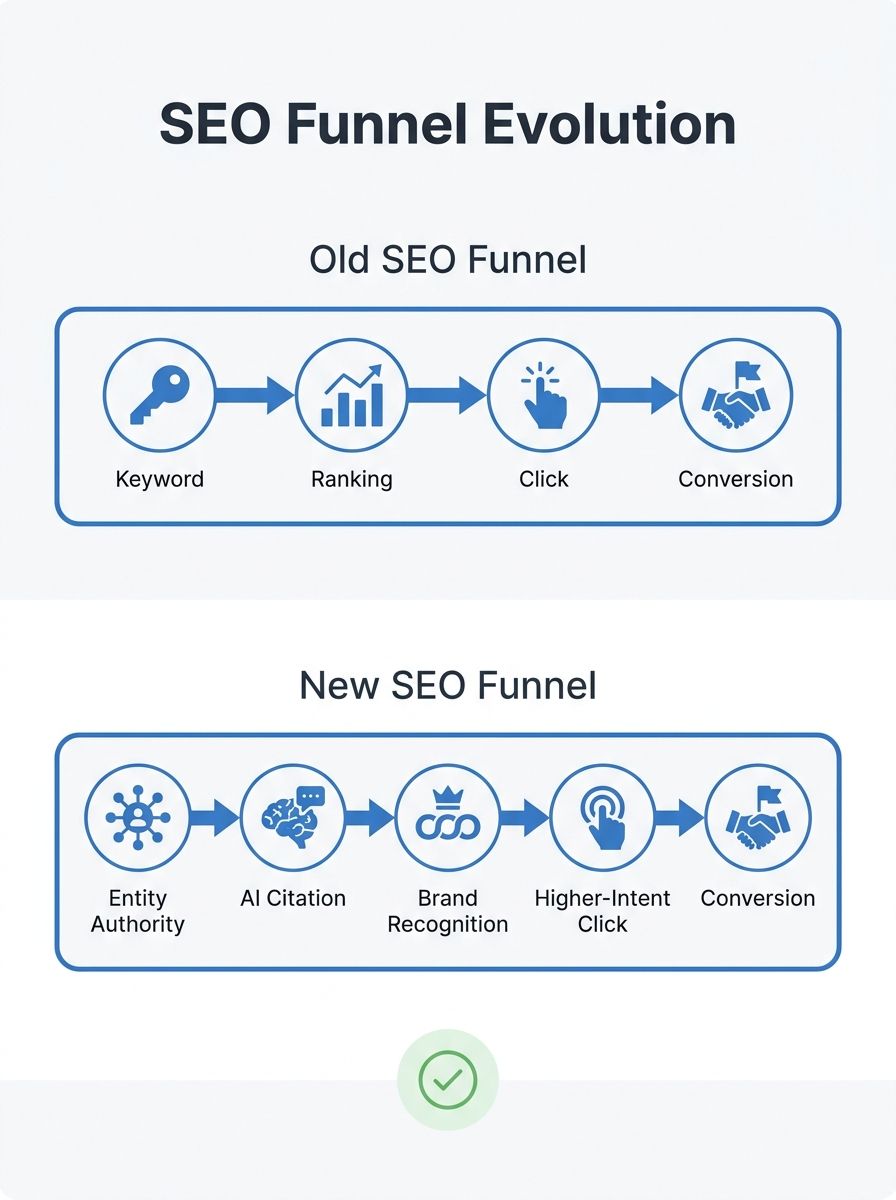
What makes this tricky for hiring decisions is that the old metrics aren't worthless. Rankings still matter for some portion of searches, and ranking still determines visibility while recognition determines selection, as LeadTap's research frames it. When users recognize a brand in search results, they arrive with a level of trust already established. So the question isn't whether to abandon ranking tracking entirely. The question is whether your agency treats rankings as an input to a broader brand recognition search strategy or as the final output of their work. That distinction separates competent agencies from outdated ones, and you can usually identify it within the first fifteen minutes of a pitch meeting by asking a simple question: "What happens to our visibility when AI Overviews answer our target queries directly?" An agency that stumbles over that question hasn't done the strategic work this environment demands.
What Entity Authority SEO Demands From the Agencies You Hire
The term entity authority SEO describes an approach where the optimization target shifts from individual keywords to the way search systems and AI models understand what your business is, what it does, and why it's credible. Instead of asking "how do we rank for this phrase," an entity-focused agency asks "how do we ensure that Google, ChatGPT, Perplexity, and every other AI system recognizes this company as a definitive authority on this topic?" Those are different questions, and they produce different strategies with different deliverables and different timelines.
In practice, entity-based optimization means content is judged less by exact phrasing and more by wider entity coverage, contextual relevance, semantic relationships, and demonstrated expertise. An agency executing this well will produce content clusters organized around your core business entities, ensure your brand shows up consistently across third-party databases and knowledge graphs, and build citation patterns that signal authority to machine learning models. MRS Digital's breakdown of entity SEO emphasizes that creating related content around wider entities positions you as an authority in your sector, which is the exact kind of signal AI systems reward. This is specialized work, and I wrote about how the generalist agency model is struggling under this kind of pressure precisely because entity-focused strategy requires knowledge that generalist shops rarely possess.
When I evaluate agencies for clients who need AI-driven search visibility, I look for specific evidence that they understand this shift. Do their case studies mention citation authority 2026 metrics, or do they still exclusively showcase ranking improvements? Can they explain their process for building entity signals across the web, or do they default to "we'll create great content and build links"? The compounding effect of aligning content, PR, and SEO around consistent entity signals is what separates brands that gain AI retrieval from those that don't, according to Search Engine Journal's analysis of cross-departmental entity strategies. I ask prospective agencies to show me how they measure AI citation performance. If they can't, or if they dismiss the question as premature, they haven't adapted their service model. I've seen this gap firsthand in agencies running outdated PR playbooks built for a citation ecosystem that no longer functions the same way.
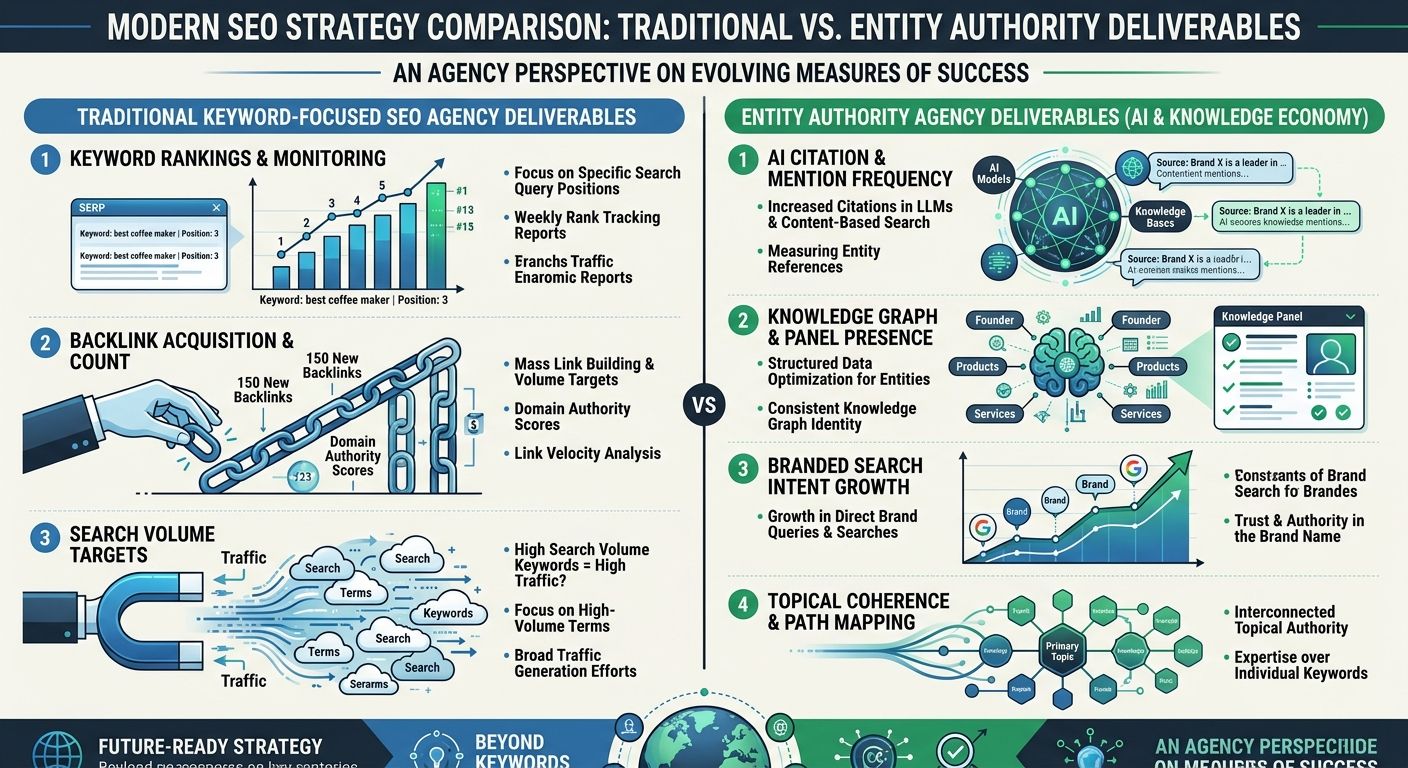
So what does a recognition-oriented agency actually look like when you're comparing proposals? I've started structuring my evaluation criteria around four areas that distinguish agencies operating with current models from those still running outdated playbooks. The first is measurement infrastructure. An agency that understands brand recognition search strategy will track AI Overview appearances, citation frequency across generative platforms, and branded search volume trends alongside traditional ranking data. If their reporting template has no section for these metrics, their strategy almost certainly doesn't prioritize them either. The tools exist now through platforms like Semrush, BrightEdge, and Meridian, so an agency that hasn't integrated them is telling you something about their priorities.
The second area is content strategy philosophy. Ask the agency how they decide what content to create. If the answer centers exclusively on keyword research and search volume, that's a signal they're still optimizing for the old game. Agencies with mature entity authority approaches build topical authority by mapping the full semantic territory around your business, creating depth that AI systems recognize as genuine expertise. The third area is cross-channel integration. Entity signals compound when content marketing, digital PR, and technical SEO reinforce the same narrative. An agency that runs these as separate workstreams with separate teams and separate reports is structurally incapable of building the kind of coherent entity presence that AI systems reward. During evaluations, I ask agencies to walk me through a recent campaign where all three disciplines contributed to the same entity-building goal. The quality of that answer tells me more about their actual capabilities than any case study PDF. For businesses concerned about whether their current agency is driving revenue rather than vanity metrics, I've outlined a framework for auditing agency performance beyond rankings that applies directly here.
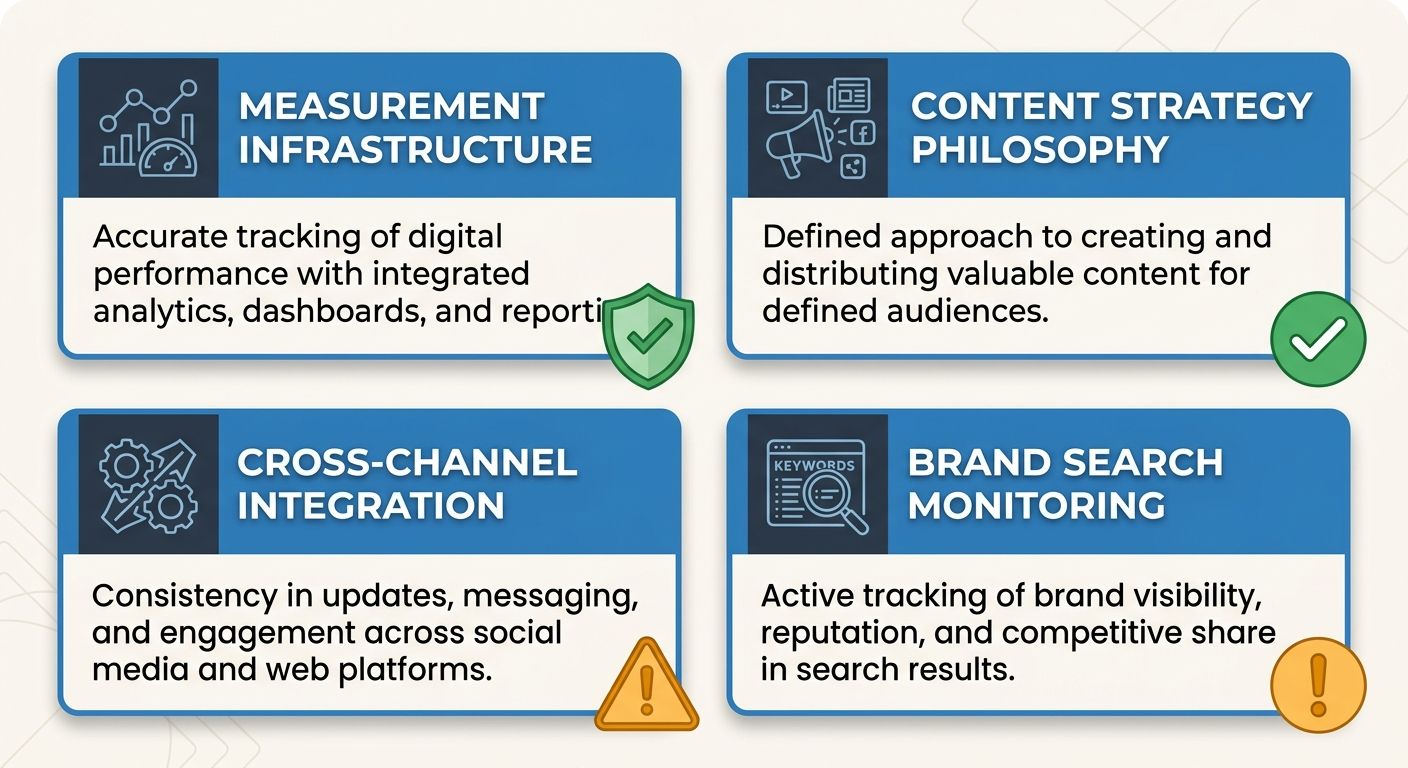
The fourth area is how the agency talks about brand search. One of the clearest indicators of genuine authority growth is branded search volume. As Search Engine Land's analysis of brand authority versus topical authority put it, human citations are evidence of market recognition and AI citations are evidence of machine retrieval. An agency that actively monitors and works to influence branded search behavior understands that the goal is recommendation, not retrieval alone. If branded search volume isn't in their KPI framework, they're missing the most reliable signal of whether their work is actually building recognition. Given that 68% of brands have reportedly vanished from AI search recommendations, this evaluation framework isn't academic. It's the difference between hiring an agency that protects your visibility in the channels where your buyers are migrating and hiring one that keeps polishing your position on a results page fewer people scroll through.
Where the Hiring Criteria Still Feel Unstable
I've laid out a fairly confident case for prioritizing recognition over rankings when evaluating agencies, but I want to be honest about the parts of this that still feel unresolved. The measurement problem is real and significant. AI citation tracking is improving, but it's nowhere near as mature or standardized as traditional ranking tools. When I recommend that clients ask agencies about citation metrics, I'm aware that even sophisticated agencies are working with imperfect data. The platforms tracking AI mentions still have significant coverage gaps across different generative systems, and there's no industry-standard methodology for benchmarking citation authority 2026 performance the way there is for keyword visibility.
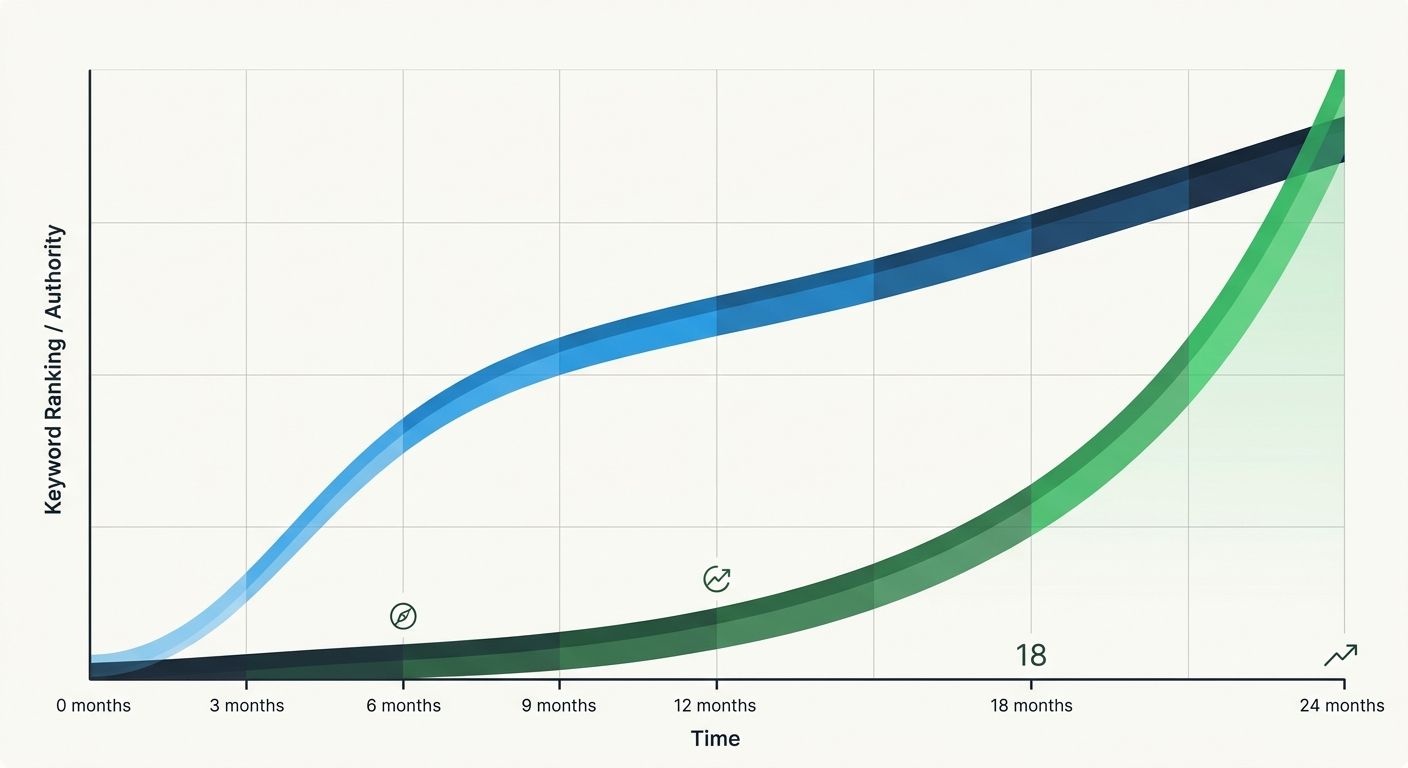
There's also a real tension between the urgency of this shift and the contract structures that most agencies use. Annual retainers and six-month minimums were designed around the timeline of traditional SEO improvements, where you'd expect to see meaningful ranking changes within three to six months. Entity authority building often takes longer to show measurable results, and the results look different. Brand search volume increases are gradual. AI citation appearances are sporadic and hard to attribute to specific actions. I worry that agencies that genuinely pivot toward recognition-first strategies will struggle to demonstrate value on the timelines that clients expect, while agencies that stick with ranking reports will keep winning contracts because their success metrics are easier to present in a quarterly review.
The honest answer is that we're in a transitional period where the old metrics haven't fully stopped working and the new metrics haven't fully matured. The agencies I respect most are the ones who acknowledge this tension directly in their proposals rather than pretending they have it all figured out. If an agency tells you they've completely cracked AI-driven search visibility measurement, that confidence should make you skeptical, not reassured. The best work I'm seeing comes from teams that combine entity authority strategies with traditional ranking discipline, measure both, and are transparent about which signals they trust most and why. That combination of ambition and intellectual honesty is, in my experience, the most reliable indicator of an agency that will serve you well as this transition continues to unfold.
Marcus Webb
Digital marketing consultant and agency review specialist. With 12 years in the SEO industry, Marcus has worked with agencies of all sizes and brings an insider perspective to agency evaluations and selection strategies.
Related Articles

AI Search Visibility Gaps Are Reshaping Agency Skill Requirements: Why Your Team Needs These New Competencies Now
Five authority gaps keep professional service businesses invisible to ChatGPT, Gemini, and Perplexity, and the first one—absent entity recognition—is a competency that virtually no one on a typical SEO team was trained to address.
From Google Search to AI Assistants: How B2B Agencies Must Rebuild SEO Strategy Beyond Traditional SERP Rankings
Three of the five B2B agency contracts sitting on my desk right now define success exclusively as Google organic ranking improvements and click-through traffic growth. The agencies that wrote those contracts aren't incompetent.

Why Enterprise SEO Agencies Are Expanding Into AI-Driven Markets: What the San Francisco Shift Reveals About 2026 Competition
SEO.co announced its physical expansion into San Francisco on May 7, targeting venture-backed startups and enterprise brands with GEO consulting, AI-driven search strategies, and technical audits designed for generative platforms.
Explore more topics