
How SEO Agencies Hide Mediocre Results: The Client Review Audit Framework That Exposes the Truth
Fifty to one hundred fake five-star Google reviews, planted within days on a fabricated Google Business Profile using a stolen brand name, is the specific pattern digital marketing consultant Eric Warncke documented in a widely-shared LinkedIn post.
 Marcus Webb··8 min read
How SEO Agencies Hide Mediocre Results: The Client Review Audit Framework That Exposes the Truth
Fifty to one hundred fake five-star Google reviews, planted within days on a fabricated Google Business Profile using a stolen brand name, is the specific pattern digital marketing consultant Eric Warncke documented in a widely-shared LinkedIn post. His step-by-step breakdown revealed how certain SEO agencies manufacture local market credibility and then report inflated metrics to clients who never verify the underlying data.
The Fabricated Storefront Warncke Exposed
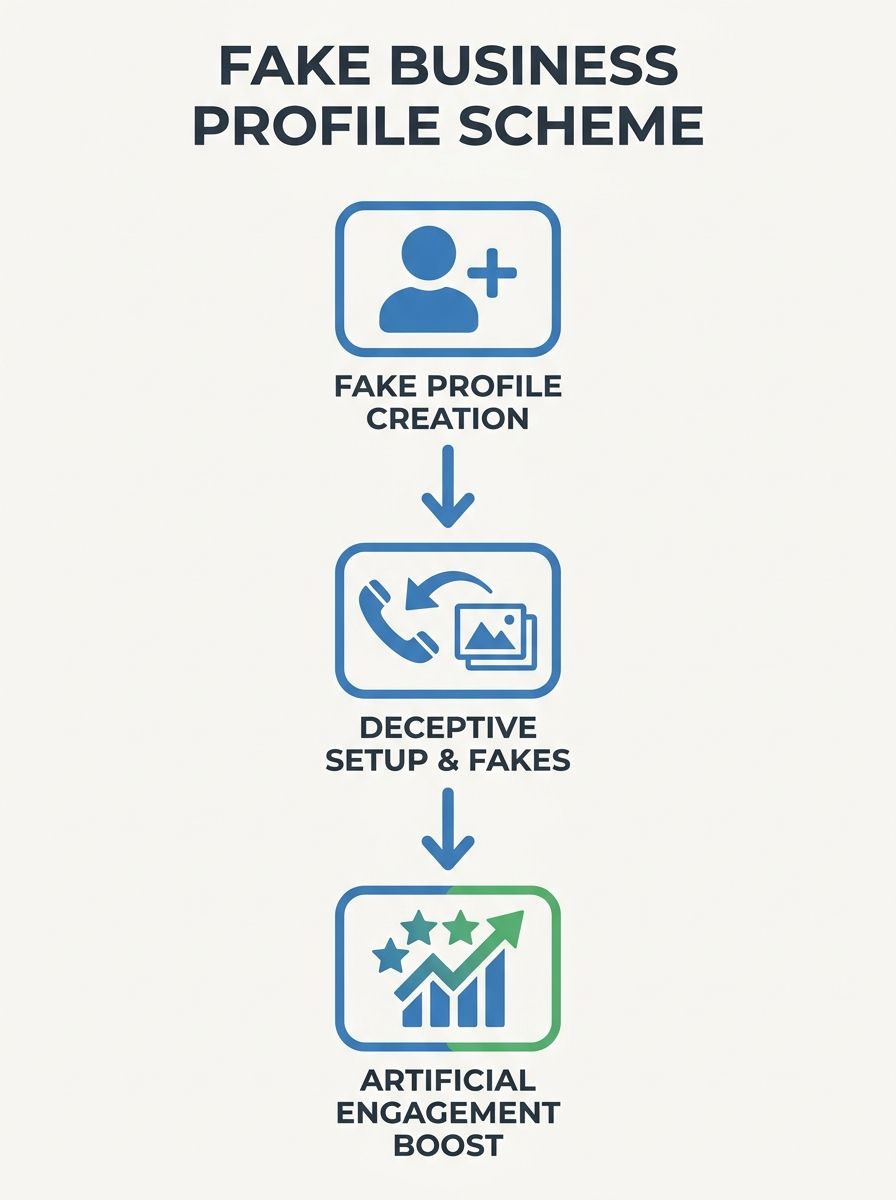
Eric Warncke's post walked through the scheme with uncomfortable precision. An agency creates a Google Business Profile using a recognizable brand's name and logo in a new city where that brand has no physical office. A real, working phone number gets added, but calls are tracked and rerouted to whoever is buying the leads. Fake photos of "the office" go up. Then 50 to 100 fake five-star reviews flood in within days. And then the agency waits for Google's built-in trust signals to activate around the "brand."
Warncke wrote: "Here's exactly how they hijack local markets", proceeding to outline every step from profile creation through lead routing. The post gained traction because it named the structural mechanics, not abstract warnings.
What makes this pattern dangerous for clients is how convincing the early-stage reporting looks. The fabricated profile generates real impressions, real map pack appearances, and real phone calls. Those numbers land in the monthly report as proof of SEO performance. A client looking at a dashboard showing 300% increases in local visibility has no reason to question the source if they've never demanded independent access to the underlying accounts.
I've evaluated over 200 SEO agencies across 12 years in this industry, and the Warncke pattern is one of the more brazen versions of a wider problem. But the subtle variations are everywhere: agencies reporting on keywords the client never targeted, cherry-picking impression data instead of click-through rates, and bundling paid traffic with organic results in a single "total traffic" line item.
A viral Reddit thread in r/DigitalMarketing titled "Every SEO agency is faking their reviews" drew dozens of responses from practitioners confirming the prevalence. One commenter captured the dynamic: "Not everyone is faking their reviews, but yeah, there are definitely many who do it. Some agencies try to build credibility quickly by posting fake testimonials, which makes it harder for genuine professionals to stand out."
Google's June 2026 spam update has targeted AI citation manipulation as a core search policy violation, which is relevant here because many fake review operations now use AI-generated review text at scale. But the update doesn't solve the client-side verification gap. That responsibility still falls on the buyer.
How Monthly Reports Dress Up What Doesn't Work
The monthly SEO report is where mediocre results get their makeover. I've sat through hundreds of these presentations, and the playbook follows recognizable patterns.
The first move is metric selection. An agency showing a 47% increase in "total impressions" sounds impressive until you realize impressions don't mean anyone clicked, converted, or even saw the result in a meaningful position. According to Improvado's 2026 SEO Analytics Guide, proper diagnostic methodology requires "metric conflict resolution, statistical significance thresholds, attribution model comparison, data validation checklists, and zero-click measurement approaches" to turn fragmented signals into defensible insights. Most client reports include none of these.
The second move is time-window manipulation. Showing a 12-month comparison that starts from a historically low traffic month (like December in many B2B verticals) creates artificial growth curves. A transparent SEO metrics audit requires month-on-month comparisons across a full business cycle, including losses. Genie Crawl's description of a transparent reporting process makes this explicit: their reports cover "keyword rankings, both wins and losses, any organic traffic changes, search visibility metrics, organic conversions or leads, along with month-on-month comparisons".
The third move is omitting deliverable evidence. Hashmeta's transparency framework points out that "even before significant ranking movements occur — which is normal, as SEO services typically show measurable results within three to six months — an agency should be able to show you concrete outputs: audit findings, keyword lists, on-page changes made, content created, and links acquired." When months pass with nothing tangible to show, something is wrong.
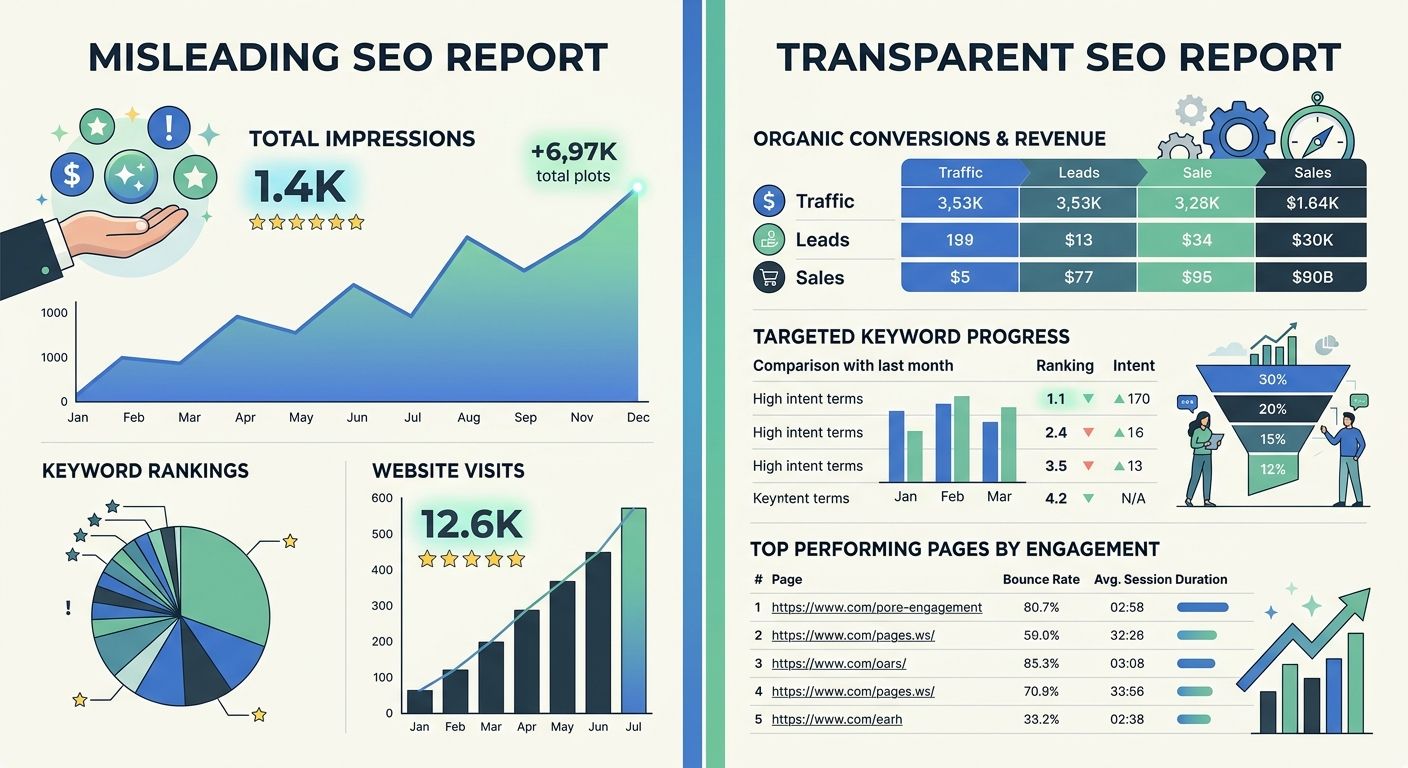
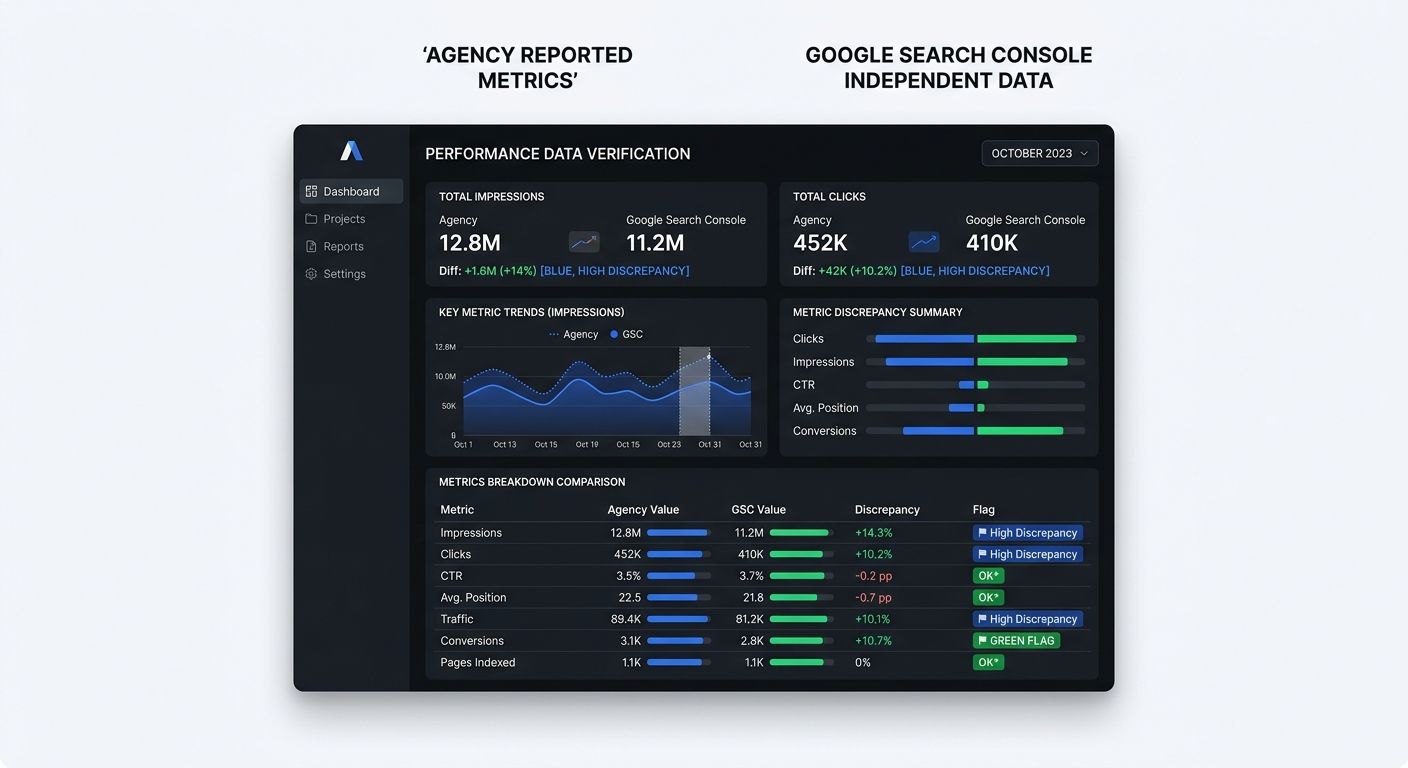
And the accuracy of automated reporting tools themselves adds another layer. Reportr Agency's 2026 accuracy test of five major SEO reporting tools found that agencies should "encourage clients to maintain access to their own Google Search Console and Analytics accounts for independent verification" and consider offering accuracy guarantees within a ±3 to 5% variance range for key metrics. If your agency isn't offering that kind of guarantee, ask yourself why. If you want a deeper look at how to cross-reference agency claims against independent data, this walkthrough on auditing agency success claims with verification tools covers the process step by step.
The Three-Layer Client Verification Audit
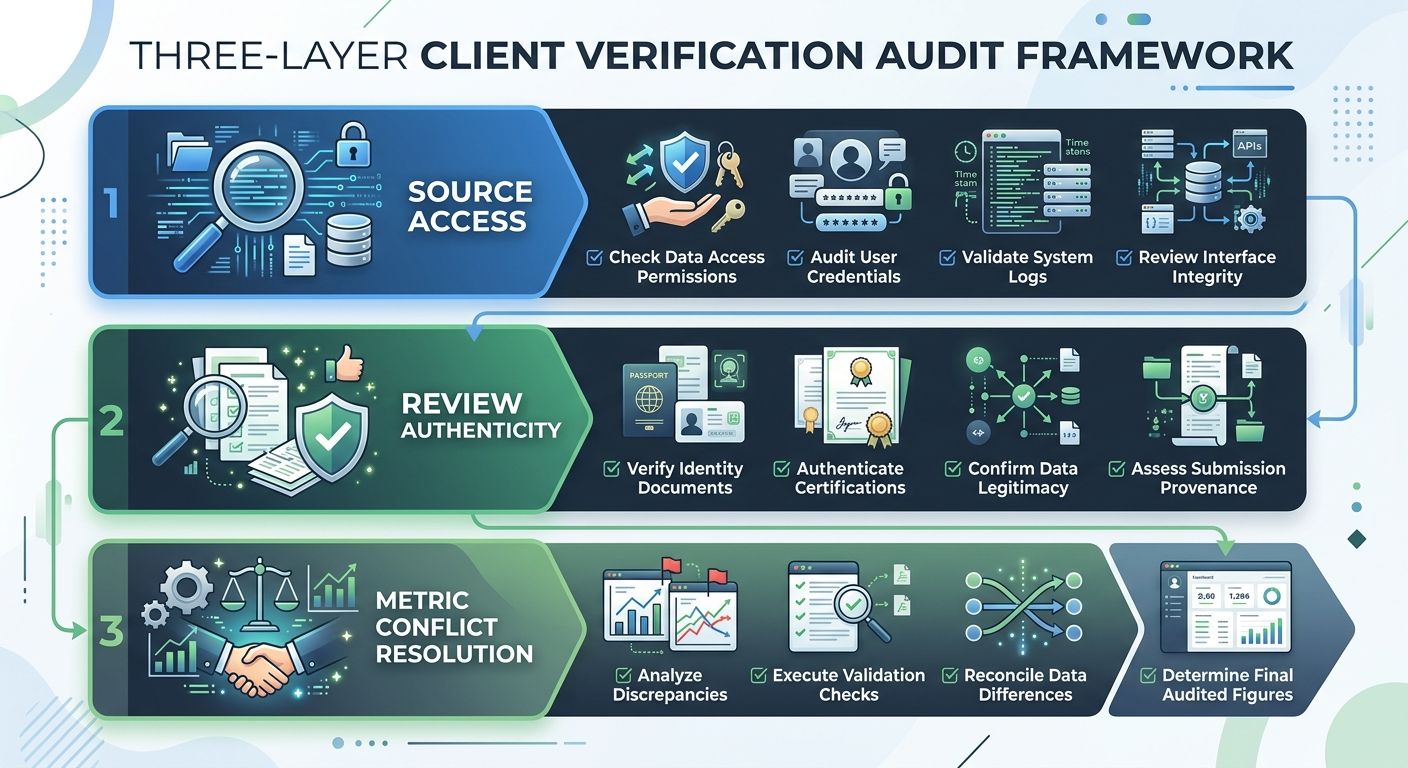
Here's the framework I use when clients bring me their agency's reports and ask whether the numbers are real. I call it the Three-Layer Client Verification Audit, and each layer catches a different category of inflation.
Layer 1: Source-Level Access Verification. You should own your Google Search Console, Google Analytics, and Google Business Profile accounts directly. If your agency set these up on their own Google account, you don't actually control your data, and you'll lose everything if the relationship ends. According to Reportr Agency's testing, independent client access to these platforms is the single most important safeguard against reporting manipulation. When an agency resists giving you admin-level access, that resistance is a red flag worth acting on immediately. I covered this dynamic in more detail when exploring how to spot performance data manipulation in agency case studies.
Layer 2: Review Authenticity Check. Tools like Fakespot use AI to detect fake online reviews across platforms including Google, Amazon, and Shopify. Thrive Local's Google review checker specifically targets fake Google reviews with features for spotting and reporting them. But you don't always need a tool. Look for temporal clustering: 30 or more five-star reviews appearing within a seven-day window is statistically improbable for any legitimate business. Check reviewer profiles for patterns like single-review accounts, generic names with stock photos, and identical review language across multiple businesses.
Layer 3: Metric Conflict Resolution. Pull your data from three independent sources: your own Google Search Console, a third-party tool like Ahrefs or SEMrush, and your agency's reports. Compare organic traffic, keyword rankings, and conversion data across all three. A ±3 to 5% variance between Search Console and third-party tools is normal. Anything above a 10% discrepancy on core metrics like organic sessions or keyword ranking positions deserves a direct conversation with your agency.
Verification Layer | What It Catches | Time to Run | Tools Needed |
|---|---|---|---|
Source-Level Access | Account ownership gaps, data withholding, platform lock-in | 15 minutes | Google Admin console |
Review Authenticity | Fake review clusters, temporal manipulation, bot-generated text | 30-45 minutes | Fakespot, Thrive Local, manual profile checks |
Metric Conflict Resolution | Inflated traffic claims, keyword cherry-picking, paid/organic bundling | 1-2 hours | Google Search Console, Ahrefs/SEMrush, agency reports |
The total time investment for all three layers runs between two and three hours. For a client paying $3,000 to $10,000 per month in agency retainers, that time cost is negligible against the risk of funding months of ineffective work.
Red Flags the Audit Surfaces Before Contract Renewal
Running the Three-Layer Client Verification Audit typically surfaces a handful of recurring patterns. These are the specific signals I've seen most frequently across the 200+ agency evaluations I've conducted.
The first pattern is keyword ranking inflation. The agency reports ranking improvements for 150 keywords, but 120 of them are long-tail variations with zero monthly search volume. Ranking first for "best affordable premium organic hand-crafted artisan soap in downtown Portland Oregon" means nothing if nobody searches for it. Cross-referencing against Search Console's actual impressions data for those keywords exposes the gap immediately.
The second pattern is traffic source bundling. Organic, direct, and referral traffic get combined into a single "website traffic" metric. When organic traffic is flat or declining, the agency masks it by pointing to overall traffic growth driven by paid campaigns or social referrals. Your Search Console data shows organic performance in isolation. That's the number that matters for evaluating SEO work.
The third pattern is deliverable absence. You're four months into an engagement, and the agency talks about "strategy development" and "content planning" but can't produce a specific list of pages optimized, technical fixes implemented, or links built. The Hashmeta framework is clear: even before rankings move, concrete output evidence should exist. Audit findings, keyword research documents, on-page changes logged with dates, content drafts, and link acquisition records should all be accessible and verifiable. For a more detailed diagnostic of hidden technical problems that might be stalling progress, running an independent technical audit alongside the verification process often reveals whether the agency is doing meaningful work beneath the reporting surface.
The fourth pattern involves Core Web Vitals misdirection. With only 47 to 54% of websites currently meeting all Core Web Vitals thresholds, there's often real technical work to be done. Legitimate agencies track these metrics and report progress. Sites improving Core Web Vitals from "Poor" to "Good" have reported 25% conversion rate increases and 35% bounce rate reductions. Sites with poor Interaction to Next Paint scores above 300 milliseconds experienced 31% more traffic drops during Google's December 2025 update. If your agency never mentions these metrics, they're either not doing the technical work or don't understand it matters.
Due Diligence Timing in the Warncke Pattern
The Warncke case illustrates a specific failure point: verification happens too late. By the time a client discovers the Google Business Profile was fabricated, they've paid months of retainer fees and built business operations around leads that will disappear when the profile gets flagged and removed.
The fix is structural. Run the Three-Layer Client Verification Audit at three specific points: before signing a contract (using the agency's existing case studies and publicly visible reviews), at the 90-day mark (when concrete deliverables should exist even if rankings haven't moved), and at every contract renewal point. The 90-day check matters most because it catches the Warncke pattern early. Fabricated profiles and fake reviews show their age poorly. A Fakespot analysis at 90 days will catch review clusters that looked plausible at 30.
I'm skeptical by nature about agencies that guarantee rankings, and I've written about the broader trust verification framework for auditing real results beyond monthly reports. But skepticism alone doesn't protect you. Structured verification at defined intervals does.
The Warncke pattern keeps working because the initial numbers look real. The calls come in. The impressions climb. The map pack placement appears. Every metric an unsophisticated buyer would check looks positive. The Three-Layer Client Verification Audit works because it checks what those metrics are built on, not what they claim. Source ownership catches account control issues. Review authenticity tools catch temporal clustering. Metric conflict resolution catches the gap between what your agency reports and what Google's own platforms show. Together, these three layers take fewer than three hours and can save you tens of thousands of dollars in wasted retainer spend. The clients who run them tell me the same thing: they wish they'd started at month one.
Marcus Webb
Digital marketing consultant and agency review specialist. With 12 years in the SEO industry, Marcus has worked with agencies of all sizes and brings an insider perspective to agency evaluations and selection strategies.
Related Articles

The SEO Agency Vetting Checklist: How to Spot Performance Data Manipulation in Client Case Studies
RankTruth's database of over 400 agency due diligence reports surfaces a reliable signal: agencies whose case study numbers collapse under verification almost always share three traits.
The SEO Agency Red Flag Audit: How to Spot Track Record Manipulation in Monthly Reports
Fake SEO metrics appear in monthly reports as proprietary-sounding graphs labeled "link velocity index," "domain trust trajectory," or "semantic authority score" that can't be verified in Google Analytics or Search Console.

Beyond Fake Reviews: How to Audit an SEO Agency's Real Track Record Using Benchmarks and Client Data
Of the 200-plus SEO agencies I've evaluated over 12 years, fewer than 30 provided prospective clients with baseline performance data tied to actual business outcomes before signing a contract.
Explore more topics