
Why 90% of SEO Agencies Will Fail in 2026—And What Separates Survivors from the Rest
I fired our SEO agency after discovering they'd been submitting AI-generated blog posts with fabricated statistics to our client's site for three months straight. Nobody on their team had read a single piece before hitting publish. The kicker?
 Marcus Webb··8 min read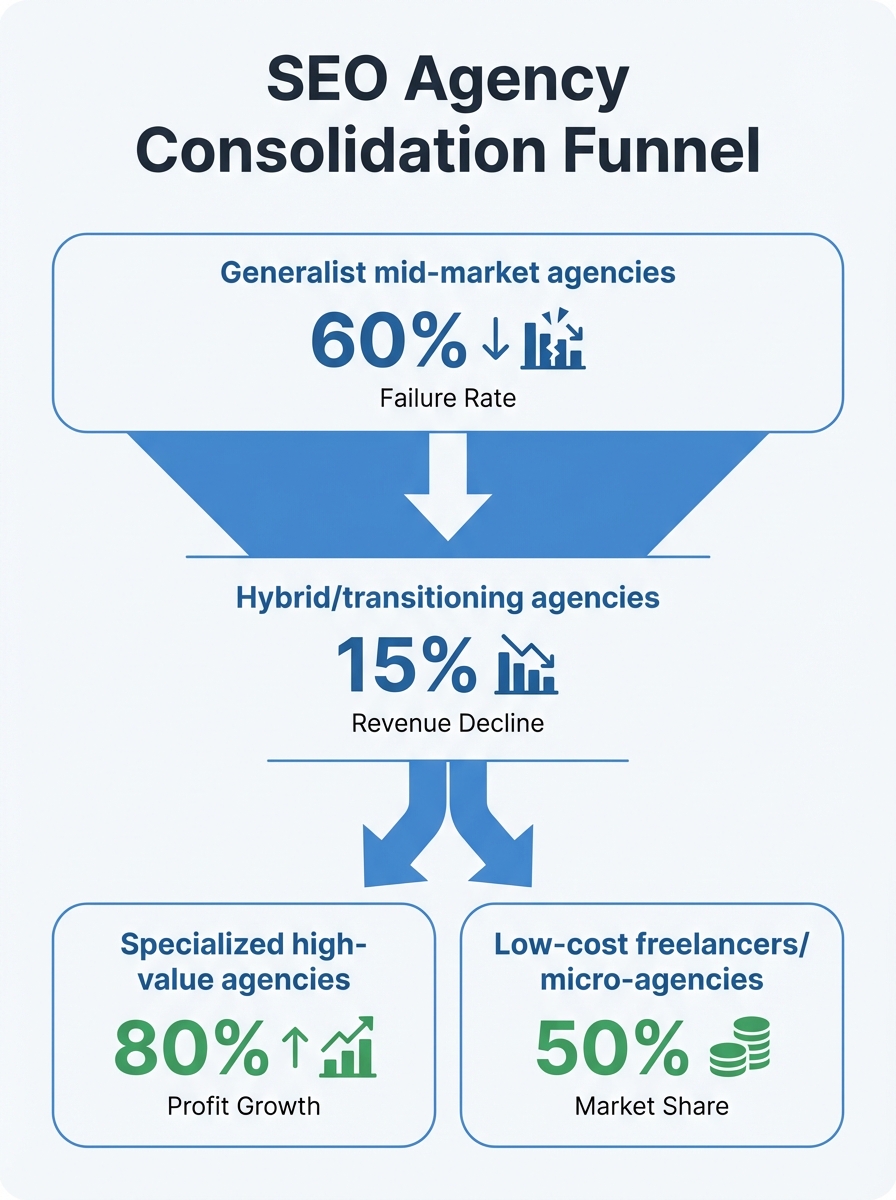
Why 90% of SEO Agencies Will Fail in 2026—And What Separates Survivors from the Rest
I fired our SEO agency after discovering they'd been submitting AI-generated blog posts with fabricated statistics to our client's site for three months straight. Nobody on their team had read a single piece before hitting publish. The kicker? They were charging $8,000 a month and reporting "improved keyword visibility" as their primary KPI. That experience cracked open something I'd been seeing across the industry: most SEO agencies aren't selling results. They're selling the appearance of activity. And the market is finally punishing them for it.
The uncomfortable truth is that the SEO agency model, as most shops practice it, is breaking apart. Not because SEO itself is dying. Search is more important than ever. But because most agencies still sell outdated strategies that stopped working years ago, and clients are getting smart enough to notice. The agencies that survive this shakeout will look fundamentally different from the ones disappearing. Here's what separates them.
The Market Is Consolidating, and the Middle Is Evaporating
Every industry goes through consolidation cycles. SEO agencies are in one right now, and the pattern is brutal. You've got a small tier of specialized, high-value agencies at the top pulling in enterprise clients with deep technical chops and measurable revenue impact. At the bottom, you've got freelancers and micro-agencies competing on price with minimal overhead. Everything in the middle? That's where agencies go to die.
The mid-market generalist agency, the one offering SEO as a bolt-on service alongside paid ads, social media management, and email campaigns, has lost its reason to exist. As one analysis from ThatWare puts it, SEO that operates in isolation will not just underperform; it will actively fail. Clients don't need another vendor managing a silo. They need partners who understand how search fits into a unified growth strategy.
This agency market consolidation isn't theoretical. I've watched three agencies in my professional network close or merge in the past eight months alone. Each one followed the same playbook: generic deliverables, interchangeable staff, and metrics that never connected to the client's bottom line.
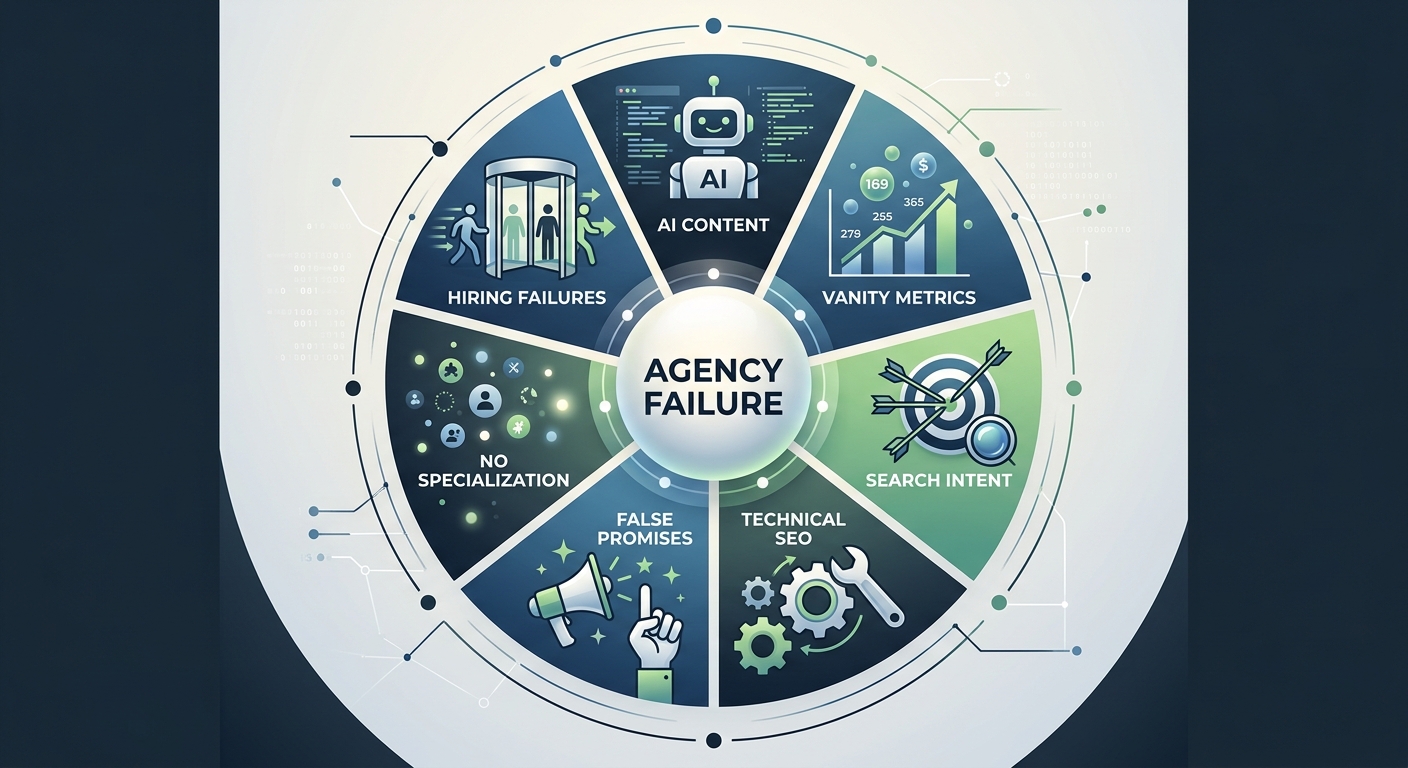
The Seven Failure Modes Killing Agencies Right Now
When you look at why SEO agencies fail, the reasons cluster into a surprisingly small number of patterns. I've identified seven that keep showing up. Most struggling agencies are guilty of at least four.
1. The AI Content Factory Problem
This is the big one. The barrier to producing content dropped to near zero when large language models became widely accessible. And a huge number of agencies responded by doing exactly the wrong thing: they scaled volume while gutting quality.
According to Search Engine Journal's State of SEO report, 58% of SEO professionals now describe themselves as "Hybrid Strategists" who use AI to enhance human-created content. That's the group seeing results. Original content creation had the most positive impact on rankings at 66%, followed by content updates at 42.6% and technical SEO improvements at 42.3%.
The agencies pumping out 50 AI-generated posts a week with zero human review? They're the ones losing clients and wondering why. Google's helpful content systems have gotten ruthlessly effective at identifying pages that exist purely to capture search traffic rather than serve a genuine purpose. If your agency's content process doesn't include human expertise, original insight, and real editorial judgment, you're building on sand.
2. Vanity Metrics as a Business Model
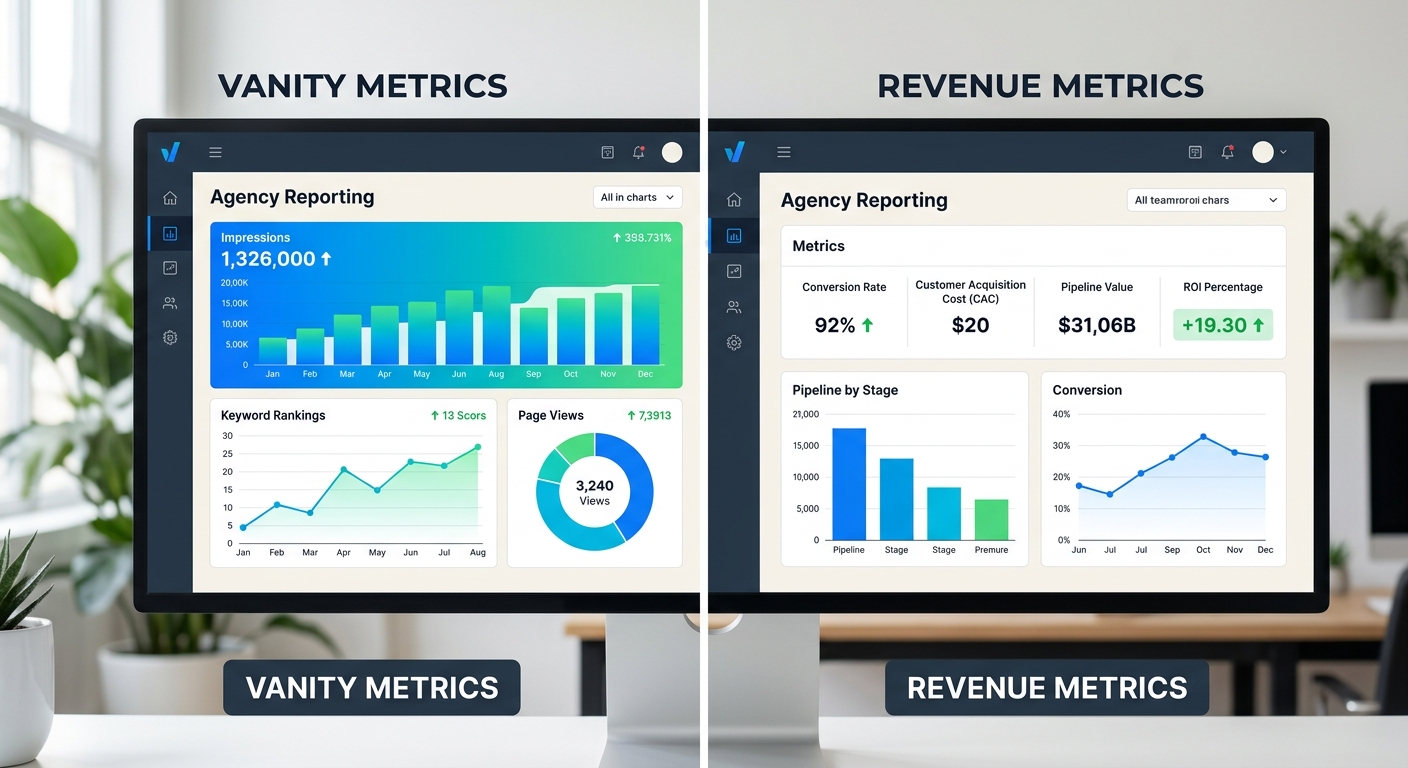
"Your impressions are up 340%!" Great. Did the phone ring? Did revenue increase? Most agencies hide behind traffic numbers and keyword rankings because those metrics are easy to move and easy to report. But clients are wising up. When a business owner pays $5,000 a month for SEO and can't point to a single new customer that came from it, that contract gets canceled.
The survivors are agencies that tie every activity to revenue. They track conversion rates by landing page. They measure which organic keywords actually drive commercial action. When you're evaluating agencies on real criteria, one of the biggest differentiators is whether they report on business outcomes or just search console dashboards.
3. Ignoring Search Intent Entirely
Search intent is the single most important factor in rankings right now. You can write a 5,000-word masterpiece, but if someone searching "best running shoes" wants a comparison list and you gave them a history lesson, Google won't rank it. Period. As Techvint's analysis explains, modern agencies follow this shift using smarter strategies, not shortcuts.
Too many agencies still build content calendars around keyword volume alone. They pick a keyword, assign it a word count, and ship it. That approach ignores the fundamental question Google is trying to answer: does this page satisfy the person who searched for this?
4. Technical SEO as an Afterthought
I've audited sites managed by agencies that hadn't touched the technical foundation in years. Broken canonical tags, orphaned pages, crawl budget wasted on faceted navigation, Core Web Vitals scores in the red. If you've ever dealt with critical mistakes during site migrations, you know how quickly technical neglect can crater an entire domain's visibility.
Technical excellence isn't a competitive advantage anymore. It's table stakes. Agencies that treat it as a one-time setup task rather than an ongoing discipline are leaving massive amounts of performance on the table.
5. The "Page 1 in 30 Days" Promise
Familiar with that pitch? It's the hallmark of an agency that either doesn't understand SEO or doesn't care about honest client relationships. Bold promises without context are a red flag that industry practitioners have called out repeatedly. If you're on page 100 for a competitive term, no amount of short-term tricks will get you to page 1 in a month. And if someone claims otherwise, they're either lying or planning to use tactics that will eventually get the site penalized.
6. Zero Specialization
Generic agencies attract generic clients who churn in 6 months. The math simply doesn't work. When you try to serve everyone from local dentists to enterprise SaaS companies with the same team and the same playbook, you deliver mediocre results to all of them. The differences between enterprise SEO and local SEO are massive, and agencies that blur those lines end up excelling at neither.
Specialized agency positioning isn't just a branding exercise. It's a survival strategy. The agencies I see thriving have picked a lane: B2B SaaS, healthcare, e-commerce, legal. They know their vertical inside out, and that depth of knowledge compounds over time into a genuine competitive moat.
7. Hiring and Retention Failures
This one gets less attention, but it's pervasive. As FatJoe's analysis of agency problems points out, industry certification isn't fully established, and agencies rely on hires being proactive about building their own skills. Expertise in one area of SEO doesn't automatically translate to a generalized agency role. The result? Agencies burn through junior staff, lose institutional knowledge with every departure, and never build the deep expertise clients are actually paying for.
What the Survivors Are Doing Differently
So if most agencies are failing, what does the 10% that's thriving actually look like? I've worked with and studied enough of them to see clear patterns.
They've Built Data-Driven SEO Services Around Revenue
Surviving agencies don't just collect data. They build their entire service model around it. Every recommendation ties to a projected revenue impact. Every report shows the commercial pipeline influenced by organic search. Every content decision is backed by intent data, not gut feeling.
This isn't about having fancier dashboards. It's about organizational discipline. The best agencies I've worked with can show me, within two clicks, which organic landing pages drove the most qualified leads this quarter and what the cost per acquisition was compared to paid channels.
They Treat AI as a Tool, Not a Replacement
The relationship between AI and human expertise in agencies is the defining question of this era. Surviving agencies have figured out the balance. They use AI for research, data analysis, first-draft generation, and pattern detection. But every piece of client-facing work goes through a human with domain expertise who adds original thinking, fact-checks claims, and ensures the content demonstrates real experience.
ALM Corp's trend analysis confirms this shift, noting that agencies should stop creating thin content targeting individual keywords and instead build thorough resources that cover topics with genuine depth. That kind of depth requires human judgment AI alone can't provide.
They've Chosen Specialization Over Scale
Every surviving agency I admire has said no to more clients than they've said yes to. They've defined their ideal client profile, built deep expertise in specific industries, and said no to everything outside that focus. This feels counterintuitive when revenue is tight, but it's the single best SEO agency survival strategy for 2026.
Specialization does three things simultaneously: it makes your pitches more convincing because you can reference relevant case studies, it makes your work more effective because you understand the industry's unique challenges, and it reduces churn because clients feel understood rather than processed.
They've Invested in E-E-A-T Infrastructure
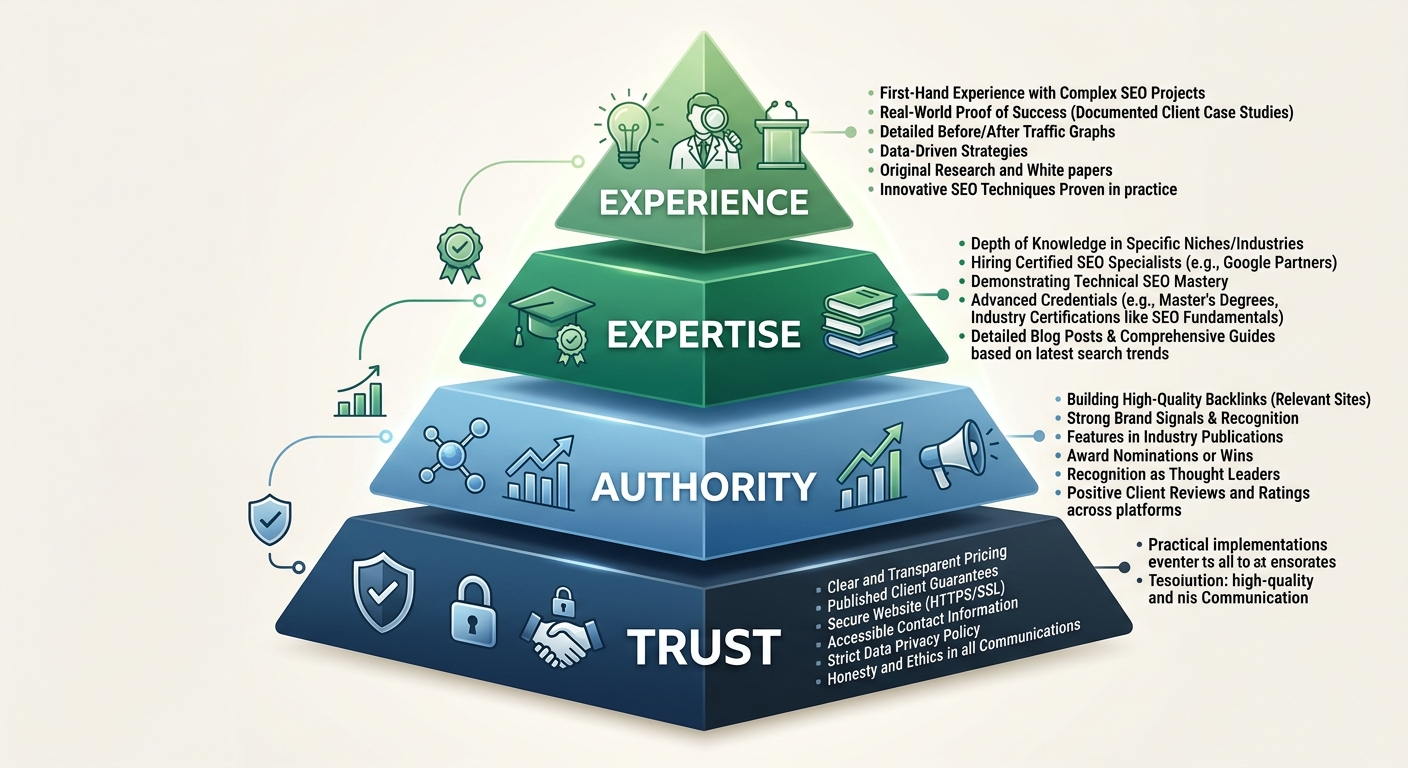
Experience, Expertise, Authoritativeness, Trustworthiness. Google's quality rater guidelines aren't a suggestion. Agencies that ignore E-E-A-T content signals, as one analysis from AFFiNCO puts it, produce pages that rank nowhere. And clients pay the price every month.
Winning agencies build E-E-A-T into their process. They connect real subject matter experts with content creation. They ensure proper author attribution with verifiable credentials. They invest in original research and proprietary data. This stuff is harder and more expensive than spinning up another AI article, but it's what actually moves the needle.
The Uncomfortable Conversation Nobody Wants to Have
Here's what I think most commentary about why SEO agencies fail misses: the agencies themselves often know they're delivering subpar work. The junior account manager knows the content is thin. The strategist knows the keyword targeting is outdated. The founder knows the client is going to churn in four months.
But they're trapped in a model that demands volume over quality, new logos over retention, and activity reporting over outcome reporting. Breaking out of that model requires genuine courage. It means raising prices, firing bad-fit clients, investing in talent, and accepting slower growth in exchange for sustainability.
The agencies surviving the current shakeout made those hard choices 12 to 18 months ago. They're now reaping the rewards while their competitors scramble.
Your Practical Takeaway
If you're running an agency, pick your specialization this quarter and turn away the next client that doesn't fit. Rebuild your reporting around revenue metrics, not vanity dashboards. Audit every piece of content your team produces and ask honestly: would I read this? Would I trust this? Does this demonstrate genuine expertise?
If you're hiring an agency, demand specificity. Ask them which industry they know best. Ask them to show you revenue impact, not keyword charts. Ask how they use AI and, more importantly, where they don't. The 10% of agencies that survive this market will be the ones that treated SEO as a disciplined, measurable growth channel rather than a grab bag of tactics wrapped in a monthly retainer. Choose accordingly.
Marcus Webb
Digital marketing consultant and agency review specialist. With 12 years in the SEO industry, Marcus has worked with agencies of all sizes and brings an insider perspective to agency evaluations and selection strategies.
Frequently Asked Questions
- Why are SEO agencies failing in 2026?
- Most SEO agencies are failing because they sell outdated strategies and the appearance of activity rather than measurable results. They rely on vanity metrics like traffic and keyword rankings instead of revenue impact, use low-quality AI-generated content without human review, and operate as generic generalist agencies in an industry consolidating around specialization.
- What is the AI content factory problem in SEO agencies?
- Many agencies scaled content volume while gutting quality by publishing 50+ AI-generated posts per week with zero human review. Google's helpful content systems now effectively identify pages created purely for search traffic, so agencies without human expertise, original insight, and editorial judgment are losing clients and rankings.
- What metrics should SEO agencies track instead of vanity metrics?
- Agencies should track revenue-based metrics like conversion rates by landing page, cost per acquisition compared to paid channels, and which organic keywords actually drive commercial action. Clients are increasingly rejecting agencies that report only traffic numbers and keyword rankings without connecting them to actual business outcomes.
- How important is search intent in modern SEO?
- Search intent is the single most important factor in rankings right now. A page won't rank regardless of quality if it doesn't satisfy what the person searching for actually wants—for example, ranking a history lesson for someone searching "best running shoes" who wants a comparison list.
- What is the best SEO agency survival strategy?
- Choosing specialization over scale is the single best survival strategy for SEO agencies in 2026. Specialization makes pitches more convincing with relevant case studies, makes work more effective through industry-specific expertise, and reduces client churn because clients feel understood rather than processed.
- How should agencies use AI tools effectively?
- Surviving agencies treat AI as a tool, not a replacement. They use it for research, data analysis, first-draft generation, and pattern detection, but every client-facing work goes through a human with domain expertise who adds original thinking, fact-checks claims, and ensures content demonstrates real experience.
- What is E-E-A-T and why does it matter for SEO?
- E-E-A-T stands for Experience, Expertise, Authoritativeness, and Trustworthiness—Google's quality rater guidelines that determine whether pages rank. Winning agencies build E-E-A-T into their process by connecting subject matter experts with content creation, ensuring proper author attribution with verifiable credentials, and investing in original research.
- What questions should you ask before hiring an SEO agency?
- Ask which industry they specialize in, request them to show revenue impact rather than keyword charts, and ask specifically how they use AI and where they don't. Avoid agencies making bold promises like "page 1 in 30 days" or those that can't explain their revenue impact within 60 seconds.
Explore more topics