
Scale Xpert Publishes Barnacle SEO Framework Targeting Third-Party Authority Platforms for Brand Visibility
Barnacle SEO—the practice of securing brand visibility through established authority sites rather than competing directly in organic search—received a comprehensive implementation framework September 17 when Scale Xpert published a platform-selection methodology covering G2, Reddit, TripAdvisor, Goo
 Marcus Webb··4 min read
Scale Xpert Publishes Barnacle SEO Framework Targeting Third-Party Authority Platforms for Brand Visibility
Barnacle SEO—the practice of securing brand visibility through established authority sites rather than competing directly in organic search—received a comprehensive implementation framework September 17 when Scale Xpert published a platform-selection methodology covering G2, Reddit, TripAdvisor, Google Business Profile, and LinkedIn, according to the guide. The strategy, which Will Scott first described in 2008 as "attaching" a brand to higher-ranking domains, has gained relevance as Google surfaces more forum content and AI search engines pull from diverse third-party sources.
Platform Selection Methodology
Scale Xpert outlines a four-step platform identification process that begins with commercial keyword analysis rather than domain authority scores. The framework instructs practitioners to search their target commercial keywords, record domains that appear repeatedly across multiple SERPs, verify whether the brand can participate on each platform, and estimate business value before committing resources, according to the published guide.
The methodology explicitly rejects "joining every platform" and warns against chasing domain authority alone. Scale Xpert notes that many high-authority sites do not permit business participation in ways that support visibility goals. The guide emphasizes that platforms must already rank for the specific keywords a business targets, not simply carry general topical authority.
For hospitality SEO agencies and travel operators, TripAdvisor receives dedicated treatment as a platform where ranking depends on review recency, volume, and response rate rather than review count alone. The framework states that TripAdvisor combines multiple signals and does not apply a universal ranking formula across all business categories.
Review and Participation Protocols
Scale Xpert establishes ethical boundaries around review generation, stating that practitioners should request reviews from actual customers, avoid purchasing reviews, and not filter requests to only satisfied clients. The framework treats constructive response to negative reviews as part of platform optimization rather than reputation damage control.
For Reddit, the guide refutes what it describes as a common misconception about a 500-karma participation threshold, stating no official rule exists. It instructs practitioners to follow individual subreddit rules, disclose brand affiliations, and contribute genuine expertise rather than treating the platform as a link directory. The framework warns that Reddit search visibility does not guarantee AI citation visibility, noting conflicting data across different AI search studies.
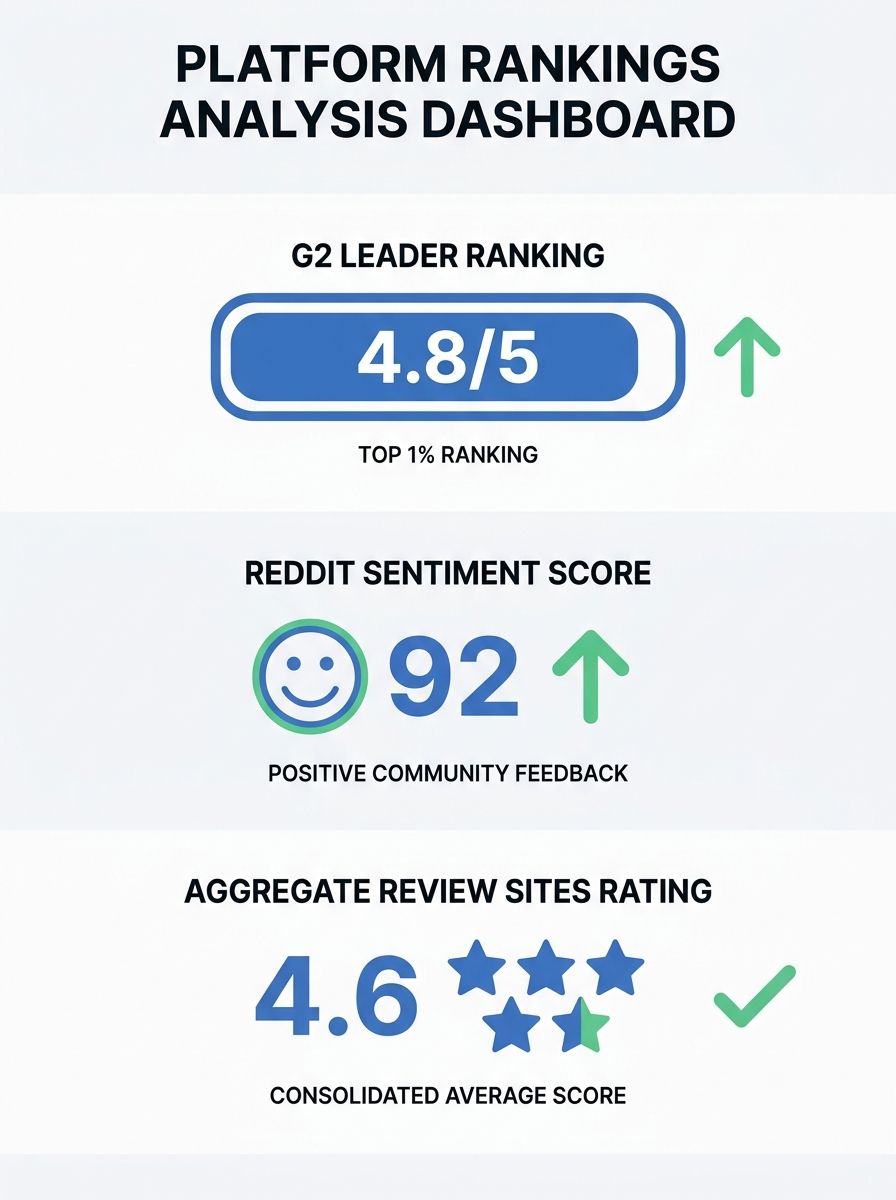
G2 receives specific attention for SaaS businesses. Scale Xpert states that G2 ranks products using review volume, recency, satisfaction scores, and engagement metrics—not a universal "50 reviews" benchmark. The framework recommends profile optimization, category selection, and competitor comparison completeness before pursuing volume-based review campaigns.
Measurement Framework
The published methodology identifies five distinct measurement categories: referral traffic from each platform, conversion rates by source, platform-specific visibility metrics (such as G2 category rank or TripAdvisor position), SERP ownership percentage (how many top-10 results the brand occupies directly or through third parties), and AI mention tracking as a separate metric.
Scale Xpert warns against assuming that traditional search visibility automatically translates to AI search citation visibility. The guide references conflicting research findings across different AI models and states that practitioners should not "build an AI strategy around one citation study." This aligns with broader industry observations about divergent AI search citation patterns across platforms.
Distinction From Site Reputation Abuse
The framework draws explicit boundaries between legitimate barnacle SEO and what Google classifies as site reputation abuse or "parasite SEO." Scale Xpert defines legitimate barnacle participation as content that provides independent value to the platform's audience, follows editorial standards, and does not exist solely to manipulate search rankings.
The guide cites Google's site reputation abuse policy and notes that editorial coverage, verified business profiles, and organic forum participation all provide value beyond SEO benefit. It positions digital PR as "high-authority barnacle SEO" when journalists independently choose to cover a company and the resulting articles rank for commercial keywords.
For home services SEO agencies working with contractors and local operators, the framework treats Google Business Profile as barnacle SEO despite Google's ownership, arguing the platform operates on the same principle: using an already-ranking property rather than building standalone organic authority.
Common Implementation Errors
Scale Xpert identifies eight frequent mistakes: joining platforms without SERP validation, prioritizing domain authority over actual ranking presence, treating Reddit as link infrastructure, purchasing reviews, assuming review volume alone determines rank, expecting platform presence to guarantee AI citations, neglecting owned-site SEO, and conflating barnacle tactics with parasite SEO.
The framework states that barnacle SEO does not replace traditional SEO but extends distribution reach. It positions the strategy as short-term visibility support while owned-site authority builds, with third-party presence eventually reinforcing entity understanding and brand authority signals that benefit the primary domain.
Context and Outlook
The 2026 search landscape has elevated third-party platform visibility through two parallel developments: Google's increased surfacing of forum content in traditional search results, and AI search engines' tendency to synthesize answers from diverse sources including review platforms, discussion boards, and structured business listings. Scale Xpert's framework addresses both channels but maintains that neither eliminates the need for owned-domain optimization.
The guide's emphasis on platform-specific ranking mechanisms rather than universal tactics reflects the fragmentation of search discovery across multiple surfaces. As AI search platforms layer atop Google rather than replace it entirely, agencies require multi-channel strategies that secure visibility wherever target customers conduct research—whether through traditional SERPs, AI chat interfaces, or platform-native search within G2, TripAdvisor, or LinkedIn.
For agencies building local SEO visibility, the framework's measurement approach—tracking referral traffic, conversions, and SERP ownership separately from AI mentions—provides a practical audit structure for demonstrating third-party strategy ROI to clients who may conflate multiple discovery channels into a single "search" category.
Marcus Webb
Digital marketing consultant and agency review specialist. With 12 years in the SEO industry, Marcus has worked with agencies of all sizes and brings an insider perspective to agency evaluations and selection strategies.
Related Articles

UK SEO Agency ClickSlice Publishes Topical Authority Framework as Core Long-Term Growth Strategy
London-based SEO agency ClickSlice published a strategic framework on July 19 positioning topical authority development as the most scalable approach for sustained business growth, according to founder Joshua George.
HubSpot Publishes Six-Field Audit Framework for Measuring Brand Visibility Across AI Search Platforms
HubSpot published a six-field audit methodology September 4 that quantifies brand visibility across ChatGPT, Claude, Gemini, and Perplexity by distinguishing between passive mentions and active recommendations, according to a sponsored framework published on Search Engine Journal.
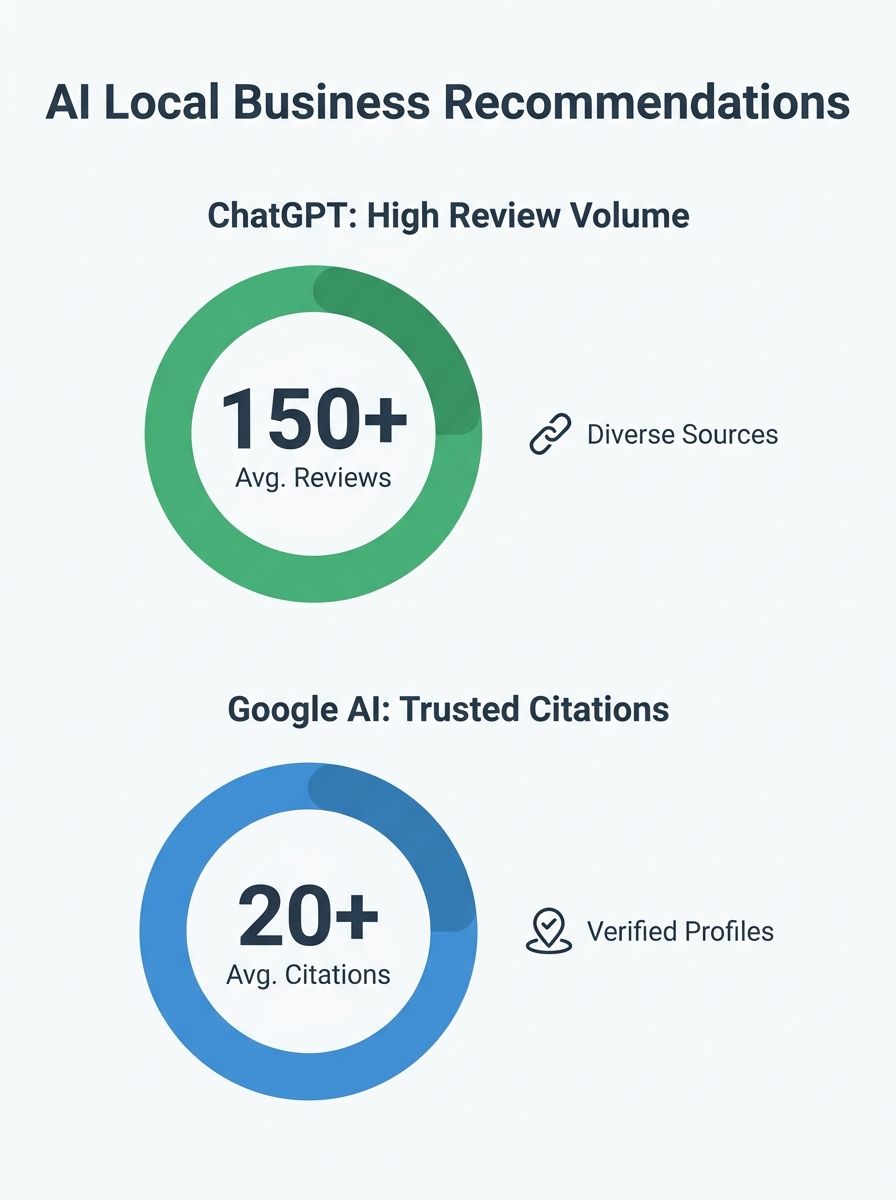
Search Engine Journal Publishes Five-Factor AI Visibility Framework for Local Business Discovery Across ChatGPT and Google AI Overviews
Search Engine Journal published a five-factor optimization framework September 9 targeting local business visibility in ChatGPT and Google AI Overviews, addressing a discovery channel that now reaches 2.
Explore more topics