
UK SEO Agency ClickSlice Publishes Topical Authority Framework as Core Long-Term Growth Strategy
London-based SEO agency ClickSlice published a strategic framework on July 19 positioning topical authority development as the most scalable approach for sustained business growth, according to founder Joshua George.
 Marcus Webb··3 min read
UK SEO Agency ClickSlice Publishes Topical Authority Framework as Core Long-Term Growth Strategy
London-based SEO agency ClickSlice published a strategic framework on July 19 positioning topical authority development as the most scalable approach for sustained business growth, according to founder Joshua George. The framework prioritizes content clustering, evergreen resource creation, and internal linking architecture over isolated keyword targeting campaigns.
The framework addresses a persistent challenge in SEO execution: businesses typically approach optimization as disconnected activities rather than integrated systems, according to ClickSlice. George's published guidance contrasts scalable SEO with paid acquisition channels that require continuous spending to maintain results, positioning organic search as an asset-building discipline.
Content Cluster Architecture Replaces Keyword-by-Keyword Targeting
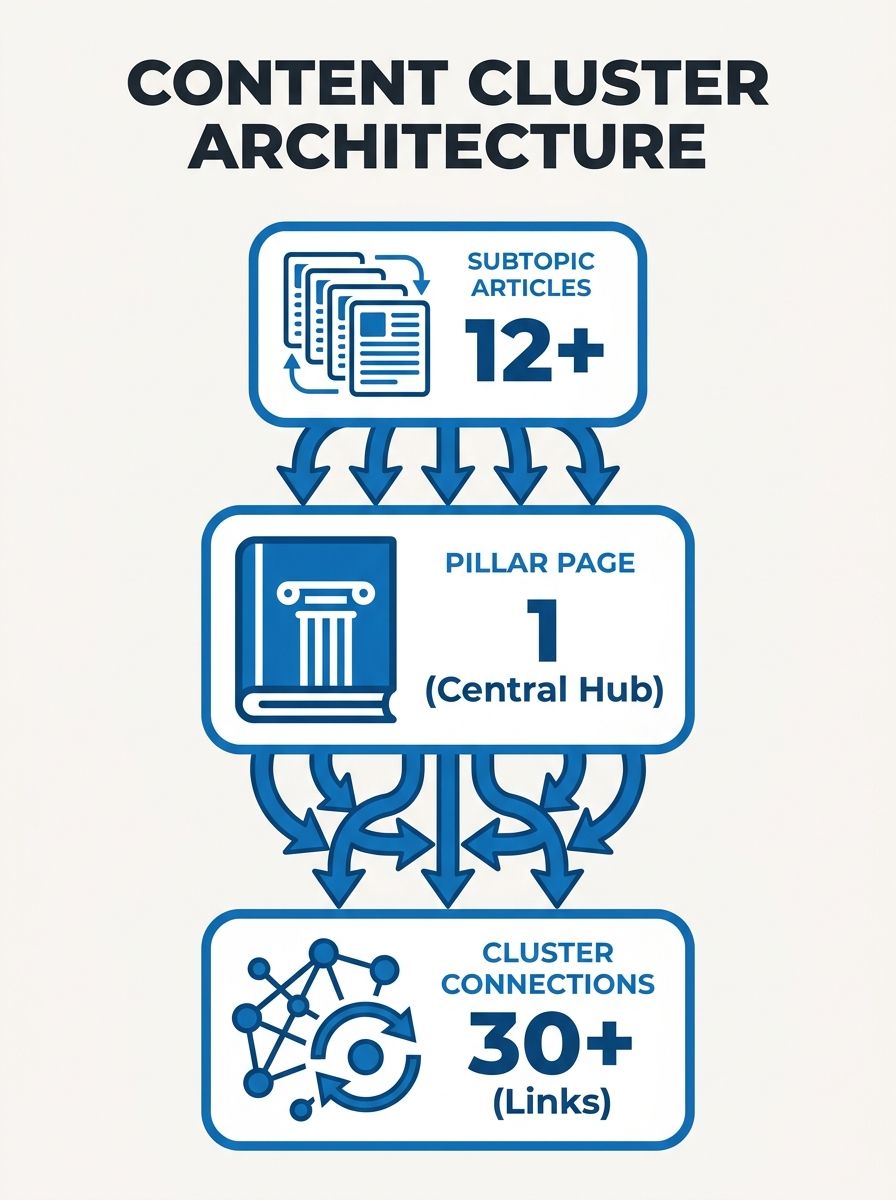
The ClickSlice framework centers on content cluster construction—a pillar page covering a core topic supported by multiple related articles addressing specific subtopics. George's published model lists technical SEO, local SEO, eCommerce SEO, link building, content marketing, SEO reporting, and keyword research as example supporting content for an SEO strategy pillar.
This structure differs from traditional keyword-focused content calendars by creating topical relevance across interconnected pages rather than building authority page by page. The framework states that comprehensive topic coverage increases the likelihood of Google viewing a website as a trusted source within that subject area.
Internal linking within clusters distributes authority throughout the site and strengthens topical signals, according to the published methodology. The framework positions cluster architecture as a mechanism for faster rankings on new content as overall site relevance compounds.
Evergreen Asset Creation Over Trend-Focused Publishing
ClickSlice's framework distinguishes between temporary traffic generation and long-term asset development. George categorizes how-to guides, industry best practices, educational resources, strategic frameworks, buying guides, and process explanations as evergreen content that continues attracting traffic years after publication.
The framework identifies comprehensive guides, industry resource hubs, interactive tools, original research, data studies, and comparison pages as high-value SEO assets. These resources often attract backlinks naturally over extended periods, strengthening domain authority across the entire site.
This asset-focused approach aligns with recent industry analysis showing that interactive tool pages including calculators and converters generate sustained organic traffic with minimal competition because AI language models cannot replicate their functionality. The ClickSlice framework positions these permanent resources as compound-interest investments rather than depleting marketing expenses.
Topical Authority Model Addresses Modern Ranking Algorithms
The published framework states that topical authority creates a compounding effect where each new piece of content strengthens overall website relevance. George's model describes this as making it progressively easier for future content to rank as collective topic expertise builds.
The framework lists faster rankings for new content, increased organic visibility across related keywords, stronger internal linking opportunities, improved user engagement, and greater trust from both users and search engines as outcomes from comprehensive topical coverage.
This approach reflects growing recognition that enterprise B2B SEO leaders are now differentiated by their approach to AI-answer optimization and governance systems that extend beyond traditional blue-link rankings. ClickSlice's framework positions topical authority as relevant to both conventional search results and AI-generated answer environments.
Long-Term Growth Model Versus Campaign-Based Execution
George's framework explicitly contrasts scalable SEO with campaign-based thinking. The published guidance states that while individual tactics including blog posts, backlinks, and page optimization can generate results, they rarely create sustainable growth independently.
The framework positions scalability as allowing businesses to increase traffic without proportional cost increases, build industry authority, generate consistent leads over time, reduce paid acquisition reliance, and create sustainable competitive advantages. These outcomes depend on system-building rather than tactical execution.
ClickSlice's published model describes SEO as creating assets that continue generating visibility and enquiries without requiring the same ongoing investment level as paid channels. This positions organic search performance as increasingly efficient over time as topical authority compounds.
Why This Matters Now
The ClickSlice framework arrives as businesses face pressure to demonstrate marketing ROI amid tightening budgets and fragmented attention across search platforms. The shift from campaign-based SEO to asset-building systems reflects broader recognition that sustainable growth requires integrated architectures rather than disconnected tactics.
For business owners and CMOs evaluating SEO agencies, the topical authority model provides a clear evaluation criterion: whether proposed strategies build compounding visibility systems or merely execute isolated campaigns. The framework's emphasis on evergreen assets over trend-chasing content offers a measurable lens for assessing long-term strategic thinking versus short-term metric optimization.
The framework also signals continued convergence between traditional SEO and AI search optimization, with topical authority serving both conventional rankings and AI-generated answers. Organizations building comprehensive subject-area expertise position themselves for visibility across expanding search surfaces while creating assets that appreciate rather than depreciate over time.
Marcus Webb
Digital marketing consultant and agency review specialist. With 12 years in the SEO industry, Marcus has worked with agencies of all sizes and brings an insider perspective to agency evaluations and selection strategies.
Related Articles

SEO Agency Excell Industries Publishes 2026 Trends Framework Emphasizing AI-Powered Search and Core Web Vitals
Digital marketing agency Excell Industries published an SEO trends framework on August 21 identifying AI-powered search optimization, user intent alignment, and Core Web Vitals performance as dominant ranking factors heading into the second half of 2026, according to a guide posted to the firm's web

NEWMEDIA.COM Publishes Enterprise SEO Framework Targeting AI Answer Visibility and Site-Wide Governance
NEWMEDIA.COM released an enterprise SEO framework on July 2 positioning large-scale organic search as a governance discipline that must now optimize for AI-powered answer engines alongside traditional rankings, according to an analysis drawing on the agency's work across $3.5 billion in client reven

Scale Xpert Publishes Barnacle SEO Framework Targeting Third-Party Authority Platforms for Brand Visibility
Barnacle SEO—the practice of securing brand visibility through established authority sites rather than competing directly in organic search—received a comprehensive implementation framework September 17 when Scale Xpert published a platform-selection methodology covering G2, Reddit, TripAdvisor, Goo
Explore more topics