
Link Building Service Publishes 2026 Framework Declaring AI Guest Posts Devalued
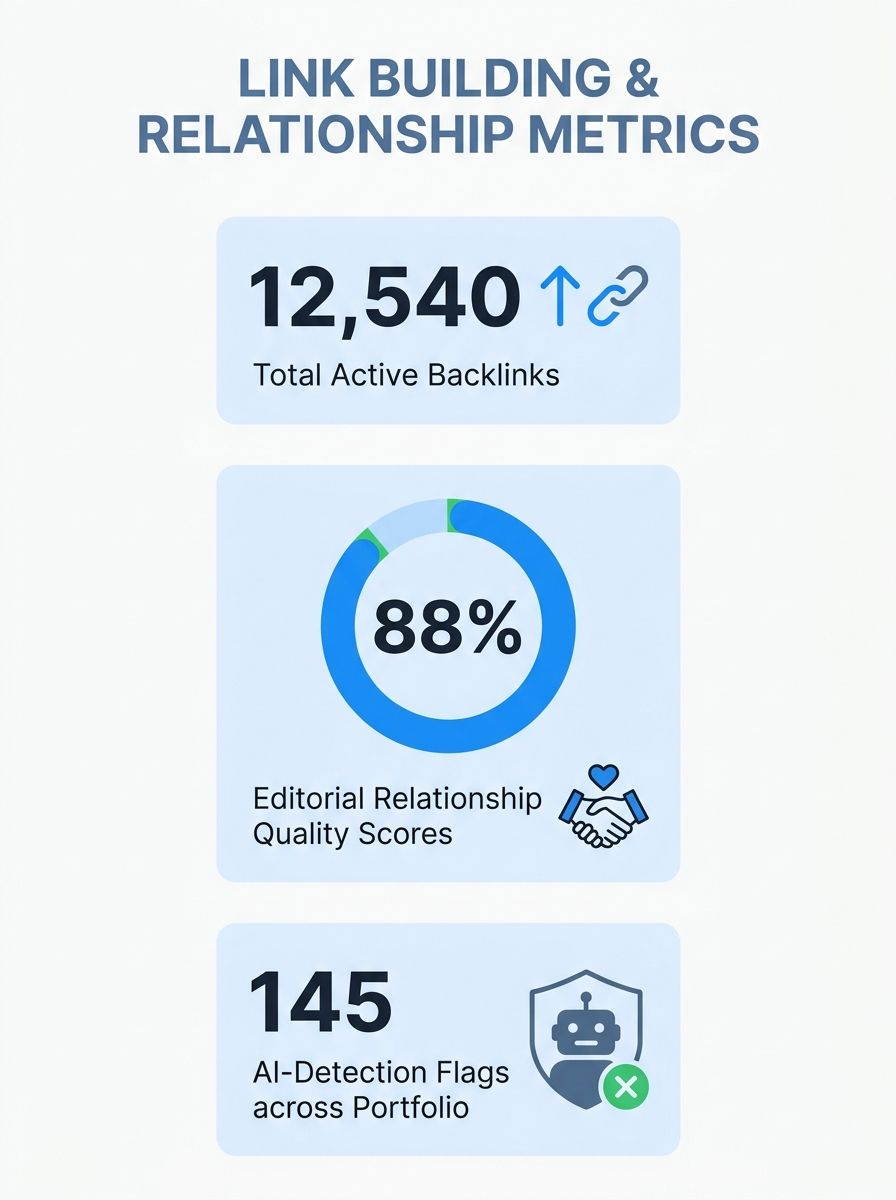
Editorial relationship quality has replaced link volume as the dominant factor in 2026 link building effectiveness, according to a comprehensive framework published July 21 by premium-backlinks.
 Marcus Webb··3 min read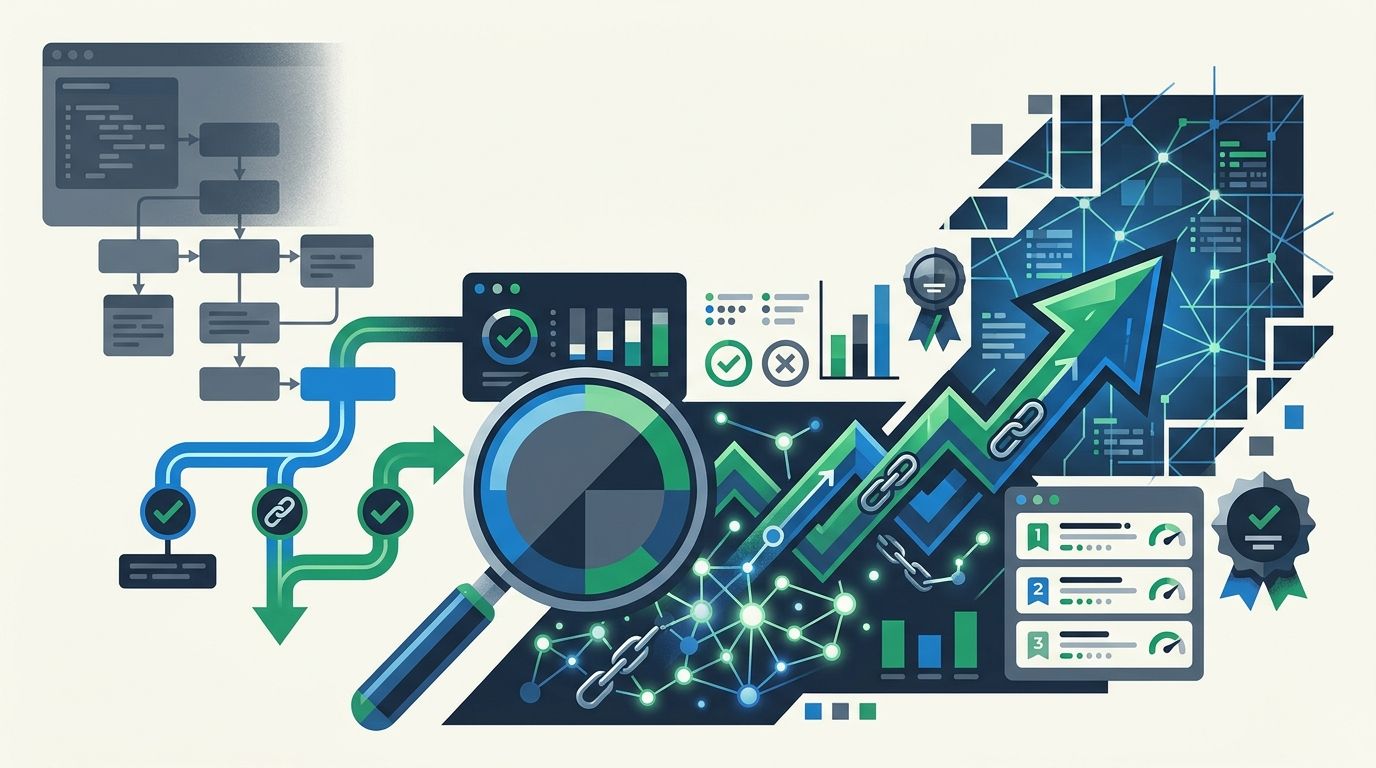
Link Building Service Publishes 2026 Framework Declaring AI Guest Posts Devalued
Editorial relationship quality has replaced link volume as the dominant factor in 2026 link building effectiveness, according to a comprehensive framework published July 21 by premium-backlinks.services that quantifies post-algorithm ranking requirements and declares AI-generated guest post networks permanently devalued.
The guide attributes the industry shift to Google's March 2024 core update, which the framework states "permanently devalued mass-produced AI content and reset the bar for what counts as a quality backlink." The publication identifies five algorithm-level changes affecting link equity calculation: AI-generated guest posts are now detected and filtered, Topical Trust Flow weight increased significantly, sponsored disclosure passes zero equity, and brand mentions count as implied links.
Devalued Tactics and Algorithm Shifts
The framework specifies that AI-generated guest posts are detected and assigned zero ranking value, marking a departure from previous tolerance of automated content. Premium-backlinks.services reports that profiles using AI-generated link content saw systematic devaluation across Google's indexing systems beginning in mid-2024.
Sponsored content disclosure now eliminates equity transfer entirely, according to the guidance. The framework states "sponsored disclosure now passes zero equity," requiring practitioners to distinguish between paid placement and editorial inclusion when evaluating link portfolios. This shift affects transparency requirements and portfolio construction across both agency and in-house SEO teams evaluating AI search optimization strategies.
The guide identifies anchor text over-optimization as "the leading cause of ranking drops in 2026," recommending 60% branded anchors and 10% exact-match distribution across link profiles. This threshold represents a departure from earlier practices that permitted higher exact-match ratios.
Five Strategies for 2026
Premium-backlinks.services identifies digital PR with original data as the highest-performing category, listing surveys, reports, and calculators as primary formats. The framework states that niche edits on aged authority pages deliver "fast indexing, fast ranking" compared to new-page placements.
Linkable assets including free tools, comparison guides, and statistics pages constitute the third category. The guide positions these resources as AI-resistant traffic sources that generate sustained inbound links without ongoing promotion costs.
Podcast and interview links provide "high relevance, brand signals" according to the framework, while HARO replacement networks including Featured, Qwoted, Connectively, and SourceBottle offer structured media-matching infrastructure. The guide reports that real editorial relationships outperform paid networks at a 5:1 effectiveness ratio.
Link Volume and Budget Requirements
The framework provides specific link quantity benchmarks by keyword competitiveness tier. Long-tail keywords require 5–15 backlinks for ranking achievement, mid-tail keywords need 30–80 links, and head terms demand 100-plus links with an average 12-month ramp period.
Premium-backlinks.services outlines three budget tiers with corresponding tactical mixes. Bootstrap budgets of $500–$2,000 monthly focus on niche edits and skyscraper outreach. Mid-range programs at $3,000–$10,000 monthly add guest posts on DR 60-plus blogs and digital PR campaigns. Enterprise budgets exceeding $20,000 monthly combine HARO networks, original research, white-label authority links, and ongoing PR initiatives.
The guide states mid-tail keywords show movement within 60–90 days, while competitive head terms require 6–12 months of consistent effort. These timeframes align with industry observation of crawl budget allocation patterns following algorithm updates.
Context and Outlook
The framework's publication reflects broader industry adaptation to quality-focused algorithm changes that began with Google's March 2024 core update and accelerated through 2025's site-wide quality assessments. The guidance positions editorial relationship development as infrastructure investment rather than transactional link acquisition, requiring budget allocation and timeline planning that extends beyond quarterly reporting cycles.
For marketing managers evaluating SEO agencies, the framework's emphasis on branded anchor ratios and editorial relationship quality provides concrete audit criteria. The 60% branded / 10% exact-match distribution offers a quantifiable threshold for assessing whether existing link profiles align with current algorithm requirements or carry over-optimization risk from earlier practices.
The budget tier specifications—particularly the $3,000 monthly threshold for DR 60-plus placement access—establish baseline expectations for link building programs capable of moving competitive mid-tail keywords within quarterly timeframes. Organizations operating below these investment levels face extended timelines or must concentrate exclusively on long-tail terms where 5–15 quality backlinks remain sufficient for ranking achievement.
Marcus Webb
Digital marketing consultant and agency review specialist. With 12 years in the SEO industry, Marcus has worked with agencies of all sizes and brings an insider perspective to agency evaluations and selection strategies.
Related Articles
Link Building Package Industry Challenged as Analysis Labels Most Services "Waste of Money" for Small Businesses
Digital marketing firm Ingenious Netsoft published an industry analysis on June 16, 2026, arguing that most pre-packaged link building services sold to small businesses deliver minimal search ranking value because they prioritize link quantity over the relevance and trust signals Google's algorithms
Google's March 2024 Core Update Penalized Topic-Cluster Content Strategies Brands Spent Three Years Building
Google's March 2024 Core Update eliminated approximately 40 percent of low-quality, unoriginal content from search results, according to Search Engine Journal, targeting the exact topic-cluster content strategies that mid-size and enterprise brands spent 2021 through 2024 building at scale. Many org

SEO Agency Excell Industries Publishes 2026 Trends Framework Emphasizing AI-Powered Search and Core Web Vitals
Digital marketing agency Excell Industries published an SEO trends framework on August 21 identifying AI-powered search optimization, user intent alignment, and Core Web Vitals performance as dominant ranking factors heading into the second half of 2026, according to a guide posted to the firm's web
Explore more topics