
Multilingual Websites Require Platform-Specific Optimization Beyond Google as Hebeos Publishes 2026 International SEO Framework
Correct hreflang implementation with reciprocal tags, deliberate URL architecture choices, and native-language keyword research per market form the technical foundation for international search visibility, according to a multilingual SEO framework published September 17 by Hebeos, a web localization
 Marcus Webb··4 min read
Multilingual Websites Require Platform-Specific Optimization Beyond Google as Hebeos Publishes 2026 International SEO Framework
Correct hreflang implementation with reciprocal tags, deliberate URL architecture choices, and native-language keyword research per market form the technical foundation for international search visibility, according to a multilingual SEO framework published September 17 by Hebeos, a web localization platform. The guide positions platform-specific optimization for Baidu in China, Yandex in Russia, and Naver in South Korea as distinct from Google-centric strategies that dominate domestic SEO planning.
The framework addresses implementation gaps that prevent translated websites from ranking in target markets despite correct language conversion. Studies cited in the guide show the majority of multilingual websites using hreflang contain at least one implementation error, most commonly missing reciprocal return tags, incorrect language-region codes, or omitted x-default declarations.
Technical Signal Machinery Precedes Content Work
The Hebeos framework requires three technical layers before content localization begins: crawlable regional URLs with country-specific subdirectories or subdomains, canonical tags preventing duplicate content penalties across locales, and server or content delivery network configurations addressing page load speed for international audiences.
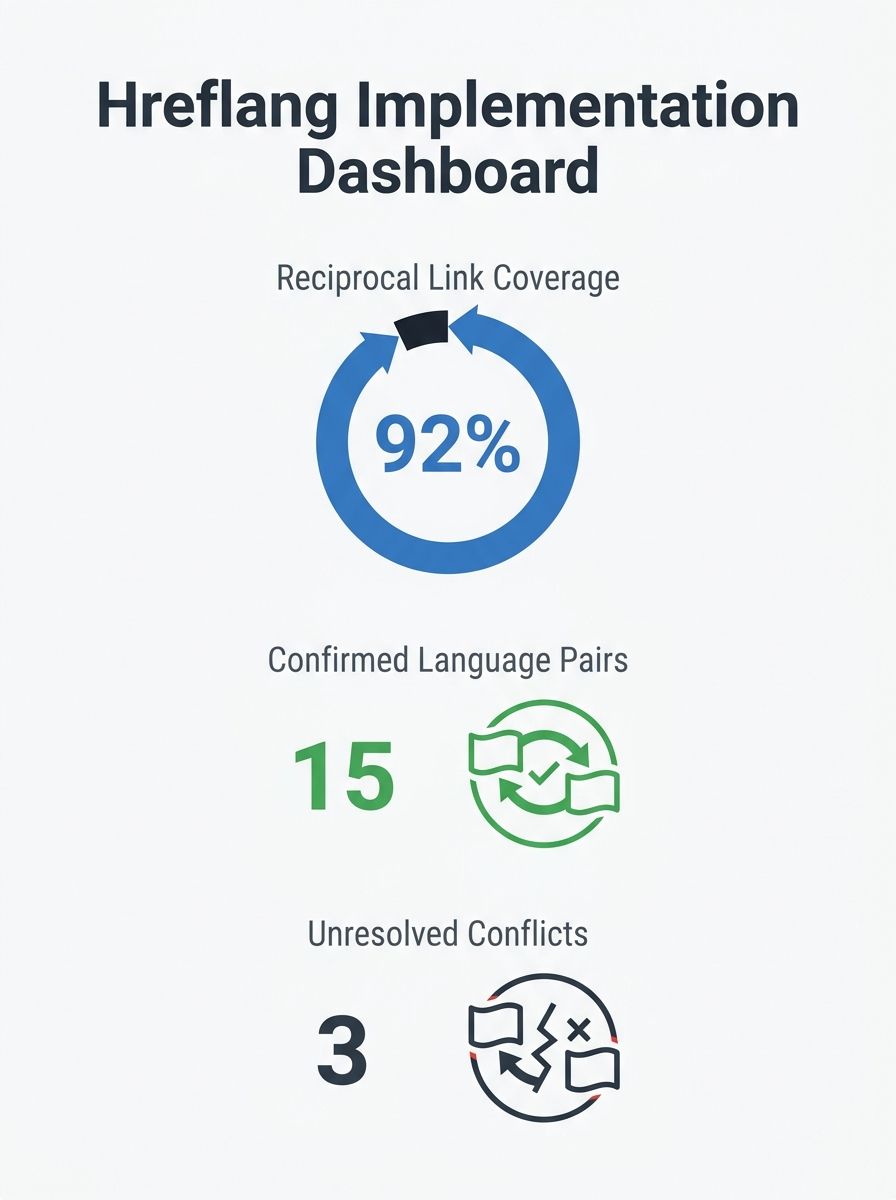
Hreflang annotations tell search engines which language-region version to serve specific users, but common syntax failures undermine the signal. The guide specifies that each hreflang tag must include a reciprocal return tag from the target page, use correct ISO language-region codes such as "en-GB" rather than "en-UK", and point to canonical URLs rather than redirected or alternate versions. The x-default tag designates which version serves users whose language preferences match no specified locale.
Sitemaps must include alternate-language URLs with correct hreflang links, the framework states. When content remains similar across regions sharing the same language—English-US versus English-Canada, for example—incorrect canonical tags can suppress the intended version in local search results.
Regional Search Platforms Require Distinct Optimization Approaches
Google dominates search volume globally but cedes majority share to regional platforms in specific markets, according to the framework. Baidu serves as the primary search gateway in China, Yandex leads in Russia, and Naver captures the majority of local searches in South Korea. An international SEO strategy optimizing exclusively for Google misses these markets, the guide states.
Local competition, market maturity, and regional authority signals affect rankings differently by country. Regional backlinks, local business citations, directory listings in country-specific platforms, and trust signals from country-code top-level domains carry substantial weight in search algorithms. The framework positions local authority building as separate from broad backlink profiles that succeed in domestic SEO campaigns.
Search intent and user behavior differ by market even for identical product categories, the framework notes. Translated keywords fail to capture how native speakers phrase queries or what information they expect from search results. The guide recommends per-locale keyword research using native-language tools rather than translating high-performing domestic keywords.
Performance Measurement Separates Per-Market Metrics
The framework recommends tracking organic traffic, keyword rankings, bounce rates, and conversions independently per market rather than aggregated global totals that mask underperforming regions. Mature international SEO programs measure whether localized pages rank for locally researched keywords in the target country's dominant search platform, not whether the English-language version ranks for translated terms in Google.
Website loading speed measured from servers located in the target country reveals performance issues invisible from domestic testing, according to the guide. Content delivery networks and regional server configurations address latency that increases bounce rates and reduces rankings in international markets.
The framework cites web localization platforms such as Crowdin as infrastructure supporting multilingual SEO operations at scale, handling translation workflow, version control across language variants, and technical internationalization that separates content from code. The guide positions localization infrastructure as prerequisite to sustainable international SEO rather than optional tooling.
Reading Between the Lines
The Hebeos framework arrives as AI search platforms layer atop rather than replace traditional search engines, adding complexity to international visibility strategies. Regional search platforms like Baidu and Yandex operate distinct crawling, indexing, and ranking systems that diverge from Google's documented signals, making platform-specific optimization a permanent requirement rather than a temporary workaround. The framework's emphasis on technical signal machinery—hreflang, canonicals, regional URLs—reflects that search engines cannot infer international targeting from content alone.
The guide's per-market measurement recommendation addresses a structural weakness in most international expansion programs: aggregate metrics that report success while individual regions fail to rank or convert. CMOs evaluating SEO agencies for international campaigns should verify that proposed deliverables include hreflang audit and implementation, per-market keyword research in native languages, and separate rank tracking for each target country's dominant search platform—not translated reporting of domestic campaign results.
Most critically, the framework positions web localization infrastructure as foundational rather than adjacent to international SEO. Agencies that treat translation as a content production task separate from technical SEO implementation will continue to ship localized pages that search engines cannot properly attribute to target markets, wasting client budgets on invisible content regardless of translation quality.
Marcus Webb
Digital marketing consultant and agency review specialist. With 12 years in the SEO industry, Marcus has worked with agencies of all sizes and brings an insider perspective to agency evaluations and selection strategies.
Related Articles

Multi-Local Market SEO Framework Shows 50% Traffic Gains in Retail Case Study, ACAI Analysis Reports
ACAI published a multi-local market SEO framework June 13 documenting how localized content strategies delivered a 50% increase in local traffic and 30% conversion rate improvement for a global retail brand, according to analysis posted on the platform. A separate tech startup case study showed 40%

AI Models Collapse Regional SEO Authority Signals Into Single Global Representation
Large language models trained on multi-market content fail to preserve local authority signals that international SEO teams build site-by-site, instead collapsing 40 regional websites into a single composite brand impression that erases market-specific expertise demonstrations, according to an analy

Search Engine Journal Updates Multi-Location SEO Framework for AI-Powered Search Era
Search Engine Journal published a revised multi-location SEO framework on June 9 that repositions Google's local ranking factors as entity-matching mechanisms rather than directory lookups, according to the guide authored by the publication's technical SEO team. The framework addresses how businesse
Explore more topics