
Search Engine Journal Publishes Five-Factor AI Visibility Framework for Local Business Discovery Across ChatGPT and Google AI Overviews
Search Engine Journal published a five-factor optimization framework September 9 targeting local business visibility in ChatGPT and Google AI Overviews, addressing a discovery channel that now reaches 2.
 Marcus Webb··3 min read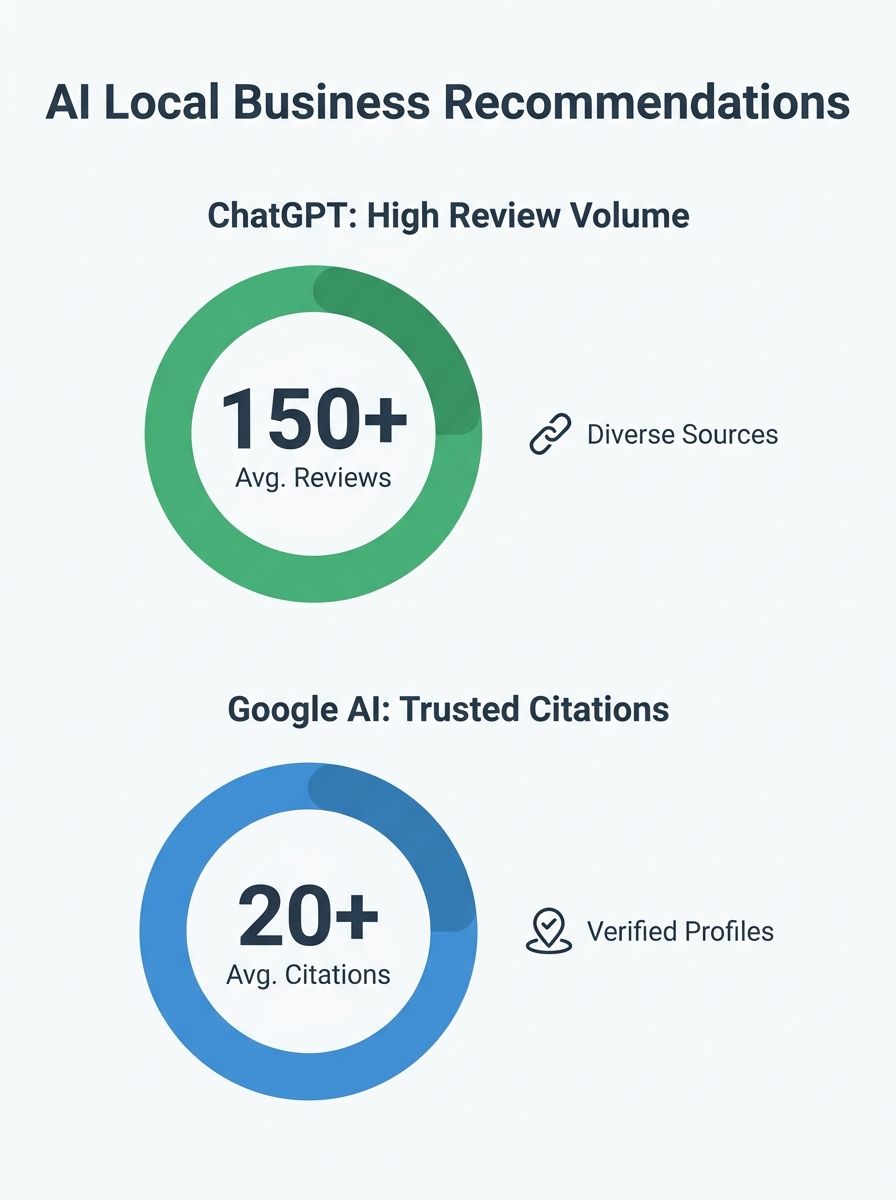
Search Engine Journal Publishes Five-Factor AI Visibility Framework for Local Business Discovery Across ChatGPT and Google AI Overviews
Search Engine Journal published a five-factor optimization framework September 9 targeting local business visibility in ChatGPT and Google AI Overviews, addressing a discovery channel that now reaches 2.5 billion monthly users through AI Overviews alone, according to sponsored research from review management platform Reviewly.ai.
The framework responds to structural changes in local search behavior. ChatGPT crossed 1 billion weekly active users in 2026, up from approximately 400 million eighteen months earlier, while Google's AI Overviews now appear on roughly 48 percent of tracked searches across all query types. However, the article notes AI Overviews trigger on only single-digit percentages of searches with clear local intent, creating what the framework describes as an "early mover window" for businesses that build entity signals before the format matures.
The Discovery Collapse
Traditional search engine optimization positioned businesses to appear in ranked lists of ten results. AI-driven discovery collapses that evaluation process into a single moment, the framework states. AI platforms synthesize recommendations from multiple sources simultaneously and present two to three pre-vetted options rather than ranked pages requiring user evaluation.
The article distinguishes between two optimization objectives: "getting found" requires ensuring AI systems recognize a business exists, while "getting chosen" demands meeting threshold signals that make the AI confident enough to include the business name in its synthesized answer. Most local businesses optimize only for the first objective, the framework notes.
Five Cross-Platform Signals
The published framework identifies five factors AI platforms weight when selecting which local businesses to recommend, based on analysis of how models source and verify local entities:
Reviews carry the heaviest signal weight for local intent queries. The framework emphasizes volume, recency, sentiment, and specific language customers use in review text. AI systems parse review content to match query intent rather than relying solely on star ratings.
Google Business Profile completeness provides structured entity data. The framework specifies that categories, hours, service areas, attributes, and question-and-answer sections supply matching signals. Incomplete or inconsistent profiles reduce recommendation confidence, according to the article.
NAP consistency (name, address, phone number) across citation sources functions as an entity verification layer. When directory listings disagree on contact details, AI confidence drops and the system defaults to competitors it can verify from multiple sources, the framework states.
Website entity corroboration allows AI systems to cross-check claims appearing in reviews, Google Business Profiles, and citation sources against the business's own website. The article notes that vague homepages without specific service pages weaken entity validation.
Third-party authority mentions from Reddit threads, local news coverage, industry directories, and social profiles contribute to entity validation through independent source confirmation.
The framework's central thesis holds that AI platforms recommend businesses they can verify from multiple independent sources. "No single tactic wins," the article states. The five factors function as a consensus mechanism rather than a ranked checklist.
Implementation Timeline and Measurement
The 90-day optimization timeline the framework proposes begins with baseline measurement. The article recommends querying ChatGPT and Google for category-specific local recommendations, searching exact business names across AI platforms to identify information gaps, and documenting which competitors appear in AI-generated answers.
Monthly re-audits track whether optimization changes move positioning within AI recommendations. The framework links this measurement approach to broader audit methodologies for brand visibility across AI search platforms published by enterprise marketing platforms.
The article emphasizes that local AI answer formats remain in early adoption stages. While Google automatically expands AI Overviews in traditional search results, local-intent queries still heavily favor map pack and organic results over AI-synthesized recommendations. The framework positions this gap as a timing advantage for businesses that establish entity signals before competitive saturation.
The Takeaway
The five-factor framework published by Search Engine Journal through Reviewly.ai addresses a measurable shift in local discovery mechanics: AI platforms now deliver two-to-three-business shortlists rather than ten-result pages requiring user evaluation. For agency clients and CMOs evaluating SEO strategies, this structural change makes entity validation signals—particularly review volume, NAP consistency, and cross-platform verification—prerequisites for local visibility rather than incremental optimizations.
The framework's practical value lies in its acknowledgment that local AI answers currently trigger on only single-digit percentages of local-intent searches. That low trigger rate creates a window for establishing authority signals before format maturity drives competitive saturation. Agencies positioning clients for answer engine optimization should prioritize the five verification signals the article identifies, particularly for service-area businesses competing in markets where AI recommendation triggers are climbing.
The 90-day timeline and monthly audit cadence the framework proposes align with standard agency reporting cycles, making incremental progress trackable through existing client dashboards. Businesses that defer this work risk losing visibility as AI platforms increase local-intent trigger rates and compress discovery into synthesized recommendation sets where second-page positioning no longer exists.
Marcus Webb
Digital marketing consultant and agency review specialist. With 12 years in the SEO industry, Marcus has worked with agencies of all sizes and brings an insider perspective to agency evaluations and selection strategies.
Related Articles
HubSpot Publishes Six-Field Audit Framework for Measuring Brand Visibility Across AI Search Platforms
HubSpot published a six-field audit methodology September 4 that quantifies brand visibility across ChatGPT, Claude, Gemini, and Perplexity by distinguishing between passive mentions and active recommendations, according to a sponsored framework published on Search Engine Journal.

Cloviana Publishes Comprehensive AI Search Optimization Framework as B2B Buyer Research Shifts to ChatGPT and AI Platforms
Cloviana published a comprehensive guide to AI search optimization on June 25, 2026, outlining how B2B brands can optimize for visibility in AI-generated answers across ChatGPT, Claude, Perplexity, Google AI Overviews, and Gemini as 71% of B2B buyers now rely on AI chatbots for software research, ac

Search Engine Journal Updates Multi-Location SEO Framework for AI-Powered Search Era
Search Engine Journal published a revised multi-location SEO framework on June 9 that repositions Google's local ranking factors as entity-matching mechanisms rather than directory lookups, according to the guide authored by the publication's technical SEO team. The framework addresses how businesse
Explore more topics