
Search Engine Journal Identifies Five AI Search Shifts Requiring Immediate Strategy Adjustments Before Q3
Search Engine Journal identified five AI-driven changes to search engine results pages that require immediate strategy adjustments before third-quarter planning cycles close, according to analysis published June 11. The shifts, spanning organic click-through rate decline, AI Overview citation mechan
 Marcus Webb··4 min read
Search Engine Journal Identifies Five AI Search Shifts Requiring Immediate Strategy Adjustments Before Q3
Search Engine Journal identified five AI-driven changes to search engine results pages that require immediate strategy adjustments before third-quarter planning cycles close, according to analysis published June 11. The shifts, spanning organic click-through rate decline, AI Overview citation mechanics, platform presence, paid-organic integration, and attribution reporting, build sequentially on each other and address why stable rankings no longer guarantee stable traffic.
The analysis arrives as marketing teams finalize Q3 budgets and search visibility increasingly splits across multiple surfaces beyond traditional blue links. The framework positions each shift as requiring distinct diagnostic work rather than blanket content rewrites, with the publication emphasizing that impression-to-click gaps now originate from two separate causes that demand different remediation strategies.
Search Engine Journal structured the guidance around a core diagnostic question: whether traffic decline stems from competitor displacement or from SERP format changes that eliminate clicks entirely. The distinction determines whether teams should invest in competitive rank recovery or redirect effort toward citation-layer visibility, according to the analysis.
Click-Through Rate Decline Splits Into Two Distinct Problems
AI Overviews and zero-click results are absorbing clicks on queries where ranking positions remain stable, Search Engine Journal reported. The publication noted that blended click-through rate reporting combines two unrelated losses, clicks lost to AI Overviews on queries where rankings hold steady, and clicks lost to competitors who gained ranking ground.
The analysis recommends segmenting query data into two groups: queries where competitor rank gains explain click loss, and queries where SERP format changes eliminated click opportunity regardless of position. Each group requires different Q3 investment, with the first directing budget toward competitive content improvement and the second directing effort toward citation-layer optimization.
Earlier SparkTro analysis documented that Google searches delivered just 232 clicks per 1,000 queries to external websites between January and April 2026, providing quantitative context for the click-absorption pattern Search Engine Journal described.
Citation-Ready Content Replaces Rank-Focused Optimization
Position one on search results pages no longer guarantees visibility, according to the June 11 analysis. Large language models and AI Overviews extract passages, synthesize across sources, and cite specific pages, which means content must be extraction-ready rather than solely rank-optimized.
Search Engine Journal described "extraction-ready" content as material structured so AI systems can lift clear, self-contained answers. Pages that rank well but lack extractable answer blocks remain invisible at the citation layer regardless of position, the publication stated.
The analysis positions citation-layer visibility as a separate optimization target from traditional ranking, requiring content audits that identify which high-ranking pages currently generate citations and which do not. The publication recommended completing that diagnostic work before initiating content rewrites.
Reddit and LinkedIn Emerge as AI Model Citation Sources
Reddit threads and LinkedIn posts from practitioners with verifiable expertise have become citation sources for AI-generated answers, not just social engagement channels, Search Engine Journal reported. Studies of AI outputs show both platforms appearing as source material, with LinkedIn posts from authors whose job titles, posting history, and engagement patterns signal domain expertise showing particular citation frequency.
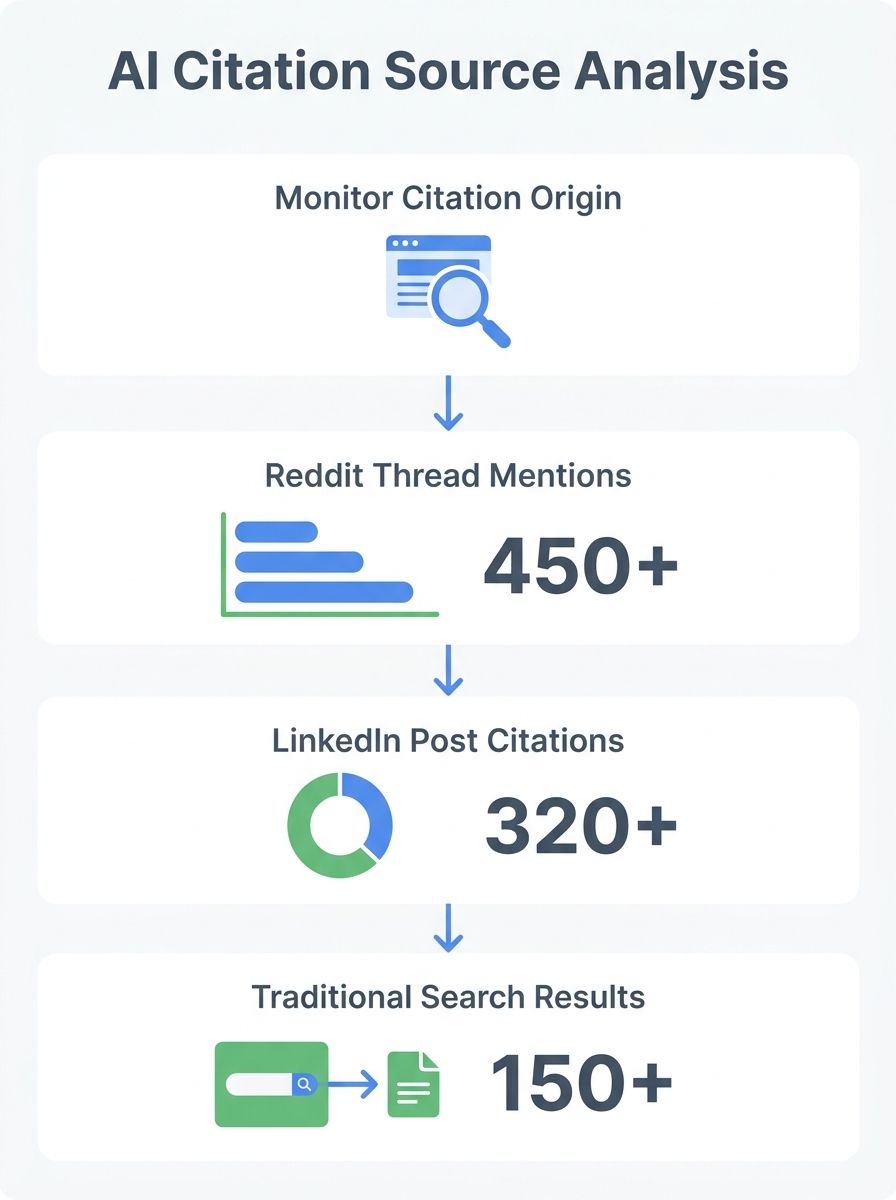
The publication noted that brands do not control either property, making presence on both platforms a dependency factor in AI citation likelihood. Search Engine Journal recommended auditing whether sources that AI answers cite in a given category mention a brand, mention competitors, or mention neither, positioning that audit as the first step before allocating Q3 budget to either platform.
The guidance aligns with broader industry recognition that traditional blue-link optimization addresses only one visibility layer while AI-surfaced answers draw from an expanded source set that includes community discussion platforms.
Paid and Organic Teams Must Coordinate AI Placement Strategy
AI Mode ads are rolling out and ChatGPT ad testing is in progress, with AI surfaces now blending organic citations and paid placements, Search Engine Journal stated. The publication noted that teams monitoring only organic visibility miss where paid placements are capturing exposure that ranking positions previously secured.
The analysis described the blended paid-organic AI surface as requiring cross-functional planning rather than siloed channel management. Search Engine Journal positioned this shift as particularly urgent for Q3 planning cycles because budget allocation decisions finalized in isolation, with paid teams and organic teams operating independently, will miss placement conflicts and visibility cannibalization that emerge when both appear on the same AI-generated answer.
Citation Metrics Join Click Tracking in Visibility Reports
Search Console clicks no longer measure full search visibility, according to the June 11 analysis. Being cited in AI-generated answers represents a second visibility metric that captures brand exposure clicks do not record, and leadership reports almost certainly do not include citation tracking yet, Search Engine Journal stated.
The publication recommended adding citation monitoring to existing reporting frameworks rather than waiting for platform-native tools to provide that data. The analysis positioned citation visibility as particularly relevant when explaining why impression counts rise while click counts fall, a pattern that Search Console data alone cannot fully explain.
What Happens Next
SEO agencies and in-house marketing teams evaluating Q3 strategy adjustments face immediate diagnostic work segmenting traffic decline into competitor-driven losses versus SERP-format losses. The distinction determines whether budget flows toward competitive content recovery or toward citation-layer optimization and platform presence on Reddit and LinkedIn.
Search Engine Journal is hosting a three-hour virtual event on June 17 (SEJ Live) covering AI search, social, paid, and attribution integration, with registrants able to submit questions that shape session agendas. The event includes Reddit and LinkedIn experts discussing citation signal strategies and a multi-channel attribution session.
Marketing leaders consolidating 2026 search strategy should prioritize citation audits that identify which high-ranking content currently generates AI citations and which does not, establishing baseline visibility before initiating content rewrites. Teams still operating with siloed paid and organic planning should accelerate cross-functional coordination before AI Mode ad rollout expands placement conflicts beyond current ChatGPT testing scope.
Marcus Webb
Digital marketing consultant and agency review specialist. With 12 years in the SEO industry, Marcus has worked with agencies of all sizes and brings an insider perspective to agency evaluations and selection strategies.
Related Articles
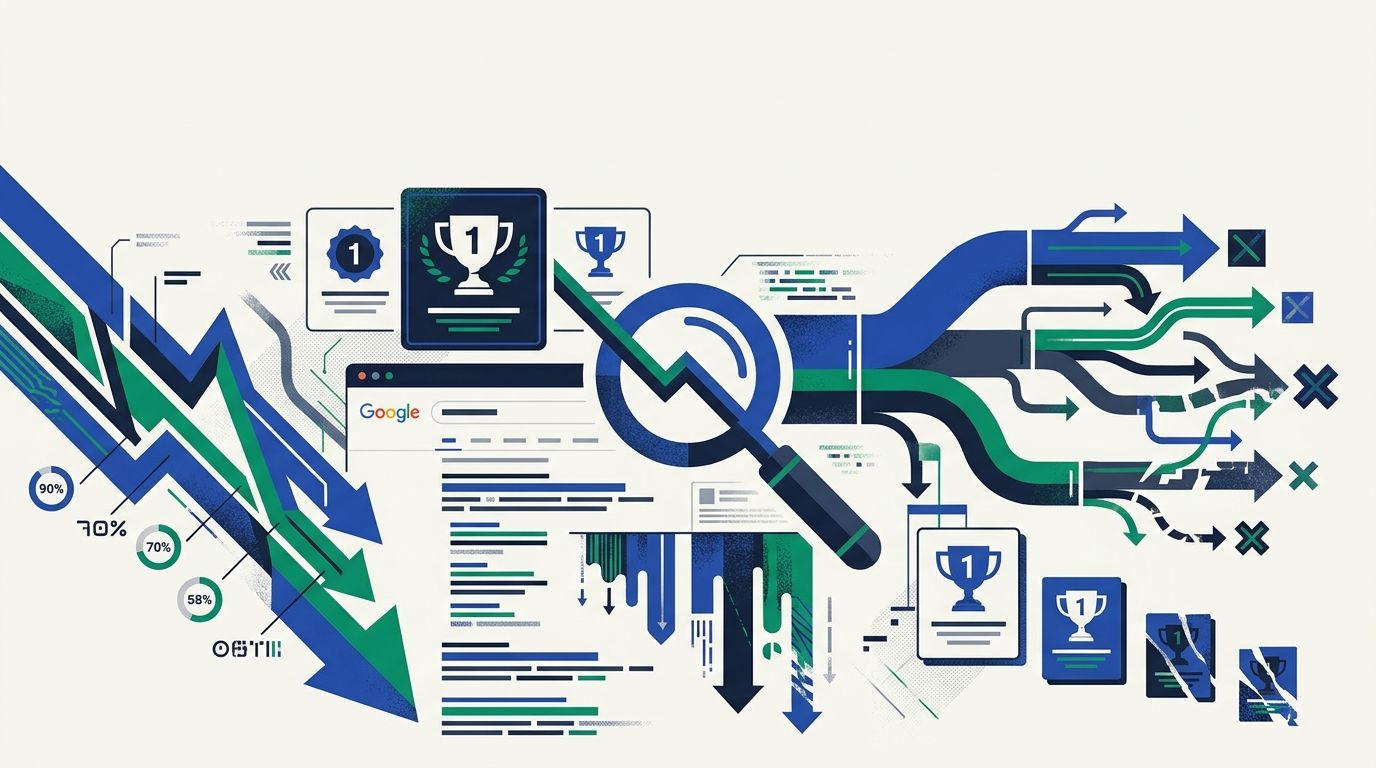
Ranking #1 on Google Now Delivers 58% Fewer Clicks Than It Used To, Gravitate Analysis Finds
A first-position Google ranking now delivers 58% fewer clicks than the same ranking delivered before AI Overviews began appearing in search results, according to an analysis released July 9, 2026 by Gravitate, a Vancouver-based digital marketing agency.
Google Marketing Live 2026 Confirms End of Traditional Search as Agency Study Shows Top-Ranked Brands Invisible to AI 69% of Time
Google announced at Marketing Live 2026 that traditional search has ended and all search on the platform now operates through AI-based systems, according to NP Digital's APAC managing director Dan Kalinski writing in Marketing-Interactive. The announcement validates what an NP Digital experiment mea
AI Search Platforms Layer Atop Google Rather Than Replace It, Similarweb Tracking Shows
Ninety-five percent of ChatGPT's 494 million users also used Google during the March-May 2026 tracking period, according to Similarweb's "2026 Generative AI Landscape" report released July 24.
Explore more topics