
Manufacturing SEO in the AI Era: How to Optimize for Both Google and Generative Engines
Engineers and procurement managers are researching vendors through Perplexity, ChatGPT, and Bing Copilot. These AI tools typically surface one or two suppliers per query.
 Marcus Webb··10 min read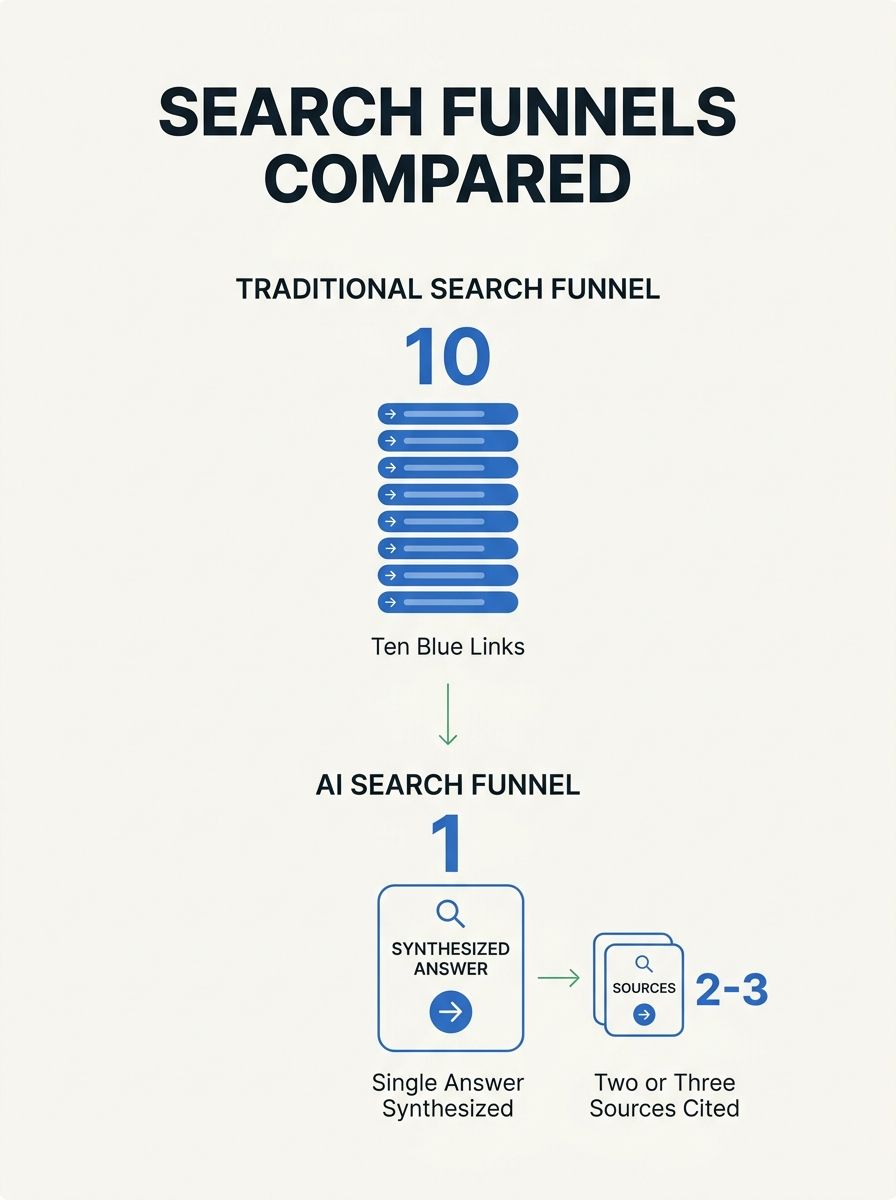
Manufacturing SEO in the AI Era: How to Optimize for Both Google and Generative Engines
Engineers and procurement managers are researching vendors through Perplexity, ChatGPT, and Bing Copilot. These AI tools typically surface one or two suppliers per query. That winner-takes-most dynamic has reshaped what a manufacturing SEO strategy should look like, and based on the agency proposals I've been reviewing this year, most firms selling SEO to industrial companies haven't caught up.
The gap between what Google shows and what AI engines cite has widened fast. Brandlight's monitoring data puts the overlap between top Google results and AI-cited sources below 20%, down from roughly 70% just two years prior. A manufacturer ranking on page one for "CNC precision machining services" can now be invisible when an engineer asks ChatGPT the same question. That split is the single biggest development industrial marketers need to understand, and it should be the first thing any agency pitching you is prepared to address.
Why Manufacturing Is Uniquely Exposed to This Shift
B2B SEO for manufacturing companies targets professional buyers — engineers, procurement managers, plant operators — who research heavily before contacting a vendor. As Nopio's analysis of industrial buying behavior makes clear, these decision-makers follow a multi-stage digital marketing manufacturing process that can stretch across months. They compare specs, read technical content, evaluate case studies, and consult peers.
AI search tools compress that research cycle. An engineer who once opened ten browser tabs to compare titanium fastener suppliers now gets a synthesized answer with two or three recommended vendors. If your site isn't one of the sources feeding that answer, you've lost the lead before you knew it existed.
This matters for agency selection because the skills needed to win in this environment are different from what a traditional SEO retainer covers. When I assess agencies for manufacturing clients, I'm now evaluating two separate competencies: conventional search optimization and generative engine optimization B2B readiness. An agency strong in one but absent in the other will leave money on the table.
What Generative Engine Optimization Actually Means for Industrial Sites
GEO, or Generative Engine Optimization, focuses on how AI models retrieve, summarize, and present your content when responding to queries. Built In's breakdown of the concept defines it as influencing how generative models select and surface information. Traditional SEO targets keyword rankings on search result pages. GEO targets whether your content becomes the source behind an AI-generated answer.
For manufacturers, this distinction has practical consequences. Consider a query like "best surface treatment for marine-grade aluminum." In Google, you'd optimize a page to rank for that phrase. In an AI engine, your content needs to be structured so the model can extract a clear, authoritative answer and attribute it to you.
The metrics shift, too. As Strapi's comparison of GEO and SEO puts it, in traditional SEO you celebrate a 5% click-through rate. In generative optimization, you celebrate being the source line under a zero-click response, even if traffic barely moves, because the brand trust impact carries over to every other channel.
I've started tracking how agencies report on this. The better ones now include citation frequency (how often AI tools reference your content), share of voice across AI models, and AI-generated referral traffic in their monthly reports. Agencies that only report keyword rankings and organic sessions are working with an incomplete picture.
How I Evaluate Agency Capabilities for Dual Optimization
Over twelve years of reviewing agencies, I've developed a pretty clear sense of when a firm is selling services it can actually deliver. Here's what separates the agencies that understand AI search visibility manufacturing from those that are just adding "AI" to their pitch decks.
Content Structure for AI Parsing
The first thing I look at is whether the agency structures content so AI models can read it cleanly. SearchEngineLand's technical guide to generative search optimization stresses keeping your context window lean so AI agents can process pages without truncation. Creating content fragments — discrete, self-contained chunks of information — feeds both search engines and AI bots.
For a manufacturing site, this means product pages need clear, concise capability statements. Application guides need question-answer formatting where the heading poses the question and the first paragraph delivers a direct answer. Spec sheets need structured data markup so AI engines can extract dimensions, tolerances, and certifications without guessing.
I ask agencies to show me a content brief they've created for an industrial client. If the brief doesn't include instructions for heading hierarchy, schema markup, or answer-first paragraph structure, the agency isn't optimizing for AI consumption.
Technical Keyword Optimization for Industrial Audiences
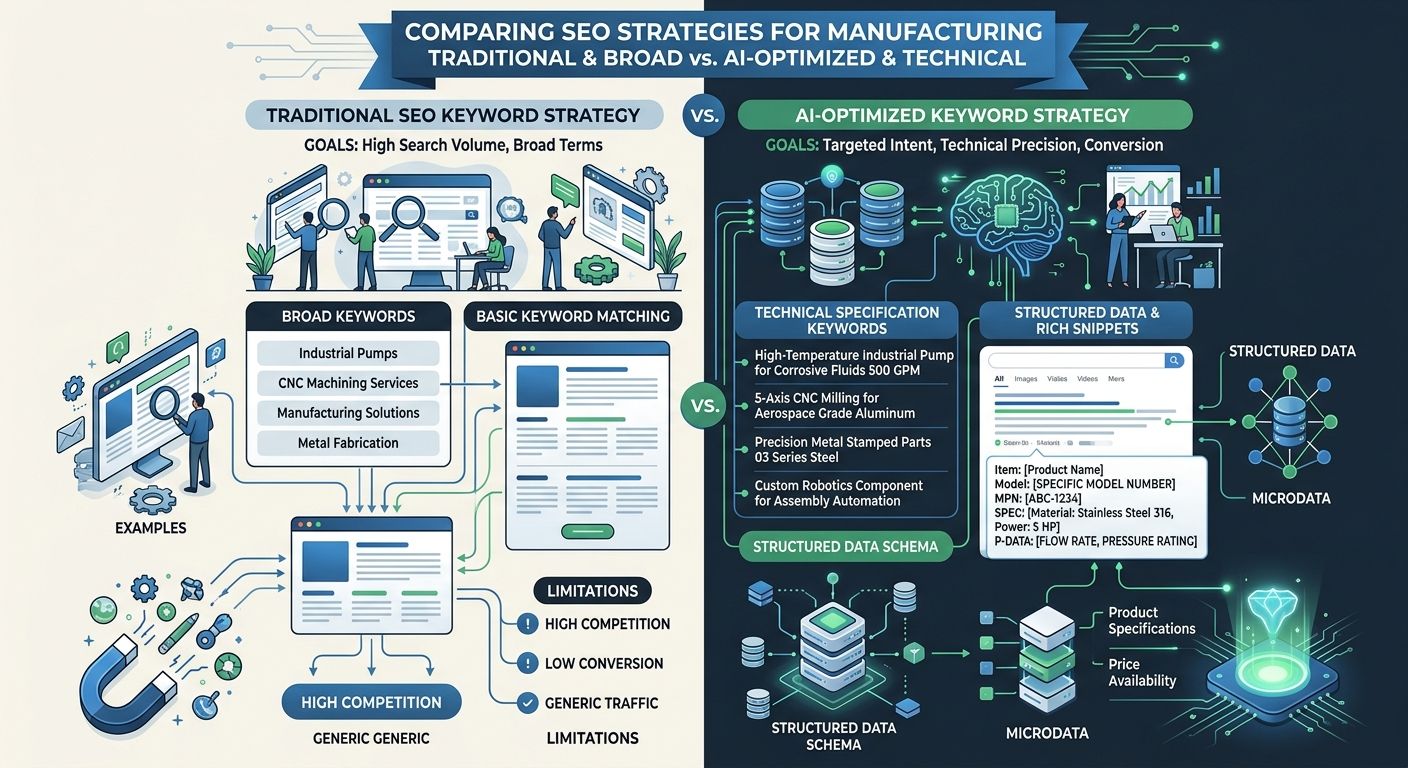
Technical keyword optimization industrial sites require is more granular than what most general SEO agencies are used to. Manufacturing buyers search using part numbers, material grades, industry standards (like ASTM or ISO certifications), and machine-specific terminology. A procurement manager searching for "316L stainless steel tube OD 1.5 inch ASTM A269" will not be served well by a page optimized for "stainless steel tubing."
Agencies that understand manufacturing build keyword clusters around these technical specifics. They group content by application, material, and compliance standard. They create dedicated pages for each product line with the exact specifications buyers search for.
The agencies that do this well for AI visibility go one step further: they structure these specs in ways that large language models can parse. Structured data, clean tables, and explicit definitions of technical terms all help AI systems extract accurate information about your products.
E-E-A-T Signals That AI Models Prioritize
Google's E-E-A-T framework (Experience, Expertise, Authoritativeness, Trustworthiness) has always mattered for SEO. For generative engines, these signals matter even more because AI systems are trying to select the most reliable source to cite in a definitive answer.
For manufacturing companies, this means content should be created or reviewed by named subject matter experts. When I evaluate agencies, I look for whether they're helping clients feature engineer quotes with real names and titles, publishing detailed case studies with measurable outcomes, and building out author profiles that demonstrate genuine industry knowledge.
Content over 2,500 words with thorough topic coverage has been shown to receive roughly 3.2 times more AI citations than shorter pieces, according to Clearscope's research. For manufacturers, that depth should come from real expertise — process explanations, failure mode analysis, comparison tables for competing materials — rather than padding.
Crawler Access and Technical Foundations
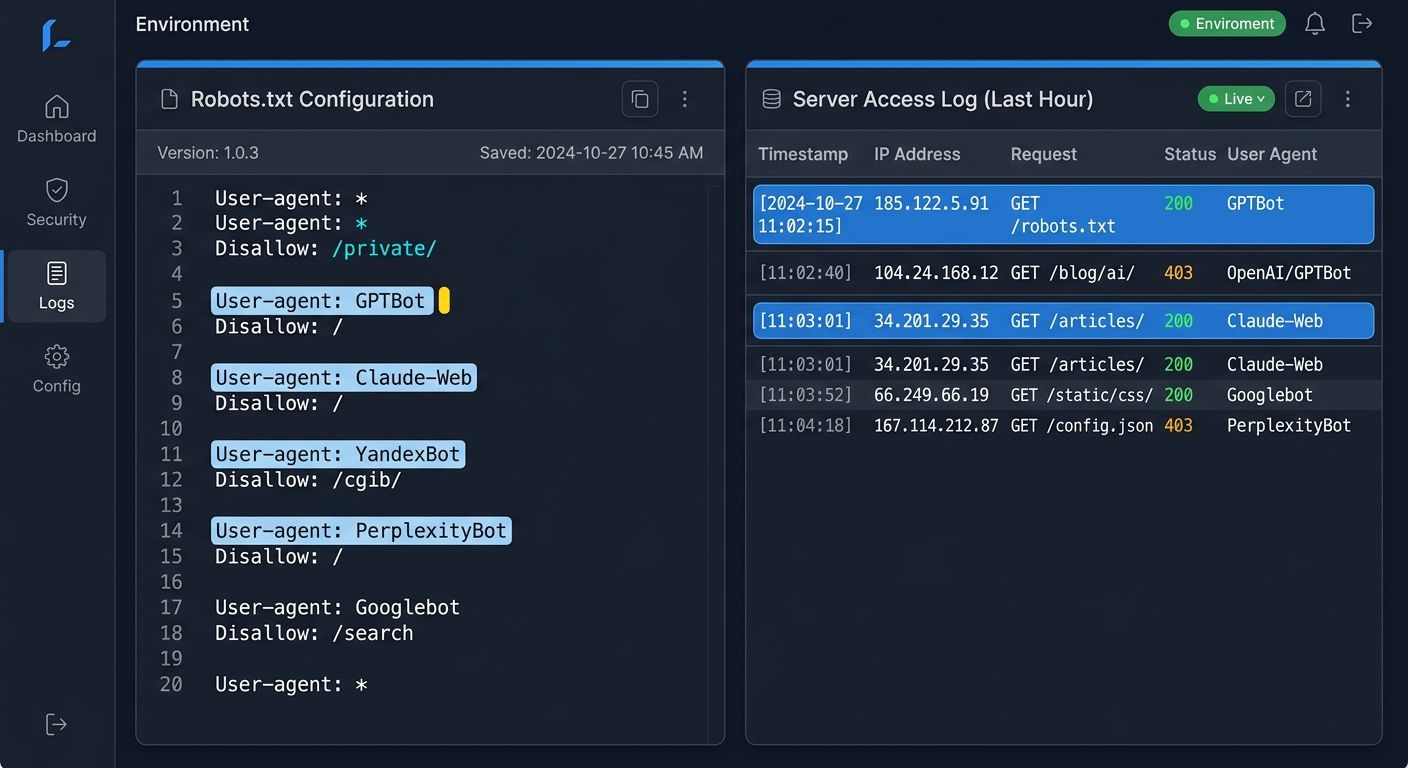
Here's a gotcha that catches even technically competent agencies off guard: many manufacturing websites inadvertently block AI crawlers. Cloudflare's default settings can block AI bots, and if your robots.txt file isn't explicitly allowing user agents like "ChatGPT-User" or "PerplexityBot," your content won't make it into AI training or retrieval pipelines.
I now ask agencies during evaluations whether they audit for AI crawler access. Fewer than half have a clear answer. This is table stakes for any agency claiming to offer AI search optimization, and it's one of the easiest technical checks to run.
Beyond crawler access, core web performance still matters. A site with a Lighthouse performance score above 90, fast mobile load times, and clean architecture signals quality to both Google and AI systems. If you're considering how agencies evaluate technical performance as part of their vetting process, crawler access for AI bots should now be on the checklist.
Agency Red Flags for Manufacturing SEO in the AI Era
After evaluating agencies for manufacturing clients who need both traditional and AI search visibility, I've identified patterns that predict underperformance. Watch for these:
No GEO reporting. If the agency can't tell you how often your content appears as a cited source in AI-generated responses, they aren't tracking the metrics that matter. New monitoring tools from providers like Goodie, Profound, and Daydream exist specifically for this purpose.
Generic content playbooks. Manufacturing content requires technical depth. Agencies that produce surface-level blog posts about "why quality matters in manufacturing" aren't creating the kind of authoritative material that AI engines select. Ask for writing samples from their manufacturing portfolio and check whether the content includes real specifications, process details, and expert attribution.
Ignoring the recency problem. AI systems exhibit a strong bias toward fresh content. Data from LLMrefs indicates that AI citations drop off sharply once content passes the three-month mark. Any agency managing your manufacturing SEO should have a quarterly content refresh cycle built into the retainer. If they're producing content once and never updating it, your AI visibility will decay fast.
Ranking guarantees. I've written about why performance metrics alone don't predict SEO success, and this applies doubly when AI search enters the picture. Any agency guaranteeing specific rankings or citation placements in AI engines is overselling. The landscape is shifting too fast for guarantees to be credible.
No schema markup strategy. Structured data is a foundational requirement for AI comprehension. If the agency's technical audit doesn't include schema implementation plans for your product pages, service pages, and FAQ content, they're missing a critical piece.
The Content Strategy That Serves Both Channels
The good news for manufacturers investing in content: the same material can work for both Google and generative engines if it's structured correctly. The approach I recommend to clients combines pillar content architecture with AI-friendly formatting.
Build pillar pages around your core capabilities. A company specializing in precision machining might create a 3,000-word guide covering materials, tolerances, surface finishes, and quality certifications. That pillar page links to detailed subtopic articles — one on each material family, one on each finishing process, one comparing machining methods for specific applications.
Each subtopic article should follow a question-answer structure with the target query as the heading and a direct, factual response in the opening paragraph. This format serves both featured snippets in Google and AI retrieval systems that look for concise, authoritative answers.
Salesforce's SEO guide notes that AI-powered tools can generate topic ideas and outlines based on target keywords, but for manufacturing content, the real value comes from pairing those tools with subject matter expertise. The AI can identify what questions engineers are asking. Your engineers need to provide the answers.
This connects to the broader issue of how synthetic content affects AI search quality. Manufacturing content that's generated entirely by AI tools without expert review tends to be vague on technical specifics. AI engines trained on that vague content produce worse answers, which creates an opportunity for manufacturers who invest in genuinely expert material.
Expanding Visibility Beyond Your Website
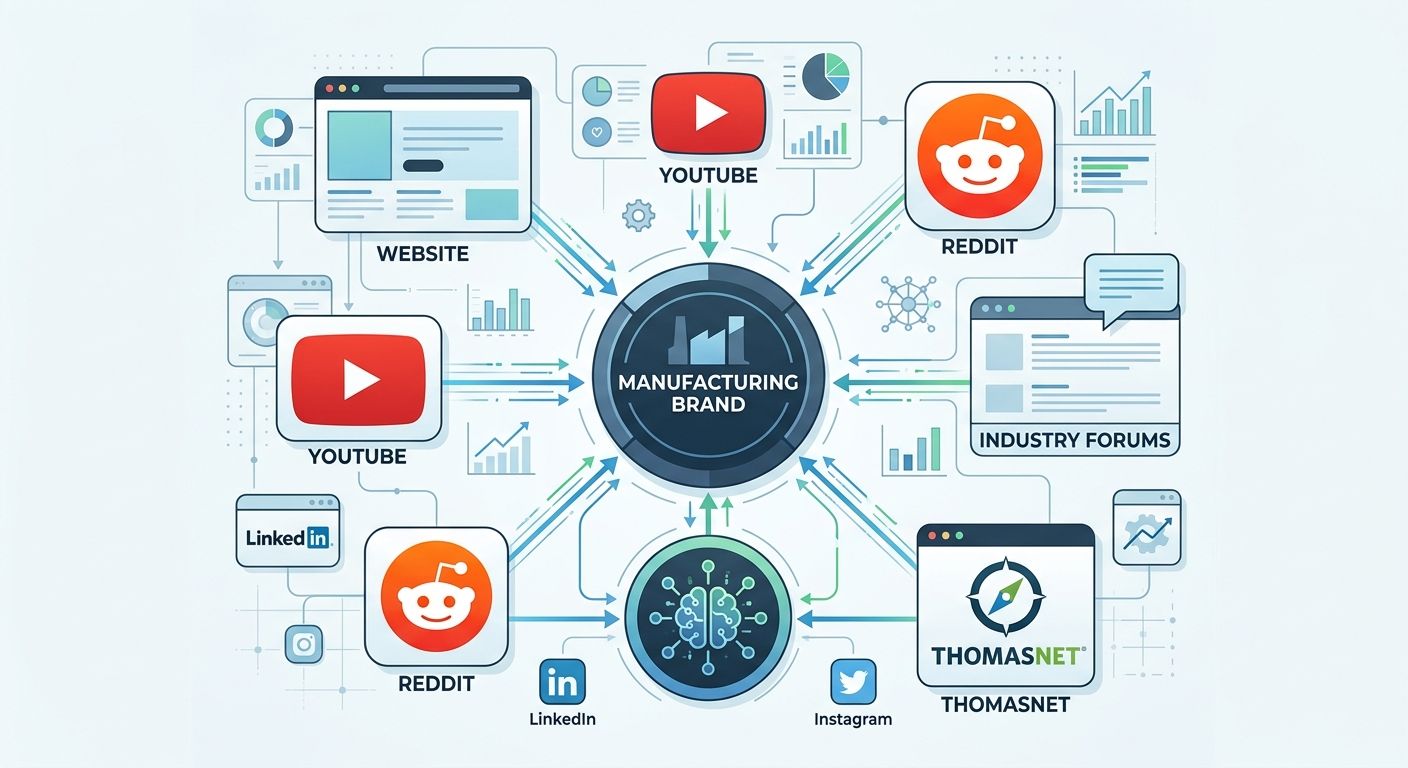
AI engines pull from more sources than your website. Engineers post on Reddit, watch YouTube teardowns, and participate in industry-specific forums. Agencies with a mature multi-stage digital marketing manufacturing approach will include strategies for these platforms.
Sponsoring AMAs on manufacturing subreddits, creating detailed YouTube tutorials on complex processes, and maintaining active profiles on platforms like Thomasnet all create touchpoints that AI systems can reference. When an AI engine synthesizes an answer about, say, injection molding design guidelines, it might pull from your website's technical guide, your Reddit comment explaining a common mistake, and your YouTube video demonstrating the process.
This is where the conversation about adapting to AI search disruption applies to industrial brands as well. The principles are similar — your digital footprint across multiple authoritative platforms feeds the AI's confidence in recommending you.
Agencies that understand this will propose a content distribution plan that extends beyond blog posts and product pages. They'll audit your presence across the platforms where your technical buyers spend time and build a plan to strengthen it.
What Still Isn't Settled
Several open questions will shape how manufacturing SEO and GEO evolve over the next twelve to eighteen months.
First, attribution and measurement remain messy. When a procurement manager finds your company through an AI-generated answer and then visits your site directly, that visit shows up as direct traffic in your analytics. Current tools for tracking AI citations are improving, but they don't yet provide the clear attribution path that Google Analytics gives for organic search. Agencies selling GEO services should be transparent about this measurement gap rather than overpromising on reporting precision.
Second, AI model behavior changes without warning. Google's AI Overviews, ChatGPT's search features, and Perplexity's citation system all update their retrieval and ranking logic on their own timelines. There's no equivalent of Google Search Console for AI engines — no dashboard that tells you exactly why your content was or wasn't selected for a given answer. Agencies need to be running regular manual audits, testing target queries across multiple AI platforms, and documenting what gets cited and what doesn't.
Third, the relationship between traditional Google rankings and AI citations may continue to diverge. If the overlap keeps shrinking from its current sub-20% level, manufacturers may eventually need to prioritize one channel over the other. For now, the smart approach is building content that serves both, but that assumption deserves re-examination every quarter.
And fourth, pricing models for this combined service haven't standardized. In my evaluations, I'm seeing agencies charge anywhere from $3,000 to $15,000 per month for manufacturing SEO retainers that include some form of AI optimization. The variance is huge because there's no industry consensus on what GEO deliverables should look like. When you're comparing proposals, ask agencies to itemize what they're doing for traditional SEO versus GEO specifically. If they can't separate the two, they probably haven't built distinct processes for each.
The manufacturing companies that will win the most visibility over the coming year are the ones that select agency partners with proven capabilities in both traditional and generative search optimization — and hold those partners accountable to metrics that cover both channels. The agencies that can deliver on that dual mandate are still rare. Finding them takes more diligence than picking the firm with the best pitch deck, but the payoff in qualified leads from technical buyers will be substantial.
Marcus Webb
Digital marketing consultant and agency review specialist. With 12 years in the SEO industry, Marcus has worked with agencies of all sizes and brings an insider perspective to agency evaluations and selection strategies.
Explore more topics