
Long-Tail Comparison Keywords: The Untapped SEO Strategy Agencies Miss in Competitive Markets
Every keyword strategy deck I review from agencies pitching white-label partnerships follows the same template: 30 to 50 head terms with keyword difficulty scores above 60, a smattering of branded queries, and zero deliberate targeting of comparison phrases.
 Marcus Webb··8 min read
Long-Tail Comparison Keywords: 7 Rules White-Label SEO Teams Keep Breaking in Competitive Markets
Every keyword strategy deck I review from agencies pitching white-label partnerships follows the same template: 30 to 50 head terms with keyword difficulty scores above 60, a smattering of branded queries, and zero deliberate targeting of comparison phrases. Out of the last 40 audits I've completed, exactly three included long-tail comparison keywords as a dedicated content category. The other 37 agencies left an entire layer of high-intent, low-competition traffic sitting on the table for their competitors to collect.
The gap is staggering when you look at the numbers. BrightEdge data shows that the average search query triggering AI Overviews grew from 3.1 words in mid-2024 to 4.2 words by the end of 2025, and it has kept climbing. Searchers typing "HubSpot vs Marketo for B2B lead nurturing" or "best CRM for real estate agents under $50/month" are deep in the buying cycle. They convert at rates that make generic informational traffic look decorative. Yet white-label SEO providers keep building content calendars around the same bloated head terms that their client's competitors have owned for years.
These seven rules are what I give to every white-label team I consult with when they're ready to add a comparison SEO strategy to their playbook. They're ordered by priority: skip rule one and the rest won't save you.
Mine comparison queries before you touch head terms
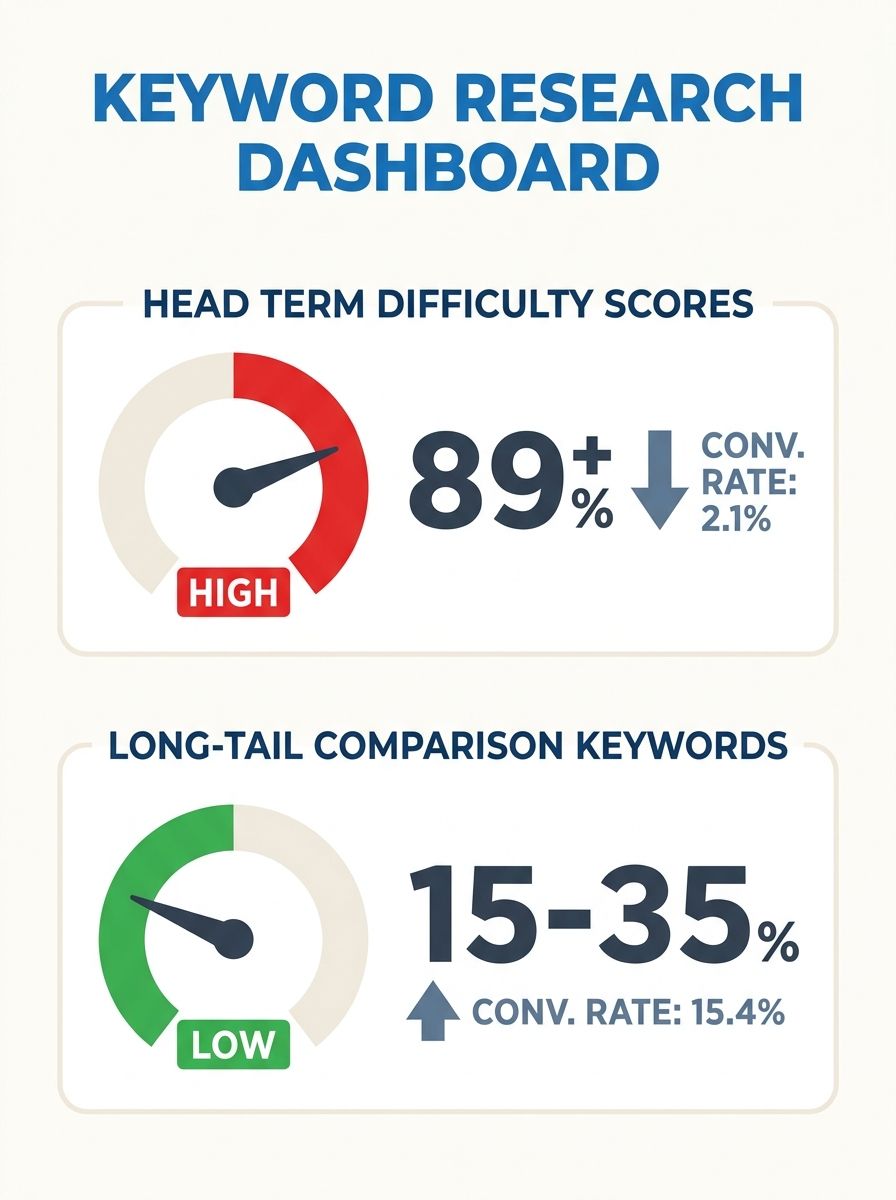
The instinct in any competitive market is to go after the biggest keywords first. "Project management software" has 40,000 monthly searches, so that's where the content calendar starts. The problem is that your client's site, or the white-label client you're serving on behalf of a reseller, almost certainly doesn't have the domain authority to crack page one for that term within a contract cycle.
Comparison queries flip the economics. "Notion vs ClickUp for remote marketing teams" might show 320 monthly searches, but the keyword difficulty drops into the teens, and the searcher has already narrowed their options to two products. According to Semrush's long-tail keyword guide, you can surface these queries by exploring Google's autocomplete predictions, People Also Ask boxes, and competitor ranking data. The discovery process takes an afternoon, not a sprint.
When this rule breaks: if your client already dominates their comparison space and needs top-of-funnel awareness, head terms deserve priority. But I've seen that situation exactly twice in twelve years. For most white-label campaigns, the comparison layer is wide open.
Check the SERP before you commit to building any comparison page
Niche keyword discovery tools will hand you dozens of "X vs Y" phrases with appealing volume and low difficulty scores. The temptation is to start writing immediately. Resist it.
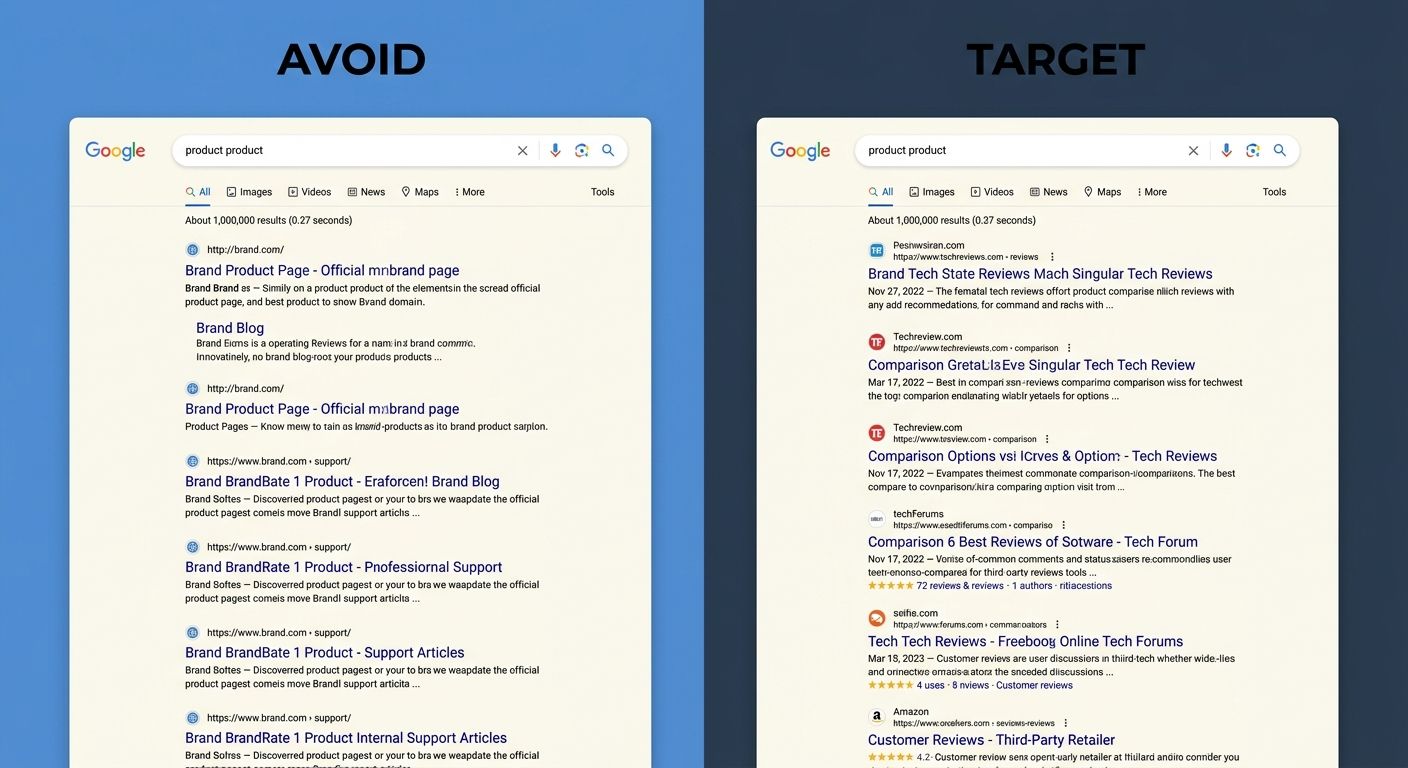
Pull up the actual search results for each target phrase and study what's ranking. If the top five results are all from the two products being compared (their own landing pages, their own blogs), you're fighting branded authority with third-party content. That's a losing position. The comparison pages worth building are the ones where the SERP already shows third-party review sites, affiliate blogs, or forum threads. Those signals tell you Google is willing to rank an independent voice.
Also look for AI Overviews. BrightEdge's Generative Parser data shows that AI Overviews now pull from up to 151% more unique websites for complex B2B queries, which means a well-structured comparison page has a realistic shot at being cited in the AI-generated answer. If you're working with clients in AI-adjacent verticals, this dovetails with the broader shift toward AI-driven search optimization frameworks that are reshaping how agencies think about visibility.
Prefer "vs" pages over generic feature roundups when buyer intent is obvious
There's a meaningful structural difference between a page titled "10 Best Project Management Tools" and one titled "Asana vs Monday.com: Which Fits a 20-Person Marketing Team?" The roundup page casts a wide net. The "vs" page answers a specific question for a specific person at a specific stage in their decision.
White-label teams default to roundups because they're easier to templatize. You can reuse the same format across dozens of clients with minor adjustments. But the conversion data tells a different story. Search Engine Land's analysis of long-tail keyword strategies emphasizes that a strong keyword strategy balances terms across varying difficulty levels and analyzes competitors to find new opportunities. The "vs" format is where those opportunities concentrate in competitive markets.
When building "vs" content for white-label clients, include pricing tiers, feature checklists, integration capabilities, and use-case recommendations. The page should answer the query so thoroughly that the searcher doesn't need to click back and refine. That completeness signal matters for rankings, and it matters even more for the client's pipeline.
Build comparison content in topical clusters, not as orphan pages
A single "vs" page floating in a blog with no supporting content will rank for a while and then fade. The pages that hold position are the ones surrounded by related content that reinforces topical authority.
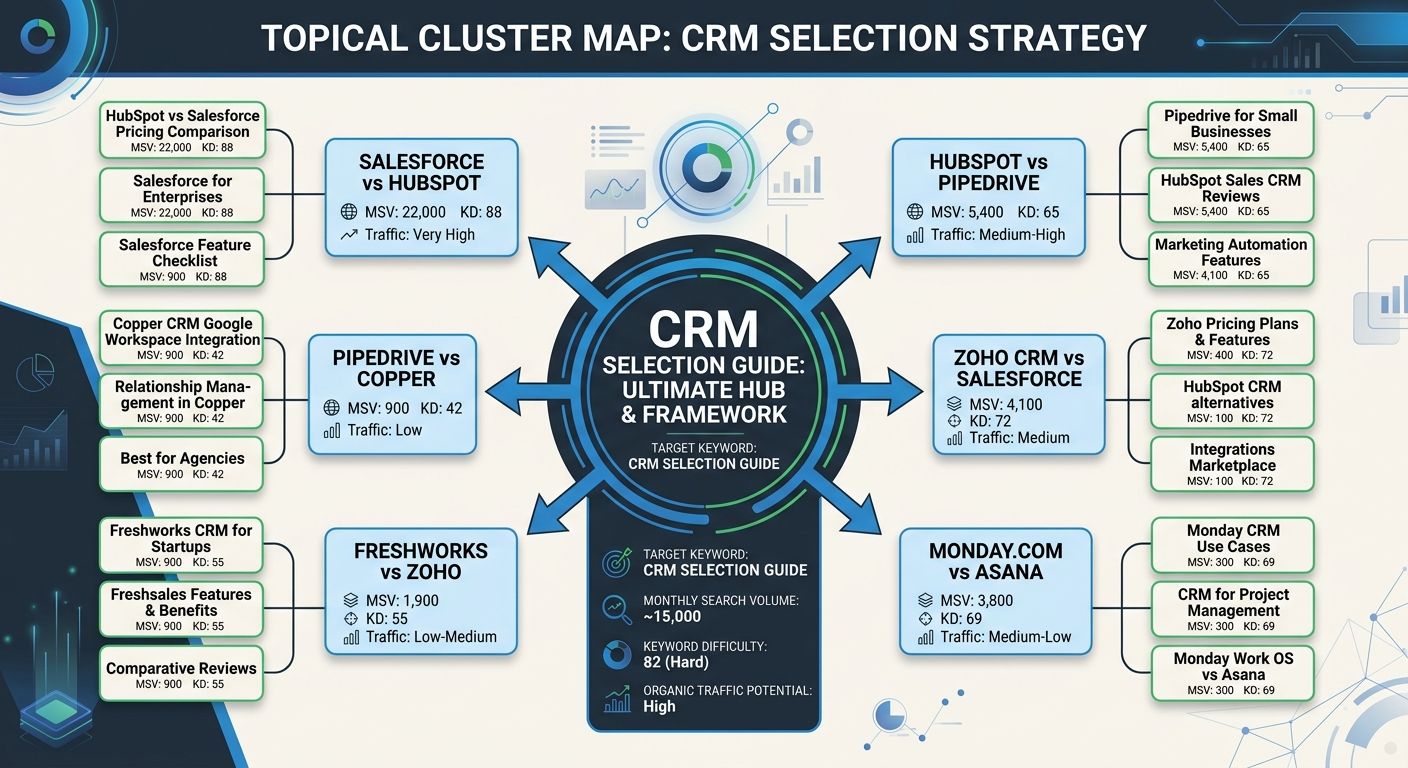
For a white-label campaign targeting CRM comparison keywords, the cluster might look like this: a pillar page on CRM selection criteria, individual "vs" pages for each major pairing (Salesforce vs HubSpot, HubSpot vs Pipedrive, Pipedrive vs Zoho), and supporting articles on specific evaluation angles (pricing models, API integrations, onboarding complexity). Each page links to the others with contextual anchor text.
This is where internal linking architecture becomes a real competitive advantage for white-label providers. Agencies that map authority flow before publishing comparison content see measurably faster indexing and stronger initial rankings than those who publish pages in isolation and retrofit links later. The cluster approach also gives you a natural content calendar: you can roll out one "vs" page per week and build the cluster over a quarter without overwhelming production capacity.
Use Ahrefs Content Gap to find the comparisons your competitors already own
The fastest path to niche keyword discovery in the comparison space is working backward from competitor data. Ahrefs' approach to finding niche keywords uses filters that surface terms with considerable demand and low competition. For Ahrefs comparison keyword research specifically, the Content Gap tool lets you enter three or four competing domains and immediately see which comparison queries they rank for that your client doesn't.
Here's the workflow I give white-label teams. Enter the client's domain plus their three closest organic competitors. Filter results to queries containing "vs," "compared to," "alternative to," or "better than." Sort by traffic potential. You'll typically find 15 to 30 comparison queries where at least one competitor ranks in the top 20 but your client has no presence at all. That's your content brief for the next quarter.
At $129 per month, Ahrefs isn't cheap for smaller white-label operations. KWFinder from Mangools at $43.85 per month focuses specifically on long-tail discovery with an interface designed for finding low-competition terms, and it works well as a supplementary tool. But for the competitor gap analysis that makes this strategy efficient, Ahrefs remains the standard.
You can also feed comparison phrases into AnswerThePublic, which generates visual maps of prepositions, comparisons, and questions users are asking around a seed term. The "vs" preposition branch alone often surfaces 10 to 15 phrases that traditional keyword tools miss entirely.
Track conversion rate per keyword cluster instead of obsessing over rank position
Ranking reports are the currency of agency-client relationships. They're easy to produce, easy to understand, and almost completely disconnected from what matters for competitive SEO positioning. A white-label team that delivers rank tracking as its primary KPI is training the client to value the wrong metric.
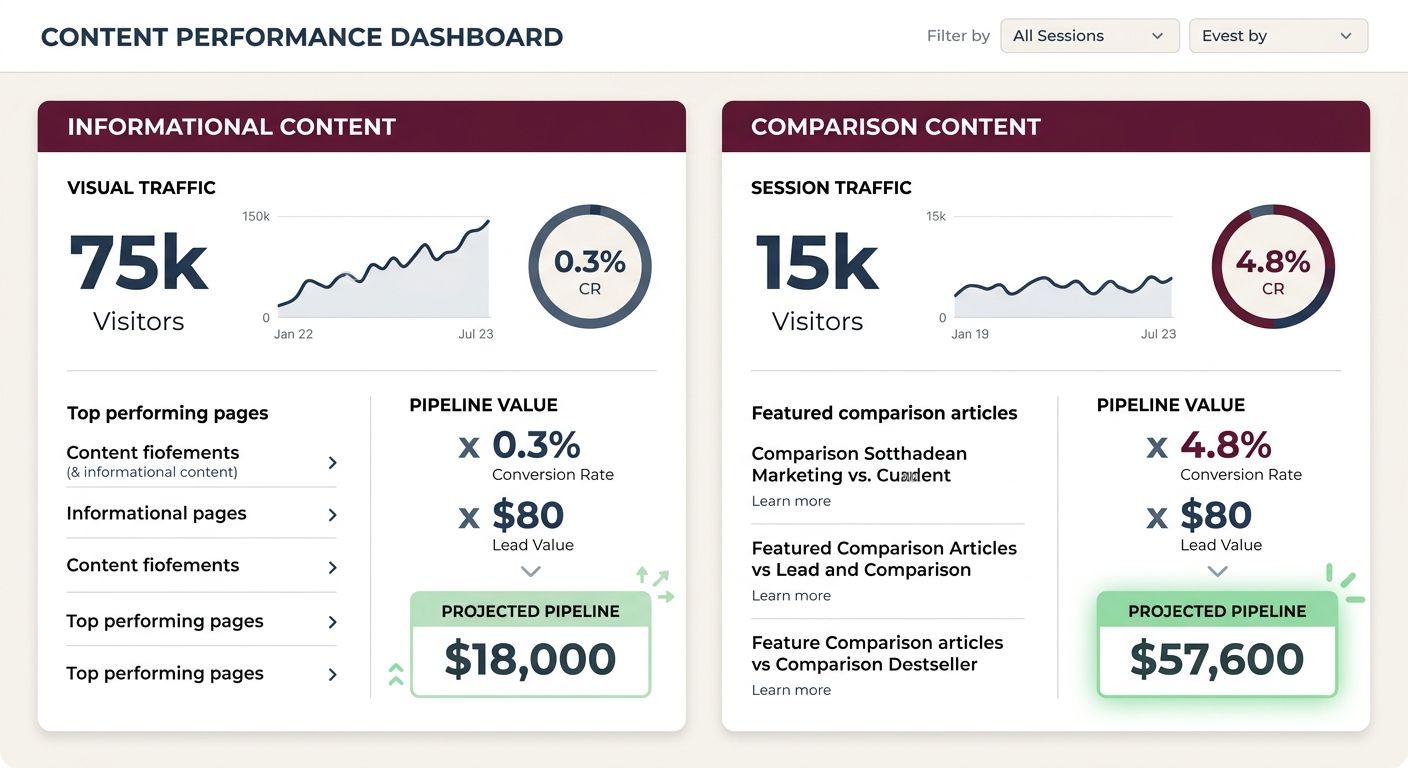
For comparison keyword campaigns, the metric that matters is conversion rate per cluster. If the CRM comparison cluster is driving 400 organic visits per month and converting at 4.8%, while the generic "what is a CRM" informational cluster drives 2,000 visits at 0.3%, the comparison cluster is generating more pipeline from a fifth of the traffic. That's the story white-label providers should be telling their agency partners, and that's the story those agency partners should be presenting to clients.
Use Google Search Console to identify which comparison queries drive actual visitors, and pair that data with goal completions in your analytics platform. Ematic Solutions recommends monitoring organic traffic to pages optimized with long-tail keywords and regularly checking keyword rankings using tools like SE Ranking or Semrush. But the ranking check should be diagnostic, not the headline number.
This reframing is especially important for agencies navigating the shift from rankings-based reporting to authority-based metrics. When a white-label team can show that comparison content generates pipeline at 5x the efficiency of informational content, the conversation about contract renewals gets a lot shorter.
Refresh comparison pages every quarter or surrender them to competitors
Comparison content decays faster than almost any other page type. Product pricing changes. Features get added or removed. New competitors enter the market. A "vs" page written in January with accurate pricing tables will have at least two outdated data points by April. Google notices, and so do users.
Build a quarterly refresh cycle into your white-label production workflow. Every 90 days, review each comparison page for pricing accuracy, feature changes, and new competitors worth mentioning. Update the publication date only when you've made substantive changes. This approach turns comparison content into a durable asset instead of a one-time traffic spike.
The refresh cycle also gives you a natural touchpoint with the agency partner. "We updated 12 comparison pages this quarter, here's how each one performed before and after the refresh" is a retention conversation that generic 100-point audit frameworks can't replicate. It demonstrates ongoing value tied to business outcomes.
When These Rules Collapse
Every framework has edges where it stops working. The comparison keyword strategy has three.
Markets with fewer than three meaningful competitors. If your client operates in a niche so narrow that there's only one real alternative, "vs" content feels forced and the search volume won't justify the production cost. In those markets, the better play is "alternative to" content targeting the dominant player.
Highly regulated industries where comparison claims carry legal risk. Financial services, healthcare, and legal verticals often have compliance teams that will gut a comparison page of anything useful. If you can't state concrete differences between products without a disclaimer paragraph after every sentence, the content won't serve the searcher and won't rank.
Clients who sell the products being compared. A white-label campaign for a SaaS reseller who carries both Salesforce and HubSpot creates a conflict when you publish a page declaring one better than the other. In those cases, the "best for [specific use case]" framing works better than a direct "vs" structure, because it positions the client as a trusted advisor rather than a partisan.
Outside those three scenarios, long-tail comparison keywords remain the most consistently underexploited category I encounter in white-label SEO audits. The agencies that build this muscle into their production workflow gain something difficult to replicate: a growing library of high-intent content that converts at rates their head-term competitors can't match, backed by a refresh cycle that compounds the advantage every quarter.
Marcus Webb
Digital marketing consultant and agency review specialist. With 12 years in the SEO industry, Marcus has worked with agencies of all sizes and brings an insider perspective to agency evaluations and selection strategies.
Related Articles

Niche Comparison Keywords for Service Firms: Why 'Architecture vs Interior Design SEO' Beats Generic Alternatives
Ranking for "interior designer" or "architect" as a head term produces traffic that will never convert into booked projects.
The SEO Benchmarking Audit: Building Your 2026 Performance Dashboard Against Industry Standards
Three agencies pitched the same mid-market SaaS company in January 2026, and each one submitted a "performance dashboard" as proof of their methodology. I reviewed all three as part of an agency selection engagement. Dashboard A tracked 47 metrics with no benchmarks.
6 Ways SEO Agencies Misread Keyword Intent Data — and the Client Campaigns That Suffer for It
Keyword intent misalignment kills more SEO agency-client relationships than bad backlinks, thin content, and missed deadlines combined.
Explore more topics