
Google's March 2026 Local SEO Purge: Why Your Competitor's GBP Got Suspended and What to Audit Now
Across my client portfolio, I counted six Google Business Profile suspension notices between March 27 and April 8.
 Marcus Webb··8 min read
Google's March 2026 Local SEO Purge: Why Your Competitor's GBP Got Suspended and What to Audit Now
Across my client portfolio, I counted six Google Business Profile suspension notices between March 27 and April 8. Every single one belonged to a service-area business whose prior SEO agency had recommended jamming extra keywords into the profile name — things like "Best Emergency Plumber Dallas 24/7 Repair Service." That naming strategy worked for years. It no longer does. And those agencies that recommended it? They aren't picking up the phone.
Google's March 2026 Core Update rolled out over twelve days, completing on April 8, and its local enforcement arm hit harder than anything I've seen in a decade-plus of auditing agencies. SE Ranking data published in April shows that nearly 80% of top-three local search results shifted positions during the update, with almost one in four pages that held top-10 rankings dropping completely out of the top 100. Locksmiths, movers, contractors, plumbers, and roofers took the heaviest damage.
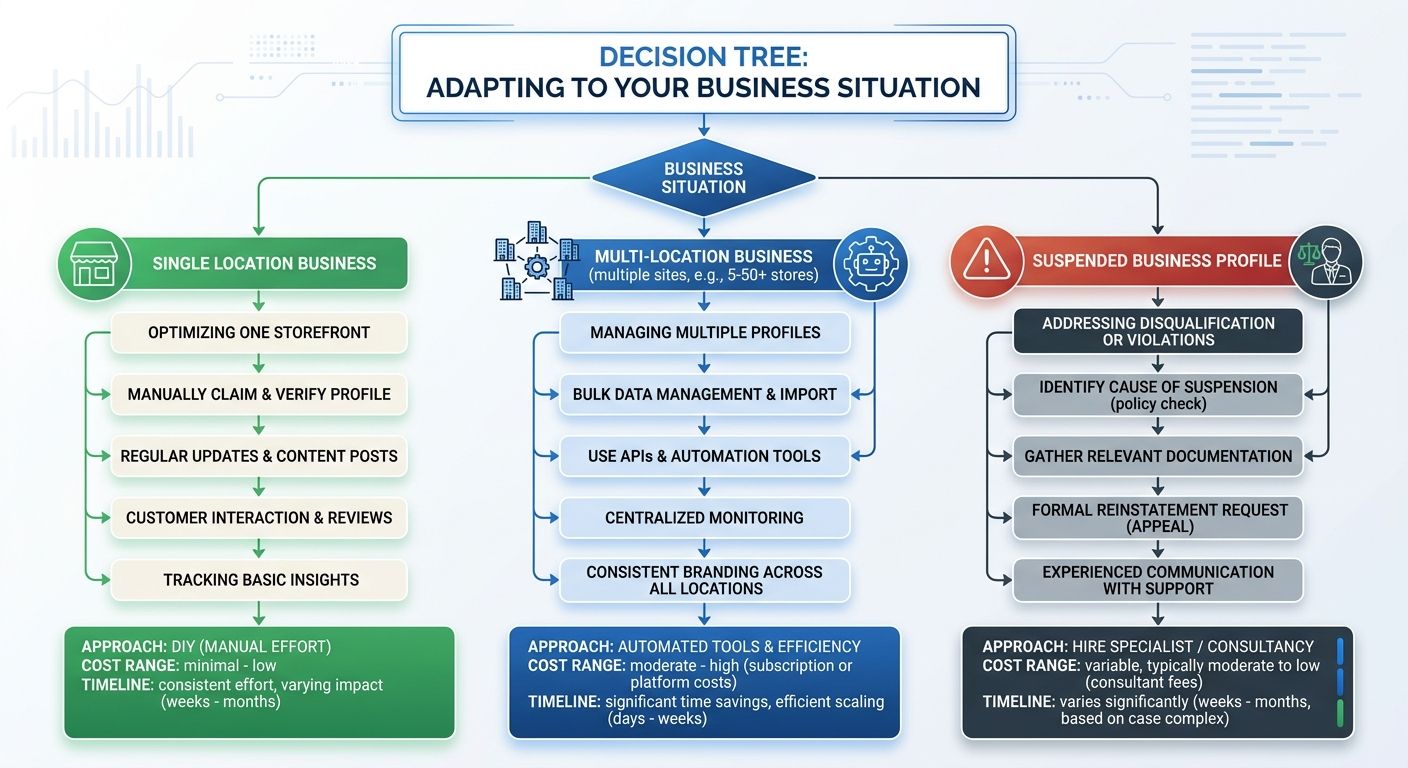
If you're reading this because your GBP got suspended, or because you've noticed a competitor's profile vanish and want to stay ahead of the next enforcement pass, you have three realistic paths forward: audit the profile yourself, deploy automated compliance tools to catch violations, or hire a local SEO specialist to manage the entire recovery. Each path comes with specific tradeoffs in cost, speed, and risk — and picking the wrong one can extend your time offline by weeks.
What Triggered the Suspensions
Before comparing recovery approaches, it helps to understand exactly what Google is enforcing. The March 2026 Core Update targeted manipulative practices that have been technically against GBP guidelines for years but were rarely punished at scale.
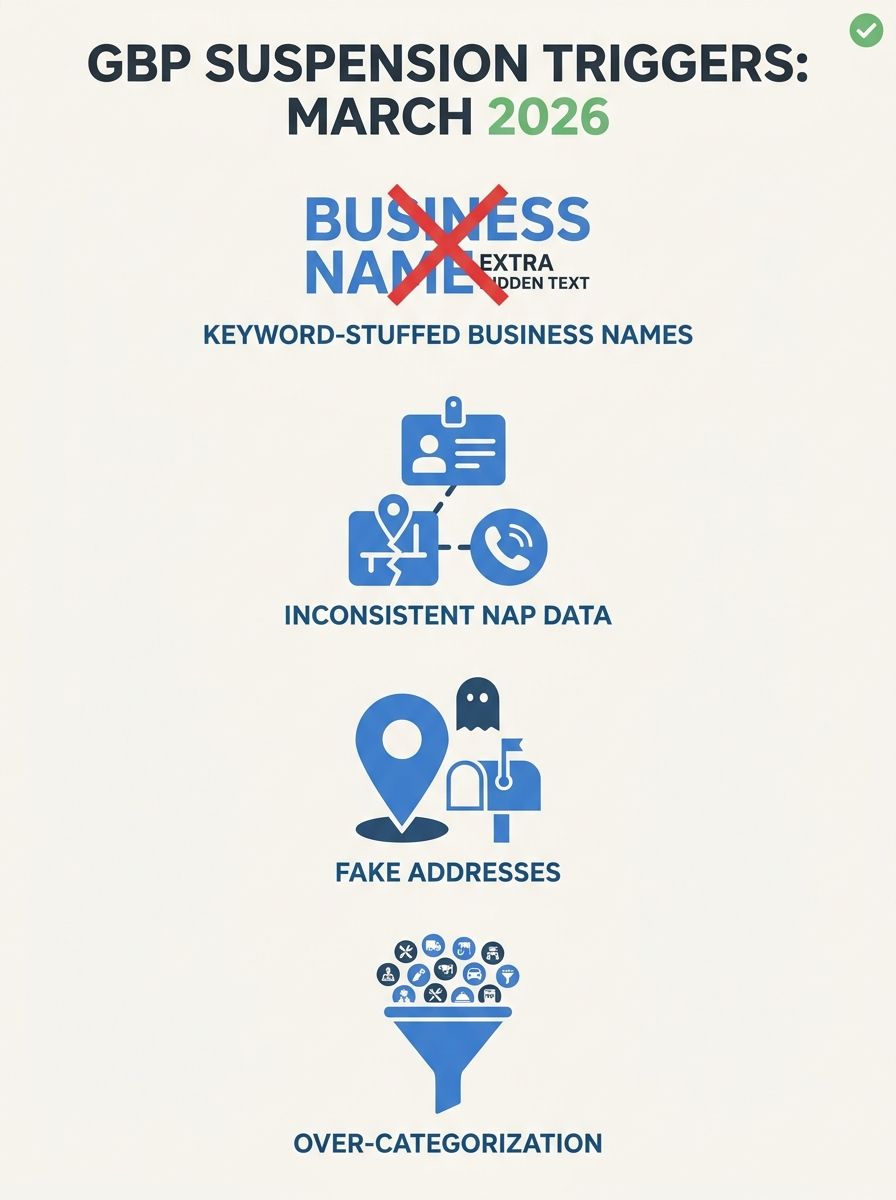
The primary triggers, according to reporting from ad-hoc-news.de, include keyword-stuffed business names (the single biggest cause), inconsistent or fabricated NAP (Name, Address, Phone) data across directories, over-categorization with misleading service areas, and virtual office addresses where no one actually works. If your listed address is a Regus suite you never visit, that alone can trigger a suspension.
Google also updated its review policies in 2026, banning name mentions in solicited reviews, on-site review kiosks, and incentivized feedback. Businesses that built their local SEO keyword stuffing penalties on inflated review counts are now doubly exposed.
The enforcement isn't abstract. For affected businesses, Google's crackdown means reduced leads, calls, and foot traffic immediately. The question is how to get back into compliance — and who should do it.
Running the Audit Yourself
Cost: Free to a few hundred dollars in your own time. Timeline: 3–7 days for the audit itself; 2–4 weeks to see reinstatement if you file an appeal. Best for: Single-location businesses with relatively simple profiles.
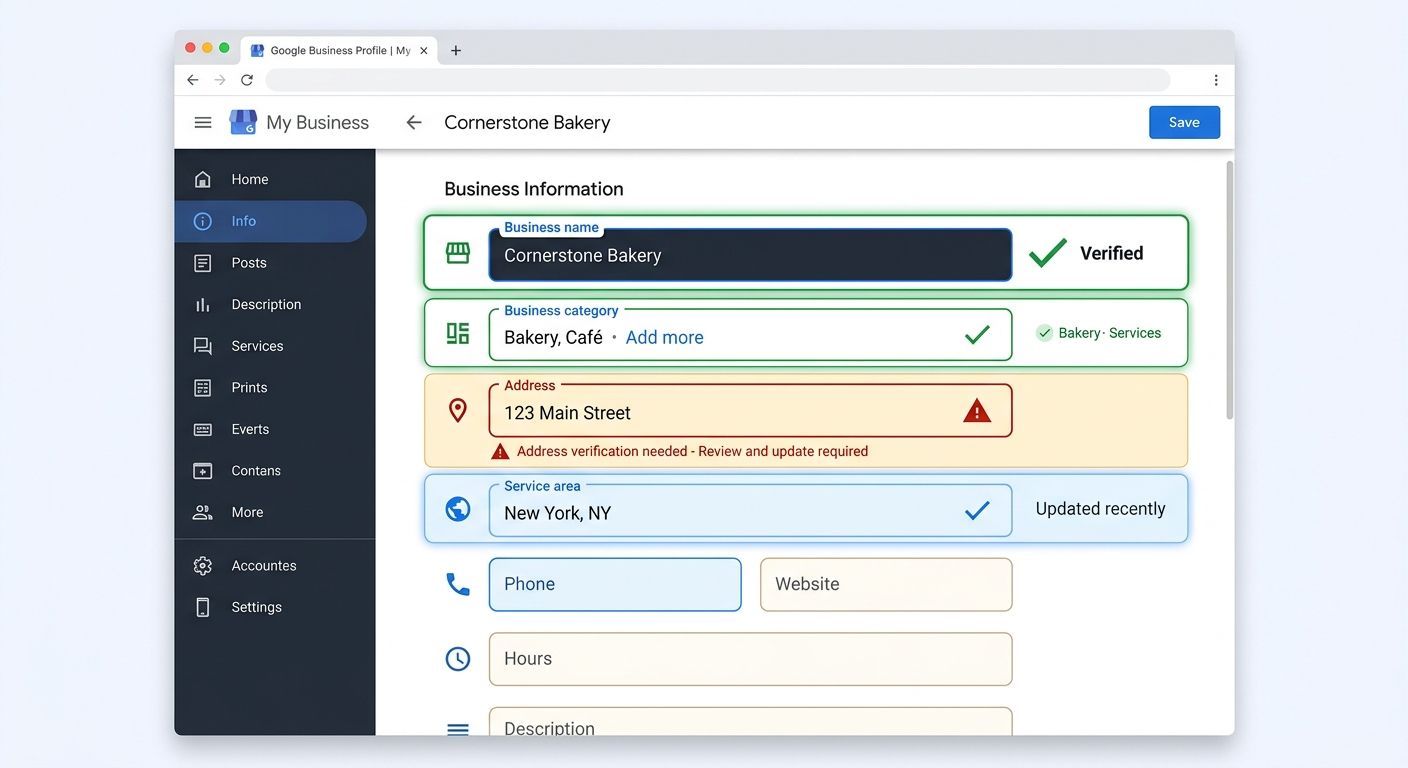
The DIY path is viable if you have one or two locations and you're willing to be thorough. The core audit takes a checklist approach: verify your business name matches your legal or DBA name exactly, strip any added keywords. Confirm your address is a real place where you or your staff work. Cross-check your phone number and address against every directory you've ever listed on — Yelp, Bing Places, Apple Maps, industry-specific directories.
The tricky part is knowing what "compliant" actually looks like in practice. Sterling Sky documented 50 cases of keyword spam and found that standard "Suggest an Edit" reports rarely stick. When competitors are still keyword-stuffing, the formal Business Redressal Form is the only effective way to report them — and knowing that distinction matters if you're trying to level the playing field after cleaning up your own profile.
For the appeal process itself, Google's support documentation outlines the steps: submit evidence that your business complies with guidelines, including photos of your physical location, your business license, and proof of operations. Reinstatement typically takes one to two weeks if your profile is genuinely compliant after corrections.
Where DIY Falls Short
The risk with self-auditing is blind spots. You might fix the name and miss that your categories are overly broad, or that a secondary listing for a practitioner at your firm is also stuffed. I've reviewed businesses that corrected their primary violation but had duplicate profiles they'd forgotten about — each one a potential re-suspension trigger.
If you've already built a solid foundation with review velocity and recency strategies, self-recovery becomes simpler because you're rebuilding on genuine signals. If your entire local presence was built on manipulation, the scope of cleanup may exceed what you can reasonably handle alone.
Letting Automated Tools Do the Scanning
Cost: $30–$150/month depending on the tool and number of locations. Timeline: Initial audit results in minutes; ongoing monitoring is continuous. Best for: Multi-location businesses, franchises, and anyone who needs to maintain compliance across several profiles.
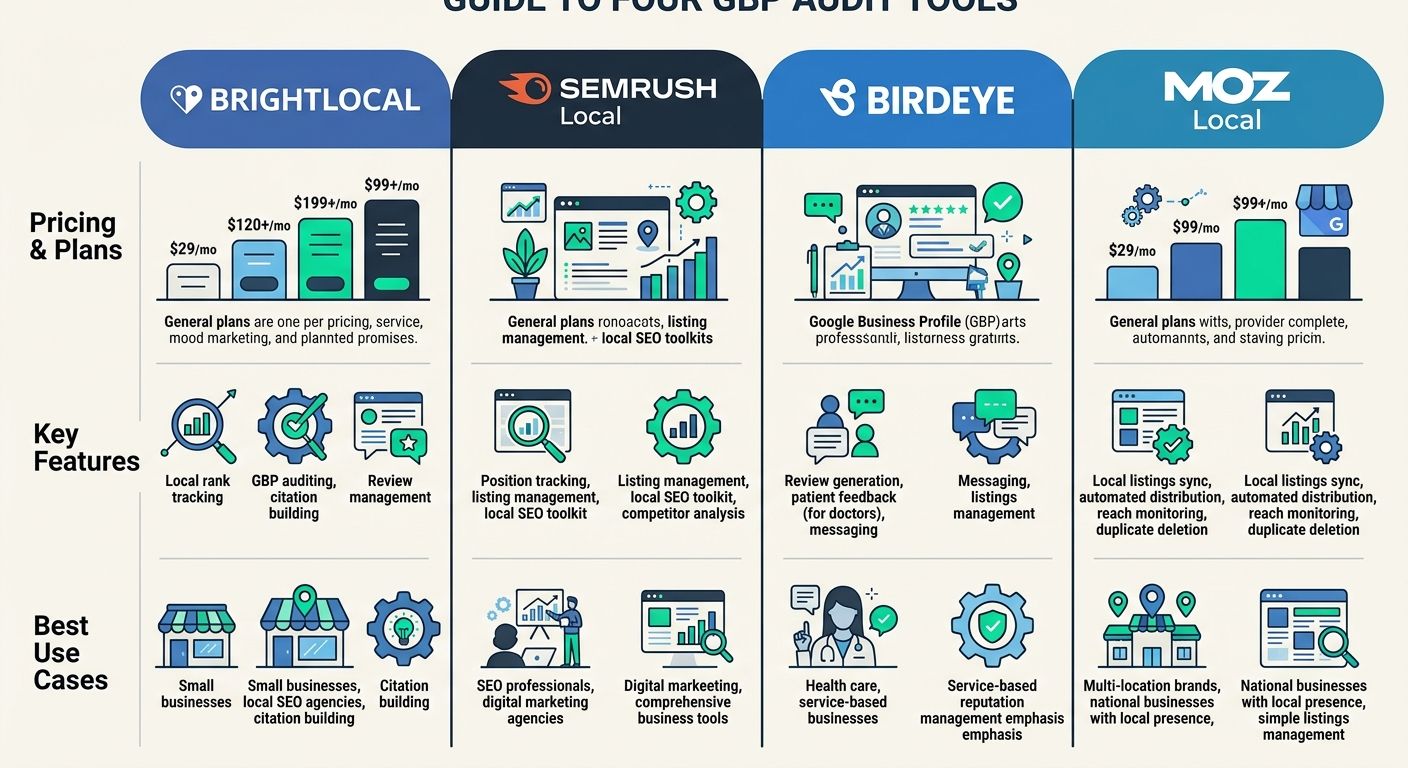
Automated audit tools — BrightLocal, SEMrush Local, Moz Local, and Birdeye's GBP audit toolset being the most widely used — scan your profile against known compliance requirements and flag violations. The better tools review categories, hours, services, photos, attributes, URLs, and booking paths, then score your profile completeness.
The real value here is monitoring, not the initial scan. A one-time audit tells you where you stand today. Ongoing monitoring catches when an employee or a former agency makes an unauthorized edit, when a competitor files a misleading "Suggest an Edit" against your profile, or when Google's own systems auto-update your information incorrectly. All three of these scenarios trigger suspensions, and all three happen more often than most business owners realize.
Comparing the Major Tools
BrightLocal excels at citation tracking and NAP consistency across directories. If your primary risk is inconsistent information across the web, this is the strongest option. Pricing starts around $39/month for a single business.
SEMrush Local offers broader integration with your overall SEO monitoring, including keyword tracking and competitive analysis layered on top of GBP compliance scanning. If you're already paying for SEMrush, adding the local module makes financial sense. Expect $40–$60/month on top of your existing subscription.
Birdeye tilts heavily toward review management alongside the audit function. Given that Google's 2026 review policy changes banned incentivized reviews and on-site kiosks, having a tool that helps you collect compliant reviews while also monitoring profile health covers two risk areas at once. Pricing varies but typically runs $100+/month for small businesses.
Moz Local handles automated listing distribution and synchronization across directories. If your problem is that you have outdated information scattered across 30+ directories, Moz's approach of pushing corrections everywhere simultaneously saves real time.
Where Tools Fall Short
No tool files your appeal for you. No tool writes your reinstatement justification or gathers your evidence photos. And no tool makes strategic decisions about how to restructure your categories or service area descriptions after a suspension. Tools identify problems efficiently, but the judgment calls still require a human brain. For businesses that already understand their local SEO compliance audit obligations, tools accelerate the work. For businesses that don't understand what's wrong, a dashboard full of red flags can be overwhelming without context.
Hiring a Local SEO Specialist for Full Recovery
Cost: $500–$3,000 for a one-time recovery engagement; $750–$2,500/month for ongoing management. Timeline: 1–2 weeks for initial audit and appeal filing; 4–6 weeks for full recovery including ranking stabilization. Best for: Businesses that have been suspended, multi-location operators, and anyone whose prior agency created the compliance mess in the first place.
An experienced local SEO consultant or agency brings pattern recognition that neither you nor a tool has. They've seen which appeal language works, which evidence Google's reviewers respond to, and which profile configurations trigger re-review. That pattern recognition is what you're paying for.
The pricing ranges above come from my direct observation across roughly 200 agency evaluations. At the lower end ($500–$1,000), you're typically getting a one-time audit with recommendations and appeal filing assistance. At the higher end ($2,000–$3,000), you're getting a full GBP recovery strategy — the appeal, citation cleanup across directories, review strategy restructuring, and category/service optimization.
Monthly retainers for ongoing GBP management ($750–$2,500/month) make sense for multi-location businesses where compliance monitoring, review management, and local content publishing need to happen continuously. For a single-location business, paying $1,500/month after the initial recovery is usually overkill.
Where Agencies Fall Short
I've spent twelve years evaluating SEO agencies, and the local SEO space has a specific problem: many agencies that are pitching recovery services right now are the same firms that recommended keyword-stuffed profile names two years ago. Before hiring anyone, ask them directly what naming conventions they recommended to clients before March 2026. If they can't acknowledge that the industry's standard practices contributed to these suspensions, they haven't internalized the lesson. The strategies detailed in our restoration playbook for suspended profiles can help you evaluate whether an agency's approach aligns with current enforcement realities.
You should also scrutinize contract terms. Recovery engagements should be project-scoped with clear deliverables, not open-ended retainers that auto-renew. I've seen businesses locked into 12-month contracts for "GBP recovery" where the actual recovery work took three weeks and the remaining eleven months were padding. The framework we outlined for evaluating whether to DIY or call an agency applies directly here.
The Verdict
The right choice depends on three variables: how many locations you're managing, whether you've already been suspended, and how much of your lead flow depends on map pack visibility.
If you're a single-location business that hasn't been suspended yet, the DIY path is the clear winner. Spend a weekend auditing your profile name, categories, NAP consistency, and review practices against the current guidelines. Cross-reference with Lily Ray's analysis of the March 2026 Core Update to understand what Google is actually rewarding now. The cost is your time, and the knowledge you gain protects you from paying an agency to do something you could maintain yourself.
If you operate 5+ locations or run a franchise model, automated tools are a baseline requirement regardless of what else you do. The math is straightforward: manually auditing five profiles across dozens of directories takes days. BrightLocal or SEMrush Local does the scan in minutes and monitors for changes continuously. Pair the tool with internal staff who understand how to act on the flags, and you've built a small business SEO compliance audit process that scales.
If you've been suspended and your lead pipeline has gone dark, hire a specialist — but hire them for a defined project, not an open-ended retainer. The specialist's value is concentrated in the first four to six weeks: diagnosing the specific violation, preparing the appeal with proper evidence, cleaning up citations, and monitoring the reinstatement. After that, you can transition to self-management with a tool. Any consultant worth hiring will agree to that structure.
One more thing worth watching. Google's Ask Maps feature is now fully live in the U.S., and AI Overviews are influencing a growing percentage of local searches. Clean, machine-readable GBP data feeds both of those systems. Profiles that relied on keyword stuffing didn't just violate human-readable guidelines. They generated noisy signals that confuse AI parsing. Getting compliant now positions you for how local search works going forward, including the emerging dynamics of AI-driven local visibility.
The enforcement wave from March 2026 punished years of accumulated shortcuts in a twelve-day window. Whether you audit yourself, automate the process, or bring in outside help, the underlying requirement is the same: your GBP needs to reflect your actual business, described in plain language, backed by genuine reviews and real operational evidence. That's the GBP recovery strategy March 2026 update demands, and there's no shortcut around it.
Marcus Webb
Digital marketing consultant and agency review specialist. With 12 years in the SEO industry, Marcus has worked with agencies of all sizes and brings an insider perspective to agency evaluations and selection strategies.
Explore more topics