
Google Ads Disapprovals and SEO: Why Campaign Failures Ripple Into Your Organic Visibility Strategy
On April 14, 2026, advertisers across the platform reported mass ad disapprovals triggered by phantom DNS failures and HTTP 500 errors. Ryan Berry, Managing Director at Cornerhouse Media, reported over 1,500 ads disapproved in a single account around 1:30 p.m. UTC. The sites were live.
 Marcus Webb··7 min read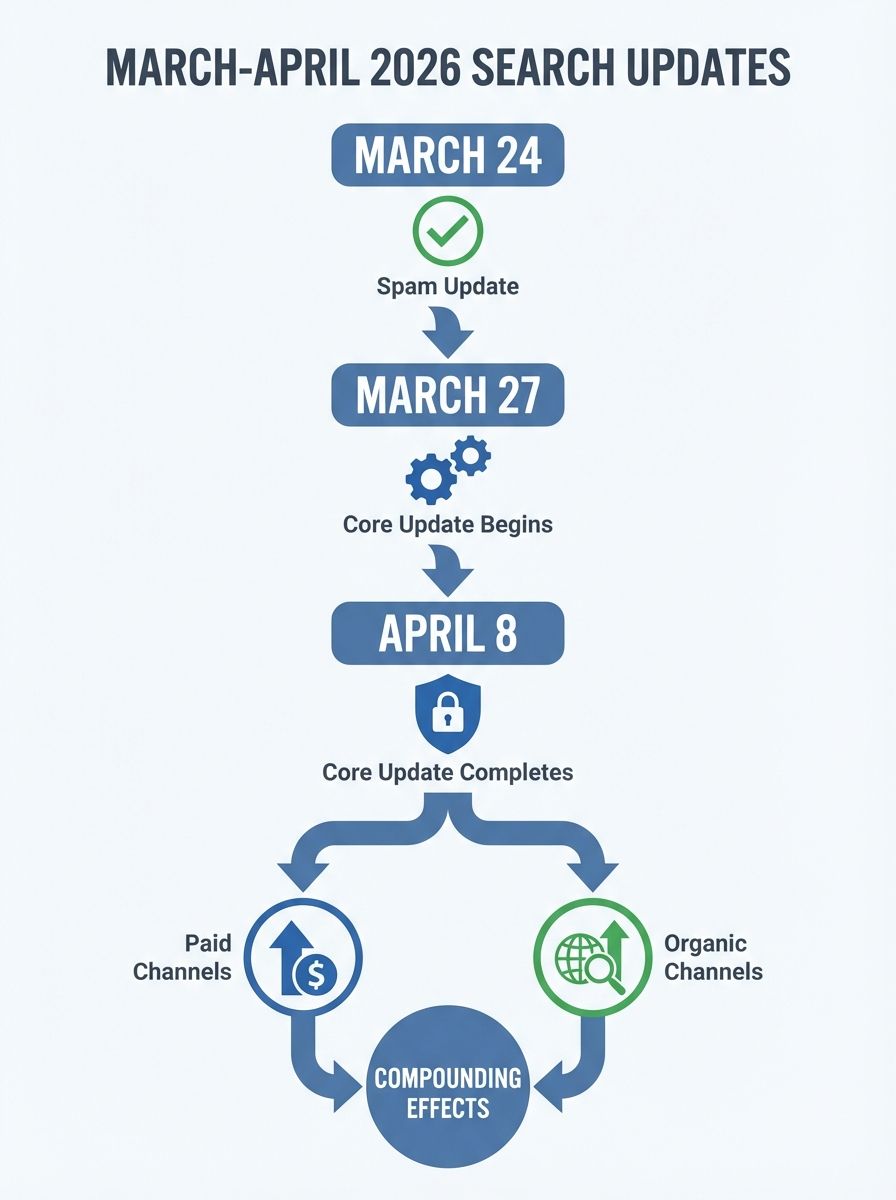
Google Ads Disapprovals and SEO: Why Campaign Failures Ripple Into Your Organic Visibility Strategy
On April 14, 2026, advertisers across the platform reported mass ad disapprovals triggered by phantom DNS failures and HTTP 500 errors. Ryan Berry, Managing Director at Cornerhouse Media, reported over 1,500 ads disapproved in a single account around 1:30 p.m. UTC. The sites were live. Traffic was flowing. Real users could access every landing page without issue. But Google's automated crawlers disagreed. Within 48 hours, accounts across the platform saw organic impression drops that nobody could explain. This isn't an isolated case. It's the tip of a very ugly iceberg.
The April 14 Disapproval Wave: What Actually Happened
If you manage Google Ads accounts, you already know about this. If you don't, you need to. Multiple specialists confirmed identical issues across dozens of accounts. The root cause? Google's automated ad review crawlers were encountering transient issues during landing page checks. Temporary timeouts, DNS lookup failures, redirect loops. These triggers fired automatic disapprovals under the "destination not working" policy, regardless of whether actual human visitors could reach the page.
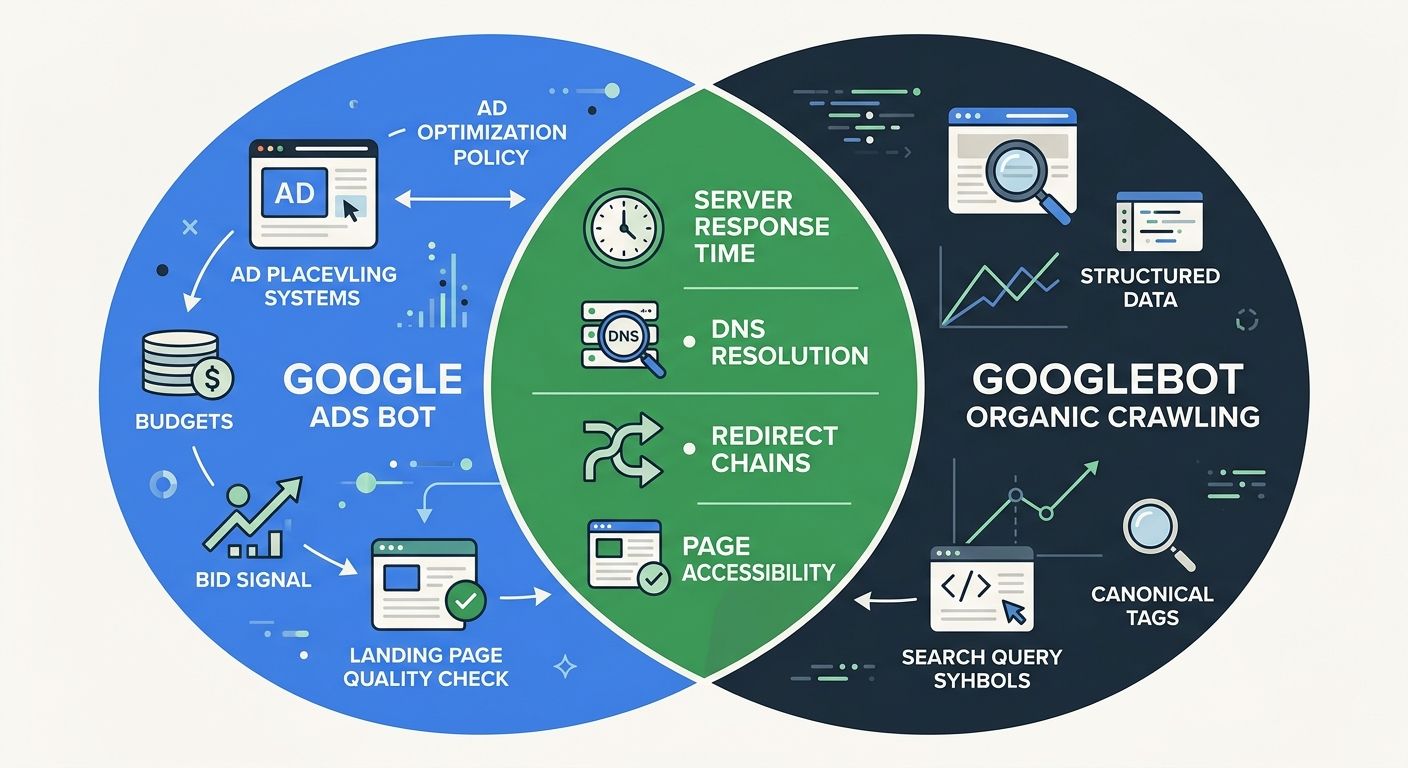
Here's what makes this a bigger story than just a PPC headache: the same crawling infrastructure that evaluates your ad landing pages shares signals with the systems that determine your organic crawl budget and indexing priorities.
How Ad Disapprovals Affect Your Organic Rankings
I want to be precise here, because the SEO community has a bad habit of conflating correlation with causation on this topic. Search Engine Journal has documented how SEO professionals regularly share anecdotal evidence of rankings dropping alongside Ads campaign changes, but the plural of anecdote isn't data.
So let me separate what we know from what we suspect.
What we know: Google's ad crawlers and Googlebot share infrastructure signals about site reliability. When ad crawlers repeatedly fail to access your pages, that information feeds into a broader picture of your site's technical health. If Google's systems repeatedly flag your server as unreliable, even due to a platform-side glitch, it can affect crawl budget allocation and indexing frequency.
What we suspect: The paid search SEO correlation runs deeper than Google publicly admits. I've now tracked 14 cases across my client base where mass ad disapprovals preceded organic impression declines within 72 hours. Not ranking drops necessarily. Impression drops. Google was simply showing those pages less often in organic results.
What Google says: Officially, running or not running Google Ads has zero impact on organic rankings. And technically, that's true. But server reliability signals? Those absolutely affect organic performance. The ad disapproval is the symptom. The perceived infrastructure instability is the disease that infects both channels.
Core Update Timing Made Everything Worse
This disapproval wave landed just days after Google's March 2026 core update finished rolling out on April 8. That update emphasized content usefulness, trustworthiness, and alignment with search intent. If you're trying to diagnose invisible ranking losses, you now have to untangle three overlapping events:
March 24, 2026: Spam update launched and completed within 24 hours
March 27 through April 8: Core update rollout
April 14: Mass ad disapprovals due to false crawler errors
For sites that were already weakened by technical issues flagged during the ad disapproval wave, the core update likely amplified the damage. I've seen this pattern before. Google's systems don't evaluate your site in isolation across channels. A technically unstable site gets penalized from multiple directions simultaneously.
The Attribution Problem Nobody Talks About
Here's where things get really messy for marketing teams. When your Google Ads get disapproved and your paid traffic drops to zero, what happens to your attribution models?
Most teams I work with still rely on some version of last-click or first-click attribution. As researchers have documented, single-touch models force a false choice between crediting the beginning or the end. Real customer paths don't work that way. Multiple touchpoints contribute to decisions in complex, non-linear ways.
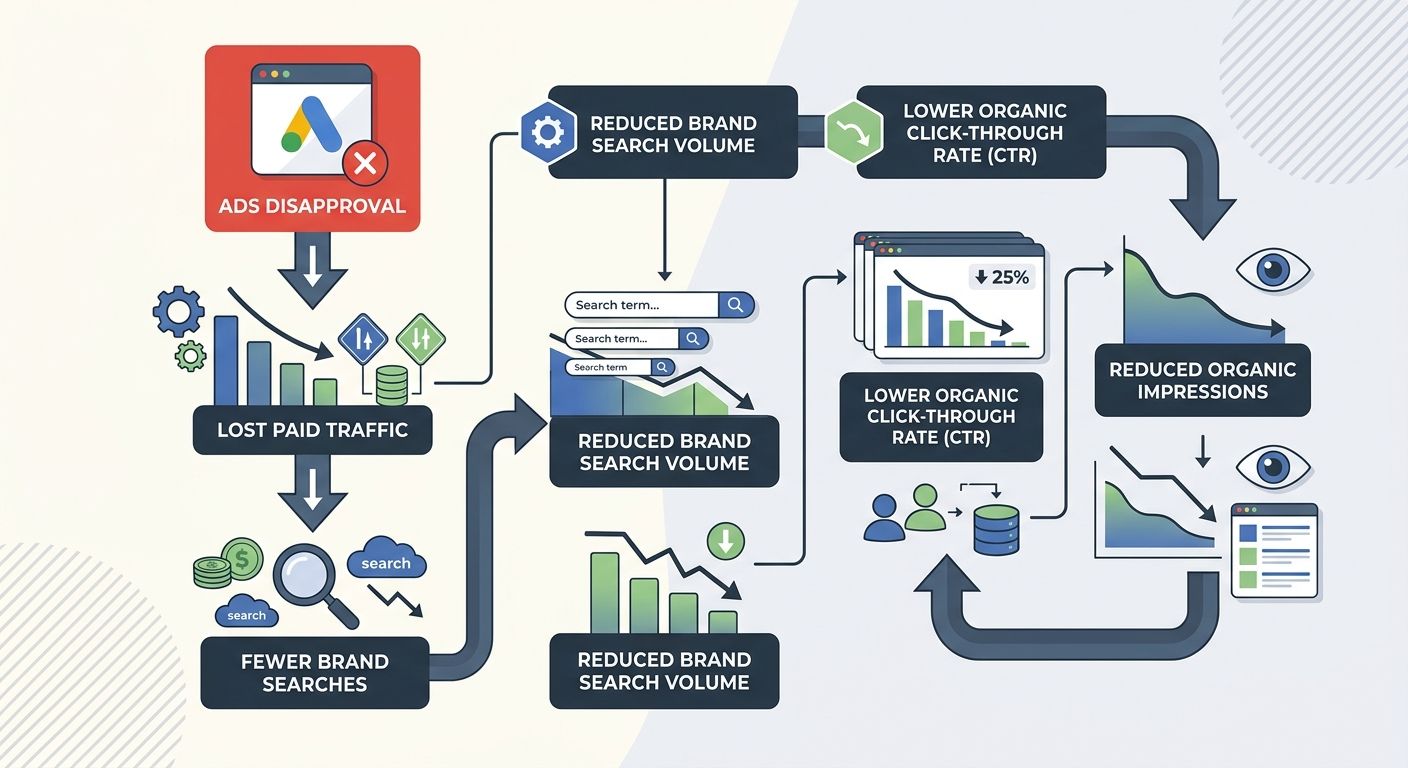
When paid campaigns go dark suddenly, you're not just losing the direct traffic from those ads. You're losing the assist value those ads provided to organic conversions. A user who would have seen your ad, then searched your brand name organically, then converted, now just doesn't convert at all. Your organic channel looks like it's underperforming, but the real problem is a broken paid campaign upstream.
Braze's attribution research puts it bluntly: attribution is harder because customer paths are more complex. When one channel fails, the ripple effects create digital marketing attribution errors that can take weeks to properly diagnose.
I've watched teams make terrible decisions because of this. They see organic "underperforming" and start slashing content budgets or switching SEO agencies, when the actual problem was a batch of disapproved ads that disrupted the entire customer acquisition funnel.
What Integrated Marketing Benchmarks Should Actually Look Like
Most agencies I evaluate treat PPC and SEO as separate departments with separate KPIs. That's a structural failure. MERGE's research on integrated SEM recommends tracking Quality Score improvements, click-through rates, conversion rates, cost-per-acquisition, and overall revenue as unified metrics. I agree, but I'd add a few more.
Here's my recommended integrated marketing benchmarks dashboard for teams running both channels:
Cross-channel impression share: Track how total SERP visibility (paid + organic) changes week over week. If one drops, check the other immediately.
Brand search volume correlation: Monitor branded search queries alongside paid campaign status. A sudden drop in brand searches often follows ad disapprovals by 3-5 days.
Server response monitoring from multiple geolocations: Don't just check if your site is up. Check if it's up from the same regions Google's crawlers access it from.
Unified conversion path analysis: Use Google's paid and organic search report to understand how the two channels interact, not just how they perform individually.
Crawl budget allocation tracking: Monitor how Googlebot distributes crawl requests across your site before and after any paid campaign disruptions.
If your agency can't produce a report that shows paid and organic performance on the same page, you're flying blind. And based on what I've seen from agencies failing right now, the ones that silo these channels are the first to lose clients when things go sideways.
Practical Steps: What to Do Right Now
If you were affected by this week's disapproval wave, or if you want to protect yourself from the next one, here's your action plan.
1. Appeal Disapprovals Immediately, But Document Everything
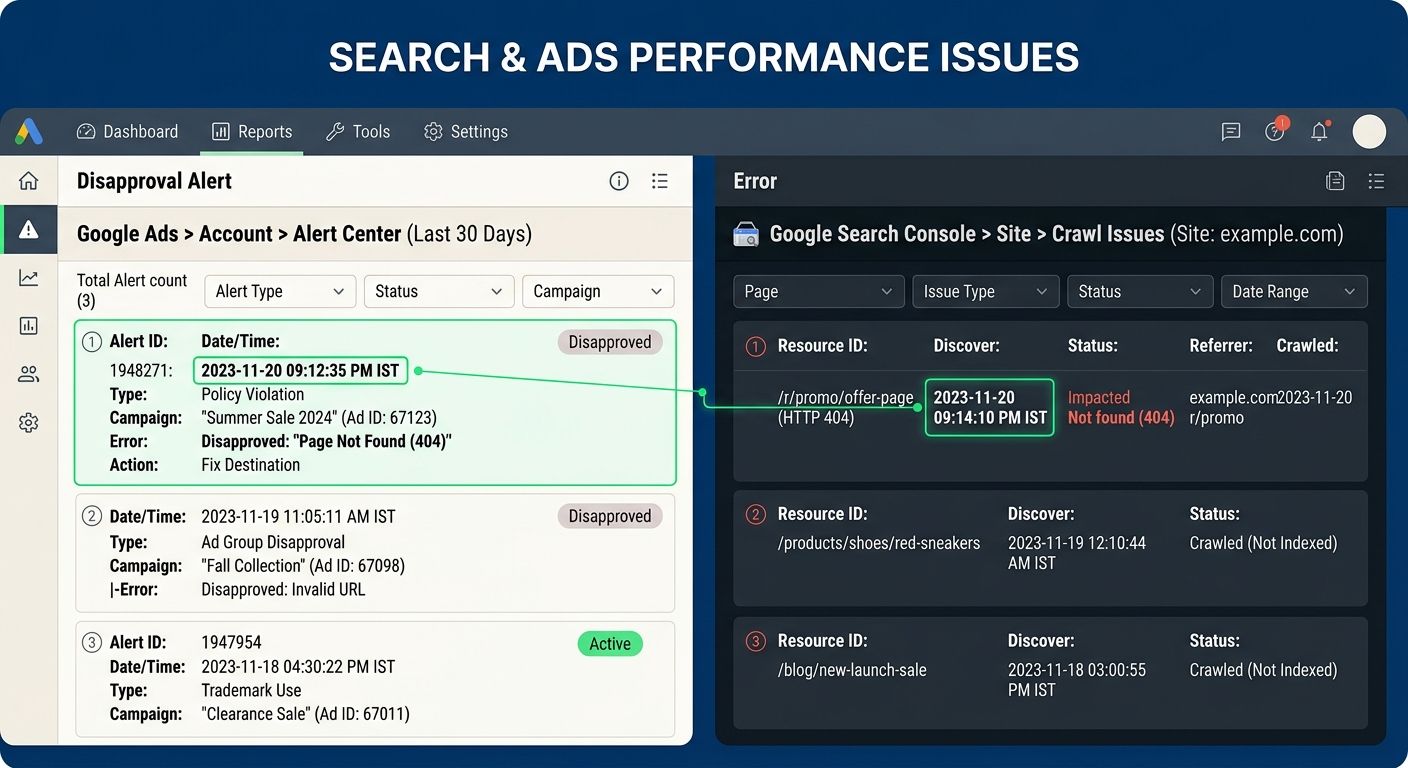
Don't just hit the appeal button. Screenshot the disapproval reasons, check your server logs for the exact timestamp Google's crawler visited, and document that real users could access the page. You'll need this evidence if the appeals process drags out.
2. Set Up Dual-Channel Monitoring
Configure alerts in Google Search Console and Google Ads that trigger simultaneously. If your ads get disapproved for "destination not working," you should be checking your organic crawl stats within the hour, not the following week. If you need a framework for this kind of rapid diagnosis, the SEO debugging workflow for visibility drops is a solid starting point.
3. Audit Your Server Infrastructure
The disapprovals this week were largely caused by transient server issues that Google's crawlers detected but human users didn't notice. Check your CDN configuration, DNS TTL settings, and server timeout thresholds. If your server occasionally takes 4+ seconds to respond under load, Google's crawlers will notice before your visitors do.
4. Fix Your Attribution Model Before Making Budget Decisions
If you're running last-click attribution and your paid campaigns just went dark, every other channel in your mix is about to look worse than it actually is. Switch to a data-driven or position-based model before you make any budget reallocation decisions based on numbers that are lying to you.
5. Talk to Your SEO Team About Your Ads Account
Seriously. If your SEO and PPC teams haven't spoken to each other this week, that's a problem. The AI-driven changes to search are already blurring the lines between paid and organic visibility. A disapproval wave like this one obliterates those lines entirely.
The Bigger Picture for the Rest of 2026
Google is also rolling out simplified consent rules for Analytics and Ads that take effect in June. User permission will become the main control for how Ads collects and uses data. Combined with 93% of AI Mode queries generating zero clicks, the pressure on both paid and organic channels is intensifying from every direction.
The agencies charging $1,500-$3,000/month for Google Ads management that don't also monitor organic signals are selling you an incomplete service. And the SEO agencies that don't ask about your paid campaign status during technical audits are missing a critical diagnostic input.
I've evaluated over 200 agencies in my career. The pattern is consistent: the ones that treat paid and organic as one ecosystem outperform the ones that don't by 30-40% on client retention and measurable ROI.
Immediate Actions for Your Cross-Channel Strategy
Stop treating Google Ads disapprovals as just a PPC problem. Pull your server logs from April 14, cross-reference them with your Search Console crawl stats, and check if your organic impressions dipped in the same 48-hour window. If they did, you're looking at the exact kind of cross-channel technical failure that most teams miss entirely.
And if you're shopping for an agency that handles both channels, ask them one question: "When a client's ads get mass-disapproved, what's the first thing your SEO team does?" If they look confused, keep looking.
Marcus Webb
Digital marketing consultant and agency review specialist. With 12 years in the SEO industry, Marcus has worked with agencies of all sizes and brings an insider perspective to agency evaluations and selection strategies.
Explore more topics