
Generative AI Search Didn't Kill Traditional SEO—Here's What Agencies Missed About the 2026 Transition
A white-label SEO provider I'd been evaluating pitched a prospective client with this line: "Traditional SEO is dead. We're pivoting 100% to AI search optimization, and you should too." They lost the contract. The agency that won?
 Marcus Webb··8 min read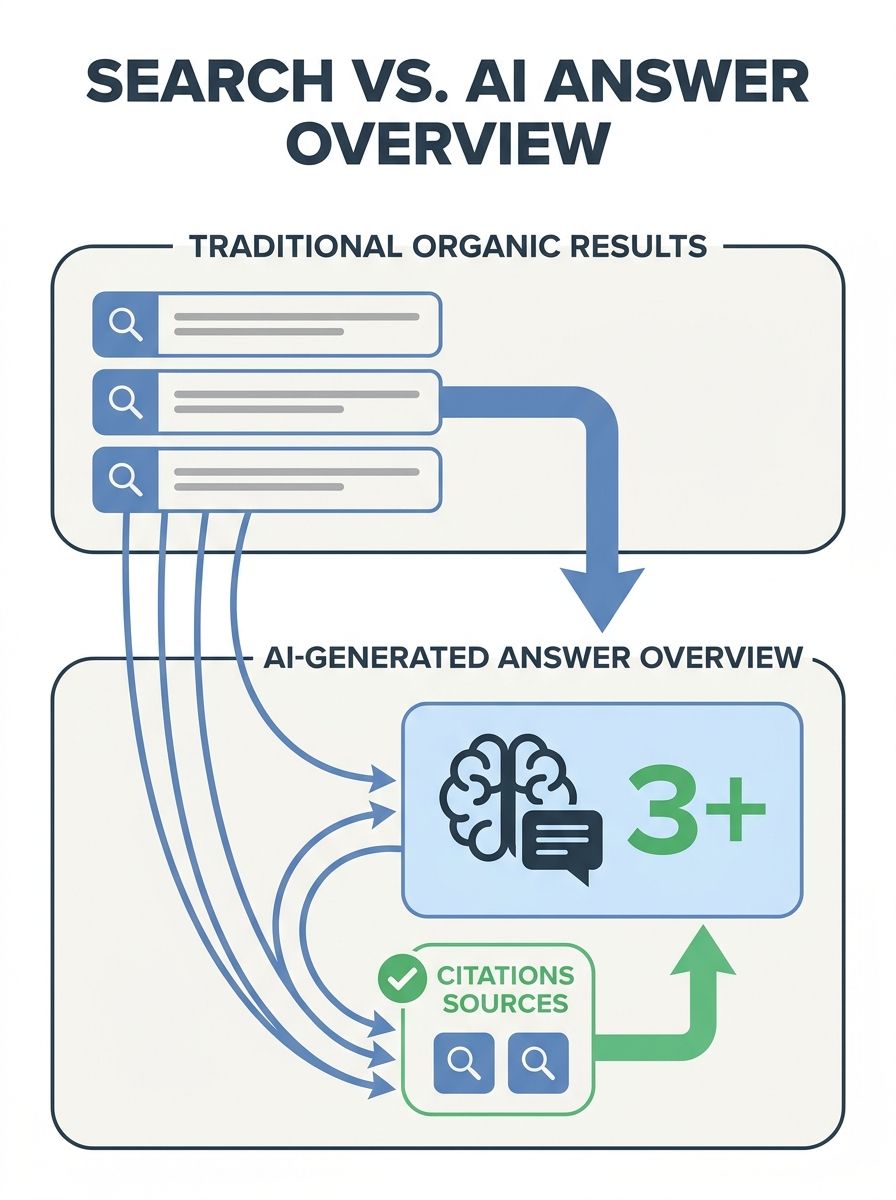
Generative AI Search Didn't Kill Traditional SEO—Here's What Agencies Missed About the 2026 Transition
A white-label SEO provider I'd been evaluating pitched a prospective client with this line: "Traditional SEO is dead. We're pivoting 100% to AI search optimization, and you should too." They lost the contract. The agency that won? One that presented a hybrid strategy showing 76% of AI Overview citations come from pages already ranking in Google's top 10 organic results. That single stat destroyed the "SEO is dead" narrative and closed the deal.
I've watched this exact scenario play out dozens of times over the past year. Agencies, white-label providers, and resellers who declared traditional SEO obsolete are now scrambling to rebuild the organic foundations they prematurely abandoned. The search landscape transition hasn't been the extinction event everyone predicted. It's been a merger. And the agencies that understood this early are eating everyone else's lunch.
The Panic Was Real, But the Data Told a Different Story
When Google AI Overviews expanded to cover roughly 16% of searches and ChatGPT crossed 5 billion monthly visits, the SEO industry had a collective panic attack. Gartner's prediction that AI-powered search interfaces would influence 30% of search traffic by 2026 felt like a death sentence for click-based SEO.
White-label SEO providers felt the squeeze first. Their agency clients started asking hard questions: "Why am I paying you $3,000/month for rankings if nobody clicks anymore?" Resellers who couldn't answer that question lost accounts. I personally know three white-label operations that shuttered between Q3 2025 and Q1 2026, each one citing the same reason: clients didn't see the value in traditional SEO anymore.
But here's what those panicking agencies missed. AI Overviews reduce organic click-through rates by up to 61% for informational queries. For transactional, commercial, and local queries? The impact is dramatically smaller. And the content that AI systems cite? It's overwhelmingly sourced from pages with strong traditional SEO signals.
The answer engine optimization vs SEO debate was never an either/or proposition. It was always both/and.
What White-Label Providers Actually Got Wrong
I've evaluated over 200 SEO agencies in my career, and the white-label segment has a unique vulnerability: they're always one step removed from the end client. When the narrative shifted to "AI search kills SEO," white-label providers faced pressure from two directions. Their agency partners demanded new AI services, and end clients questioned the value of existing organic work.
Here's what I saw go wrong across the board:
Mistake #1: Abandoning Technical SEO Foundations
Several white-label operations I reviewed gutted their technical SEO teams to fund "AI optimization specialists." The irony is brutal. As Adobe's research team noted, visibility now depends on whether a brand is cited within AI-generated responses, but those citations overwhelmingly pull from technically sound, well-structured pages.
One white-label provider I tracked cut their technical auditing team from five people to one. Within four months, their client portfolio saw a 23% drop in organic visibility. Not because AI ate their traffic, but because basic crawlability issues went undetected. If you're a reseller evaluating white-label partners, their technical SEO debugging capabilities should be non-negotiable.
Mistake #2: Treating AI Optimization as a Separate Service
Too many providers created standalone "AI visibility" packages priced between $1,500 and $4,000/month, completely disconnected from their core SEO work. Clients ended up paying for two services that should have been one integrated strategy.
The smarter approach? Build AI-driven search strategy 2026 components directly into existing SEO deliverables. Structured data, entity optimization, and conversational content formatting aren't separate disciplines. They're extensions of what good SEO has always been.
Mistake #3: Ignoring Brand Mentions as a Ranking Signal
This one caught almost everyone off guard. Unlinked brand mentions now carry significant weight in AI citation algorithms. Traditional link-building still matters, but agencies adapting to AI search have discovered that branded web mentions correlate more strongly with AI Overview appearances than domain rating or raw backlink count.
White-label providers who focused exclusively on link acquisition missed an entire category of signals. Community engagement on Reddit, Quora, and industry forums now directly impacts whether AI systems reference a brand in generated responses.
The Real Framework: How the Search Landscape Transition Actually Works
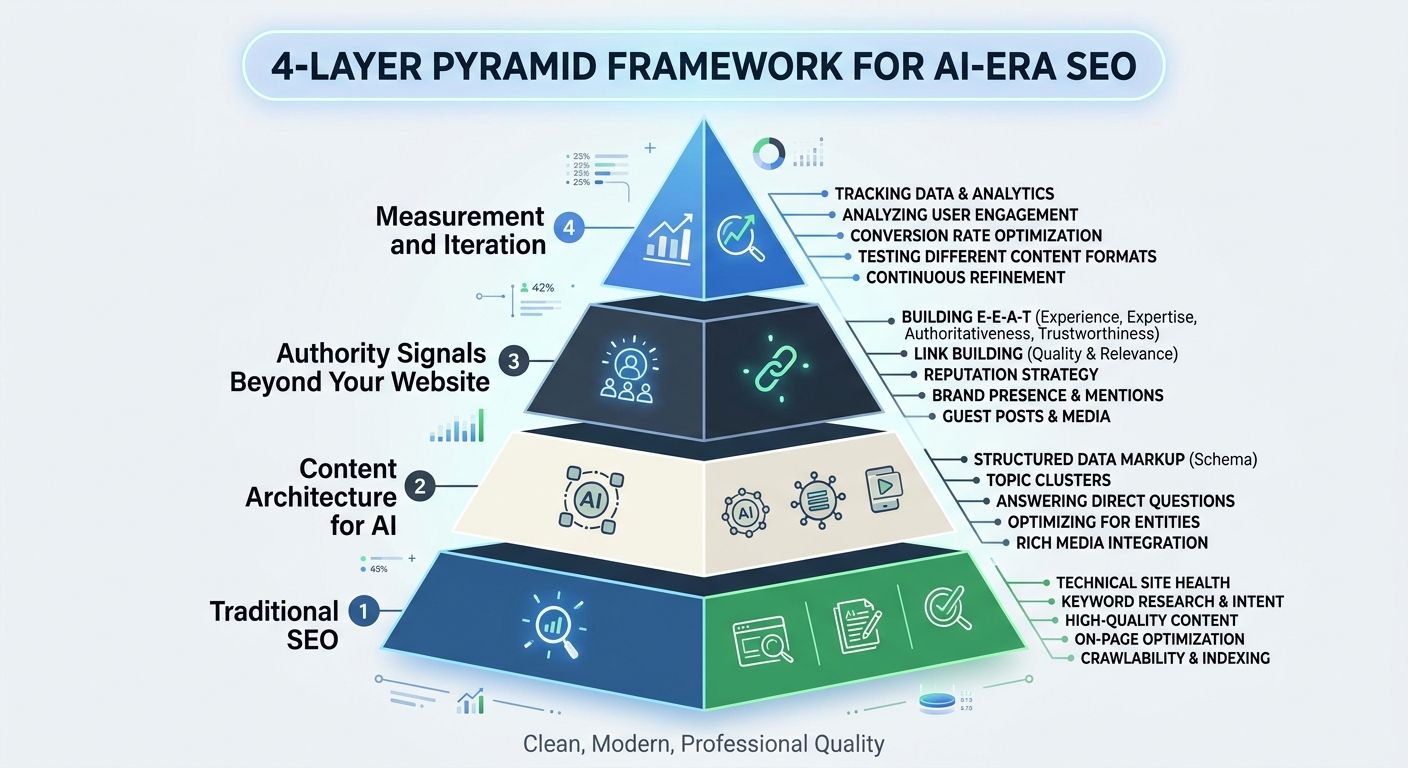
Let me break down the generative AI content ranking model as I've observed it working in practice. This is what I tell every white-label provider and agency I consult with.
Layer 1: Traditional SEO (The Foundation) Pages need to be technically sound, well-structured, and authoritative. Without this, AI systems won't find your content to cite. Period.
Layer 2: Content Architecture for AI Extraction AI systems extract information in modular chunks. Each section of your content needs to stand alone as a self-contained answer. This means:
Headings formatted as questions users actually ask
Concise 2-3 sentence direct answers immediately following each heading
FAQPage, Article, and Organization schema markup
Clear semantic structure where no section depends on surrounding paragraphs for context
Search Engine Land's analysis shows the steady increase in FAQPage schema adoption is a direct response to this need. Sites that adopted structured data early saw measurable improvements in AI citation frequency.
Layer 3: Authority Signals Beyond Your Website Brand mentions, community engagement, expert citations, and presence on platforms where LLMs train and pull data. This is the layer most agencies missed entirely.
Layer 4: Measurement and Iteration New KPIs including prompt visibility, citation accuracy, and SERP saturation across AI summaries, ads, and organic results.
Practical Pricing and Packaging for White-Label Resellers
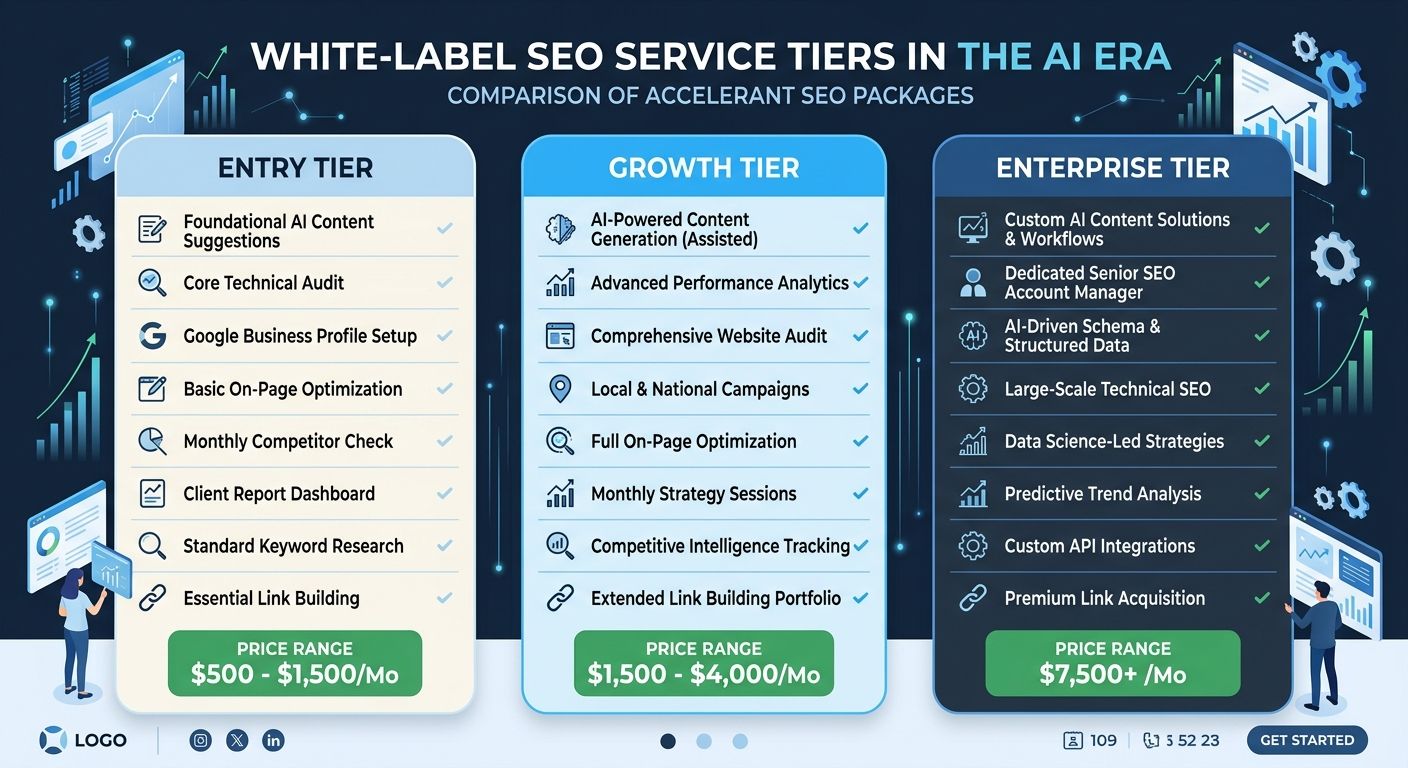
Here's where I get tactical. If you're running a white-label SEO operation or reselling services through a provider, your packaging needs to reflect the converged reality of SEO and answer engine optimization.
Entry Tier ($1,200-2,000/month per client):
Technical SEO auditing and maintenance
On-page optimization with AI-extraction formatting
Basic schema markup implementation
Monthly organic performance reporting with AI visibility checks
Growth Tier ($2,500-4,500/month per client):
Everything in Entry, plus
Content creation optimized for both traditional rankings and AI citation
Brand mention monitoring and community engagement strategy
Quarterly AI visibility audits across ChatGPT, Perplexity, and Google AI Overviews
Entity optimization and knowledge graph management
Enterprise Tier ($5,000-10,000+/month per client):
Everything in Growth, plus
Custom schema strategies and structured data architecture
Multi-platform authority building campaigns
Real-time citation monitoring and response optimization
Dedicated AI search strategist
The agencies I've seen struggling most are the ones trying to sell AI optimization as a premium add-on while keeping their core SEO packages unchanged. Don't do this. Integrate the approach. Your clients shouldn't need to buy two things that are fundamentally one thing.
For a deeper look at what separates strong providers from weak ones, the checklist for vetting e-commerce SEO agencies applies almost identically to evaluating white-label partners in this new environment.
The Content Quality Bar Has Risen Dramatically
Search engines now rank pages based on clarity, depth, and trust rather than keyword repetition. This matters enormously for white-label providers because the content production model has to change.
I've reviewed content from dozens of white-label operations this year. The ones producing thin, templated blog posts at scale? Their clients are hemorrhaging visibility. The data backs this up: 74% of high-performing content uses AI elements in the production process, but 93% of marketers edit AI-generated content before publishing. Pure AI output without expert refinement actively hurts rankings.
For white-label providers, this means your content team needs real subject matter expertise or access to it. A 500-word blog post churned out by AI with light editing won't earn citations from generative search platforms. A 2,000-word expert analysis with original insights, specific data points, and clear structure? That's what gets cited.
If you're an agency evaluating whether to keep your current provider or switch, understanding how agencies are pivoting their approach to generative AI and answer engine optimization will help you ask the right questions.
The Technical Gotcha Nobody Talks About
Here's something I keep running into during agency audits that barely anyone discusses publicly. Many sites are accidentally blocking AI crawlers. Cloudflare's default settings now block AI bots, and sites using CDN services may have unknowingly cut off access to the very systems they're trying to get cited by.
Your white-label provider should be checking:
robots.txt for AI bot permissions (ChatGPT-User, PerplexityBot, Google-Extended)
Server logs for AI crawler activity and access patterns
CDN and firewall settings that might block non-traditional user agents
Page load performance since AI crawlers have strict timeout thresholds
The most common reason for failed AI visibility isn't content quality. It's AI crawlers being blocked at the infrastructure level. I've seen this on at least a dozen client sites in the past six months. Every time, the fix took less than an hour. The diagnosis just required someone who knew to look.
This fits into the broader challenge of building enterprise-level visibility in AI-generated results, where technical access issues compound with content gaps to create invisible ranking losses.
A 90-Day Integration Plan for White-Label Operations
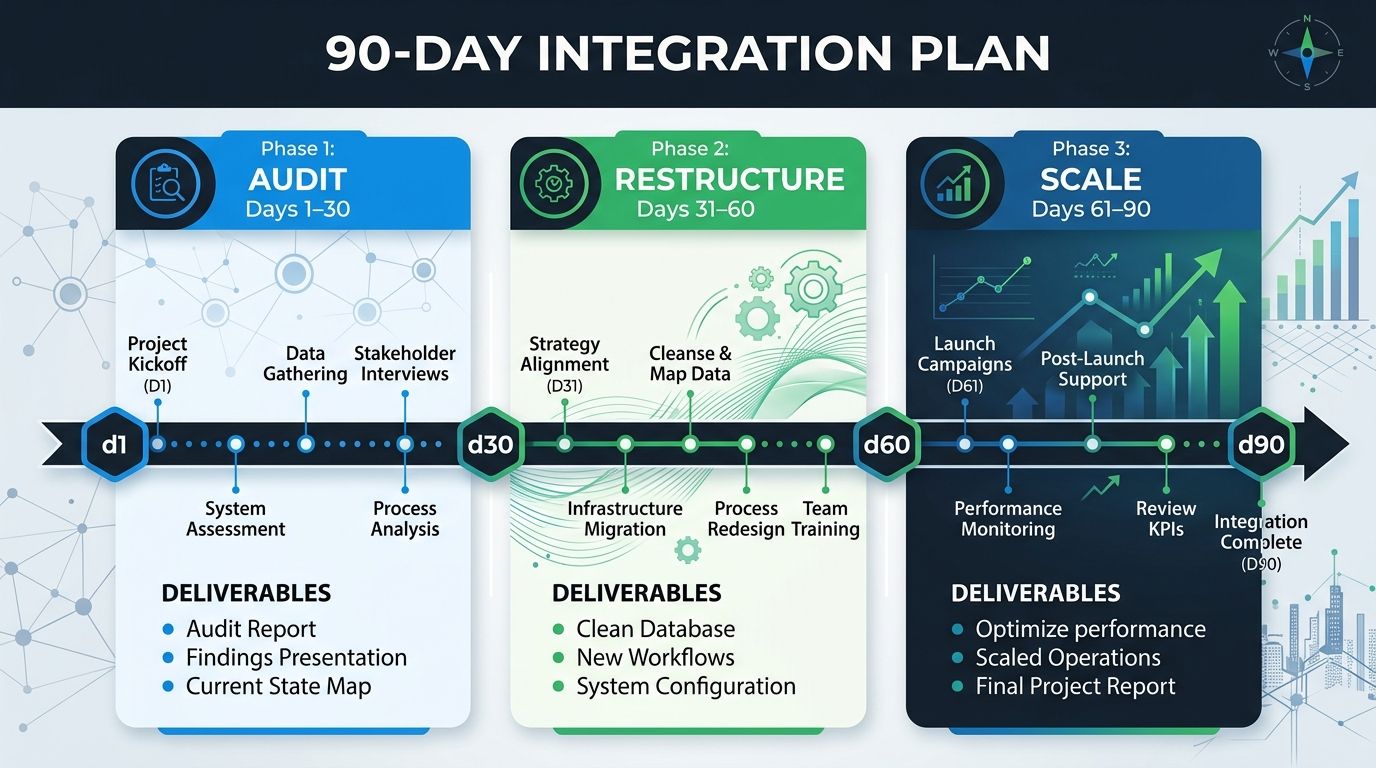
Based on what I've seen work for agencies adapting to the converged search reality, here's a phased approach that white-label providers and their reseller partners can implement:
Days 1-30: Audit and Assess
Search for every client brand in ChatGPT, Perplexity, and Google AI Overviews
Document current citation frequency and accuracy
Audit robots.txt and server configurations for AI crawler access
Review existing content for AI-extraction readiness (modular structure, direct answers, schema)
Days 31-60: Restructure and Optimize
Update content templates to include Q&A formatting and self-contained sections
Implement FAQPage and Article schema across priority pages
Begin brand mention monitoring across community platforms
Revise reporting dashboards to include AI visibility metrics alongside traditional KPIs
Days 61-90: Scale and Measure
Launch content refresh program for top 20 pages per client
Establish community engagement protocols for brand mention growth
Set baseline AI citation metrics for quarterly comparison
Adjust pricing and packaging to reflect integrated service model
As ALM Corp's research on agency adaptation recommends, this phased approach prevents the operational chaos that comes with trying to overhaul everything at once.
Why Traditional SEO Foundations Still Determine AI Visibility
The agencies that survived this transition share three traits. They never abandoned technical SEO fundamentals. They integrated AI optimization into existing workflows instead of bolting it on as a separate product. And they updated their measurement frameworks before clients started asking uncomfortable questions.
If you're running a white-label operation, your value proposition just got more complex. But it also got more defensible. Any agency can buy AI tools. Building the expertise to blend traditional SEO with AI-driven search strategy 2026 requirements takes real operational investment and deep understanding of how these systems actually work together.
My recommendation: stop treating this as a transition from one thing to another. Treat it as an expansion. Traditional SEO didn't die. It became the foundation layer for something bigger. The white-label providers who build on that foundation, rather than replacing it, will own the next decade of search.
Marcus Webb
Digital marketing consultant and agency review specialist. With 12 years in the SEO industry, Marcus has worked with agencies of all sizes and brings an insider perspective to agency evaluations and selection strategies.
Explore more topics