
Study Shows 63% of Global Companies Optimizing Localized Content for AI Search Visibility
A new study from Lokalise reveals that language-specific content optimization has become a strategic priority for businesses seeking visibility in AI-generated search results, with nearly two-thirds of global companies now tailoring multilingual content for discovery by AI systems.
 Marcus Webb··3 min read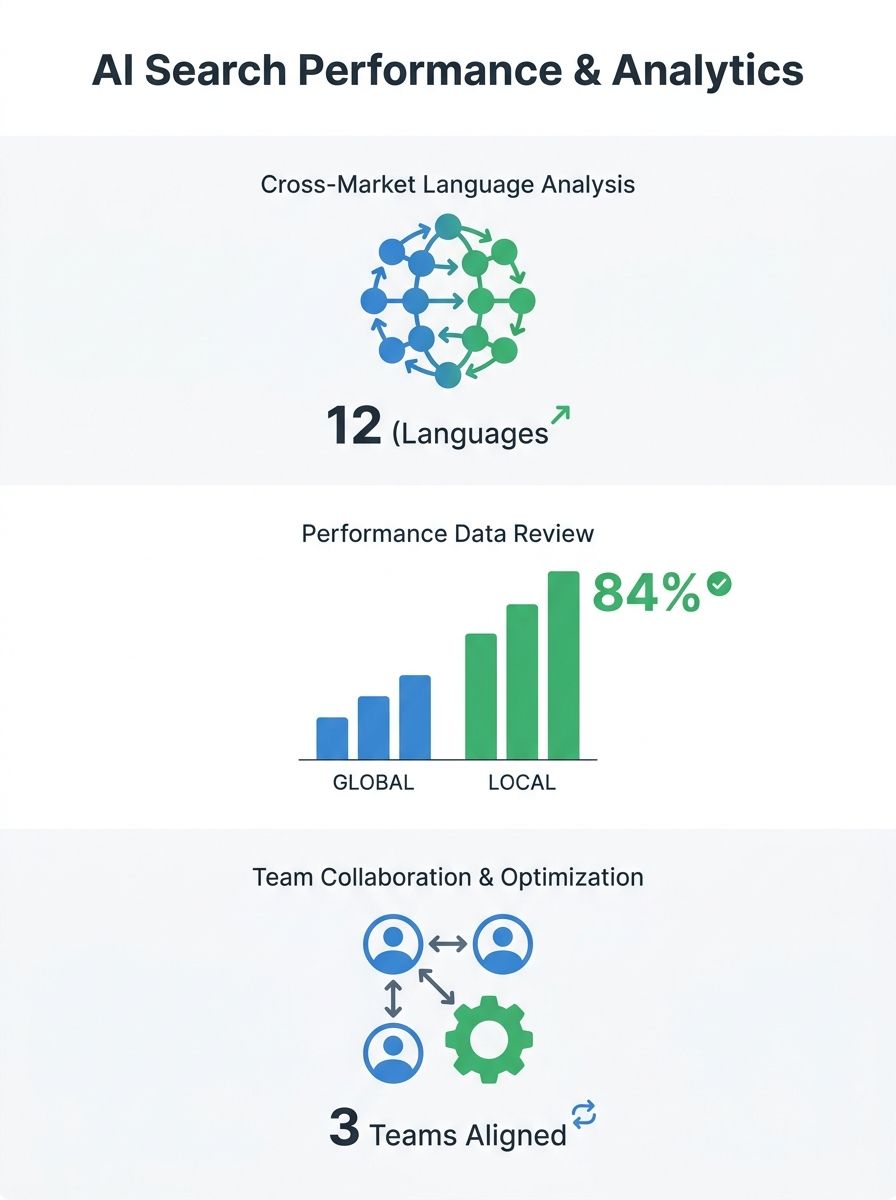
Study Shows 63% of Global Companies Optimizing Localized Content for AI Search Visibility
A new study from Lokalise reveals that language-specific content optimization has become a strategic priority for businesses seeking visibility in AI-generated search results, with nearly two-thirds of global companies now tailoring multilingual content for discovery by AI systems.
According to research published by ContentGrip, 63% of global companies are actively optimizing localized content specifically for AI search visibility. The study, conducted in 2026, examined how businesses are adapting content strategies as AI-powered search tools reshape discovery patterns across digital channels.
The data shows a measurable performance gap between localized and English-only approaches. Companies report 45% stronger AI search visibility in fully localized markets compared to regions served exclusively in English, suggesting AI systems prioritize language and regional relevance when generating answers and recommendations.

Investment Following Performance Data
Among organizations already optimizing for AI search, 73% plan to increase localization spending within the next 12 months, the study found. This shift reflects a transition from treating localization as a tactical expense to viewing it as a growth investment tied to discoverability outcomes.
The research indicates growing internal alignment on the strategic value of multilingual optimization. Sixty-seven percent of respondents said their belief in localization's role in AI discoverability has strengthened over the past year, while 55% agree that language strategy meaningfully impacts visibility in non-English markets.
Budget allocation decisions increasingly hinge on performance metrics. Sixty percent of teams report that AI search visibility performance directly influences how they distribute localization budgets across geographic markets, according to the study.
Barriers to Adoption Remain
Not all organizations are advancing at the same pace. Among companies not yet optimizing for AI search, 38% cite insufficient budget as the primary obstacle, followed by lack of expertise at 32% and unclear return on investment at 31%.
The study identifies a gap between awareness and execution. Companies planning to begin optimization within 12 months are nearly twice as likely to believe they are already losing AI search visibility compared to those with no plans, suggesting concern is building faster than implementation capacity.
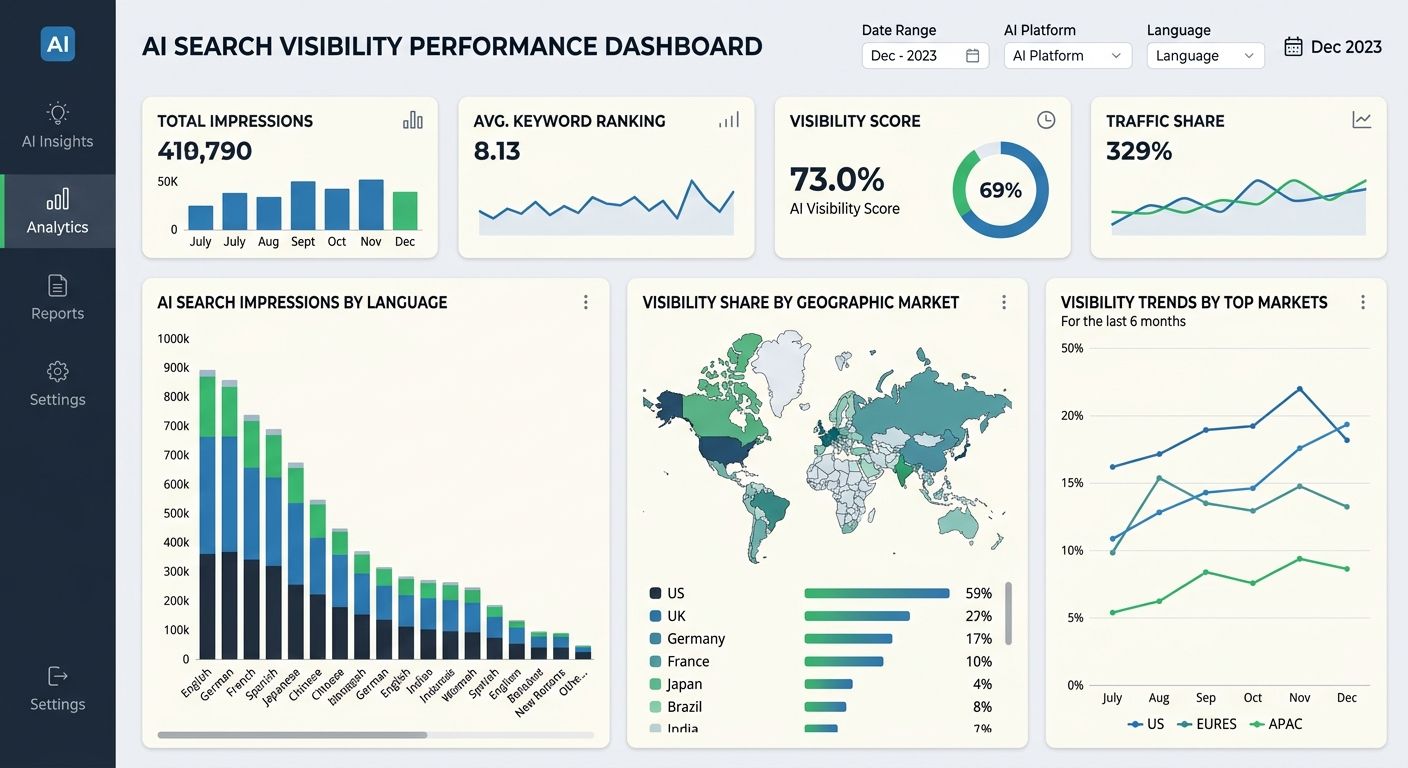
Language distribution in AI-generated results remains heavily skewed toward English, which appears in 97% of responses tracked in the study. Spanish, French, Chinese, and German represent the next tier of languages appearing in AI search results, though at significantly lower frequencies.
Content Format Preferences Emerge
The research reveals distinct patterns in which content types organizations prioritize for AI search optimization. Product documentation and help center articles lead at 50% each, followed by landing pages at 46% and FAQs at 44%.
Traditional editorial content formats show lower optimization rates. Blog content sits at 38%, while user-generated content and structured data hover in the mid-30% range. Video transcripts rank lowest at 32%, the study shows.
These distribution patterns suggest AI systems favor structured, utility-driven content when generating answers over narrative-heavy formats.
Measurement Maturity Varies
Tracking capabilities remain uneven across organizations. Only 31% of companies monitor AI-driven search traffic separately by language or geography, according to the findings. Twenty percent rely on a single global metric, while 10% report no tracking at all.
This measurement gap creates challenges for optimization. Without market-level performance data, organizations cannot effectively allocate resources or identify underperforming regions, the research suggests.
How Localization Capabilities Shape AI Search Readiness
CMOs and marketing managers evaluating SEO agency partnerships should consider how localization capabilities factor into AI search readiness. The study's findings indicate that English-only content strategies may increasingly limit visibility as AI systems evolve to prioritize language and regional relevance.
Organizations should assess whether current SEO vendors track AI-generated search performance separately from traditional organic metrics, particularly at the market and language level. Without granular measurement, optimizing for this emerging search paradigm becomes speculative rather than data-driven.
The research also suggests that certain content formats—specifically product documentation, help centers, and FAQs—may warrant priority in localization budgets given their performance in AI search contexts. Marketing leaders should evaluate whether their content mix aligns with formats AI systems appear to favor when generating answers and recommendations.
Marcus Webb
Digital marketing consultant and agency review specialist. With 12 years in the SEO industry, Marcus has worked with agencies of all sizes and brings an insider perspective to agency evaluations and selection strategies.
Explore more topics