
Long-Tail Comparison Keywords: The Underrated SEO Strategy Enterprise Agencies Are Missing
Enterprise SEO agencies typically build their keyword strategies around volume. They chase head terms with 10,000+ monthly searches, compete for branded category pages, and measure success by how many top-10 positions they hold for single-word or two-word phrases.
 Marcus Webb··8 min read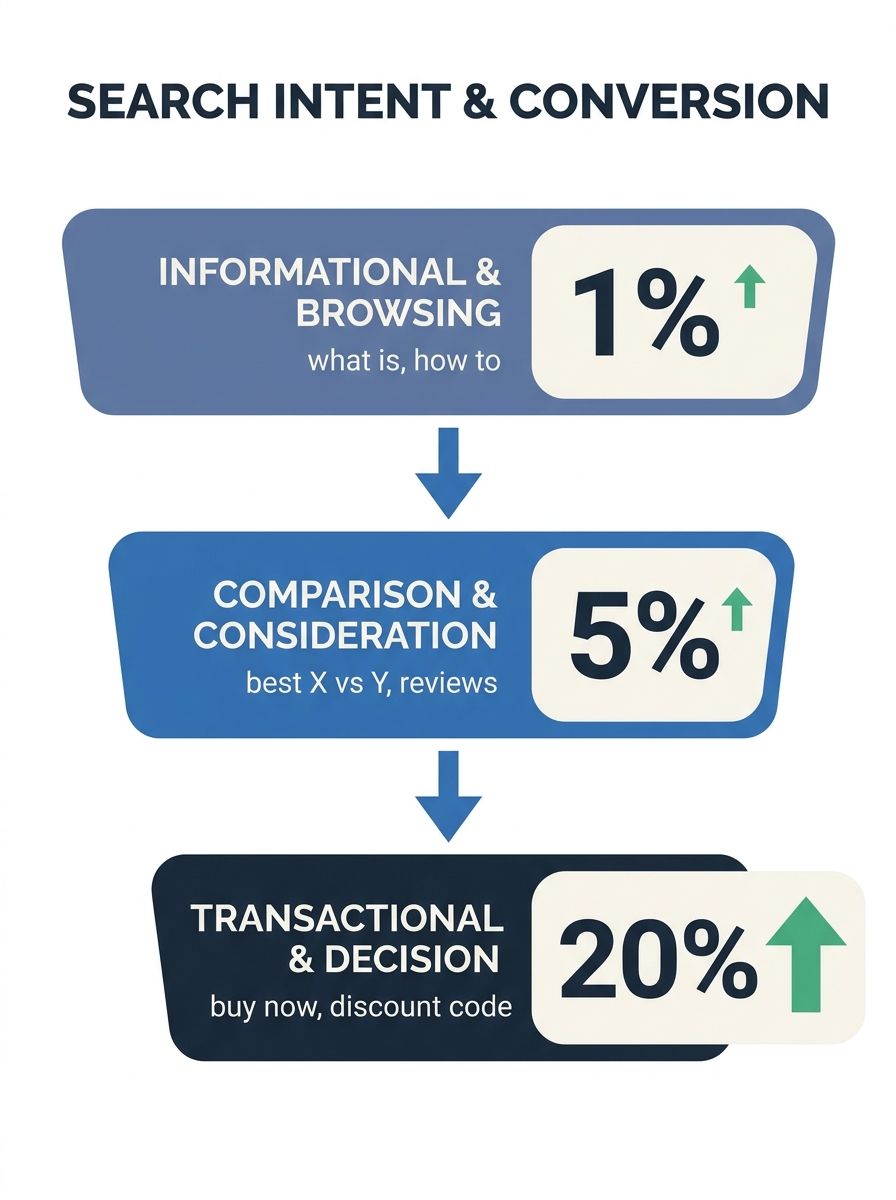
Long-Tail Comparison Keywords: The Underrated SEO Strategy Enterprise Agencies Are Missing
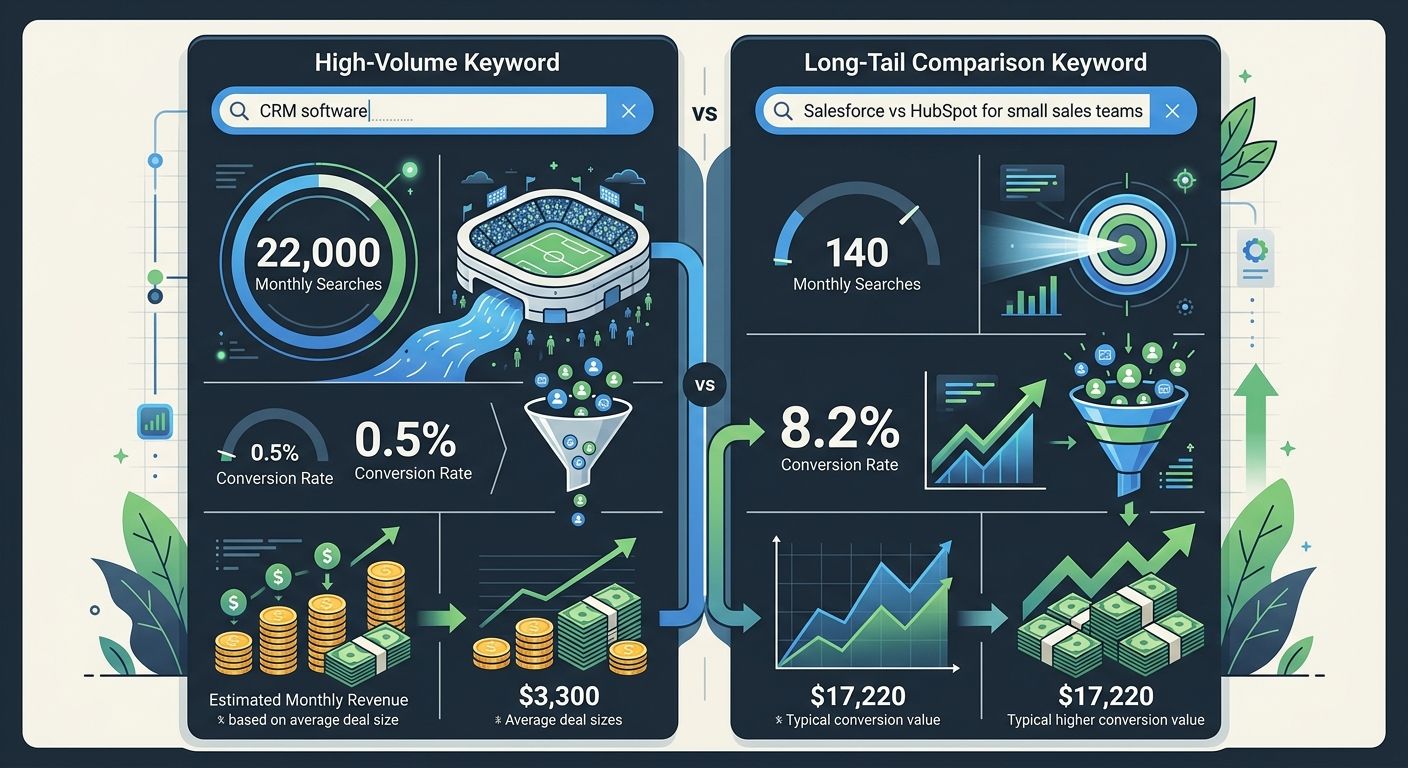
Enterprise SEO agencies typically build their keyword strategies around volume. They chase head terms with 10,000+ monthly searches, compete for branded category pages, and measure success by how many top-10 positions they hold for single-word or two-word phrases. The mechanism they're ignoring is long-tail comparison keywords: multi-word queries where a searcher is actively weighing two or more options before making a decision. Phrases like "Salesforce vs HubSpot for small sales teams" or "best HRIS software for companies under 200 employees" carry a fraction of the search volume but represent buyers who are weeks, sometimes days, from a purchase. The misunderstanding isn't that enterprise teams don't know these queries exist. It's that they systematically deprioritize them because the numbers look small in a keyword report. And that's exactly why they're leaving their highest-converting organic traffic on the table.
How Comparison Intent Differs From Everything Else in the Funnel
Search intent gets bucketed into informational, navigational, and transactional. That's the textbook version. But comparison intent sits in an uncomfortable gap between consideration and decision. Someone searching "CRM software" is browsing. Someone searching "buy Salesforce license" is purchasing. Someone searching "Salesforce vs HubSpot for remote SaaS teams" is doing neither. They're evaluating.
As Neil Patel's research on funnel-stage keywords points out, when someone searches "best CRM," they're not looking for you to brag about being the best. They want an honest comparison so they can decide for themselves. That distinction matters enormously because the content that ranks for comparison queries has to be structured differently than product pages, blog posts, or landing pages.
This is bottom-of-funnel traffic in disguise. The searcher has already done their top-of-funnel research. They know the category. They've narrowed to a shortlist. Now they need help making a final call. Enterprise agencies that focus exclusively on high-volume category terms are essentially optimizing for people who are still window shopping while ignoring the ones with a credit card in hand.
The Anatomy of a Long-Tail Comparison Keyword
Not all comparison queries are created equal. Understanding their structure helps you identify which ones are worth targeting and which are noise.
A typical long-tail comparison keyword has three components:
The comparison frame: "vs," "compared to," "or," "alternatives to," "versus"
The subjects: two or more named products, services, or approaches
The niche modifier: a qualifying phrase that narrows the audience ("for healthcare," "under $500/month," "for teams of 10-50")
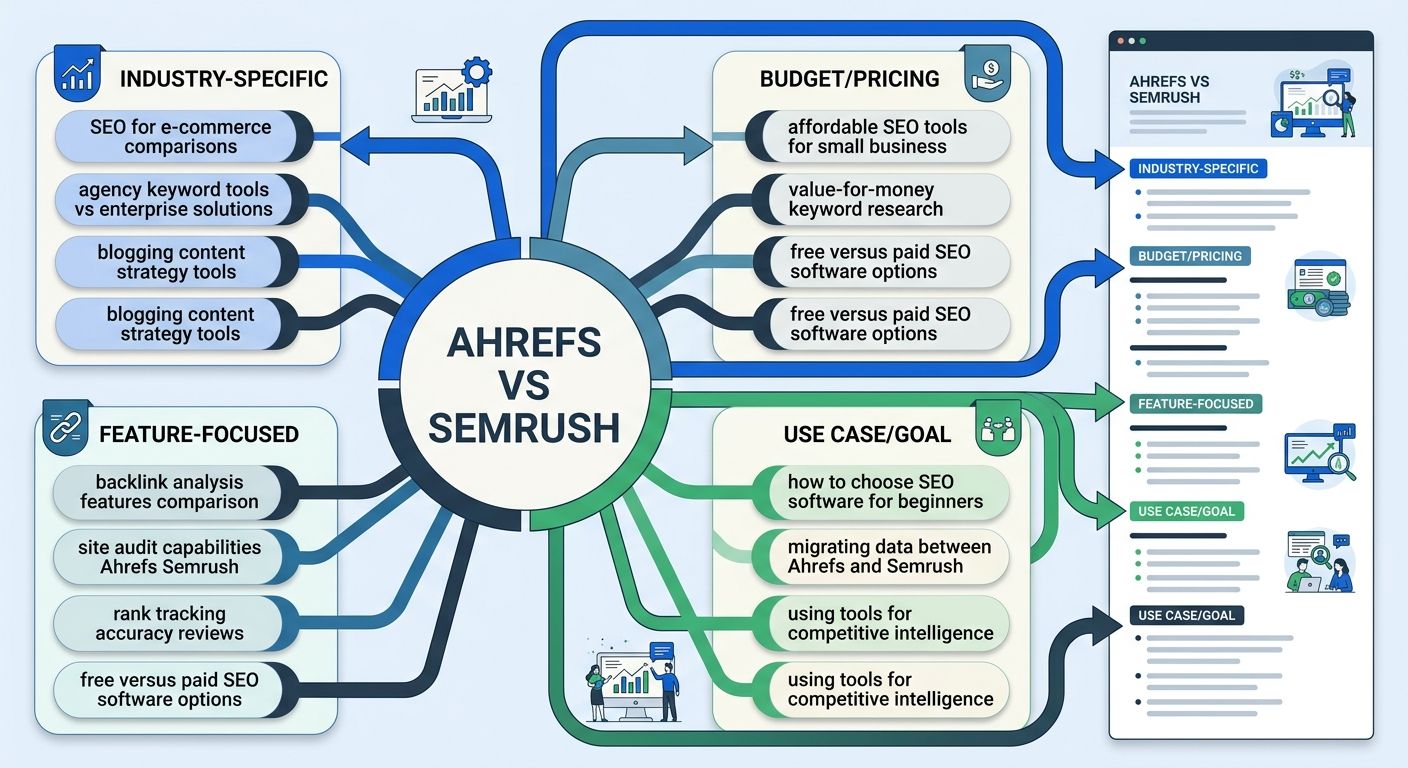
That third component is what makes these keywords long-tail, and it's where the real value hides. "Ahrefs vs Semrush" is a comparison keyword, sure, but it's also brutally competitive. "Ahrefs vs Semrush keyword research for B2B SaaS" adds niche keyword modifiers that dramatically reduce competition while increasing relevance to a specific buyer.
BrightEdge's research on long-tail optimization confirms this pattern, noting that niche comparisons like "CRM for remote SaaS teams" and specific use cases like "email automation tools for nonprofits with under $10M budget" represent the kind of clustered intent that converts. These aren't random keyword combinations. They're the exact phrases people type when they're ready to make a commitment.
Why Enterprise Agencies Skip These
I've evaluated over 200 SEO agencies, and the pattern is remarkably consistent. Enterprise agencies report on keyword rankings in dashboards that sort by volume. A keyword with 90 monthly searches simply doesn't show up on a CMO's radar when it's sitting next to terms pulling 15,000. The agency knows those 90-search keywords convert at 5-8x the rate of the head terms, but explaining that to a client who's paying $15,000/month for SEO and wants to see big numbers? That's a harder conversation than most account managers want to have.
This is a transparency problem as much as a strategy problem. If you're working with an agency that claims AI readiness but still reports solely on volume metrics, you're likely missing comparison keyword opportunities entirely.
Finding Comparison Keywords: The Tooling Layer
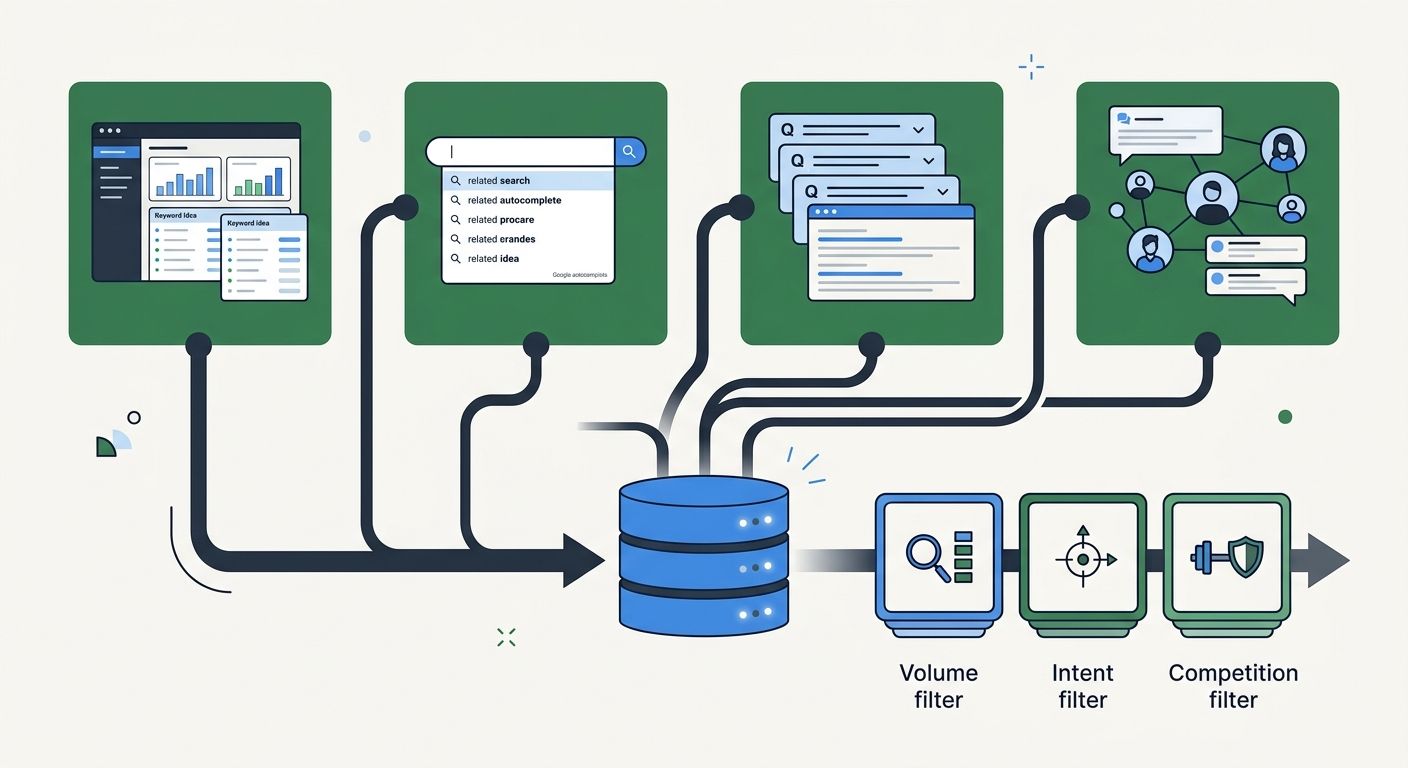
The tools you use to find long-tail comparison keywords matter, but probably not in the way you think. The real differentiator isn't which tool has the bigger database. It's how you query the tool and what filters you apply.
Ahrefs vs Semrush for Keyword Research
Since we're talking about comparison queries, let's address the most common one in our own industry. The Ahrefs vs Semrush keyword research debate comes down to a practical difference: Ahrefs has a larger overall keyword database as of February 2026, but Semrush provides more keyword variations for US-based searches. For finding long-tail comparison keywords specifically, I prefer Semrush's Keyword Magic Tool because it lets you filter by question format and include/exclude specific modifiers like "vs" or "compared to."
Community sentiment on Reddit's SEO forums largely echoes this. Ahrefs excels at competitive backlink analysis and keyword ranking history, but for raw keyword discovery, particularly at the long-tail level, Semrush tends to surface more variations. If you're running both tools (and at enterprise scale, you probably should be), use Ahrefs for competitive gap analysis and Semrush for initial keyword ideation.
Beyond the Big Two
Semrush's long-tail keyword guide outlines several underused discovery methods: analyzing your existing keyword rankings for comparison terms you already rank for (often on page 2-3), checking competitor rankings for "vs" and "alternative" pages, and mining online communities like Reddit, Quora, and industry-specific forums for the exact language buyers use.
If you're an agency building out a custom tool stack without vendor lock-in, consider pairing a primary keyword tool with a community monitoring solution. The comparison keywords real buyers use in forum posts often differ from what keyword tools predict.
Niche Keyword Modifiers That Signal Purchase Intent
The modifier attached to a comparison keyword tells you everything about where the searcher sits in their decision process. Some modifiers signal genuine bottom-of-funnel intent. Others are just curiosity.
High-intent niche keyword modifiers:
Industry verticals: "for healthcare," "for ecommerce," "for B2B SaaS"
Company size: "for startups," "for enterprise," "for teams under 50"
Budget constraints: "under $100/month," "free vs paid," "affordable"
Specific features: "with API access," "with HIPAA compliance," "with white-label"
Migration context: "switching from," "migrating from," "replacing"
Lower-intent modifiers (still valuable, but further from conversion):
General comparisons: "pros and cons," "differences between"
Year-based: "in 2026," "latest"
Beginner-level: "for beginners," "explained"
When someone searches "Semrush vs Ahrefs for B2B SaaS agency with 20+ clients," they aren't writing a blog post about keyword tools. They're choosing one. The specificity of the modifier directly correlates with purchase readiness.
Flow Agency's research on niche keyword research makes an important point: if your SaaS has both a Starter Plan for small companies and an Enterprise Plan, you're targeting two entirely different audiences. The comparison keywords those audiences use will reflect their distinct needs, budgets, and evaluation criteria. One-size-fits-all comparison pages miss this completely.
Building Content That Actually Matches Comparison Intent
This is where most enterprise content strategies fall apart. Even when agencies identify the right comparison keywords, they build the wrong content for them.
What Comparison Searchers Actually Want
A person searching "[Tool A] vs [Tool B] for [specific use case]" wants:
An honest, side-by-side evaluation with specific criteria
Pricing information (or at least pricing ranges)
Feature-by-feature breakdowns relevant to their use case
A clear recommendation with reasoning
Evidence the author has actually used both products
What they don't want is a 3,000-word essay that refuses to take a position. I've seen enterprise content teams produce comparison pages so carefully hedged that they're useless. "Both tools are great options depending on your needs" isn't an answer. It's a dodge.
As Siteimprove's analysis of lower-funnel search intent puts it, someone comparing software options wants a thoughtful comparison, not an advertisement for one company. There's a middle ground between being neutral and being useful. Take a position, explain your reasoning, and let the reader decide if your criteria match theirs.
The Content Format That Converts
Structure your comparison content with these elements:
Quick verdict at the top: Don't bury the lead. Give your recommendation in the first 100 words, then spend the rest of the article supporting it.
Feature comparison table: Scannable, specific, and honest about limitations.
Use case matching: "Choose A if you need X. Choose B if you need Y."
Pricing transparency: Even if pricing changes, provide the ranges you verified and when.
Niche-specific context: This is the whole reason someone clicked a long-tail comparison instead of a generic one.
Enterprise agencies that have already started finding competitor keyword gaps often discover that their competitors have comparison pages, but those pages are thin, outdated, or missing the niche modifiers that specific buyer segments are searching for. That's your opening.
Clustering, Not Isolating
Don't build a separate page for every minor variation of a comparison keyword. BrightEdge's guidance here is sound: cluster keywords around a primary comparison query and address the long-tail variants within that content. "Ahrefs vs Semrush for keyword research" and "Ahrefs vs Semrush keyword difficulty accuracy" and "Ahrefs vs Semrush for B2B" can all live on the same well-structured page with distinct sections.
This approach gives each page enough topical depth to rank for the primary term while capturing dozens of long-tail variations. It's more efficient to produce, easier to maintain, and performs better in search than 15 thin pages competing with each other.
Measurement: Why Standard Reporting Hides the Wins
If you measure a comparison SEO strategy using the same dashboard you use for head terms, you'll kill it within three months. A single comparison page might attract 200 organic visits per month. In isolation, that looks pathetic next to a category page pulling 8,000 visits.
But pull the revenue data. Those 200 visits from "[Product] vs [Competitor] for [specific need]" are converting at 6-10%, which means 12-20 qualified leads per month from one page. At enterprise deal sizes, that's potentially six figures in pipeline from a single piece of content that took a day to produce.
The agencies that understand how to predict SEO performance separate comparison keyword reporting into its own segment. They track assisted conversions, not just last-click attribution, because a comparison page often isn't the first touch. It's the last meaningful touch before a demo request or purchase.
Three Steps to Start Capturing Comparison Traffic
You don't need to overhaul your entire keyword strategy. You need to add a layer to it.
Start by auditing your existing content for pages that already rank for comparison terms on pages 2-3 of Google. These are the lowest-hanging wins because the content exists and Google already associates it with comparison intent. Optimize those pages first: add niche modifiers in subheadings, include pricing ranges, take a clear position.
Next, run a competitor gap analysis specifically filtered for "vs," "compared to," "alternative," and "review" keywords. If your competitor has a comparison page ranking for a term you don't cover, build a better one. Better means more specific, more honest, more current, and more opinionated.
Build 3-5 comparison pages per quarter, each targeting a primary comparison keyword with a cluster of niche modifier variants. Track them separately from your head-term content. Give them 90 days before evaluating performance, and measure them on conversion rate and pipeline contribution, not raw traffic.
The enterprise agencies that figure this out first will own the bottom-of-funnel traffic their competitors are ignoring. And in a world where generative AI is already changing how people discover top-of-funnel content, owning the comparison layer might be the most defensible SEO position you can build.
Marcus Webb
Digital marketing consultant and agency review specialist. With 12 years in the SEO industry, Marcus has worked with agencies of all sizes and brings an insider perspective to agency evaluations and selection strategies.
Frequently Asked Questions
- What are long-tail comparison keywords and why do they matter for SEO?
- Long-tail comparison keywords are multi-word queries where searchers actively weigh two or more options before making a decision, such as "Salesforce vs HubSpot for small sales teams." Though they have lower search volume, they represent buyers who are weeks or days away from a purchase and convert at 5-8x the rate of head terms.
- What are the three components of a long-tail comparison keyword?
- Long-tail comparison keywords consist of: the comparison frame ("vs," "compared to," "alternatives to"), the subjects (two or more named products or services), and the niche modifier (a qualifying phrase like "for healthcare" or "under $500/month"). The niche modifier is what reduces competition while increasing relevance to specific buyers.
- Which SEO tools are best for finding long-tail comparison keywords?
- Semrush's Keyword Magic Tool is preferred for finding comparison keywords because it filters by question format and lets you include/exclude modifiers like "vs" or "compared to." Google's autocomplete and People Also Ask boxes are also valuable free resources for discovering how real people phrase comparison queries.
- What niche keyword modifiers indicate high purchase intent?
- High-intent modifiers include industry verticals ("for healthcare"), company size ("for startups"), budget constraints ("under $100/month"), specific features ("with HIPAA compliance"), and migration context ("switching from"). For example, "Salesforce vs HubSpot for healthcare teams under 50" signals a buying decision rather than curiosity.
- How should you structure comparison content to match search intent?
- Comparison content should include a quick verdict at the top, a feature comparison table, use case matching sections, transparent pricing information, and niche-specific context. It should take a clear position with reasoning rather than being neutrally hedged, and address what the searcher actually needs to make a final decision.
- How should enterprise agencies measure the success of comparison keyword pages?
- Measure comparison pages separately from head-term content using conversion rate and pipeline contribution rather than raw traffic volume. Track assisted conversions since comparison pages are often the last meaningful touch before a demo request or purchase, and allow 90 days before evaluating performance.
- Why do enterprise agencies typically ignore long-tail comparison keywords?
- Enterprise agencies deprioritize long-tail comparison keywords because they appear to have small search volumes in keyword reports, making them less visible to clients paying premium fees who expect to see high-volume rankings. This is a transparency problem—agencies know these keywords convert at higher rates but struggle to justify them to clients focused on big numbers.
- What is the difference between comparison intent and other types of search intent?
- Comparison intent sits in a gap between consideration and decision stages—it's neither browsing (informational) nor purchasing (transactional). Someone searching "Salesforce vs HubSpot for remote SaaS teams" has already done top-of-funnel research and narrowed to a shortlist; they're evaluating to make a final decision.
Explore more topics