
Entity-Based Optimization Framework Positions Disambiguation as Core SEO Layer Alongside Technical and Content Signals
Search Engine Journal published a four-layer SEO audit framework September 2 that positions entity optimization as foundational to modern information retrieval, alongside technical SEO, content quality, and E-E-A-T signals, according to an analysis by SEO consultant Harry Clarkson-Bennett.
 Marcus Webb··3 min read
Entity-Based Optimization Framework Positions Disambiguation as Core SEO Layer Alongside Technical and Content Signals
Search Engine Journal published a four-layer SEO audit framework September 2 that positions entity optimization as foundational to modern information retrieval, alongside technical SEO, content quality, and E-E-A-T signals, according to an analysis by SEO consultant Harry Clarkson-Bennett.
The framework argues that Google's Knowledge Graph—a database of entities operating for 15 years—requires consistent signals across owned and earned properties to confidently interpret brand relationships. Entity SEO specifically targets disambiguation of people, places, organizations, products, events, and topics relevant to a business, Clarkson-Bennett wrote.
"Search engines and AI systems have to build a picture of who you are from fragmented evidence across the web," Clarkson-Bennett stated in the September 2 article. "Your job is to make that picture as clear, consistent and well-supported as possible."
Four-Component Audit Structure Treats Entities as Distinct Layer
The published framework divides SEO auditing into technical SEO, content, E-E-A-T, and entities as separate evaluation categories. The entity layer focuses on controlling owned properties to ensure stated brand positioning matches earned mentions across external platforms, according to the framework.
On-page content, internal and external links, navigation, and the consistency of owned and earned mentions determine how information retrieval systems interpret brand signals, the analysis states. Organizations must verify that third-party mentions corroborate controlled messaging on owned properties.
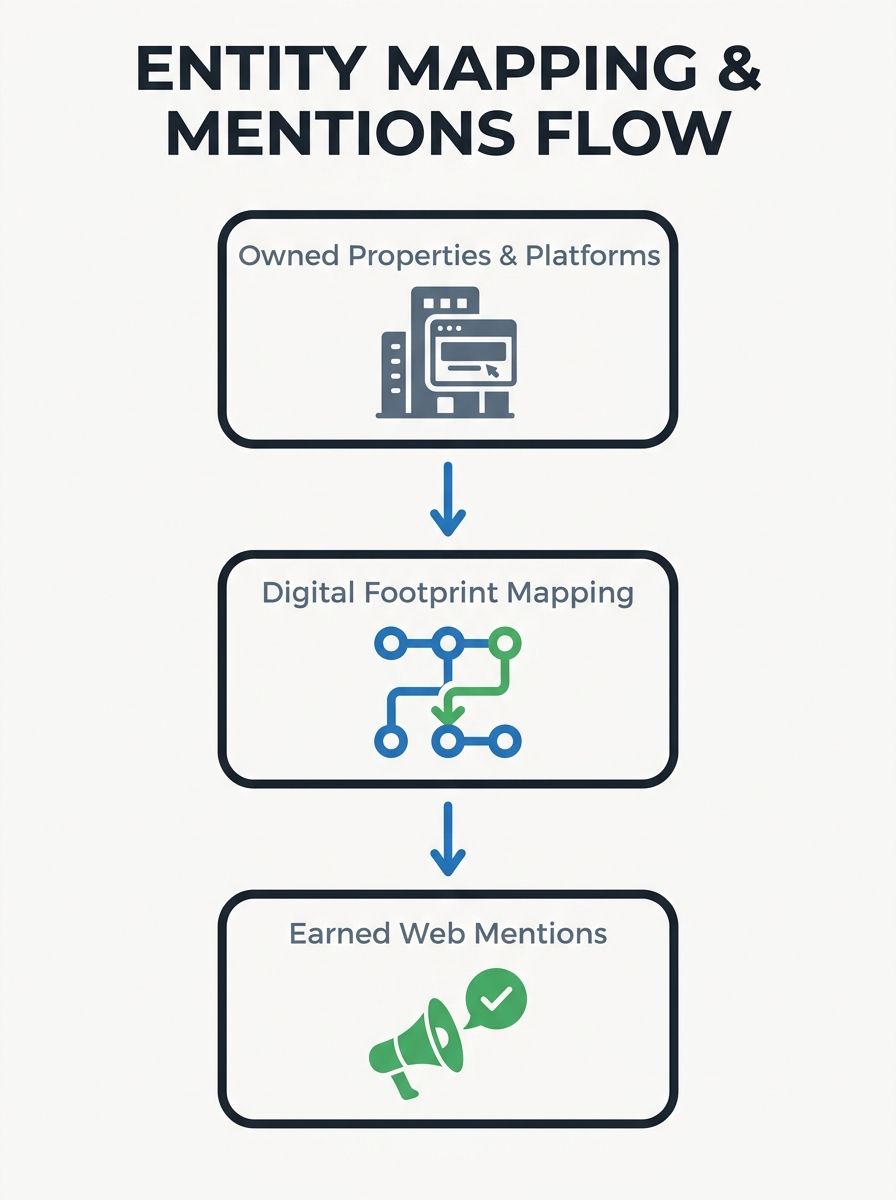
The framework suggests assigning oversight to a director-level marketing role responsible for inputs and outputs across both owned and earned entity signals. Clarkson-Bennett proposed "Director of Discoverability" as a potential title for the role managing entity consistency.
News Publishing and Entity-First Information Retrieval
News content represents an edge case for entity-based optimization because users search with short-tail entity queries after hearing about stories, the framework notes. Top Stories placements—a primary success metric for news SEO—are dominated by entity-focused headlines and opening paragraphs that establish story focus for crawlers that may index articles only once during demand spikes.
"You're trying to establish what this story is about as quickly and efficiently as possible for a crawler that may crawl your news article once and then only again once the spike in demand has passed," Clarkson-Bennett wrote. Google's news crawling system may provide one indexing opportunity, making first-pass accuracy critical for entity clarity.
The framework warns that content partnerships generating mentions in contexts misaligned with brand positioning—such as betting coverage for brands seeking broader authority—may damage entity relationships in information retrieval systems. While AI systems currently lack advanced spam filtering and may use site-specific search modifiers for trusted brands, filtering capabilities will improve, the analysis states.
Implementation Focuses on Owned Property Control Before Earned Expansion
The published approach prioritizes auditing owned properties for entity consistency before addressing earned mentions. Smaller brands and publishers face higher risk from entity name misspellings and inconsistent references compared to established entities like the BBC or New York Times, according to the framework.
Organizations should track branded search volume and direct traffic to specific site sections to identify areas of genuine user demand, the analysis recommends. Understanding which topics or events confer authority in algorithmic assessments helps brands allocate entity-building resources.
The framework acknowledges that influencing earned mentions sits outside most SEO team remits and requires marketing coordination. Entity maps help identify errors and inconsistencies across wide-reaching web properties, Clarkson-Bennett wrote.
Marketing teams adapting to AI search platforms that layer atop Google face related challenges in maintaining entity clarity across both traditional search and large language model outputs. The framework positions entity optimization as applicable to both retrieval systems.
Why This Matters Now
Entity-based optimization frameworks signal a structural shift in how SEO practitioners evaluate foundational ranking factors. By elevating entity disambiguation to the same tier as technical SEO and content quality, the published framework reflects growing recognition that information retrieval systems prioritize relationship mapping over isolated page signals.
For agencies advising clients on competitive positioning, the framework provides a diagnostic structure that treats brand mentions, owned property consistency, and third-party corroboration as measurable optimization layers. CMOs evaluating SEO strategies can use the four-component audit approach to assess whether current campaigns address entity clarity or focus exclusively on technical and content factors while leaving brand signal consistency unmanaged.
The framework's emphasis on owned property control before earned expansion offers smaller brands and emerging publishers a prioritization sequence that addresses foundational entity signals before pursuing broader authority-building campaigns. Organizations lacking established Knowledge Graph presence face higher disambiguation risk from inconsistent mentions—making systematic entity auditing a competitive necessity rather than an advanced tactic.
Marcus Webb
Digital marketing consultant and agency review specialist. With 12 years in the SEO industry, Marcus has worked with agencies of all sizes and brings an insider perspective to agency evaluations and selection strategies.
Related Articles

Why Recognition Beats Rankings in 2026: How SEO Agencies Should Pivot Their Authority Strategy
The slide deck that convinced a $4M ARR fintech company to sign a 12-month agency retainer showed fourteen keyword ranking improvements, zero AI citation metrics, and no mention of entity authority anywhere in the strategy section.

Answer Engine Optimization Framework Published as Corporate Digital Strategy Shifts to AI-Mediated Discovery
Answer Engine Optimization emerged as a strategic framework for corporate digital presence in an analysis published August 22 by The Upgrade Curve newsletter, defining the practice as making organizational expertise easier to understand and surface within AI-mediated discovery experiences that now p
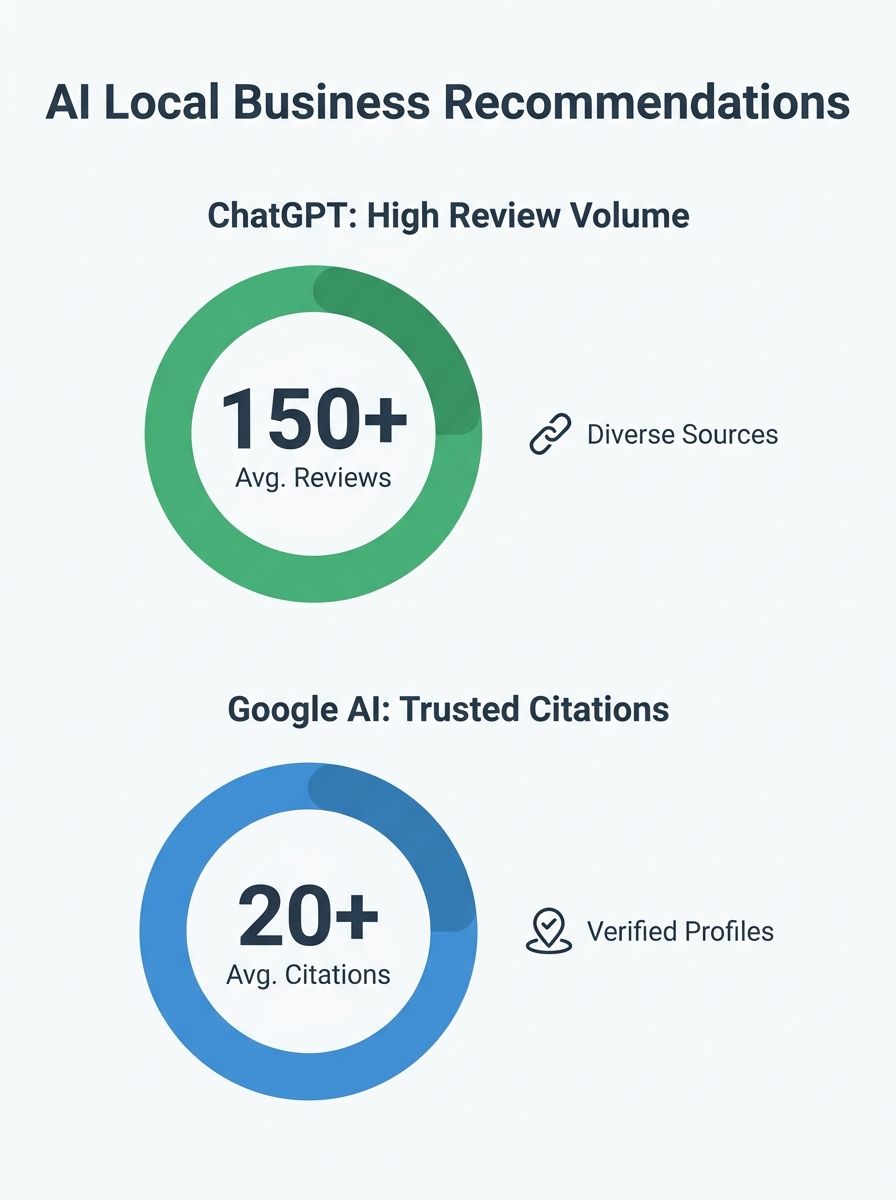
Search Engine Journal Publishes Five-Factor AI Visibility Framework for Local Business Discovery Across ChatGPT and Google AI Overviews
Search Engine Journal published a five-factor optimization framework September 9 targeting local business visibility in ChatGPT and Google AI Overviews, addressing a discovery channel that now reaches 2.
Explore more topics