
How to Choose an SEO Agency for Your SaaS Company
A B2B SaaS founder I advise signed a $9,000/month contract with an agency that had a gorgeous website, polished case studies, and a pitch deck that could make you weep with optimism.
 Marcus Webb··9 min read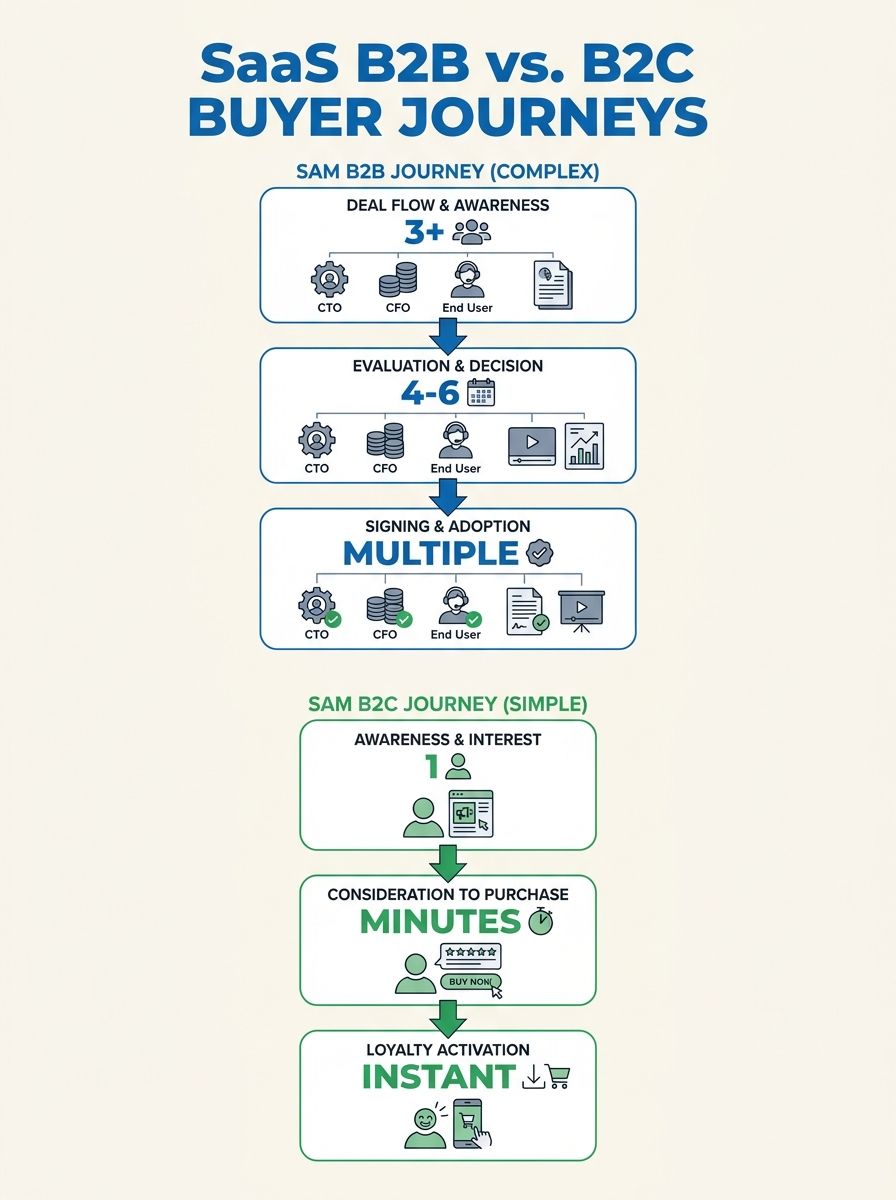
How to Choose an SEO Agency for Your SaaS Company
A B2B SaaS founder I advise signed a $9,000/month contract with an agency that had a gorgeous website, polished case studies, and a pitch deck that could make you weep with optimism. Eight months later, he had 43 blog posts about topics his buyers never search for, a 6% increase in organic traffic from completely irrelevant keywords, and exactly zero attributable demo signups. The agency's monthly reports were filled with green arrows and upward charts. Every metric was improving except the one that mattered: revenue.
I've evaluated over 200 SEO agencies across my career, and I see this story repeat with alarming regularity in the SaaS space. The problem isn't that good agencies don't exist. They do. The problem is that the SEO agency selection process most SaaS companies follow is fundamentally broken. They evaluate agencies the same way they'd pick a vendor for a local restaurant or an ecommerce store, ignoring that SaaS SEO operates under a completely different set of rules.
This is the guide I wish that founder had read before signing that contract.
Why SaaS SEO Is a Different Animal
Selling software on recurring subscriptions creates dynamics that most generalist agencies simply don't understand. Your sales cycles are long, often 84 days for mid-market deals and six to twelve months at the enterprise level. Your buyers aren't individuals making impulse purchases. They're committees of technical evaluators, budget holders, and end users who each need different content at different stages.
SaaS companies care about MRR, CAC, churn, and expansion revenue. If an agency can't connect their SEO work to those metrics, they're playing a different sport entirely.
And here's the kicker: the B2B SaaS marketing landscape has shifted dramatically with AI-generated search results now appearing in 13-20% of Google queries, reducing click-through rates to traditional organic results by roughly 34.5%. An agency that's still running the 2022 playbook of "publish more blog posts and build backlinks" is already behind.
Not every agency needs SaaS experience, but the ones that do well in this space tend to share specific traits. They understand product-led growth versus sales-led motions. They know how to build content for comparison pages, integration directories, and feature-specific landing pages. They track pipeline, not just pageviews.
The same logic applies to any niche specialization. Just as you'd want hotel SEO agencies that understand seasonal booking patterns if you ran a hospitality brand, you need an agency that genuinely understands subscription economics for your SaaS product.
Define What Success Looks Like Before You Talk to Anyone
This sounds obvious. It isn't. I've sat in dozens of kickoff calls where the SaaS team says "we want more organic traffic" without any clarity on what kind of traffic, from whom, or toward what business outcome.
Before your first agency call, answer these questions:
What's your primary growth motion? Product-led growth companies need bottom-funnel content targeting feature keywords and comparison terms. Sales-led companies need content that generates MQLs and nurtures them through longer cycles.
Where are you in your growth stage? A Series A startup with 200 monthly visitors has radically different needs than a Series C company doing $30M ARR. As MADX Digital notes in their agency breakdown, early-stage SaaS needs differ from enterprise, and budget ranges and company fit vary accordingly.
What's your realistic timeline? SaaS SEO typically takes six to nine months for significant results. If you need leads next month, SEO alone won't save you.
What does your dev team's bandwidth look like? If your engineering team is slammed and can't implement technical recommendations, you need an agency that either provides implementation support or works within those constraints.
Write these answers down. They become your scoring rubric for every agency conversation that follows.
SaaS-Specific Track Records Matter More Than Generic Portfolios
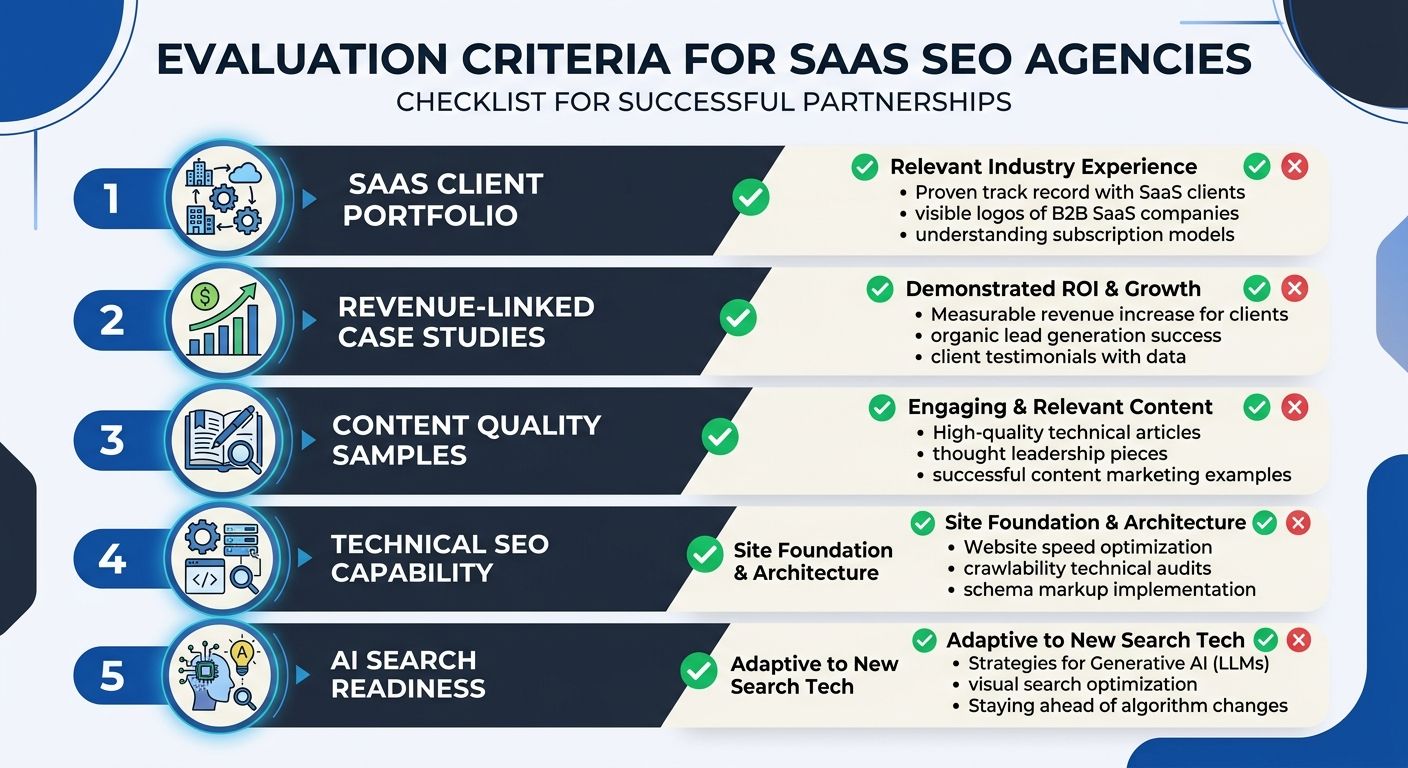
The single most reliable predictor of agency performance I've found is relevant client experience. Not "digital marketing" experience. Not "B2B" experience. Actual SaaS client work with measurable outcomes.
According to First Page Sage's agency rankings, an agency's experience with notable SaaS clients is the best indicator of their ability to run successful campaigns, which is why it carries the heaviest weight in their evaluation methodology.
Here's what to look for in case studies:
Specific revenue or pipeline numbers, not just traffic increases. One agency I reviewed showed how a client scaled signups from 67 to over 2,100 in ten months. That's useful. "Increased organic traffic by 150%" without conversion context is not.
Companies at a similar stage and price point to yours. An agency that crushed it for Salesforce might not know how to operate with a $3,000/month budget.
Content examples you can actually read. Pull up their client's blog. Is the content genuinely useful, or is it keyword-stuffed filler?
Ask agencies directly: "Walk me through a campaign for a SaaS company at our stage, in our price range, with a similar growth model." If they can't, that tells you everything.
Where Most Agencies Fall Apart in Their Content Process
Content is the engine of SaaS SEO. And it's where the gap between great agencies and mediocre ones is widest.
When evaluating agencies, Grow and Convert recommends asking them to walk you through exactly how they produce content. Where does the information come from? Do they interview anyone at your company, or do they just research online?
This question alone will eliminate 60% of agencies. Here's why: most SaaS content needs genuine product knowledge, industry context, and subject matter expertise that you can't get from Googling. If an agency's process is "our writers research the topic and produce a draft," your content will read like every other generic SaaS blog post on the internet.
The best agencies I've worked with follow some variation of this process:
Keyword research tied to buyer intent, not just volume. They prioritize terms that signal purchasing readiness.
Subject matter expert interviews with your team or actual users of your product.
Content briefs reviewed by both sides before writing begins.
Conversion-focused page types beyond blog posts, including comparison pages, alternative pages, use-case landing pages, and technical documentation.
If you're also struggling with competitor keyword gaps your current strategy is missing, a good agency should identify those during their audit phase and prioritize them in their content roadmap.
Demand Revenue Attribution, Not Vanity Metrics
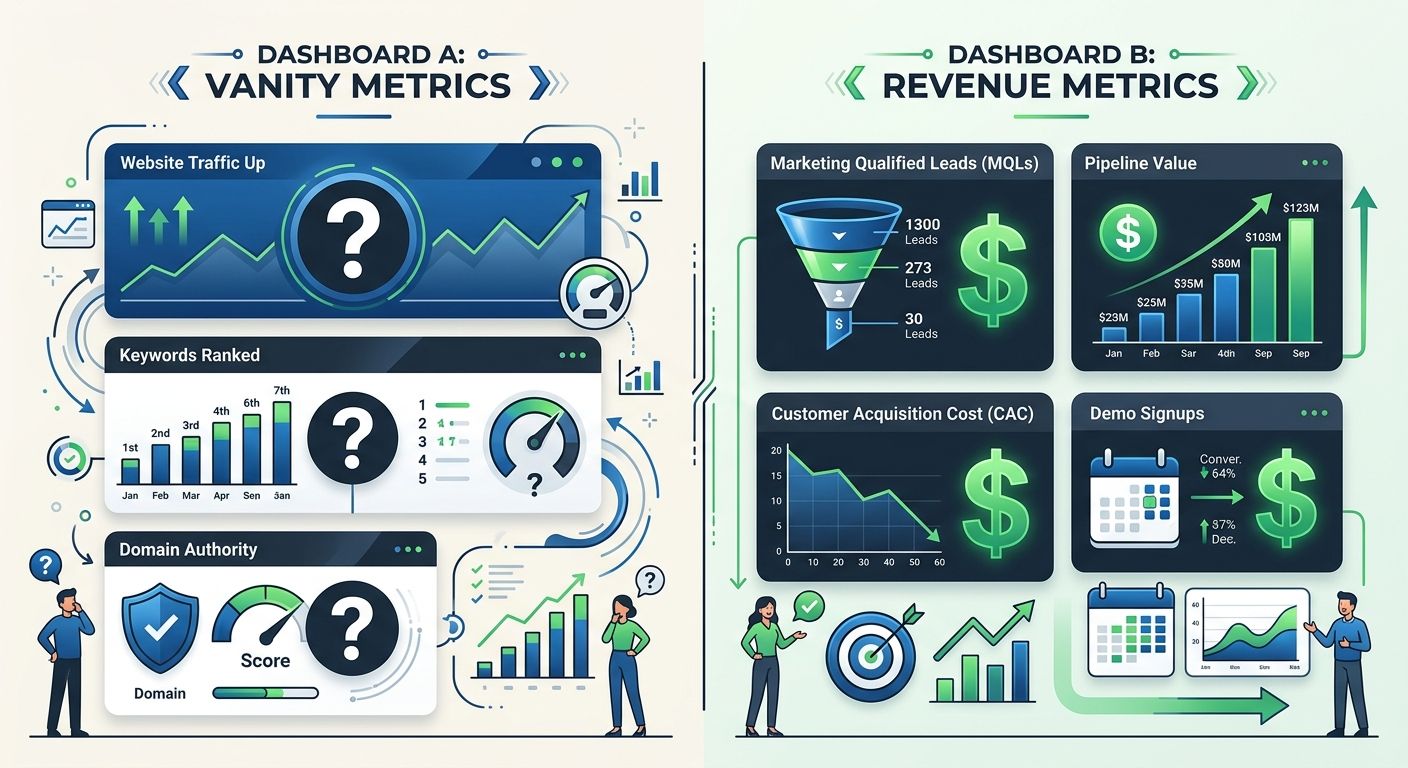
This is the hill I will die on. If an agency reports success in terms of "keyword rankings improved" or "domain authority increased" without connecting those metrics to actual business outcomes, they're wasting your budget.
The shift I've seen among top B2B SaaS SEO agencies is toward unified KPI frameworks that integrate SEO data with your CRM and marketing automation systems. The best agencies track the full customer path from organic search to MQL to SQL to closed deal.
What your agency's reporting should include:
Organic traffic segmented by intent (informational vs. transactional vs. navigational)
Conversion events: demo requests, trial signups, contact form submissions attributed to organic
Pipeline value influenced by organic content, pulled from your CRM
Content-level performance, showing which specific pages drive conversions and which don't
Revenue impact over time, not just month-over-month traffic snapshots
If an agency pushes back on this level of reporting, it usually means one of two things: they don't know how to set it up, or they don't want you to see the real numbers. Neither is acceptable.
Technical SEO Capabilities You Can't Ignore
SaaS platforms are often JavaScript-heavy, multi-tenant applications with dynamic content, complex URL structures, and aggressive release cycles. Technical SEO isn't optional here.
Your agency should be able to:
Conduct thorough technical audits that go beyond surface-level crawl reports
Improve Core Web Vitals performance and provide specific, prioritized fixes
Work with (or alongside) your dev team to get recommendations implemented
Handle issues specific to SaaS architectures like client-side rendering, internationalization, and multi-subdomain setups
I've written before about how enterprise-level vetting methodologies separate serious agencies from pretenders, and technical capability is often the clearest differentiator. An agency that can talk intelligently about your tech stack during the sales process will almost certainly deliver better results than one that glosses over technical details.
Red Flags That Predict Poor Outcomes
After evaluating over 200 agencies, these are the patterns that consistently predict poor outcomes:
Guaranteed rankings. No ethical agency can guarantee a #1 position. Google's algorithm isn't something any agency controls. Run away from anyone who promises specific ranking positions.
Generic packages. "$999/month for 4 blog posts and 10 backlinks" tells you the agency is selling a productized service, not building a custom strategy for your business.
No mention of AI search. If an agency isn't talking about AI Overviews, answer engine optimization, or how generative search is changing discovery, they're already behind. This shift is real, and agencies need to be adapting strategies for AI-generated results.
Long lock-in contracts with no performance clauses. I've seen 12-month contracts with no exit provisions and no performance benchmarks. Reasonable agencies offer 90-day review cycles or performance-based exit clauses.
They can't explain their link building process. If the answer is vague or they avoid the question, they might be using tactics that could get your domain penalized.
What SaaS Companies Should Actually Expect to Pay
I'm a firm believer in pricing transparency, so here are the ranges I see in the market right now:
Early-stage SaaS (pre-Series A): $2,000-$5,000/month. At this level, expect a focused strategy on a handful of high-intent keywords, limited content production, and basic technical audits.
Growth-stage SaaS (Series A-B): $5,000-$15,000/month. This gets you a dedicated strategist, regular content production, ongoing technical optimization, and meaningful reporting.
Enterprise SaaS: $15,000-$30,000+/month. Full-service engagements including content at scale, advanced technical SEO, conversion rate optimization, and deep analytics integration.
Beware of agencies charging enterprise prices for growth-stage deliverables, or agencies charging startup prices and claiming they'll deliver enterprise results. The economics simply don't work.
Contract terms to negotiate:
90-day initial commitment with month-to-month renewal after that
Clear deliverables and timelines documented in the SOW
Performance review checkpoints at 90, 180, and 365 days
Data ownership clause ensuring you retain all content, accounts, and analytics access if you leave
And if you're inheriting an existing agency relationship that isn't working, the transition process matters enormously. Parallel running, proper data migration, and risk mitigation can mean the difference between a smooth handoff and months of lost momentum.
The Evaluation Scorecard I Actually Use
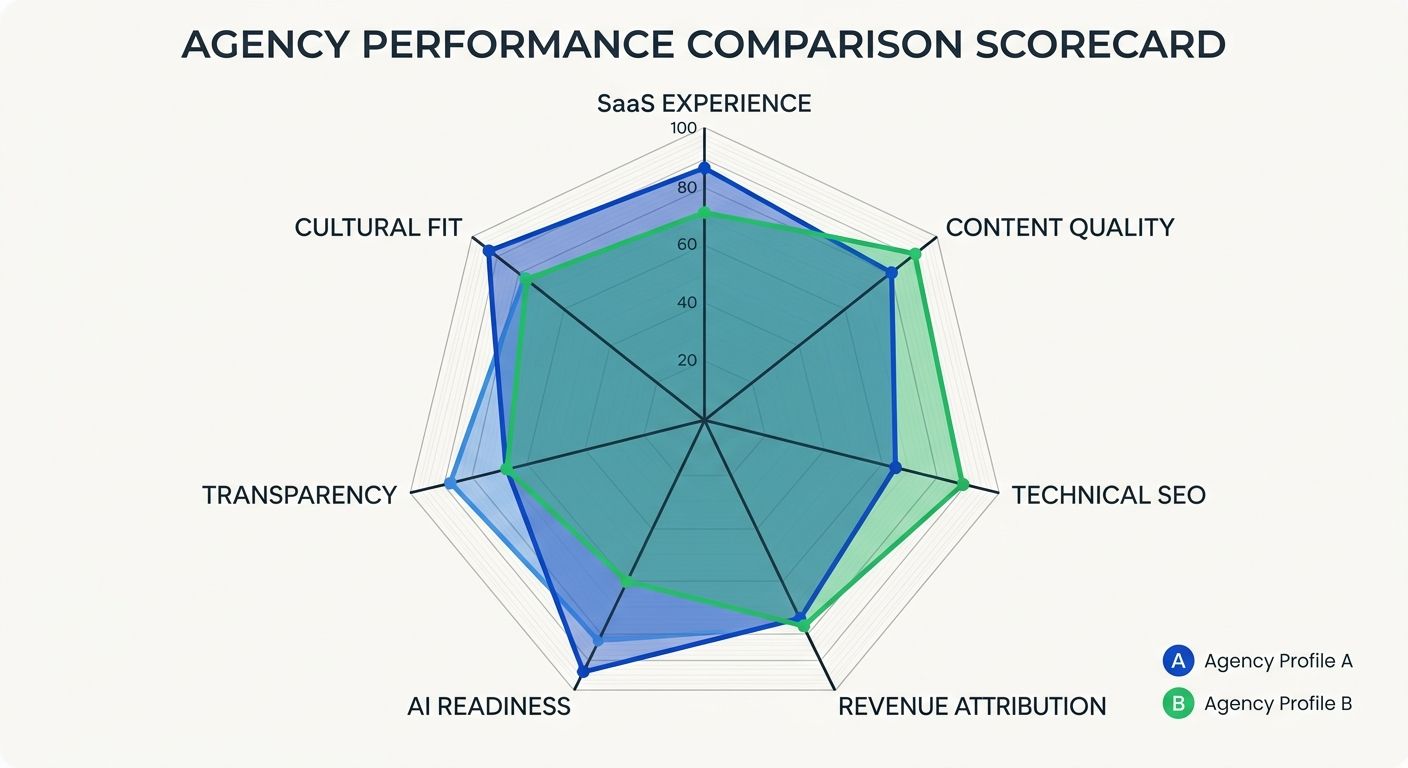
When I help SaaS companies evaluate agencies, I score each candidate on these seven criteria using a 1-5 scale:
SaaS experience depth — Have they worked with companies at your stage, price point, and growth model?
Content production quality — Can you read their clients' content and learn something?
Technical SEO capability — Do they understand your architecture?
Revenue attribution — Do they connect SEO to pipeline and revenue?
AI search readiness — Are they adapting to generative search, or ignoring it?
Communication and transparency — How do they report, how often, and through what channels?
Cultural fit — Will they work well with your marketing and product teams?
Any agency scoring below 3 on more than two criteria gets eliminated. The winners typically score 4+ across the board and have at least one area where they're genuinely exceptional.
The Conversation That Matters Most
Here's the single most revealing question I ask when evaluating an agency for a SaaS client: "Tell me about a SaaS campaign that didn't go as planned and what you did about it."
Every agency has failures. The good ones learn from them and can articulate what went wrong with zero defensiveness. The bad ones either claim they've never failed (a lie) or blame the client (a red flag).
As Brand Theory puts it, it makes sense to establish what you're trying to achieve with SEO before you hire a partner. But I'd add this: establish what honesty looks like, too. The agency willing to tell you "this won't work for your situation" is infinitely more valuable than the one promising the moon.
Your SaaS company deserves an SEO partner that treats your organic channel as a revenue function, not a content factory. Take the time to vet properly. Score candidates systematically. Check references by asking about failures, not just wins. And never sign a 12-month contract without performance checkpoints built in. The right agency will welcome that scrutiny because they know their work speaks for itself.
Marcus Webb
Digital marketing consultant and agency review specialist. With 12 years in the SEO industry, Marcus has worked with agencies of all sizes and brings an insider perspective to agency evaluations and selection strategies.
Explore more topics