
Why API-First SEO Is Replacing Subscription Tool Sprawl: The 2026 Agency Shift Explained
$238 per month versus $8 per month. Same data. Same keyword metrics, SERP results, and backlink intelligence. The only difference is how you access it.
 Marcus Webb··7 min read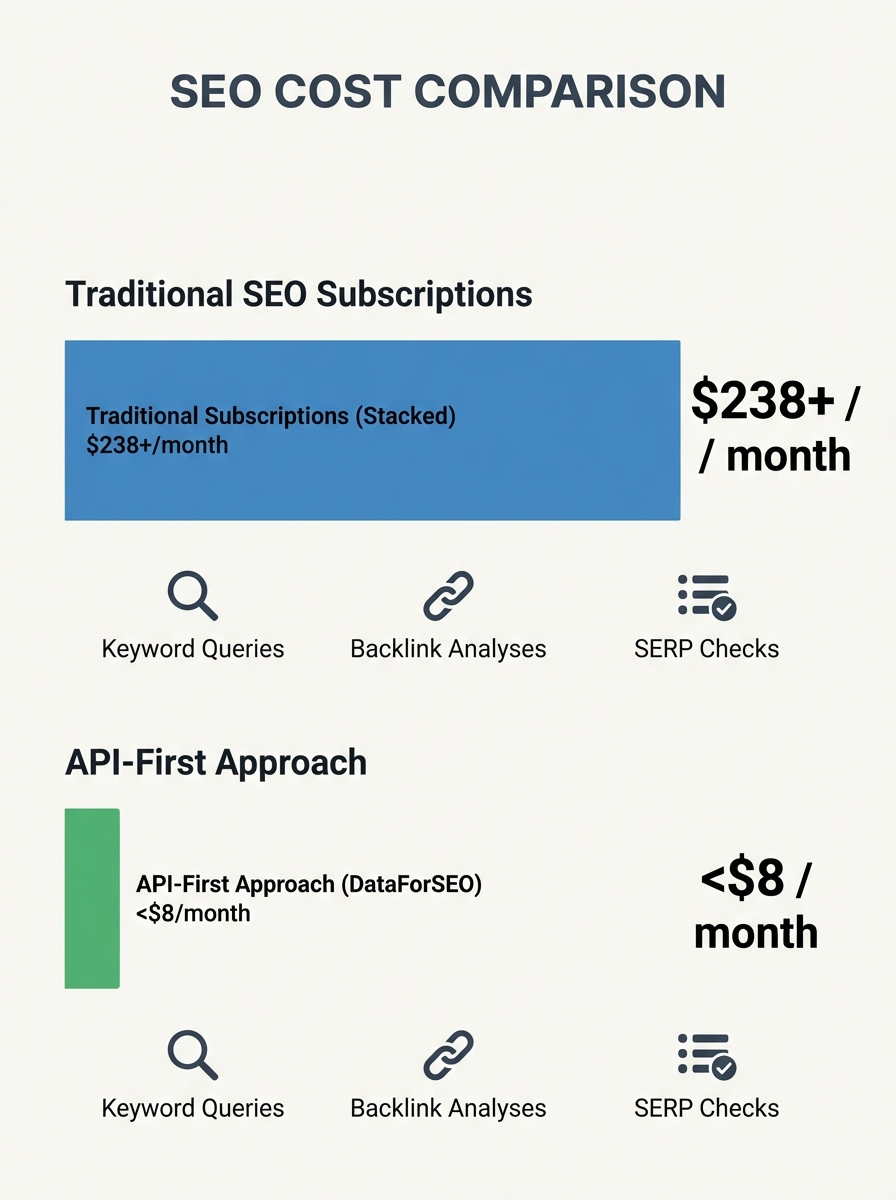
Why API-First SEO Is Replacing Subscription Tool Sprawl: The 2026 Agency Shift Explained
$238 per month versus $8 per month. Same data. Same keyword metrics, SERP results, and backlink intelligence. The only difference is how you access it. That's the math that's pushing a growing number of digital agencies to rip out their SaaS SEO subscriptions entirely and rebuild their stacks around API-first platforms. And the shift isn't theoretical anymore. It's happening right now, and the numbers are hard to argue with.
I've been watching agency tool consolidation accelerate for a while, but the tipping point seems to have arrived this month. Between Colorado agencies going public with their migration stories, AI coding assistants eliminating the developer bottleneck, and DataForSEO dropping pricing that makes traditional platforms look almost absurd, the API-first SEO model has moved from niche developer play to mainstream agency strategy.
The Subscription Fatigue Problem Is Real
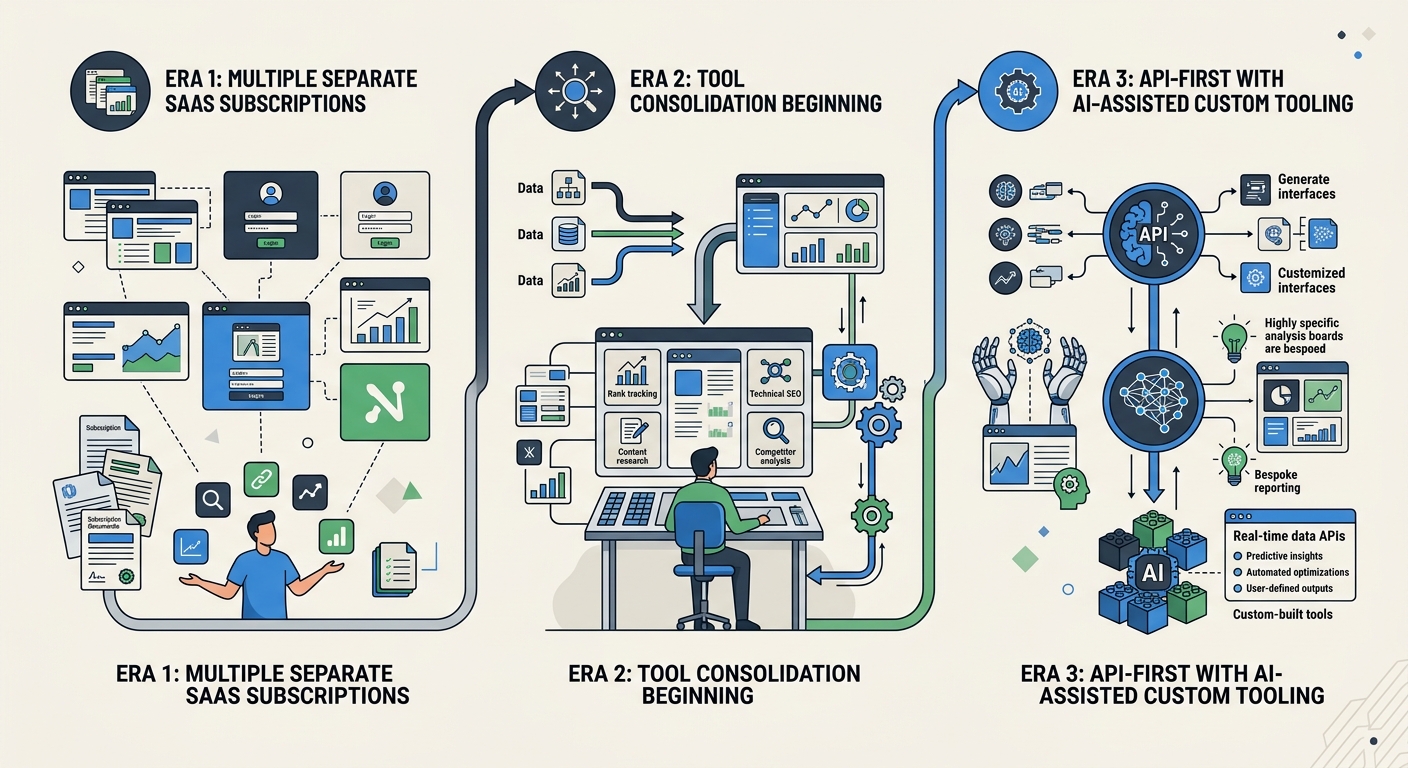
Here's a pattern I keep seeing in agency audits: a mid-sized SEO shop running SEMrush for keyword research, Ahrefs for backlinks, Screaming Frog for crawls, Moz for domain authority, and maybe BrightLocal for local packs. Add it all up and you're looking at $300 to $500 per month minimum, often more once you factor in seat licenses for a team of five or six.
The dirty secret? Most agencies use maybe 15% of the features in each tool. You're paying for the UI, the dashboards, the onboarding emails, and the customer success team. But the actual data underneath all that chrome? It often comes from the same handful of providers anyway.
This is what people mean when they talk about SEO subscription fatigue. It's not just the cost. It's the cognitive overhead of context-switching between six different interfaces, the inconsistent metrics across platforms, and the nagging feeling that you're paying for a lot of software you barely touch.
A North Denver News report published this week highlighted how Colorado's digital marketing community is leading the charge here. Agencies in the Boulder-Denver corridor are dropping their SaaS stacks and going API-first, treating SEO data as a commodity they pipe into their own custom dashboards rather than renting access through someone else's interface.
What API-First SEO Actually Looks Like in Practice
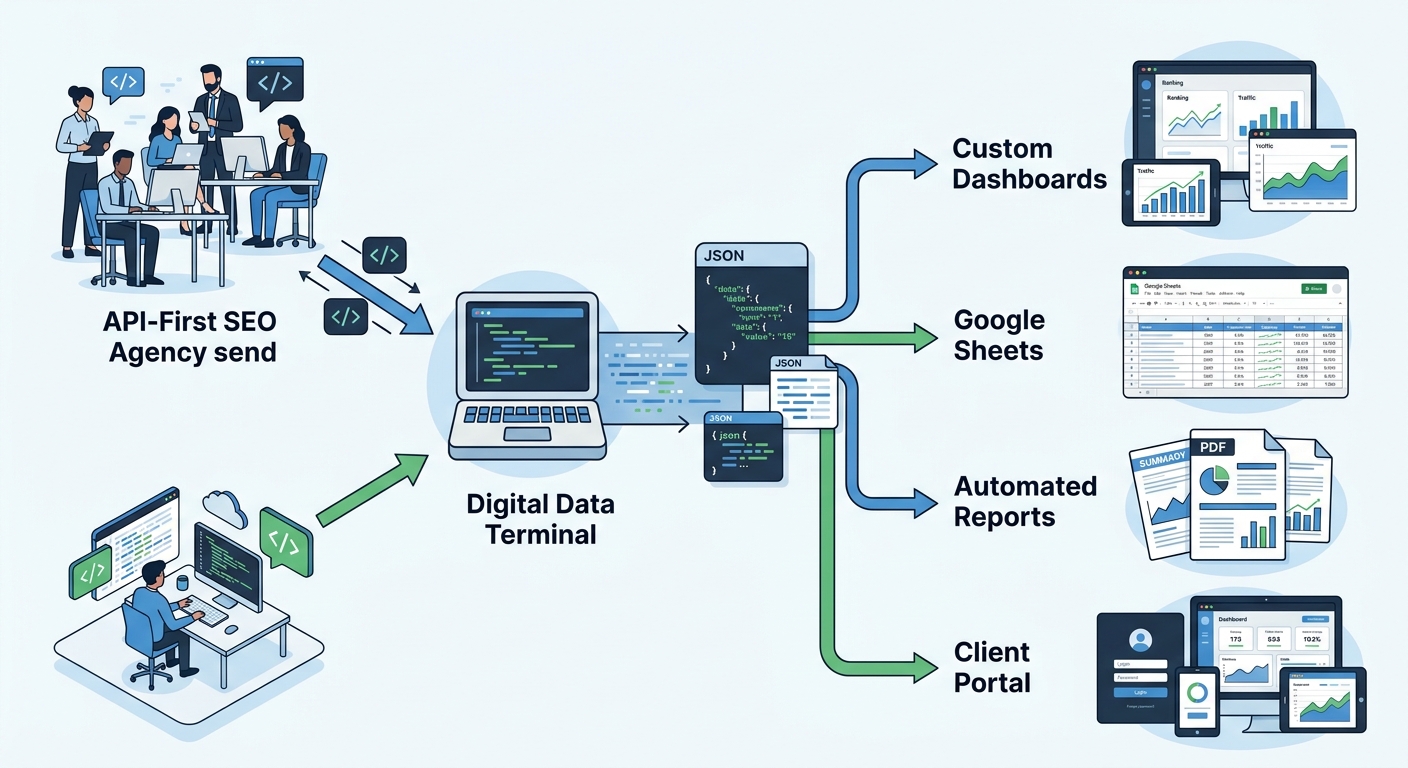
If you've never worked with API-first SEO tools, the concept is straightforward. Instead of logging into a web app, clicking buttons, and exporting CSVs, you send a structured request to an endpoint and get structured data back. Keyword volumes, SERP features, backlink profiles, on-page analysis: it all comes back as clean JSON that you can pipe into whatever system you already use.
The biggest name driving this shift is DataForSEO. Their DataForSEO integration options cover the full spectrum of what agencies typically need:
SERP API for real-time Google results including featured snippets, People Also Ask, local packs, and knowledge panels
Keywords Data API for search volume, keyword difficulty, CPC, and competition data
Backlinks API for competitor link profiles, referring domains, and anchor text analysis
AI Optimization API for tracking how AI systems like ChatGPT, Claude, and Gemini reference or cite brands
That last one is worth pausing on. Traditional SaaS tools are still scrambling to figure out AI visibility tracking. DataForSEO already has an endpoint for it. When you think about how Google's algorithm updates are increasingly intertwined with AI, having programmatic access to AI citation data isn't a nice-to-have anymore.
As the NextGrowth.ai review of DataForSEO points out, their pricing follows a "True Cost Multiplier" framework where savings compound as query volume grows. The entry point is a $50 deposit with no recurring fee. G2 reviews consistently praise data accuracy and API coverage.
The API vs SaaS SEO Debate Has Shifted
The traditional argument against going API-first was always "but my team can't code." That argument died this year.
One engineer documented how he replaced his entire SEO agency workflow with Claude and four APIs, building custom tools by describing what he needed in plain English and letting AI generate the integration code. This approach, sometimes called "vibe coding," means a marketing manager with zero programming experience can now say "build me a keyword research tool that pulls data from DataForSEO and exports to CSV" and have working software in minutes.
DataForSEO themselves have leaned into this. Their kickstart guide walks through setting up automated workflows in Zapier that retrieve search volume for specified keywords and dump the data directly into Google Sheets. No code required. Their integrations with Make take it further, connecting SEO data to hundreds of other tools through visual automation builders.
The API vs SaaS SEO conversation has fundamentally changed because the "ease of use" advantage that SaaS platforms held has evaporated. When AI can scaffold an entire custom tool in an afternoon, the value proposition of paying $199/month for a pretty UI starts to look thin.
The Real-World Cost Breakdown
Let me get specific because vague claims about "saving money" don't help anyone make decisions.
A mid-sized agency running 500 keyword queries, 100 backlink analyses, 1,000 SERP checks, and 50 AI citation queries per month would pay roughly:
Keyword queries (500): About $0.75
Backlink analyses (100): About $3.00
SERP checks (1,000): About $1.50
AI citation queries (50): About $2.50
Total: Under $8 per month. And there are no seat licenses. Your entire team accesses the same data through shared API credentials.
Compare that to a minimum of $238/month across SEMrush, Ahrefs, and a couple of smaller tools. For agencies comparing the true cost of tool stacks versus full-service solutions, the math on API-first has become impossible to ignore.
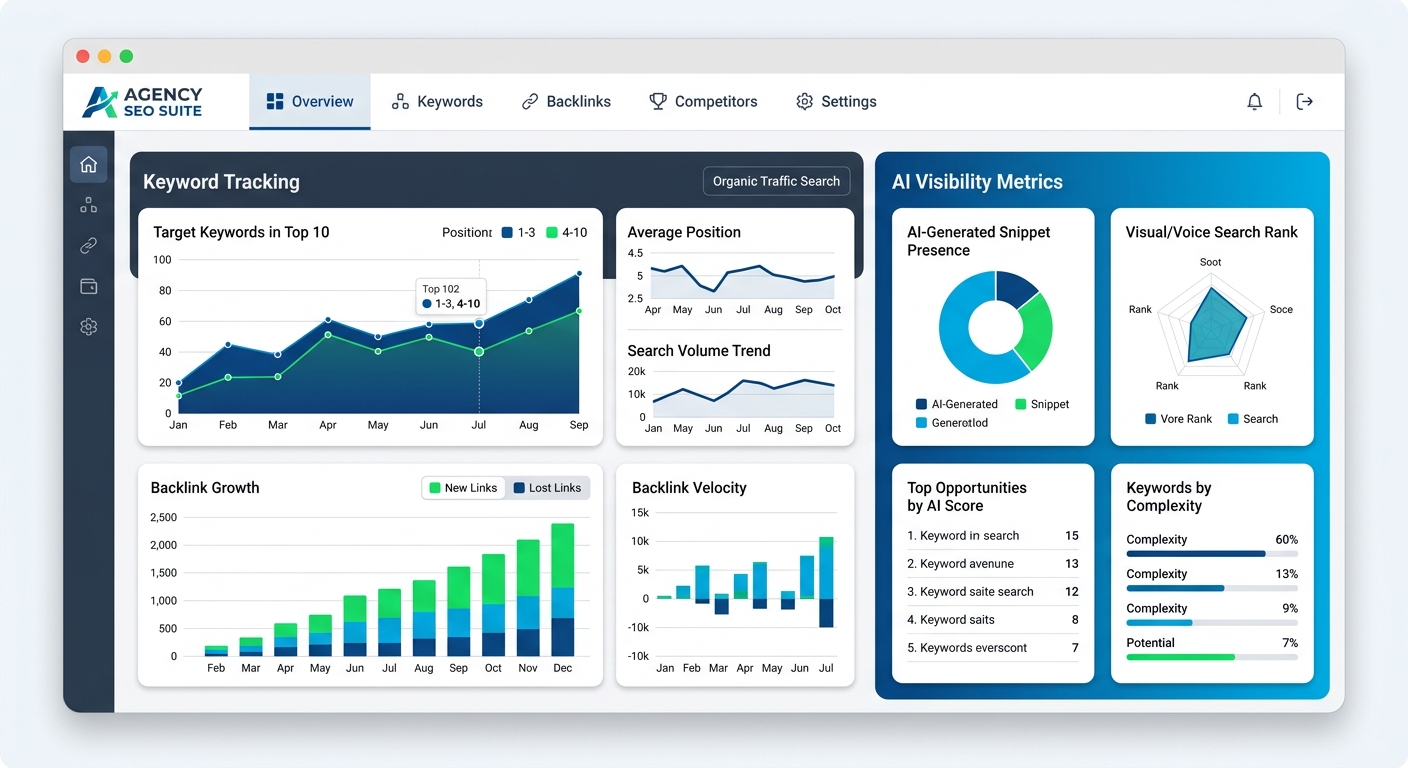
Now, you do lose the pre-built dashboards and the customer support chat. You have to build your own reporting layer or wire things into existing tools. But that's exactly the trade-off that's starting to appeal to agencies who want control over their workflows rather than being locked into someone else's UI decisions.
Who Should Actually Make This Switch
I want to be honest here because this isn't the right move for everyone.
API-first SEO tools make sense if you:
Run an agency managing 10+ clients and feel the cumulative subscription costs
Have someone on staff (or access to AI coding tools) who can wire up basic integrations
Want to build white-label reporting and dashboards that don't look like every other agency's output
Need to scale query volume up and down based on client load without paying for unused capacity
Care about tracking AI visibility alongside traditional SERP metrics
Stick with SaaS subscriptions if you:
Are a solo practitioner who needs an out-of-the-box solution today
Don't have 2-3 days to invest in initial setup and configuration
Rely heavily on specific proprietary metrics that only exist in one platform
Prefer phone support over API documentation
The agencies that are surviving and thriving in 2026 tend to be the ones that treat their tooling as a competitive advantage rather than a line item expense. Building custom workflows around API data gives you differentiation that's hard to replicate.
How Data Governance and Industry Economics Change
This shift has downstream effects that go beyond individual agency economics.
Robert Goldenowl's analysis of API providers raises an important point about data governance. When you're pulling raw SEO data through APIs and potentially reselling insights to clients, you need to think carefully about compliance, data integrity, and whether your provider's terms actually allow the use case you're building. This matters especially for agencies building client-facing tools or automated reporting systems.
The SaaS platforms aren't sitting still either. Search Engine Land reported this week that the entire search industry is shifting toward persuasion-based optimization as AI reshapes how brands get recommended. Traditional platforms will likely respond by adding more AI features and trying to justify their pricing with proprietary insights. But the fundamental commodity nature of SERP data, keyword volumes, and backlink counts makes that a tough sell when the raw data is available at a fraction of the cost.
AWS just announced their Agent Registry in AgentCore, which points to a future where AI agents can discover and reuse tools across an organization. Imagine an SEO agent that automatically pulls DataForSEO data, runs analysis, generates reports, and pushes recommendations to your project management tool. We're maybe six months away from that being a standard agency workflow.
Where to Start Your Migration
This isn't a "wait and see" situation. The agencies that are already running API-first stacks have a structural cost advantage that compounds every month. Here's what I'd do right now:
Audit your current SEO tool spend. Add up every subscription, every seat license, every annual renewal. Get the real number.
Sign up for DataForSEO's sandbox. They offer free credits on signup, enough for hundreds of test queries. Run the same queries you'd run in your current tools and compare the data.
Pick one workflow to migrate first. Keyword research is usually the easiest starting point. Use the Google Sheets Connector if you want zero-code, or let Claude or Cursor build you a simple tool.
Keep your existing subscriptions running in parallel for 30 days. Verify the data matches your expectations before canceling anything.
Document the process. If it works, you'll want to migrate other workflows. If it doesn't, you'll want to know exactly why.
The agencies that are diagnosing problems systematically and building custom data pipelines are pulling ahead. The ones still clicking through five different SaaS dashboards every morning are leaving money and time on the table.
The tool sprawl era is ending. The API era is here. The only question is whether you'll make the switch on your own timeline or when your competitors force your hand.
Marcus Webb
Digital marketing consultant and agency review specialist. With 12 years in the SEO industry, Marcus has worked with agencies of all sizes and brings an insider perspective to agency evaluations and selection strategies.
Explore more topics