
AI Visibility Optimization Agencies vs. Traditional SEO: Why 2026 Is the Inflection Point for Generative Search
A client called me in February, panicking. Their organic traffic had dropped 41% over six months despite their SEO agency reporting "strong keyword rankings" and "healthy backlink growth." The rankings were real. The backlinks were legitimate.
 Marcus Webb··8 min read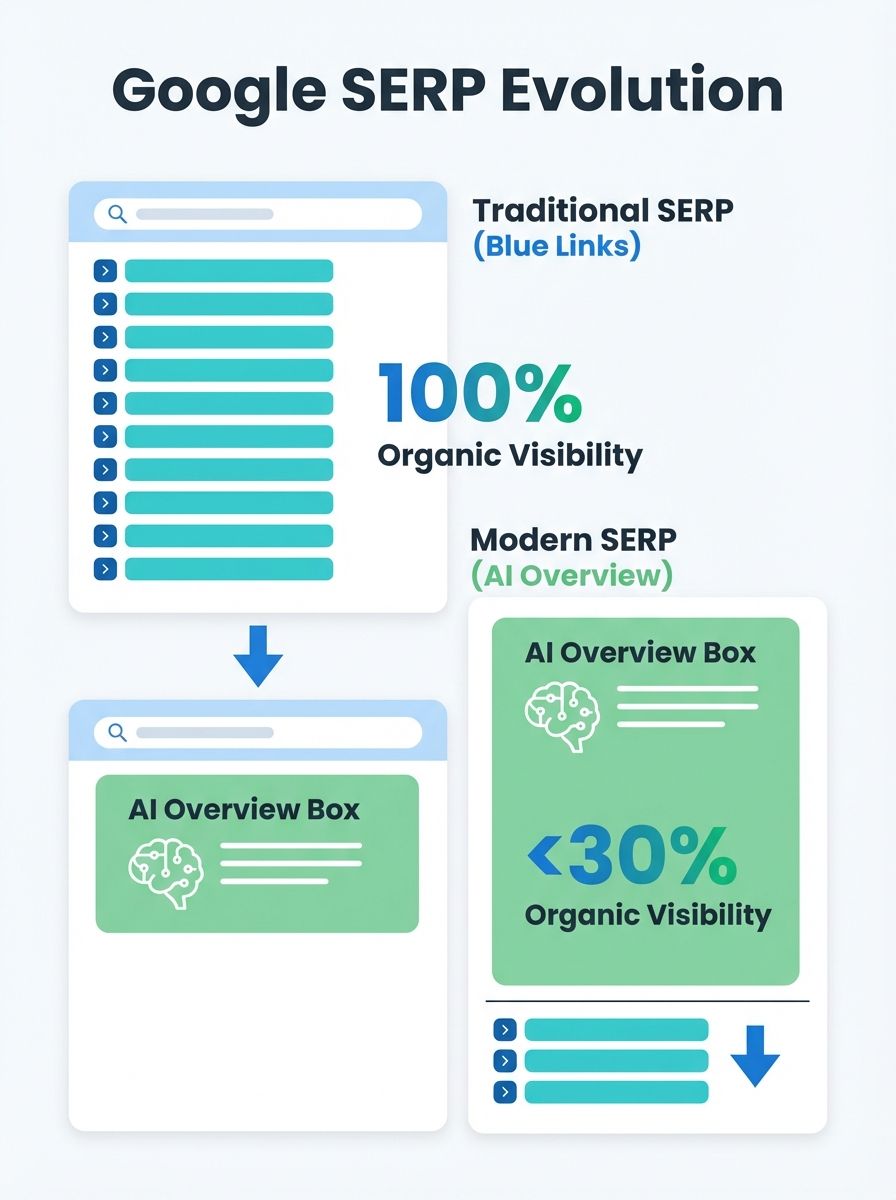
AI Visibility Optimization Agencies vs. Traditional SEO: Why 2026 Is the Inflection Point for Generative Search
A client called me in February, panicking. Their organic traffic had dropped 41% over six months despite their SEO agency reporting "strong keyword rankings" and "healthy backlink growth." The rankings were real. The backlinks were legitimate. But the traffic was evaporating because Google's AI Overviews were answering their target queries directly in the SERP, and their agency had zero strategy for it. They were paying $8,500 a month for a service that was optimizing for a version of search that no longer existed.
I've evaluated over 200 SEO agencies across my career. I've never seen a divide this stark. On one side, you have traditional SEO firms still grinding on the same playbook from 2019. On the other, a new breed of AI visibility optimization agencies that treat citation in AI-generated answers as the primary success metric. The gap between these two camps isn't narrowing. It's accelerating.
And 2026 is the year that gap became impossible to ignore.
The Numbers That Should Terrify Traditional SEO Agencies
Here's what's actually happening: Google AI Overviews now appear on roughly 48% of tracked queries, up from 31% in early 2025. That's a 58% year-over-year increase. When an AI Overview shows up, organic click-through rates drop by as much as 34.5% compared to similar queries without one. Some data sets show even steeper declines, with CTR falling from 1.76% to 0.61% when AI Overviews are present.
The implication is brutal. You can rank #1 for a high-value keyword and still lose the majority of your traffic to an AI-generated summary that sits above your listing. Traditional ranking position is becoming a vanity metric.
But here's the part that really matters: a brand cited within an AI Overview receives roughly 35% more organic clicks than a non-cited brand, even if the non-cited brand ranks higher in traditional results. Citation status is overtaking rank position as the primary driver of search traffic. This is a fundamental shift in how AI search engine visibility works, and most agencies haven't caught up.
According to Semrush's breakdown of traditional vs. AI SEO, the distinction is straightforward: traditional SEO focuses on improving a website's visibility in search engine results pages, while AI SEO focuses on improving content to appear in AI-generated answers from platforms like ChatGPT, Gemini, and Google's AI Overviews.
Simple to describe. Much harder to execute.
What Traditional SEO Agencies Are Getting Wrong
I want to be fair here. Traditional SEO isn't dead. Technical foundations like crawlability, site architecture, and page speed still matter. If your site can't be crawled and indexed properly, no amount of AI optimization will save you. That's why I still recommend teams invest in solid technical audit processes before worrying about generative search.
But traditional agencies are making three critical errors right now.
Error #1: Measuring the Wrong Things
Most traditional agencies still report on keyword rankings, Domain Authority, and backlink counts. These metrics aren't meaningless, but they're increasingly disconnected from actual business outcomes. When 93% of Google Search AI Mode sessions end without a click, reporting that you "rank #3 for 47 target keywords" doesn't tell the client anything useful about their revenue trajectory.
The agencies surviving this shift are tracking AI Overview citation frequency, branded search volume trends, direct referral traffic from AI platforms, and share of voice in AI-generated answers. If your current agency can't show you these metrics, that's a red flag.
Error #2: Optimizing for Keywords Instead of Answers
Traditional keyword optimization assumes a user types a query, scans a list of results, and clicks one. That behavior is declining rapidly. AI search queries are longer, more conversational, and often get answered without a click. The AI system breaks complex questions into sub-queries and synthesizes answers from multiple sources.
Content optimized for "best CRM software" as a two-word keyword target won't perform the same way it did three years ago. AI systems want content that directly answers specific questions with verifiable facts and clear structure. A study of over 1,500 AI-cited results found no correlation between keyword density and citation likelihood. Instead, topical authority was the strongest on-page factor.
Error #3: Ignoring Multi-Platform AI Search
Google isn't the only AI answer engine anymore. Data from Conductor shows that 87.4% of all AI referral traffic comes from ChatGPT, and outbound referral traffic from ChatGPT to the rest of the web grew 206% in 2025. Agencies focused exclusively on Google rankings are missing an entire ecosystem of AI search platforms, including Perplexity, Gemini, and Microsoft Copilot.
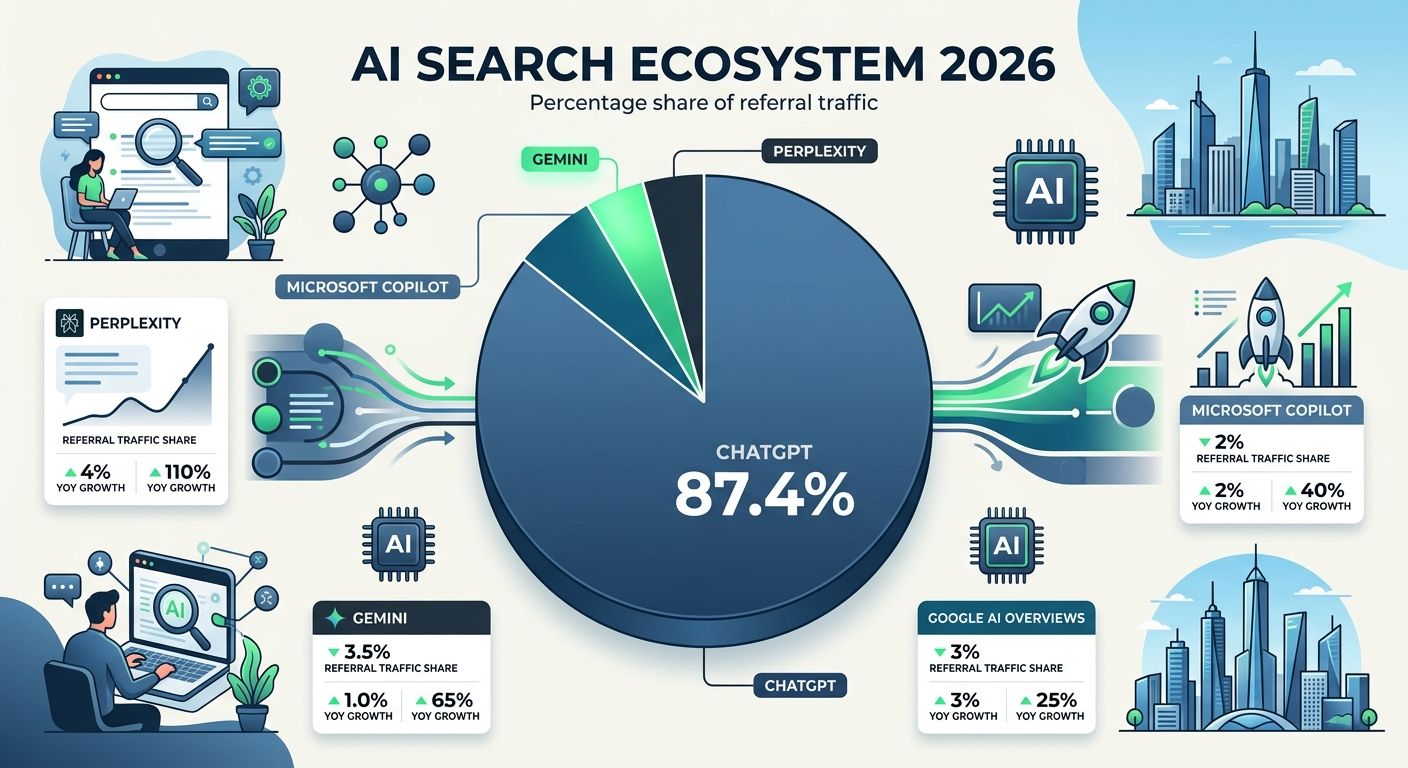
Agencies that specialize in generative search SEO now navigate platform-specific citation behavior across all of these AI search interfaces, each with its own preferences for content structure, source authority, and citation patterns.
What AI Visibility Optimization Agencies Actually Do Differently
I've been reviewing the new wave of AI-native agencies, and their operating model is genuinely different from what traditional firms offer. Here's what separates them.
Citation Engineering
The core discipline of AI visibility optimization is getting your content cited in AI-generated answers. This isn't about gaming the system. It's about structuring content so AI systems can easily extract, verify, and attribute information from your pages.
Practical tactics include:
Leading each content section with a direct, self-contained answer in the first sentence (44.2% of AI citations pull from the first 30% of a text)
Structuring H2 and H3 sections so each one makes sense independently, since AI systems extract sections in isolation
Including specific, named statistics with clear attribution, which makes content 30-40% more likely to appear in AI responses
Implementing FAQPage, Article, and HowTo schema markup as a "nutrition label" for AI systems
AIV Scoring and Multi-Platform Monitoring
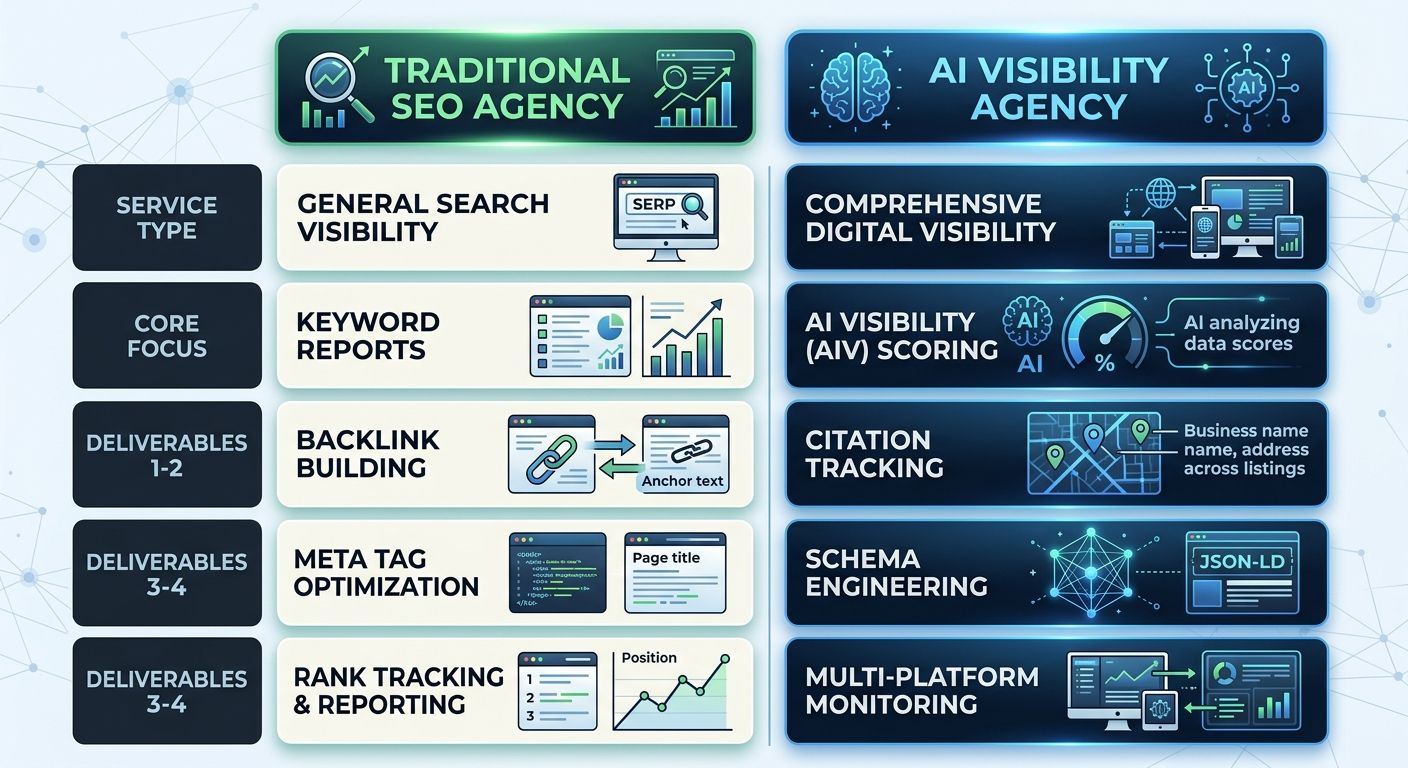
The most sophisticated AI visibility agencies have developed proprietary scoring systems. The AIV Score quantifies how frequently and prominently a brand appears in AI-generated responses across ChatGPT, Perplexity, Gemini, and Google AI Overviews. This gives clients a single number to track their progress in generative search, similar to how Domain Authority functioned (however imperfectly) for traditional SEO.
Agencies like GenOptima and iPullRank now offer what they call Result-as-a-Service, where success is measured by citation frequency across multiple AI platforms rather than traditional ranking positions.
E-E-A-T as Infrastructure, Not Afterthought
Traditional agencies often treat E-E-A-T (Experience, Expertise, Authoritativeness, Trustworthiness) as a content checklist. AI-native agencies treat it as core infrastructure. Why? Because AI systems heavily favor content with demonstrated expertise, original research, author credentials, and real-world case studies.
This means building what some agencies call "digital paper trails" for client brands: original data studies, expert commentary placed in high-authority publications, and primary-source content that AI models learn to trust and cite repeatedly.
Pricing and Contract Structures: What to Expect
Since I always include specific numbers, here's what I'm seeing in the market right now.
Traditional SEO agencies are charging roughly the same as they have for years:
Small business packages: $1,500-$3,500/month
Mid-market: $5,000-$15,000/month
Enterprise: $15,000-$50,000+/month
AI visibility optimization agencies tend to run higher, partly because the discipline is newer and partly because the monitoring tools are more expensive:
Small business: $3,000-$6,000/month
Mid-market: $8,000-$25,000/month
Enterprise: $25,000-$75,000+/month
The smarter agencies I've reviewed offer hybrid models: traditional SEO foundations combined with AI visibility optimization. Contract terms typically run 6-12 months with quarterly citation audits and monthly reporting on both traditional and AI-specific metrics. This is where I'd point most businesses right now, especially if you're already working with a firm that understands the broader agency landscape.
The Conversion Argument That Changes Everything
Here's the data point that should drive your decision: AI search visitors convert 4.4x better than traditional organic visitors. They show 27% lower bounce rates and 38% longer session durations on retail sites.
The volume is smaller. But the quality is dramatically higher.
This means even if your total traffic from AI citations is a fraction of your traditional organic traffic, the revenue impact could be equal or greater. I've seen this play out with three clients in the e-commerce space who shifted budget toward AI visibility optimization and saw revenue per session from AI-referred traffic outperform every other channel including paid search.
For teams already debugging visibility drops, this context matters enormously. A traffic decline that looks catastrophic might actually be a shift in traffic composition, where you're losing low-intent informational visits while retaining (or gaining) high-intent AI-referred visits.
How to Evaluate Whether Your Agency Is Keeping Up
You don't necessarily need to fire your current agency and hire an AI-native firm. But you do need to ask hard questions. Here's my evaluation framework:
Can they show you AI citation data? If your agency can't tell you how often your brand appears in AI Overviews, ChatGPT responses, or Perplexity results, they're behind.
Do they optimize content structure for extraction? Ask them to explain their approach to content formatting for AI readability. If they can't articulate a specific methodology, they're still operating on a traditional model.
Are they tracking multi-platform AI visibility? Google isn't the only AI search platform that matters. As McKinsey's research supports, diversifying your search strategy beyond Google is becoming essential.
Do they understand schema markup for AI? Not just basic schema for rich snippets, but structured data specifically designed to help AI systems parse and cite content.
Have they adjusted their KPIs? If the monthly report still leads with keyword rankings and backlink counts without any AI-specific metrics, that tells you everything.
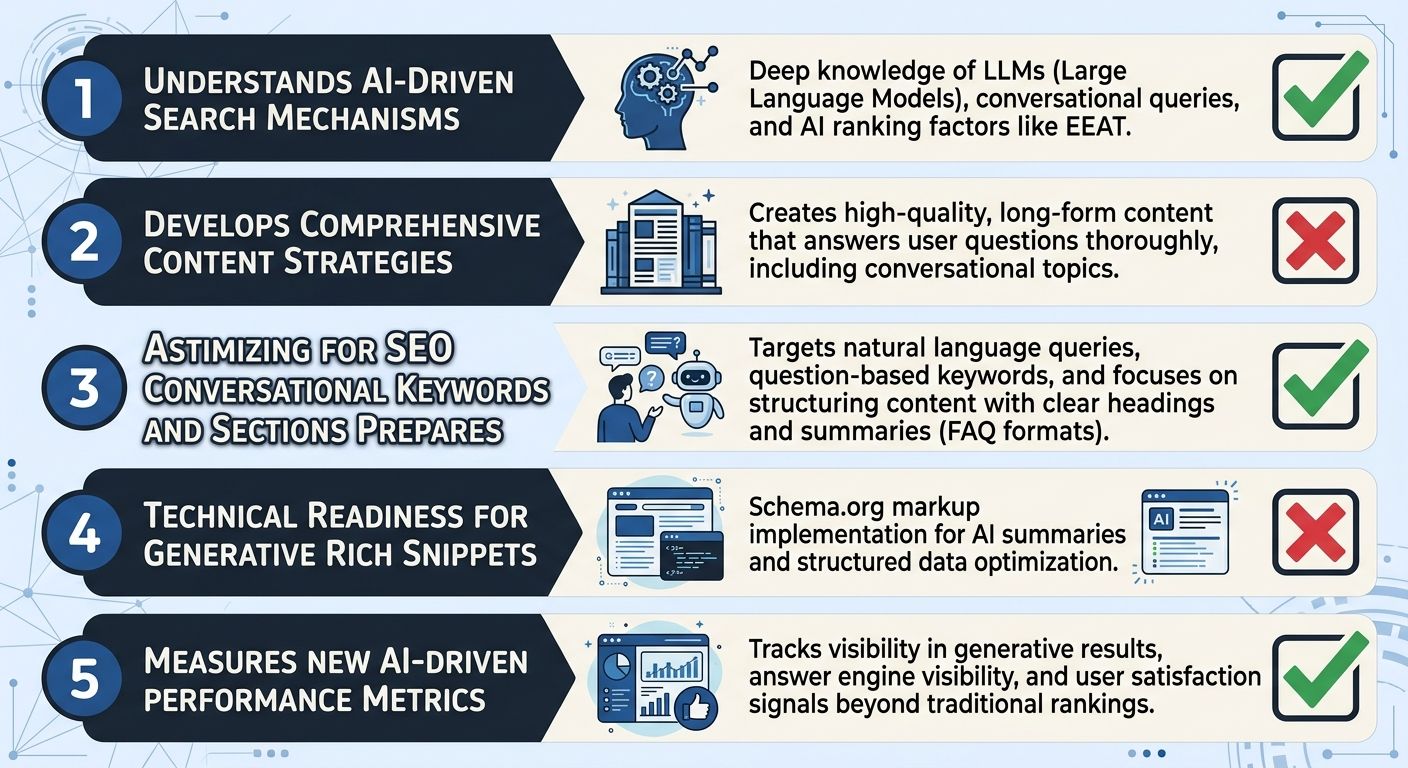
As EnFuse Solutions documents, AI Overviews are driving significant drops in organic CTR and compelling marketers to adapt. The agencies that recognized this early are now 12-18 months ahead of competitors who are just starting to react.
My Honest Take on SEO Agency Specialization in 2026
I've been in this industry for 12 years. I've watched agencies adapt to Panda, Penguin, mobile-first indexing, Core Web Vitals, and a dozen other shifts. This one feels different. Not because traditional SEO is irrelevant, but because the gap between traditional vs AI-native SEO approaches is widening faster than most agencies can adapt.
The agencies that will thrive are the ones treating this as a both/and situation. You still need clean technical foundations. You still need quality content. You still need authority signals. But on top of that foundation, you now need a deliberate strategy for how AI systems interpret, cite, and surface your content.
If your agency isn't talking about this yet, it's time to start that conversation. And if that conversation doesn't go well, it might be time to look at what separates agencies that survive from those that don't.
What the Citation Data Reveals About Agency Performance
AI Overviews appear on roughly 48% of tracked queries, and your traditional rankings mean less when AI answers sit above them. Citation beats ranking — being cited in an AI response drives more traffic than ranking #1 without a citation. AI-referred traffic converts 4.4x better than traditional organic visitors, meaning the volume is smaller but the value per visit is dramatically higher.
AI visibility optimization agencies charge $3,000-$75,000+ per month depending on business size, with hybrid traditional/AI models offering the best value for most companies. You don't need to switch agencies immediately, but you need to evaluate whether your current partner can execute on generative search SEO and hold them accountable with AI-specific metrics.
Multi-platform monitoring is non-negotiable. ChatGPT drives 87.4% of AI referral traffic, so if your agency only watches Google, they're missing the bigger picture. The inflection point isn't coming — it's here. The question is whether your agency recognized it before your competitors did.
Marcus Webb
Digital marketing consultant and agency review specialist. With 12 years in the SEO industry, Marcus has worked with agencies of all sizes and brings an insider perspective to agency evaluations and selection strategies.
Explore more topics