
The SEO Dependency Trap: How to Sell Projects That Don't Stall on Content Reviews, Dev Access, and Analytics Approvals
A $14,000/month enterprise client once told my team that their dev team would "get to the technical fixes next sprint." That was in February.
 Marcus Webb··8 min read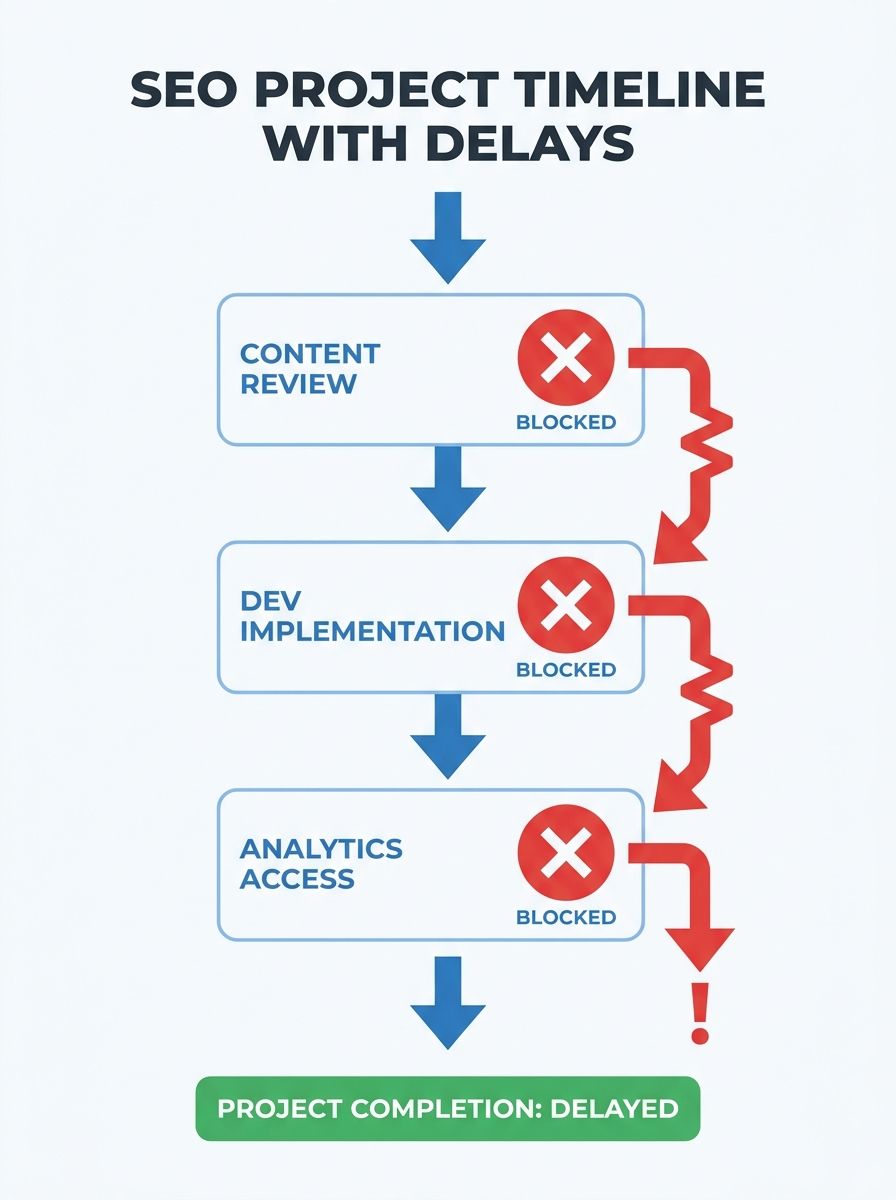
The SEO Dependency Trap: How to Sell Projects That Don't Stall on Content Reviews, Dev Access, and Analytics Approvals
A $14,000/month enterprise client once told my team that their dev team would "get to the technical fixes next sprint." That was in February. By August, not a single redirect had been implemented, the content queue had 47 articles sitting in approval limbo, and we still didn't have Google Analytics access beyond a read-only view someone had set up incorrectly. The client blamed us for flat organic numbers. Technically, they were right to be frustrated. But the real failure happened before we ever signed the contract.
I'd sold the project wrong.
Every deliverable assumed the client would hold up their end of the bargain quickly. Content reviews within 5 business days. Dev implementation within 2 sprints. Analytics access on day one. None of that happened. And it wasn't because the client was difficult. They were just... a normal company with normal internal politics and competing priorities.
This is the SEO dependency trap, and after evaluating over 200 agencies, I can tell you it kills more engagements than bad strategy ever will.
Why Most SEO Projects Are Designed to Fail
Here's something nobody talks about during the sales process: the average SEO engagement has between 8 and 15 external dependencies baked into its first 90-day plan. Content approvals. CMS access. Developer tickets. Brand guideline reviews. Legal sign-offs for certain industries. Analytics tool provisioning.
Each one of those is a potential stall point. And they compound.
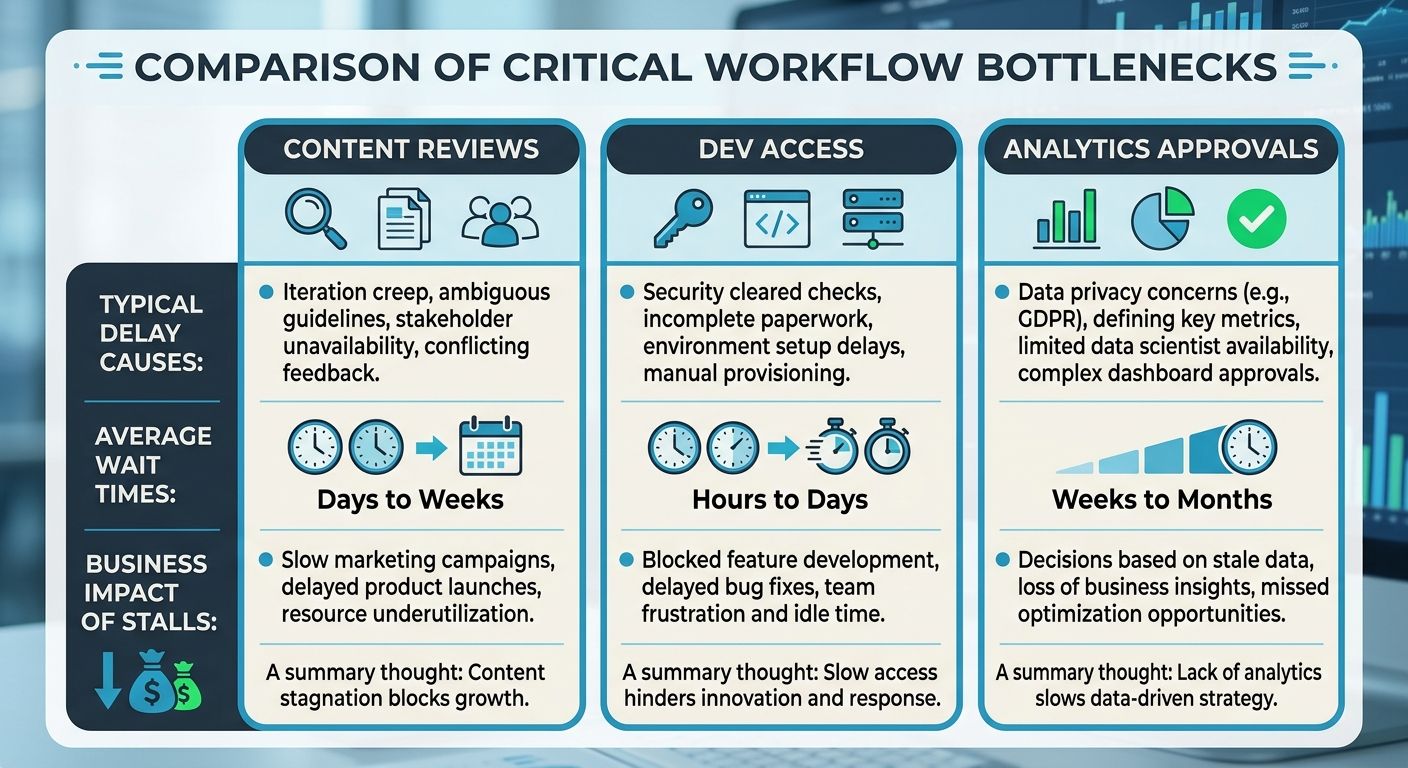
According to monday.com's SEO workflow analysis, 80% of delays in content production occur during subject matter expert review phases. Not writing. Not keyword research. Not strategy. The bottleneck is waiting for someone on the client side to say "yes, this is accurate."
When you stack content review delays on top of technical SEO blockers like dev queue backlogs and analytics provisioning, you get a project that looks like it's moving on the agency side but is functionally frozen on the client side.
The worst part? Agencies often don't recognize this pattern until they're 3-4 months into an engagement and explaining to leadership why organic traffic hasn't moved. By then, trust is already eroding.
The Three Dependency Categories That Kill Projects
Content Review Bottlenecks
Content is where most agencies feel the pain first. You produce a batch of optimized articles, send them for client review, and they disappear into a black hole. As StoryChief's research on approval workflows points out, one missed email can delay an entire campaign, and deadlines slip because feedback is scattered, unclear, or simply late.
I've seen this play out dozens of times. The marketing director is copied on the review, but they're waiting for the product team to verify technical accuracy, and the product team is in a release cycle. Three weeks pass. Your content calendar is wrecked.
Key takeaways for selling around this:
Build explicit review windows into your SOW with automatic approval clauses ("if not reviewed within 7 business days, content is considered approved")
Reduce the number of approvers. Ask during the sales process: "Who specifically will approve content, and what's their typical response time?"
Propose pre-approved content templates and tone-of-voice guides that eliminate subjective review cycles
Developer Access and Implementation Delays
This one hits technical SEO work hardest. You audit a site, find 40+ issues affecting crawlability and indexation, and deliver a prioritized implementation plan. Then you learn the dev team operates on 3-week sprints, SEO tickets are classified as "low priority," and there's a 6-week backlog.
A Semrush analysis of technical SEO agencies highlighted a case where a React frontend paired with a PHP backend created a fragmented development environment that repeatedly delayed SEO implementations. That's not an edge case. That's Tuesday for most enterprise SEO engagements.
If you're running into these kinds of technical SEO debugging challenges, the problem isn't usually the diagnosis. It's getting someone to act on it.
Key takeaways for selling around this:
Identify during sales whether you'll have direct CMS access, tag manager access, or if everything routes through a dev team
Scope projects that separate "needs dev" work from "agency can implement directly" work
Price in a dedicated implementation support phase rather than just delivering audit reports
Analytics Approvals and Data Access
This is the silent killer. You can't prove ROI without data. You can't diagnose problems without access. Yet I've worked with agencies that waited 6+ weeks for Google Analytics 4 property access because the request had to go through IT security review.
Tools like Wrike and other SEO project management platforms emphasize the importance of integrations with Google Analytics, Ahrefs, and Semrush. But integration means nothing if you don't have credentials.
How to Sell Projects That Don't Stall
The fix isn't better project management after the contract is signed. It's better scoping before the contract exists. Here's how I structure engagements now versus how I used to.
Step 1: Run a Dependency Audit During the Sales Process
Before I quote a project, I ask the prospect to complete what I call a "Dependency Readiness Assessment." It's a one-page questionnaire that covers:
Who approves content, and what's their average turnaround?
Does the SEO team/agency get direct CMS access?
Is there a dedicated dev resource for SEO, or do requests go into a shared backlog?
What analytics platforms are in use, and who controls access provisioning?
Are there legal or compliance review requirements for published content?
This does two things. It surfaces SEO implementation roadblocks before they become your problem, and it sets the expectation that the client has responsibilities too.
Step 2: Structure Deliverables by Dependency Level
I break every SEO engagement into three tiers:
Agency-independent work (no client action needed): Technical audits, keyword research, competitive analysis, content strategy development, internal linking plans
Light-touch client involvement (simple approvals): Content reviews with pre-approved templates, meta title/description updates via CMS access, schema markup implementation via tag manager
Heavy client dependency (requires dev or executive action): Site architecture changes, server-side redirect implementations, analytics platform migrations, new tracking implementations
When building your SEO benchmarking dashboard, make sure you're tracking not just performance metrics but also implementation velocity across these tiers.
The first 30-60 days of any engagement should be loaded with Tier 1 work. This builds momentum, demonstrates value, and buys time for Tier 3 dependencies to work through internal processes.
Step 3: Build Approval Automation Into the Workflow
I've started requiring that clients set up automated approval workflows before kickoff. Tools like monday.com now offer Portfolio Risk Insights that scan project boards and flag risks by severity, which means neither side has to manually chase down bottlenecks.
Here's what a healthy client approval workflow looks like:
Content submitted → automatic notification to reviewer with 5-day deadline
Day 3: automated reminder if no action taken
Day 5: content auto-advances to next stage (with option to pull back)
All feedback centralized in one platform, not scattered across email threads
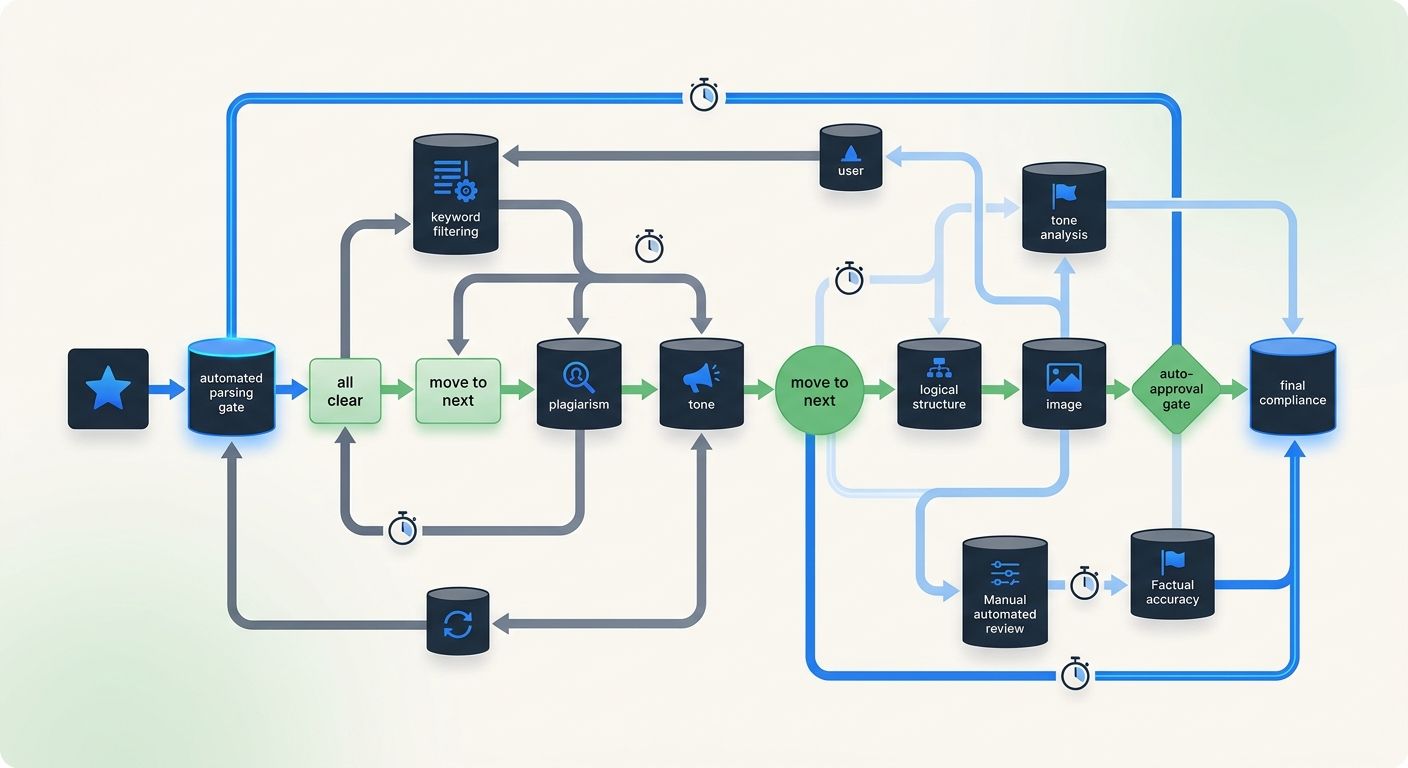
This approach, as Search Engine Journal's review of project management tools notes, can automate task creation so completed keyword research automatically generates content briefs. The less manual handoff, the less opportunity for stalling.
Step 4: Price the Engagement for Reality, Not the Best Case
Most agencies price SEO engagements assuming everything goes smoothly. Content gets approved fast. Dev tickets get picked up promptly. Analytics access arrives on day one.
That's fiction.
I now build a 20-30% buffer into project timelines and structure payment around deliverables submitted, not deliverables implemented. If I deliver a technical audit and implementation guide, that milestone is complete whether the client's dev team has touched it or not.
This protects the agency from revenue loss when client-side delays stack up, and it creates healthy pressure on the client to actually move on recommendations.
If you're comparing the true cost of agency work versus handling things in-house, factor in how much internal friction adds to both timelines and budgets. It's almost always more than people expect.
The Contract Language That Saves Relationships
Beyond process, the actual contract needs specific provisions. Here are clauses I now include in every SOW:
Access SLA: Client will provision all requested tool access within 10 business days of contract signing. Delays beyond this window may push project timelines by equivalent duration.
Content approval windows: All content submitted for review will receive feedback within 7 business days. Content not reviewed within this window advances to the next workflow stage.
Dev implementation tracking: Client will provide a named technical contact and weekly status updates on implementation tickets. Agency is not responsible for organic performance delays caused by unimplemented recommendations.
Quarterly dependency review: Both parties review open dependencies and adjust project scope/timeline accordingly.
These aren't adversarial clauses. They're alignment tools. Every agency I've evaluated that has strong client retention uses some version of mutual accountability documentation.
What Happens When Alignment Works
I worked with an agency that restructured their entire sales and onboarding process around dependency management. They started running readiness assessments before proposals, built three-tier delivery structures into every SOW, and required automated approval workflows as a condition of engagement.
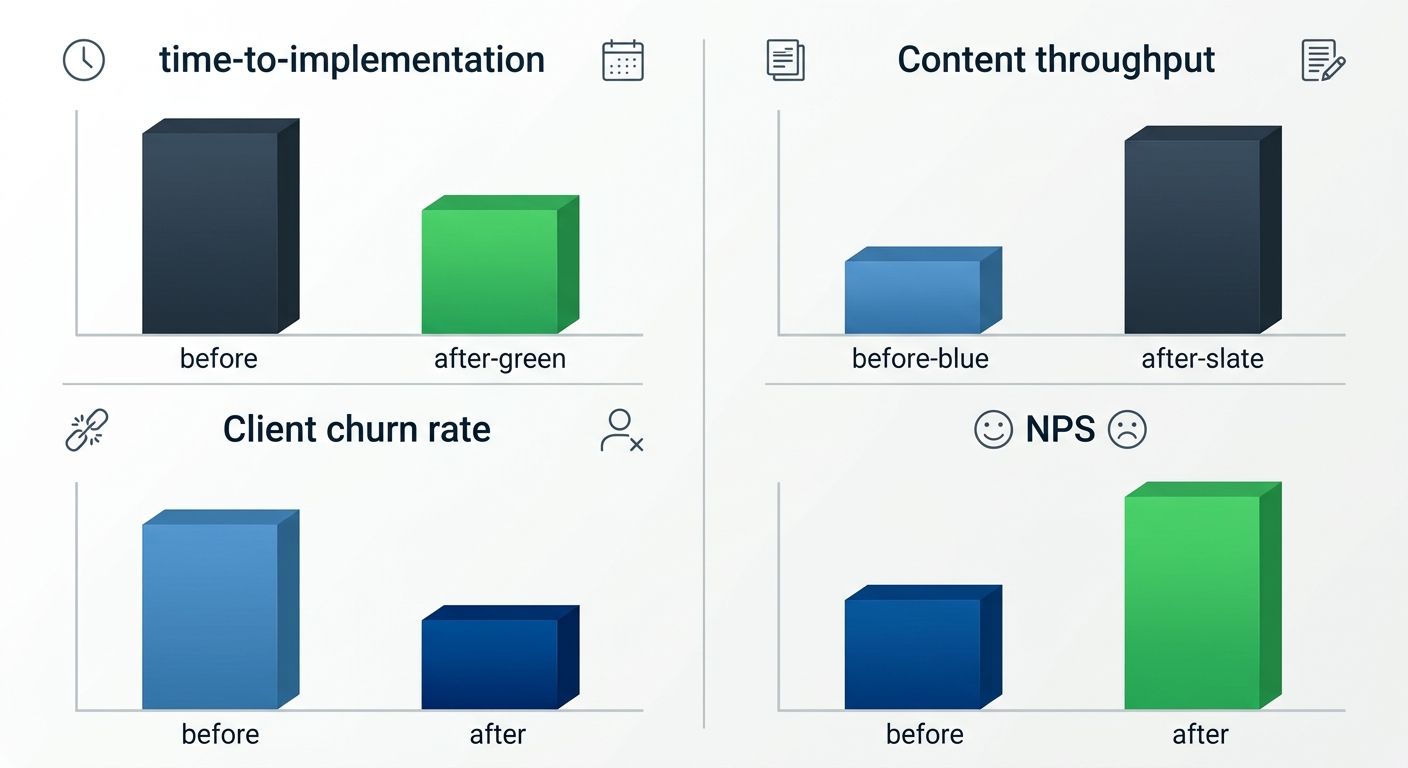
Their results after 8 months:
Average time-to-first-implementation dropped from 47 days to 12 days
Client churn decreased by 35%
Content production throughput increased by roughly 60%
NPS scores went from 32 to 71
The SEO strategies they were executing didn't change dramatically. The work itself was similar. What changed was how much of it actually got done.
As agencies adapt to the shifting landscape of AI-driven search and generative optimization, the pressure to show results faster is only increasing. You can't afford 3 months of dependency gridlock before a single page goes live.
The Real Competitive Advantage
Agency-client alignment isn't a soft skill. It's an operational discipline that directly impacts whether your SEO recommendations ever see the light of day. I've seen brilliant strategies die in approval queues and mediocre strategies succeed because they were actually implemented.
Stop selling SEO as a list of deliverables. Start selling it as a joint operating model where both sides have clear ownership, clear timelines, and clear consequences for delays.
The agencies winning right now aren't the ones with the fanciest decks or the most aggressive ranking guarantees. They're the ones who've figured out that removing SEO project dependencies from the critical path is worth more than any individual optimization.
Run your dependency audit before you send the proposal. Structure your tiers. Automate your approvals. And put it all in writing. Your future self, staring at a retention report instead of a churn spreadsheet, will thank you.
Marcus Webb
Digital marketing consultant and agency review specialist. With 12 years in the SEO industry, Marcus has worked with agencies of all sizes and brings an insider perspective to agency evaluations and selection strategies.
Explore more topics